
Main Courses
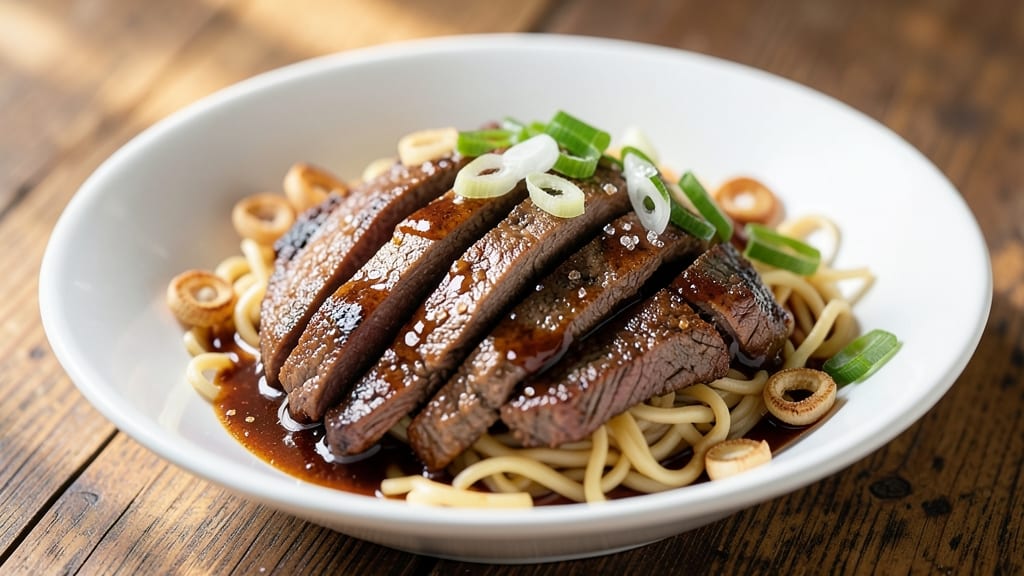
This P.F. Chang's Mongolian Beef copycat recipe delivers the exact smoky-sweet sauce and tender beef you crave—without the restaurant price tag.
The secret lies in marinating the beef just right and building layers of flavor in the sauce, where hoisin, soy sauce, and a touch of ginger create that signature balance. I've replicated the dish exactly as I enjoyed it at P.F.
Chang's, right down to the perfectly cooked egg noodles that soak up every bit of that rich, caramelized sauce.
The process is straightforward but requires patience—especially in the sauce-making, where you'll need to simmer ingredients until they meld into a thick, glossy glaze. The beef marinates for just 30 minutes, giving it enough time to absorb the flavors without becoming mushy.
What you end up with is a dish that looks and tastes like it came straight from the restaurant: tender strips of beef, chewy egg noodles, and a sauce so perfectly balanced between sweet, salty, and smoky that it disappears faster than you can say "takeout night."
This recipe serves four, making it ideal for a weeknight dinner or a casual gathering where you want to impress without spending hours in the kitchen. The beef stays tender and flavorful, the noodles cook just right, and the sauce coats everything perfectly—no drippy mess here.
Serve it with steamed rice or a side of broccoli to round out the meal, just like the original. The result? A dish that tastes like a night out, but with the convenience of homemade.
Once you try this copycat version, you'll never order takeout again—it's that good. The key is paying attention to the sauce reduction and ensuring the beef cooks through evenly. With these steps, you'll achieve restaurant-quality Mongolian Beef in your own kitchen. Let's get started on making this a new favorite.
Ingredients for pf chang's mongolian beef copycat
Pantry staples plus a few specialty sauces. This copycat delivers the smoky-sweet magic.
| Ingredient | Amount | Notes |
|---|---|---|
| Flank Steak 🥩 | 1 ½ lb | Thinly sliced against grain |
| Egg Noodles 🍜 | 8 oz | Fresh or dried, al dente |
| Hoisin Sauce 🍶 | ½ cup | Store-bought or homemade |
| Soy Sauce 🍶 | ⅓ cup | Light or dark preferred |
| Brown Sugar 🍯 | ¼ cup | Packed, light brown preferred |
| Garlic Cloves 🧄 | 6 cloves | Minced, fresh preferred |
| Fresh Ginger 🌿 | 2 tbsp | Grated, peeled, fresh preferred |
| Sesame Oil 🫒 | 1 tbsp | Toasted, for aroma |
| Green Onions 🧅 | 4 whole | Sliced, white and green parts |
| Vegetable Oil 🫒 | 2 tbsp | For stir-frying beef |
| Salt 🧂 | 1 tsp | Kosher or sea salt |
| Black Pepper 🌶️ | ½ tsp | Freshly ground preferred |
| Rice Vinegar 🍶 | 1 tbsp | For sauce balance |
| Cornstarch 🌾 | 1 tbsp | For thickening sauce |
The flank steak is non-negotiable here—it's lean but tender when sliced thin. Costco or Trader Joe's usually have great prices, and look for a cut with good marbling. Slice it against the grain for that signature tender bite. Egg noodles? Fresh is ideal (like Barilla), but dried works in a pinch—just cook them al dente. The hoisin sauce is the soul of this dish. La Choy or Lee Kum Kee are my go-tos, but any quality brand with no weird additives will do. If you're feeling ambitious, you can make your own with fermented soybeans, but we're keeping this easy.
No hoisin? Substitute with 2 tbsp soy sauce plus 1 tbsp brown sugar—it won't be identical, but you'll still get that sweet-salty punch. Fresh ginger? Dried works at half the amount, but it's worth grabbing a small knob from the Asian aisle. The sesame oil is purely for aroma—don't skimp on the toasted kind. Trader Joe's has a great one that's affordable. For the cornstarch, make sure it's pure—no potato starch mixed in. The beef marinates for just 30 minutes, so don't overdo it. And if you're serving with rice, cook it up first—it'll keep warm while you finish the dish.
This sauce thickens as it sits, so reheat gently if you're not serving immediately. The beef stays tender for 2 days in the fridge, but the noodles are best fresh. Store the sauce separately if you're prepping ahead—it reheats beautifully. Freeze the sauce for up to 3 months if you're making a big batch. The leftovers? Even better the next day—all those flavors meld together like magic. Serve with extra green onions on top for that restaurant touch.
Why You'll Love This Recipe
- One-Pan Magic: The flank steak slices itself while you stir—no fancy knife skills required. Toss in the pre-made hoisin and soy sauce, let the sugar caramelize, and boom: restaurant-quality in one pan. (Yes, even on a Tuesday night.)
- Sweet-Savory Fix: That perfect balance of sticky hoisin, salty soy, and just enough brown sugar to make your taste buds dance? It’s addictive. The steak gets tender and glossy, while the egg noodles soak up every last bit of sauce—no leftovers needed.
- Lunchbox Hero: Pack the leftovers cold or reheat them—this dish travels like a champ. My kids grab it for school lunches, and my husband brings it to work because it’s that good. (Pro tip: Add a sprinkle of sesame seeds for extra flair.)
- Budget Win: Flank steak stretches far, hoisin sauce is cheap, and you’re talking under $15 for four servings. Honestly, it’s the kind of meal that makes me feel like I’m feeding a crowd without breaking the bank. Plus, the noodles? They’re the ultimate stretchy, satisfying filler.
Step-by-step instructions for pf chang's Mongolian beef
Here's how to recreate that iconic smoky-sweet sauce at home—every bite will taste like the restaurant.
Prep the Flank Steak for Perfect Texture
Slice the 1.5 lb flank steak thinly against the grain using a sharp knife. You want strips about ¼-inch thick—this ensures tender bites that cook quickly in the stir-fry. Pat the slices dry with paper towels to remove any excess moisture, which helps them sear properly instead of steaming.
Season both sides generously with the 1 tsp salt and 0.5 tsp black pepper. I like to press the seasoning into the meat so it adheres well. Let the seasoned steak sit at room temperature for 15-20 minutes while you prep the rest of the ingredients. This step guarantees even cooking and maximum flavor penetration.
Build the Signature Sauce
In a small bowl, whisk together the 0.5 cup hoisin sauce, 0.33 cup soy sauce, 0.25 cup brown sugar, 1 tbsp rice vinegar, and 1 tbsp sesame oil. This combination creates the perfect balance of sweet, salty, and tangy flavors that define Mongolian beef. Set the sauce aside while you cook the beef and aromatics.
In a separate small bowl, mix the 1 tbsp cornstarch with 2 tablespoons of cold water to create a slurry. This will be your thickening agent later—it's what gives the sauce that perfect coatable consistency. Keep this mixture nearby; you'll add it at the end of cooking.
Stir-Fry the Beef to Juicy Perfection
Heat the 2 tbsp vegetable oil in a large skillet or wok over medium-high heat until shimmering. Add the minced 6 cloves garlic and 2 tbsp grated fresh ginger, cooking for 30 seconds until fragrant. Don't let them brown—just warm through. Immediately add the seasoned flank steak strips in a single layer.
Stir-fry the beef for 2-3 minutes until it's cooked through but still retains some pink in the center. The high heat will give you that characteristic smoky flavor. Remove the beef with a slotted spoon and set it aside on a plate. Here's the thing—you don't want to cook the beef all the way through yet. It'll finish cooking in the sauce.
Cook the Noodles and Combine
While the beef rests, cook the 8 oz egg noodles according to package instructions until al dente. Drain and rinse briefly under cold water to stop the cooking process, then toss with 1 tbsp sesame oil to keep them from sticking. The noodles should be hot but not overcooked—they'll absorb the sauce better this way.
Return the cooked beef to the skillet and pour in the sauce mixture. Stir everything together and bring to a gentle simmer. Cook for 2-3 minutes until the sauce begins to thicken and coat the beef and noodles evenly. This is where the magic happens—the sauce should cling beautifully to every strand of noodle and piece of beef.
Finish and Serve with Fresh Garnishes
Stir in the cornstarch slurry while maintaining a gentle simmer. The sauce will thicken dramatically within 30-60 seconds. Taste and adjust seasoning if needed—you might want to add a splash more soy sauce for saltiness or a touch of rice vinegar for tang.
Divide the Mongolian beef among four plates and garnish each serving with 1 whole sliced green onion. The fresh green onions add a bright contrast to the rich, smoky-sweet sauce. Serve immediately while the noodles are hot and the sauce is at its peak consistency. This dish tastes best right out of the pan!
Pro Tips For Making Pf Chang'S Mongolian Beef Copycat
- Slice Against the Grain: The flank steak’s muscle fibers run long—cutting perpendicular makes each bite tender. Use a sharp knife and slice at a 45-degree angle after cooking, or freeze the meat for 20 minutes first to tighten the fibers for cleaner cuts.
- Deglaze with the Sauce: After searing the beef, don’t just splash water in the pan. Toss in 2 tablespoons of hoisin and soy sauce right away—the caramelized bits stuck to the bottom dissolve into the sauce, adding depth. Scrape those bits up with a wooden spoon like your life depends on it.
- Balance the Sweet-Salty: Brown sugar can overpower if you’re not careful. Taste your sauce before tossing it with the noodles—if it’s too sweet, add a splash of extra soy sauce (about 1 teaspoon) to cut through. The goal is sticky, not cloying.
- Stir-Fry in Two Batches: Overcrowding the pan steams the beef instead of searing it. Cook half the beef first, remove it, then finish the second batch in the same hot pan. The residual heat keeps everything crisp, and the sauce gets to work properly without diluting. (Yes, it’s an extra step, but your beef won’t turn to shoe leather.)
Essential equipment for great pf chang's mongolian beef copycat
Skillet Essentials
A 14-inch cast iron skillet or carbon steel wok is my go-to for this recipe—the wide surface area ensures even cooking, and the material retains heat beautifully. I swear by my Lodge 14-inch cast iron skillet for its durable pre-seasoned surface that prevents sticking.
If you don’t own cast iron, a nonstick skillet (like GreenPan or Cuisinart) works too, but avoid overheating to prevent warping. 🔥
Sauce Thickening Tools
For the sauce, grab a small whisk (I use OXO Good Grips) to combine the hoisin, soy, and sugar smoothly. A fine-mesh strainer helps remove any lumps from the brown sugar if you’re using packed variety.
The cornstarch slurry is critical—use a small bowl and a rubber spatula to mix it thoroughly to avoid clumps. A wooden spoon works best for stirring the sauce at the end to prevent scorching.
Knife & Cutting Prep
A sharp 8-inch chef’s knife (like Wüsthof or Victorinox) is a must for slicing the flank steak against the grain—this ensures tender, bite-sized pieces. I recommend sharpening your knife before starting; a dull blade crushes the meat instead of cleanly slicing it.
A cutting board (I prefer bamboo for grip) prevents slipping, and paper towels are essential for patting the beef dry before seasoning. 💪
Heat Control Gear
Monitoring the medium-high heat is key—use an infrared thermometer (like Thermoworks IR) to check your skillet’s temperature if you’re unsure. A long-handled spatula (preferably silicon-coated) helps flip the beef without losing any in the process.
For the noodles, a colander with holes wide enough to drain them quickly is a game-changer. If you’re prepping ahead, airtight containers keep the sauce and beef fresh for up to 2 days in the fridge.
Garnish & Serving
Fresh green onions are the perfect garnish—slice them with a small chef’s knife for clean, paper-thin strips. A serving spoon (like Nordic Ware) helps portion the noodles neatly. For extra flair, keep sesame seeds (toasted in a dry pan for 30 seconds) on hand to sprinkle on top.
A large serving platter or individual bowls elevate the presentation, making it look just like the restaurant version. ✨
Nutrition facts
Frequently asked questions
Can I substitute flank steak with another cut?
Yes, but choose carefully! Sirloin or ribeye work well—just slice them ¼-inch thick against the grain for tenderness. Avoid tougher cuts like chuck roast, as they won't become tender enough. If using pre-sliced stir-fry beef from the grocery store, pat it extra dry to prevent steaming instead of searing.
How do I make the sauce less sweet?
Reduce the brown sugar to 2 tablespoons and add 1 extra tablespoon of rice vinegar for tang. For a smokier flavor, increase the sesame oil to 2 teaspoons. Taste as you go—you can always adjust with more soy sauce or vinegar. The key is balance between sweet, salty, and acidic.
Can I use regular spaghetti instead of egg noodles?
Not ideal—egg noodles have a chewy texture that soaks up sauce perfectly. If you must substitute, use udon or ramen noodles (cooked 1 minute less than package instructions). Avoid thin spaghetti; it'll turn mushy. For best results, stick with egg noodles—they're the secret to that restaurant-quality texture.
Why is my sauce too thin?
Most likely, you didn't simmer long enough or your cornstarch slurry wasn't fully dissolved. Heat the sauce to a gentle boil for 1-2 minutes after adding the slurry, stirring constantly. If it's still too thin, mix ½ teaspoon more cornstarch with 1 teaspoon water and stir in. Never add raw cornstarch directly—it'll clump.
Can I make this gluten-free?
Swap the hoisin sauce for gluten-free tamari (instead of soy sauce) and use a gluten-free hoisin substitute (like San-J brand). Check your brown sugar for gluten-free certification, and ensure your cornstarch is pure (not wheat-based). The beef and noodles can remain the same—just verify their labels.