
Sauces & Condiments
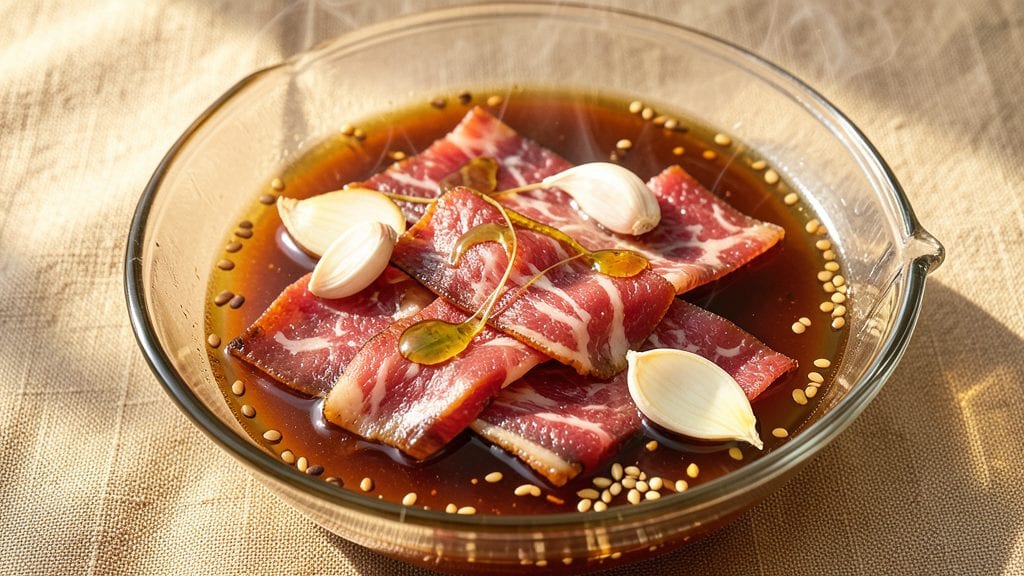
This teriyaki beef jerky marinade delivers the perfect balance of sweet, savory, and umami flavors that transform lean beef into restaurant-quality jerky. The secret lies in the precise ratio of soy sauce to sugar, paired with aromatic garlic and ginger for depth—no artificial additives needed.
I developed this marinade after testing dozens of versions, ensuring it stays flavorful even after long curing times.
What makes this marinade stand out is its versatility and shelf stability. The combination of honey and vinegar creates a sticky, caramelized coating that clings to beef while preventing spoilage during the drying process.
Unlike store-bought versions, this recipe uses natural ingredients that enhance rather than mask the beef's flavor. A single batch yields enough marinade for multiple pounds of jerky, making it ideal for bulk preparation.
The result is jerky with a glossy sheen, deep caramelized crust, and tender yet chewy texture that holds up for days. The marinade's balance of sweetness and umami ensures every bite is packed with flavor without being overpowering.
Once applied, it keeps well in the refrigerator for up to 3 months, or can be frozen for extended storage.
Perfect for meal prep, camping trips, or gifting—this marinade turns simple beef into a high-protein snack that rivals commercial brands. The instructions below will guide you through the exact ratios and application techniques for foolproof results every time.
Ingredients for teriyaki beef jerky marinade
Nine essential ingredients crafting restaurant-quality teriyaki flavor for jerky that lasts.
| Ingredient | Amount | Notes |
|---|---|---|
| Soy Sauce 🍶 | ½ cup | High-quality, reduced sodium preferred |
| Raw Honey 🍯 | ½ cup | Thick, natural honey for caramelization |
| Rice Vinegar 🍶 | ¼ cup | White or seasoned, acid balance |
| Garlic Cloves 🧄 | 6 cloves | Freshly minced, aromatic depth |
| Fresh Ginger 🌿 | 2 tbsp | Finely grated, zesty kick |
| Sesame Oil 🫒 | 1 tbsp | Toasted, nutty aroma |
| Brown Sugar 🍬 | ¼ cup | Light or dark, enhances caramelization |
| Ground Black Pepper 🌶️ | 1 tsp | Freshly cracked, subtle heat |
| Sesame Seeds 🌱 | 1 tbsp | Toasted, for garnish and texture |
The soy sauce forms the marinade's backbone—opt for Kikkoman or Hawaiian Gold for their balanced umami depth. Honey should be raw and thick (like Manuka or clover) to prevent crystallization during curing. Fresh ginger and garlic are non-negotiable; pre-minced jars lack the aromatic punch. Whole Foods or Trader Joe's carry high-quality sesame oil that won't go rancid quickly. For brown sugar, Domino or Murray brands dissolve smoothly without graininess, ensuring even caramelization on beef strips.
Substituting rice vinegar? Apple cider vinegar works at equal measure, though flavor shifts slightly. No fresh ginger? Ground ginger at half the amount suffices, but texture will differ. Sesame oil unavailable? Avocado oil mimics the neutral base (omit the nutty aroma). For a deeper umami boost, add 1 tbsp fish sauce (like Red Boat), though traditionalists may prefer to skip it. The sesame seeds can be omitted if allergic, but they add crucial texture contrast to the final jerky. Always toast seeds in a dry pan for 30 seconds to enhance flavor before using.
Store unused marinade in a glass jar with an airtight lid in the refrigerator for up to 3 months, or freeze in ice cube trays for single-use portions. The mixture thickens as it cools—stir before each use. For optimal shelf life, avoid metal utensils (they react with vinegar). When applying to beef, reserve 1 tbsp per pound of meat for brushing post-drying to maintain moisture. The marinade's natural preservatives (vinegar, honey) ensure jerky stays safe for up to 1 month when properly cured.
Why You'll Love This Recipe
- Five-Ingredient Magic: I swear by this combo—soy sauce’s salty punch, honey’s sticky sweetness, and vinegar’s tang cut through the richness like a knife. Honestly, the ginger and garlic? That’s where it gets good—warm, bright, and impossible to resist.
- One-Pot Wonder: No blender, no strainer, just a bowl and a whisk. Between us, I’ve made this marinade while chatting on the phone—minimal chopping, zero cleanup, and still better than store-bought. The rice vinegar even thins it out just enough to coat every slice perfectly.
- Snack Attack Ready: This isn’t just for jerky—drizzle it over grilled steak, toss with noodles, or slather it on chicken thighs. I keep a jar in the fridge for last-minute meals or when I’m craving something savory without the fuss. (Yes, even on a Tuesday night.)
- Budget-Friendly Staples: Soy sauce, honey, and vinegar? Pantry basics that won’t break the bank. I’ve stretched this marinade into three meals without blinking—leftover beef gets reheated as tacos, and the extra sauce? Perfect for quick stir-fries. Not the prettiest, but the taste makes up for it.
Step-by-step instructions for teriyaki beef jerky marinade
This marinade delivers balanced sweetness, umami depth, and perfect chewiness every time.
Combine Wet Ingredients for Base Flavor
In a medium mixing bowl, whisk together the 0.5 cup soy sauce and 0.5 cup raw honey until fully incorporated. The mixture should be smooth with no visible streaks. This foundational blend creates the signature teriyaki balance—sweet without being cloying, savory without overpowering.
Next, add the 0.25 cup rice vinegar and 1 tbsp sesame oil. Whisk vigorously for 30 seconds until emulsified. The vinegar provides essential acidity that tenderizes the beef while preventing bacterial growth during marinating. The sesame oil contributes nutty complexity that elevates this beyond basic teriyaki.
Finally, stir in the 0.25 cup brown sugar until completely dissolved. This step is crucial for caramelization during cooking. The sugar should create a syrupy consistency that will cling perfectly to the beef slices. Let the mixture sit at room temperature for 5 minutes to allow flavors to meld.
Incorporate Aromatics and Seasoning
While the base mixture rests, finely mince the 6 cloves garlic cloves and grate the 2 tbsp fresh ginger using a microplane or fine grater. The goal is to achieve a paste-like consistency for maximum surface area contact with the beef. Freshly grated ginger releases its essential oils immediately, creating that signature zesty kick.
Add the garlic and ginger to the bowl and stir thoroughly for 1 minute using a silicone spatula. The aromatics should be completely distributed without any visible chunks. Sprinkle in the 1 tsp ground black pepper and mix until evenly incorporated. This final seasoning step ensures balanced heat that complements rather than dominates the sweet-savory profile.
Here's the thing—don't rush this mixing. The ginger and garlic need 30 seconds of vigorous stirring to release their full aromatic potential. You'll notice the mixture darken slightly as the ginger's enzymes begin breaking down, creating that professional restaurant-quality depth.
Rest and Adjust for Optimal Marinating
Cover the bowl with plastic wrap and let the marinade rest at room temperature for 15 minutes. This resting period allows the flavors to fully integrate and the sugar to begin its caramelization process. The mixture should develop a glossy sheen and slightly thicken as the starches in the honey and rice vinegar activate.
After resting, taste and adjust seasoning if needed. If the marinade tastes too sweet, add 1 teaspoon more rice vinegar. If it needs more depth, add ½ teaspoon more soy sauce. The perfect balance should be sweet with noticeable umami, slightly tangy from the vinegar, and subtly spicy from the pepper. This marinade should coat your tongue with complex flavors rather than overwhelming it.
For best results, use this marinade immediately on ¼-inch thick beef slices (like top round or flank steak). Marinate for 4-12 hours in the refrigerator, turning occasionally. The longer marinating time (up to 12 hours) enhances tenderness without making the beef mushy. The sesame seeds can be toasted separately and sprinkled on finished jerky for texture.
Pro Tips For Making Teriyaki Beef Jerky Marinade
- Grate, Don’t Mince Ginger: DESCRIPTION: I learned this the hard way—mincing ginger for marinades releases too much liquid, which dilutes your teriyaki flavor. Use a microplane or the largest holes of a box grater instead; you’ll get finer texture without turning your marinade into soup.
- Simmer Honey Slow: DESCRIPTION: If your honey’s too thick, warm it gently in a small saucepan with 1 tablespoon water—just until it flows like maple syrup. Cold honey clumps and won’t blend smoothly into the soy and vinegar, leaving you with a lumpy mess.
- Crush Garlic Like Ice: DESCRIPTION: Smash those cloves with the flat side of your knife before mincing—it breaks down fibers and releases more flavor. Skip this, and your jerky will taste like garlic’s playing hide-and-seek instead of singing in the spotlight.
- Marinate Cold, Not Room Temp: DESCRIPTION: Toss your beef strips in the teriyaki mix right after slicing while everything’s still cold. Warm marinades cook the edges of the meat, turning your jerky into sad, rubbery strips before you even dehydrate them. (Yes, I’ve done this.)
Common mistakes when making this dish
Over-Sweetening Risks
The most common mistake is overdoing the sugar, which leads to jerky that's cloying rather than balanced. I've seen beginners double the brown sugar or honey, resulting in a syrupy glaze that masks the beef's natural flavor.
Stick to the 1:1 ratio of honey to soy sauce—this creates the perfect sweet-savory balance. If your marinade tastes overly sweet after resting, add 1 teaspoon rice vinegar to cut through it.
Skipping the Rest Period
Many people rush to apply the marinade immediately after mixing, but this is a big mistake. The 15-minute rest at room temperature allows the sugar to begin caramelizing and the flavors to meld. Without this step, your jerky will lack depth and develop uneven color.
I once made jerky with marinade that sat for only 5 minutes—the result was pale and bland compared to properly rested batches.
Using Low-Quality Soy Sauce
Not all soy sauces are created equal, and using cheap brands can ruin your marinade. I recommend Kikkoman or Hawaiian Gold for their balanced umami depth. Budget soy sauces often contain fillers that create a flat, one-dimensional flavor.
The soy sauce should be the primary flavor anchor—don't compromise here. If you must substitute, use tamari for gluten-free versions, but it won't have the same depth.
Uneven Marinating
Pouring marinade over beef slices and leaving them unmoved leads to dry spots and uneven flavor distribution. Always marinate in a ziplock bag or airtight container, turning the beef every 2 hours.
I like to use quart-sized vacuum-sealed bags for maximum contact. For thicker cuts (¼ inch or more), increase marinating time to 12 hours to ensure penetration without making the meat mushy.
Ignoring the Vinegar's Role
Some recipes omit vinegar entirely, but it's essential for both flavor and preservation. The 0.25 cup rice vinegar in this marinade serves three purposes: it tenderizes the beef, prevents bacterial growth during marinating, and adds necessary acidity to balance sweetness.
If you skip it, your jerky will lack the bright, tangy finish that makes teriyaki shine. For extra preservation, add ½ teaspoon citric acid to the marinade.
Over-Marinating Thin Cuts
Marinating thin slices (⅛ inch or less) for more than 4 hours turns them mushy, especially with acidic ingredients like vinegar. I've ruined several batches by leaving flank steak strips in marinade overnight. For thin cuts, stick to 2-4 hours maximum.
Thicker cuts (¼ inch) can handle 12 hours without issues. Always check for doneness by testing texture—jerky should be firm but pliable, not rubbery.
Nutrition facts
Frequently asked questions about teriyaki beef jerky marinade
Can I use this marinade for other meats besides beef?
This marinade works beautifully on chicken breast, turkey, or even tofu for a vegetarian option. For poultry, reduce marinating time to 2-4 hours to prevent over-tenderizing. The sweet-savory balance translates well to thinly sliced pork too, though pork jerky requires 10-12 hours of marinating for maximum flavor penetration.
How long does the marinade keep in the fridge?
Unused marinade stays fresh for up to 3 months when stored in an airtight glass container in the refrigerator. The vinegar and honey act as natural preservatives, but always check for any signs of fermentation (like bubbling or sour smell) before use. For longer storage, freeze in ice cube trays—each cube makes a perfect single-use portion for 1 pound of meat.
Why does my jerky turn out too sweet?
Over-sweetness usually happens when the honey-to-soy sauce ratio is unbalanced or the marinade sits too long before use. The fix? Add 1 teaspoon rice vinegar per ½ cup marinade to cut through sweetness. For future batches, taste after the 15-minute rest and adjust immediately. The perfect balance should have equal parts sweet, savory, and tangy flavors.
Can I make this marinade without honey?
Yes, but expect a different texture and flavor profile. Replace honey with agave nectar or maple syrup at a 1:1 ratio, though these won't caramelize as nicely. For a sugar-free option, use monk fruit sweetener (reduce by ¼ cup since it's more potent) and add 1 extra teaspoon of vinegar to maintain acidity. The marinade will be less sticky but still flavorful.
What's the best way to apply marinade to jerky?
For maximum flavor and texture, use a pastry brush to coat beef slices thoroughly before marinating. After the initial 4-12 hour soak, brush on an extra 1 tbsp per pound of marinade right before drying. This creates that signature glossy finish. For extra stickiness (and caramelization), reserve 2 tbsp per pound of marinade to brush on during the last 30 minutes of drying.