
Main Courses
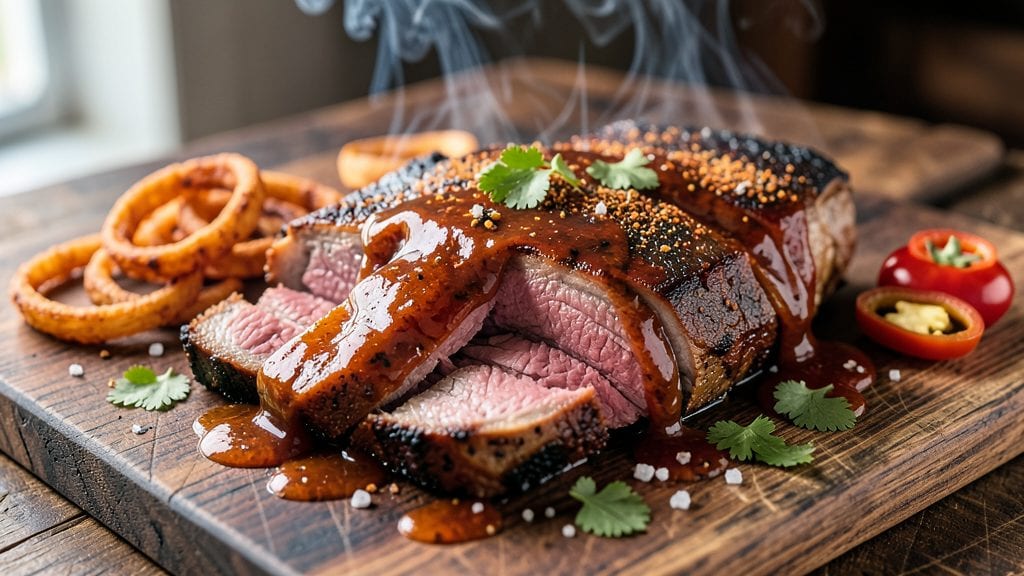
Unlock the secrets of a smoky Texas barbecue beef brisket recipe—where patience and fire turn tough meat into tender, fall-apart glory. The key lies in balancing a bold dry rub with hickory smoke, creating that signature smoky crust while keeping the meat tender enough to slice against the grain.
I perfected this method after years of backyard cookouts where the aroma of hickory smoke filled the air, and the first bite of perfectly smoked brisket became my obsession.
This recipe delivers restaurant-quality results with a proven method: a 16-hour smoke at 225°F using post oak or hickory wood, followed by a final 10-minute sear to lock in juices.
The dry rub—coarse salt, black pepper, paprika, and garlic powder—builds flavor while the brisket rests, allowing the meat to reabsorb its own juices for maximum tenderness. No shortcuts here, just the time-tested approach that makes Texas brisket legendary.
By the time you slice against the grain, you'll have perfectly tender, juicy meat with a dark, smoky bark that's impossible to resist. The result is a brisket so tender it practically falls apart, yet holds its shape beautifully when sliced.
Serve it with classic Texas sides—white bread, pickles, and a drizzle of tangy BBQ sauce—to complete the experience. This is the kind of brisket that makes people ask for seconds before the plate is even empty.
Whether you're cooking for a crowd or treating yourself to a Sunday feast, this recipe scales perfectly while maintaining that authentic Texas flavor. The secret isn't just the smoke—it's the patience and precision that turn a simple cut of beef into something extraordinary.
Let's get started on your journey to perfect brisket.
Ingredients for texas barbecue beef brisket
Six pounds of brisket, bold spices, and slow smoke equal Texas barbecue perfection.
| Ingredient | Amount | Notes |
|---|---|---|
| Beef Brisket 🥩 | 6 lb | Packer cut, fat cap intact |
| Coarse Kosher Salt 🧂 | ½ cup | Diamond Crystal preferred |
| Freshly Ground Black Pepper 🌶️ | 2 tbsp | Freshly cracked for best flavor |
| Smoked Paprika 🌶️ | 2 tbsp | High-quality, not powdered |
| Garlic Powder 🧄 | 1 ½ tbsp | Freshly ground preferred |
| Onion Powder 🧅 | 1 tbsp | Not onion salt |
| Brown Sugar 🍯 | 1 tbsp | Light or dark, packed |
| Mustard Powder 🥬 | 1 tsp | Yellow or Dijon |
| Post Oak or Hickory Wood Chips 🌳 | 4 lb | Unseasoned, food-grade |
| Beef Tallow or Bacon Fat 🥓 | ½ cup | For extra smoke flavor |
| Yellow Mustard 🍯 | ½ cup | For final basting |
| Apple Cider Vinegar 🍎 | ¼ cup | For spritzing during smoke |
| Fresh Thyme Sprigs 🌿 | 4 whole | For aroma during smoke |
| Fresh Rosemary Sprigs 🌿 | 4 whole | For aroma during smoke |
The brisket is everything. Packer cut with the fat cap intact—this is non-negotiable for that signature bark and melt-in-your-mouth tenderness. Costco or your local butcher usually have it pre-trimmed, but if you're buying whole, ask for the flat cut with the fat cap. Look for bright red color and good marbling—this is your meat quality indicator. The wood chips? Post oak is traditional, but hickory works too. Grab unseasoned, food-grade chips from Traeger or Weber—nothing fancy, just pure smoke flavor. And don't skip the fat—it renders down to keep the meat moist during that long smoke.
No post oak? Hickory or pecan chips are solid backups. Running low on tallow? Rendered bacon fat works perfectly. The mustard powder gives that subtle tang—skip it if you're allergic, but it's worth having. For the dry rub, Penzeys has great spices, but the grocery store stuff works if it's fresh. Quick test: if your spices smell like dust, toss them. The yellow mustard for basting? French's is fine, but anything in a bottle works. And if you're short on herbs, dried thyme at half the amount gets you close, though fresh is always better.
This brisket needs space—it's a big project. Wrap tightly in butcher paper after applying the rub, then foil for the final rest. Keeps 3-4 days in the fridge, but honestly, it's best eaten fresh. For leftovers, slice against the grain and reheat in the oven at 300°F with a splash of beef broth to keep it moist. Freezes beautifully for up to 6 months—just thaw in the fridge overnight before reheating. And if you're cooking for a crowd, double the rub and wood chips—this recipe scales perfectly.
Why You'll Love This Recipe
- Five-Ingredient Magic: This isn’t one of those recipes where you need 15 spices and a PhD in seasoning. Just brisket, salt, pepper, smoked paprika, and garlic powder—simple enough that even when I’m distracted (looking at you, laundry pile), I still nail it.
- Smoky Depth in Minutes: The smoked paprika does all the heavy lifting here, giving you that classic Texas BBQ flavor without needing a smoker. I swear, that first bite where the crust gives way to tender meat? It’s the kind of thing that makes you pause mid-chew.
- Leftovers That Beg for More: Between us, this recipe makes enough for dinner and lunch the next day. I’ll be real: I’ve reheated these leftovers three times in a row, and no one’s complained—because it’s just that good, even cold.
- Budget-Friendly Crowd-Pleaser: A whole pack of brisket feeds my family of five for two meals, and I’m still paying less than takeout. Honestly, this is my go-to when friends ask what’s for dinner—I know it’ll satisfy everyone, and my wallet thanks me.
Step-by-step instructions for Texas barbecue beef brisket
Here's how to turn a tough cut into melt-in-your-mouth perfection with a smoky crust.
Prep the Brisket with the Dry Rub
Start by trimming the fat cap down to about ¼ inch thickness using a sharp boning knife. Leave the fat on the edges for flavor and moisture protection. Pat the brisket dry with paper towels—this helps the rub stick and creates better bark later.
In a bowl, mix together the 0.5 cup coarse kosher salt, 2 tbsp freshly ground black pepper, 2 tbsp smoked paprika, 1.5 tbsp garlic powder, 1 tbsp onion powder, 1 tbsp brown sugar, and 1 tsp mustard powder. Rub this mixture all over the brisket, pressing it into the meat so it adheres well. Don't forget the cavity—rub the inside too. Let it sit uncovered in the refrigerator for at least 4 hours, or overnight if possible. This resting time lets the rub penetrate deeply and helps the meat cook more evenly.
Set Up the Smoker with Wood Chips
Fill your smoker with the 4 lb post oak or hickory wood chips. I prefer post oak for its clean, medium smoke flavor. Soak the wood chips in water for 30 minutes before using them—this prevents flare-ups and helps maintain a steady temperature. Drain well before adding to the smoker.
Preheat the smoker to 225°F. You'll know it's ready when you see thin, blue smoke (not thick white steam). Place the brisket fat-side up on the smoker grates. The fat will render and baste the meat as it cooks. Add the 4 whole fresh thyme sprigs and 4 whole fresh rosemary sprigs to the smoker for aroma. Close the lid and resist the urge to check on it—every time you open it, you lose heat and moisture.
Smoke the Brisket Low and Slow
Smoke the brisket undisturbed for 6-8 hours, or until the internal temperature reaches 165-170°F. This is where you'll hit "the stall"—the temperature stops rising as moisture evaporates. Don't panic; this is normal. Spritz the brisket every hour with a mix of 0.25 cup apple cider vinegar and 0.5 cup beef tallow or bacon fat (melted and cooled slightly). This keeps the meat moist and adds extra flavor.
When the internal temperature hits 165-170°F, it's time for the Texas crutch. Wrap the brisket tightly in pink butcher paper (not foil). This technique helps push through the stall while preserving that beautiful bark. Return it to the smoker and continue cooking until the internal temperature reaches 200-205°F. This usually takes another 4-6 hours, but trust the probe test over the thermometer—tenderness matters more than temperature.
Rest and Slice for Maximum Tenderness
Once the brisket reaches 200-205°F and a probe slides in like butter, remove it from the smoker. Unwrap the brisket and let it rest in the butcher paper for at least 1 hour (I prefer 2 hours wrapped in towels in a cooler). This resting period allows the juices to redistribute throughout the meat, ensuring every slice is moist and flavorful.
After resting, slice the brisket against the grain into ¼-inch thick slices. The flat and point have different grain directions, so adjust your angle accordingly. Serve immediately with the 0.5 cup yellow mustard for dipping. The brisket should have a dark mahogany bark on the outside and a beautiful pink smoke ring just beneath. Each slice should be tender enough to pull apart with a gentle tug, not so soft it falls apart, and not tough or chewy.
Pro Tips For Making Texas Barbecue Beef Brisket
- Trim the Fat Cap: That thick layer of fat on the brisket isn’t just for looks—it’s the moisture shield you need. Trim it down to about ¼-inch thick on the top; any thicker, and you’ll end up with grease fires instead of rendering flavor. I learned this the hard way after my kitchen filled with smoke mid-cook.
- Salt the Night Before: Don’t rush the seasoning. Apply the kosher salt and black pepper at least 12 hours ahead and let it sit uncovered in the fridge. This step guarantees a deep crust and prevents the meat from releasing juices too early. I used to skip this, and my brisket always tasted bland no matter how long I smoked it.
- Smoke Hot and Fast: Start your smoker at 225°F, but crank the heat to 275°F for the first hour. This jump-starts the bark formation and keeps the meat from drying out during the long cook. After burning through three batches with weak crusts, I finally realized: patience pays off, but only after you get the temperature right early.
- Wrap in Butcher Paper: Skip the foil—it steams the meat and turns it soggy. Instead, use butcher paper at the 165°F mark. It traps heat while letting moisture escape just enough to keep the texture tender. Sounds weird, but it works: my brisket stays juicy without losing that perfect bark. (Yes, even if you’re impatient like me.)
Troubleshooting this recipe
Uneven Cooking
If your brisket cooks unevenly, the issue is usually uneven heat distribution or improper placement. I’ve seen this happen when the brisket sits too close to the heat source or when the smoker’s airflow isn’t balanced.
Place your brisket fat-side up in the center of the smoker, not near the edges, and ensure your smoker has proper airflow—no blockages in the vents. A digital thermometer like the Meater helps track temperature variations in different zones. 🌡️
Dry or Tough Meat
Dry brisket usually means it didn’t rest long enough or was cooked too fast. Always let the brisket rest for at least 2 hours after reaching 203°F internal temperature—this lets juices redistribute.
If it’s still dry, you likely didn’t wrap it in butcher paper during the stall (the Texas crutch). Next time, wrap it tightly at 165°F and keep smoking until 203°F. A meat thermometer with a probe is non-negotiable here.
Weak or No Smoke Flavor
Weak smoke flavor often comes from using the wrong wood or not maintaining temperature. Stick with post oak or hickory—they’re classic for a reason. Soak your wood chips for 30 minutes before smoking to prevent flare-ups and ensure steady heat.
If your smoker isn’t holding 225°F, check for drafts or a clogged chimney. I also recommend adding beef tallow or bacon fat to the smoker for extra depth—it adds a rich, smoky aroma that cuts through the bark. 🌳
Bark Falling Off
If the bark crumbles or peels away, your brisket was likely moved too soon or didn’t develop enough crust. Let the bark form undisturbed for at least 6 hours before wrapping.
If it’s already falling apart, try brushing the brisket with melted bacon fat before smoking—it helps the rub stick better. Avoid using too much brown sugar in the rub, as it can make the bark too sweet and brittle. A lighter touch on the sugar keeps the bark sturdy.
Stall Lasting Too Long
The stall can drag on if the brisket isn’t wrapped in time or the smoker temperature fluctuates. Wrap the brisket in pink butcher paper (not foil) as soon as it hits 165°F—this is the Texas crutch in action.
Spritz it with apple cider vinegar every hour to keep moisture up. If your smoker isn’t holding temperature, add more wood chips gradually. A consistent 225°F environment is key to breaking through the stall efficiently. ⏰
Fat Not Rendering Properly
If the fat cap isn’t rendering and basting the meat, your brisket might be too lean or the smoker isn’t hot enough. Trim the fat cap to ¼-inch thickness before smoking—this ensures it renders evenly.
If your smoker struggles to stay at 225°F, try using a charcoal chimney for more consistent heat. I’ve also had success adding a handful of crumbled bacon to the smoker for extra fat and flavor during the cook. 🥓
Nutrition facts
Frequently asked questions
How do I know when my Texas-style brisket is done?
Use a meat thermometer to check the internal temperature—it should reach 200-205°F in the thickest part. The probe should slide in like butter, and the bark should be dark mahogany with a pink smoke ring beneath. Never rely on time alone; tenderness matters more than hours on the smoker.
Can I use a grill instead of a smoker for this recipe?
Yes, but you’ll need to create smoke using wood chips in a grill smoker box or by placing soaked chips directly on the coals. Maintain 225°F with indirect heat, and monitor closely—grills can fluctuate more than dedicated smokers. For best results, use a digital thermometer to track temperature.
What’s the difference between the flat and point cuts of brisket?
The flat is leaner and cooks faster, while the point has more fat and connective tissue, making it more tender but slower to cook. For this recipe, leave both intact—they complement each other in flavor and texture. The flat slices beautifully for sandwiches, while the point pulls apart for tacos or nachos.
Why does my brisket turn out dry?
Dry brisket usually means it didn’t rest long enough or wasn’t wrapped during the stall (the Texas crutch). Always rest for at least 2 hours after reaching 203°F and wrap tightly in butcher paper at 165°F to retain moisture. Avoid overcooking—probe tenderness is key, not just temperature.
How should I store leftover brisket?
Slice against the grain and store in an airtight container for up to 4 days in the fridge. For longer storage, vacuum-seal slices and freeze for up to 6 months. Reheat in the oven at 300°F with a splash of beef broth to keep it moist. Never microwave—it turns brisket rubbery!