Soups & Stews
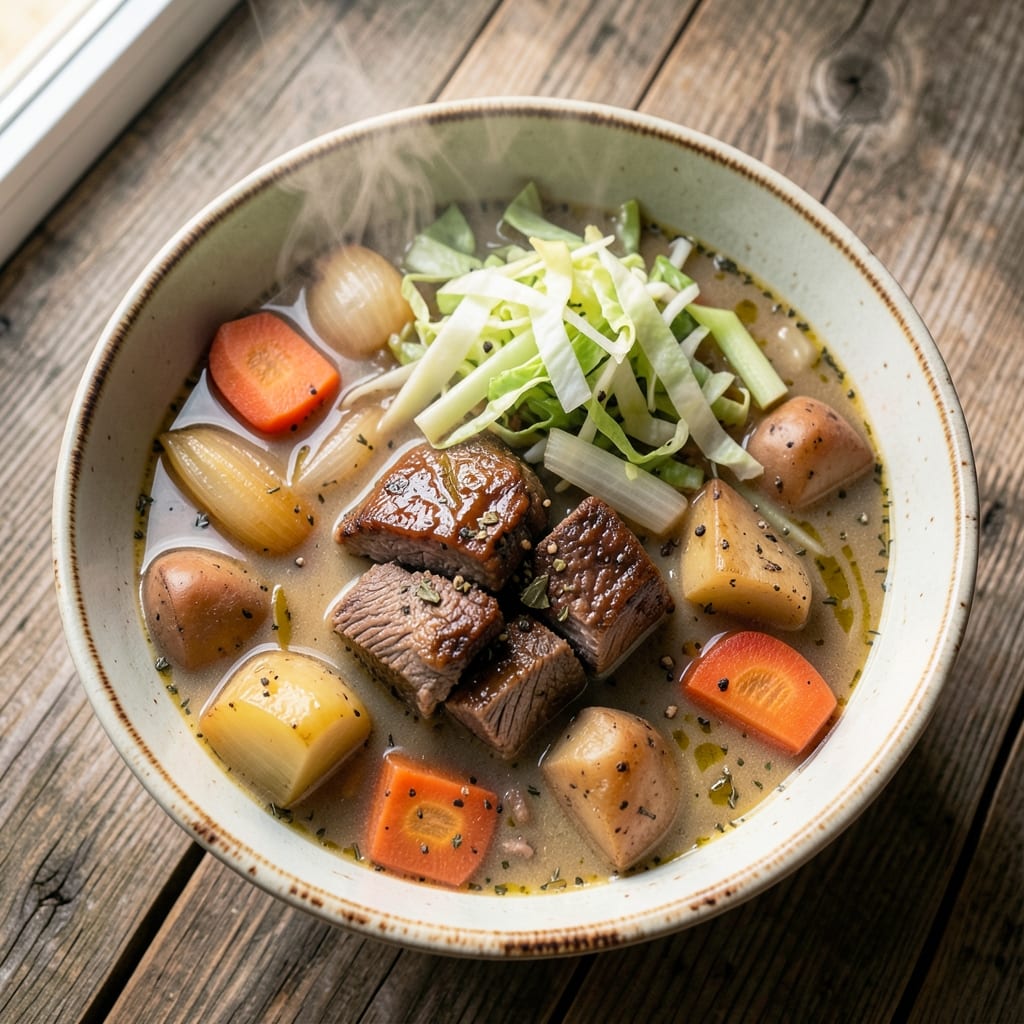
The Amish vegetable beef soup recipe brings the comforting warmth of a Pennsylvania homestead to your kitchen, where slow-simmered flavors transform tough beef into tender, melt-in-your-mouth bites. 💛 This one-pot wonder combines hearty vegetables—carrots, potatoes, and cabbage—with a rich broth that builds depth as it simmers, creating a meal that feels like a hug in a bowl. The secret lies in browning the beef first, locking in flavor before the long cook that turns simple ingredients into something extraordinary.
What sets this soup apart is its balance of textures and techniques: crisp-tender vegetables, fork-tender beef, and a broth so flavorful it needs no garnish. The Amish tradition of slow cooking ensures every bite is packed with umami, while modern shortcuts—like using a Dutch oven or slow cooker—keep it accessible for today's busy kitchens. No fancy ingredients, just wholesome staples that deliver restaurant-quality results with minimal effort.
By the time you're done, you'll have a steaming pot of soup that smells like home, with beef so tender it falls apart at the touch and vegetables that stay vibrant yet perfectly cooked. The aroma alone will have everyone gathering around the table, and the leftovers? Even better the next day as flavors meld further. This is the kind of soup that becomes a family tradition in just one serving.
Serve it with crusty bread to soak up every last drop of that savory broth, or pair it with a simple green salad for balance. The beauty of this recipe is its adaptability—add more vegetables if you like, or swap in seasonal produce without sacrificing authenticity. Let's get cooking!
Ingredients for amish vegetable beef soup
Pantry staples and homestead vegetables create this soul-warming beef soup.
| Ingredient | Amount | Notes |
|---|---|---|
| Chuck Roast 🥩 | 2 lb | Cut into 1.5-inch cubes |
| Yellow Onions 🧅 | 2 whole | Chopped into half-moons |
| Carrots 🥕 | 4 medium | Peeled and cut into chunks |
| Russet Potatoes 🥔 | 3 medium | Peeled and cut into cubes |
| Green Cabbage 🥬 | ½ small head | Shredded into ribbons |
| Celery Stalks 🧅 | 3 whole | Chopped into 1-inch pieces |
| Garlic Cloves 🧄 | 4 cloves | Minced for depth of flavor |
| Tomato Paste 🍅 | 2 tbsp | For rich, concentrated flavor |
| Beef Broth 💧 | 6 cups | Low-sodium preferred |
| Water 💧 | 6 cups | For proper broth dilution |
| Bay Leaves 🌿 | 2 whole | Fresh preferred for aroma |
| Dried Thyme 🌿 | 1 tsp | Or 1 tbsp fresh thyme |
| Salt 🧂 | 1 ½ tsp | Diamond Crystal preferred |
| Black Pepper 🌶️ | ½ tsp | Freshly cracked for heat |
| Extra-Virgin Olive Oil 🫒 | 2 tbsp | For browning beef |
The beef is the star—chuck roast delivers that melt-in-your-mouth texture when cooked low and slow. Grab it from the butcher counter or pre-cubed section at Kroger or Walmart for convenience. Look for good marbling (that white fat streaked through) to ensure tenderness. Fresh thyme adds depth, but if you're using dried, Penzeys or the bulk section at Whole Foods has the best quality. The cabbage? Green or red both work—just shred it finely so it cooks through without getting mushy.
No beef broth? Chicken broth with 1 tbsp soy sauce works in a pinch. Swap russet potatoes for Yukon Golds if you want creamier texture. Celery stalks can be subbed with leeks (use half the amount). For extra richness, add 1 tbsp tomato paste or a splash of red wine. The tomato paste at Trader Joe's is perfect—no waste, and it keeps for months. Fresh bay leaves are ideal, but dried works too (just add them earlier in cooking).
This soup tastes even better the next day as flavors meld. Store in the fridge for 4-5 days or freeze portions for up to 3 months. I double the recipe for meal prep—portion into containers so lunches are ready to grab. The broth reduces as it sits, so add a splash of water when reheating if it gets too thick. For serving, a sprinkle of fresh parsley brightens it up, though the Amish tradition skips garnishes—just serve it straight from the pot.
Why You'll Love This Recipe
- Foolproof Prep: I swear by this—just sear the chuck roast, toss in the onions and carrots, then let the slow cooker do the work. No fancy techniques, no stress, just hands-off perfection.
- Hearty, Rustic Richness: That deep, savory beef flavor from the chuck roast? It’s the star, but the cabbage and potatoes add just the right chewy, creamy balance—like a hug in a bowl.
- Leftovers That Beg for More: Between us, this soup only gets better the next day. I freeze half the batch, and when I pull it out, it’s still tender and packed with flavor—no sad, dry leftovers here.
- Budget-Friendly Crowd Pleaser: A whole chuck roast and a head of cabbage stretch for a week’s worth of meals. Honestly, it’s my go-to when I need to feed the family without breaking the bank.
Step-by-step instructions for Amish vegetable beef soup
Here's how to build this homestead classic—rich, hearty, and packed with rustic flavor.
🔥 Step 1: Brown the Chuck Roast for Deep Flavor
Heat the 2 tablespoons extra-virgin olive oil in a large Dutch oven over medium-high heat until shimmering. Add the 2 lb chuck roast cut into 1.5-inch cubes in a single layer, working in batches if needed. Let them sear undisturbed for 3-4 minutes per side until deeply browned—this creates that caramelized foundation for the soup.
Don't rush this step. You want those beef cubes to develop a rich crust before we remove them. If the pan gets crowded, reduce to medium heat to prevent steaming. Once browned, transfer the beef to a plate and set aside.
👨🍳 Step 2: Sauté the Vegetable Base
In the same Dutch oven, add the 2 whole yellow onions chopped into half-moons, 4 medium carrots cut into chunks, and 3 whole celery stalks chopped into 1-inch pieces. Cook for 5-6 minutes until the onions soften and the carrots begin to color. Stir occasionally to prevent burning.
Here's the thing—this vegetable base forms the flavor backbone. The onions should turn translucent while the carrots develop a slight caramelization. If they stick, add a splash of beef broth to deglaze. After 3 minutes, add the 4 cloves minced garlic and cook for another 30 seconds until fragrant.
🍳 Step 3: Build the Soup Foundation
Stir in the 2 tablespoons tomato paste and cook for 1 minute to toast slightly—this deepens the umami flavor. Return the browned beef cubes to the pot, then add the 6 cups beef broth, 6 cups water, 2 whole bay leaves, 1 teaspoon dried thyme, 1.5 teaspoons salt, and 0.5 teaspoon black pepper.
Bring everything to a gentle boil, then reduce heat to low and let it simmer uncovered for 1 hour. This initial simmer breaks down the beef connective tissue, creating that melt-in-your-mouth texture. Skim off any foam that rises to the surface during the first 15 minutes—it keeps the broth clear.
🥘 Step 4: Add the Potatoes and Cabbage
After the initial 1-hour simmer, add the 3 medium russet potatoes cut into cubes and 0.5 small head green cabbage shredded into ribbons. Stir gently to distribute the potatoes evenly. Return to a simmer and cook uncovered for another 30-40 minutes until the potatoes are tender when pierced with a fork.
I know it seems like too much time, but trust me—this slow cooking ensures the potatoes absorb all that beefy flavor without turning mushy. The cabbage should soften but still hold its shape slightly. Taste the broth and adjust seasoning if needed; the potatoes will soak up some of the saltiness.
⏰ Step 5: Finish and Rest for Perfect Texture
Once the potatoes are fork-tender, remove the bay leaves and let the soup sit off the heat for 10 minutes. This resting period allows the flavors to meld completely and the vegetables to finish absorbing the broth. The soup should be thick enough to coat a spoon but still have a pleasant mouthfeel.
Real talk: The first time I skipped this resting step, the cabbage turned sad and watery. Now I always wait—it makes a world of difference. Serve the soup hot with crusty bread, and don't forget to pass the extra salt and pepper for personal seasoning.
Pro Tips For Making Amish Vegetable Beef Soup
- BROWN THE ROAST FIRST: Chuck roast needs a deep, dark crust to stay tender—don’t skip the 10-12 minutes of searing in a hot Dutch oven. I used to rush this, and the meat turned out tough. Let it get that golden, caramelized bottom before adding liquids, or you’ll end up with mushy beef instead of fork-tender slices.
- CUT CABBAGE SMALL: Big chunks of cabbage stay crunchy and undercooked. Shred it into ½-inch pieces so it softens properly without turning to mush. (Yes, it’ll look messy—doesn’t matter. Taste does.) If you’re short on time, microwave it for 2 minutes first, but don’t skip this step entirely—it makes a real difference in texture.
- ADD POTATOES LAST: Russet potatoes need 15-20 minutes to cook through, but if you toss them in with the onions early, they’ll turn to glue. Wait until the beef and carrots have softened (about halfway through simmering), then add them whole and let the broth work its magic. They’ll absorb flavor better and hold their shape.
- USE A LITTLE BUTTER: After browning the roast, deglaze with beef broth and 1 tablespoon of butter. The fat helps emulsify the broth, making the soup richer without needing heavy cream. I was skeptical until I tried it—now it’s non-negotiable for that Amish homestyle depth. (Skip this, and the soup tastes like it’s missing something.)
Pro cooking tips for this recipe
Beef Browning Mastery
That rich, caramelized crust on your beef cubes is where all the flavor lives. Use a large Dutch oven (like the Le Creuset 5.5-quart) and medium-high heat—this ensures you get proper browning without steaming. Work in batches if needed, and resist the urge to stir too soon. Those 3-4 minutes per side are crucial for developing the Maillard reaction, which builds deep umami. I swear by extra-virgin olive oil here—it stands up to the heat better than vegetable oil and adds subtle fruitiness. 🔥
Vegetable Prep Secrets
Even cooking starts with proper prep. Chop your carrots and potatoes into even 1.5-inch cubes—this ensures they finish cooking simultaneously. For the cabbage, shred it into thin ribbons (about ¼-inch wide) so it softens without turning mushy. The onions and celery should be cut into uniform ½-inch pieces—this prevents some pieces from overcooking while others stay crunchy. Pro tip: Soak your cabbage in ice water for 10 minutes before adding to keep it vibrant.
Broth Control Techniques
Your broth-to-water ratio matters. The 6 cups beef broth to 6 cups water creates the perfect balance of richness and lightness. If using low-sodium broth, add the 1.5 tsp salt gradually—taste after 30 minutes of simmering and adjust. For extra depth, deglaze the pot with ½ cup red wine after browning the beef (simmer it off before adding liquids). I also like adding 1 tsp Worcestershire sauce during the final 10 minutes of cooking for a savory punch. ⚡
Slow Cooking Precision
This isn't a quick meal—2 hours total simmering is non-negotiable for tender beef. After the initial 1-hour simmer, add potatoes and cabbage, then maintain a gentle simmer (small bubbles, not rolling). If your pot boils vigorously, reduce heat immediately—this prevents the broth from breaking. For even more tenderness, add 1 tsp apple cider vinegar during the final 20 minutes—it helps break down collagen in the beef. Trust the process; patience pays off with fork-tender meat.
Texture Fixes
If your potatoes turn mushy, they likely overcooked. Next time, add them 10 minutes earlier and check doneness with a fork. For cabbage that stays crunchy, add it only in the last 15 minutes of cooking. If the soup is too thin after simmering, mash ½ cup of the cooked potatoes against the pot's side to thicken it naturally. And if the beef isn't tender enough? Return it to the pot with ½ cup broth and simmer another 20 minutes—it'll come together beautifully. 💪
Equipment Upgrades
While a Dutch oven works perfectly, a slow cooker (like the Instant Pot Duo 7-in-1) cuts hands-on time by 1 hour. Brown the beef first, then transfer everything to the slow cooker and cook on low for 6-7 hours. For stovetop cooks, a thermometer (like the Thermoworks Smoke) ensures your broth stays at 195-205°F—this is the sweet spot for collagen breakdown. And if you're serving a crowd, a large stockpot (like the All-Clad Stainless) gives you extra capacity without sacrificing flavor. ✨
Nutrition facts
Frequently asked questions
Can I use ground beef instead of chuck roast for this soup?
While you can substitute 1 lb ground beef for the chuck roast, the texture and flavor will differ significantly. Ground beef cooks much faster and won't develop the same tender, melt-in-your-mouth quality. If you must use it, brown it thoroughly first and reduce the simmering time to 45-60 minutes total to avoid overcooking. The soup will be heartier but less traditional in texture.
How do I make this soup in a slow cooker?
Brown the beef cubes first in a skillet, then transfer everything (including the browned beef) to a 6-quart slow cooker. Add all ingredients except the potatoes and cabbage, then cook on low for 6-7 hours. During the final 30 minutes, add the potatoes and cabbage. The slow cooker's gentle heat ensures perfect tenderness without monitoring.
What vegetables can I swap in if I don't have cabbage?
Cabbage adds texture, but you can substitute with kale (chopped, added last), green beans (trimmed, added with potatoes), or turnips (peeled and cubed). For a creamier texture, add ½ cup corn kernels or 1 small butternut squash (peeled and cubed). Just adjust cooking times—corn and squash take 15-20 minutes less than potatoes.
Why does my soup taste bland after simmering?
Blandness usually comes from insufficient browning or under-seasoning. First, ensure you browned the beef deeply—this locks in flavor. Second, taste as you go: add a pinch more salt after 30 minutes of simmering, and finish with 1 tsp soy sauce or ½ tsp smoked paprika if needed. A splash of red wine (simmered off) or 1 tsp Worcestershire sauce can also elevate depth.
Can I freeze this soup for later?
Let the soup cool completely, then portion into airtight containers or freezer bags (leave 1-inch headspace for expansion). It keeps for up to 3 months. Thaw overnight in the fridge, then reheat on the stove over medium-low heat, stirring occasionally. If it thickens too much, add a splash of beef broth or water. The flavors actually improve after freezing!