Main Courses
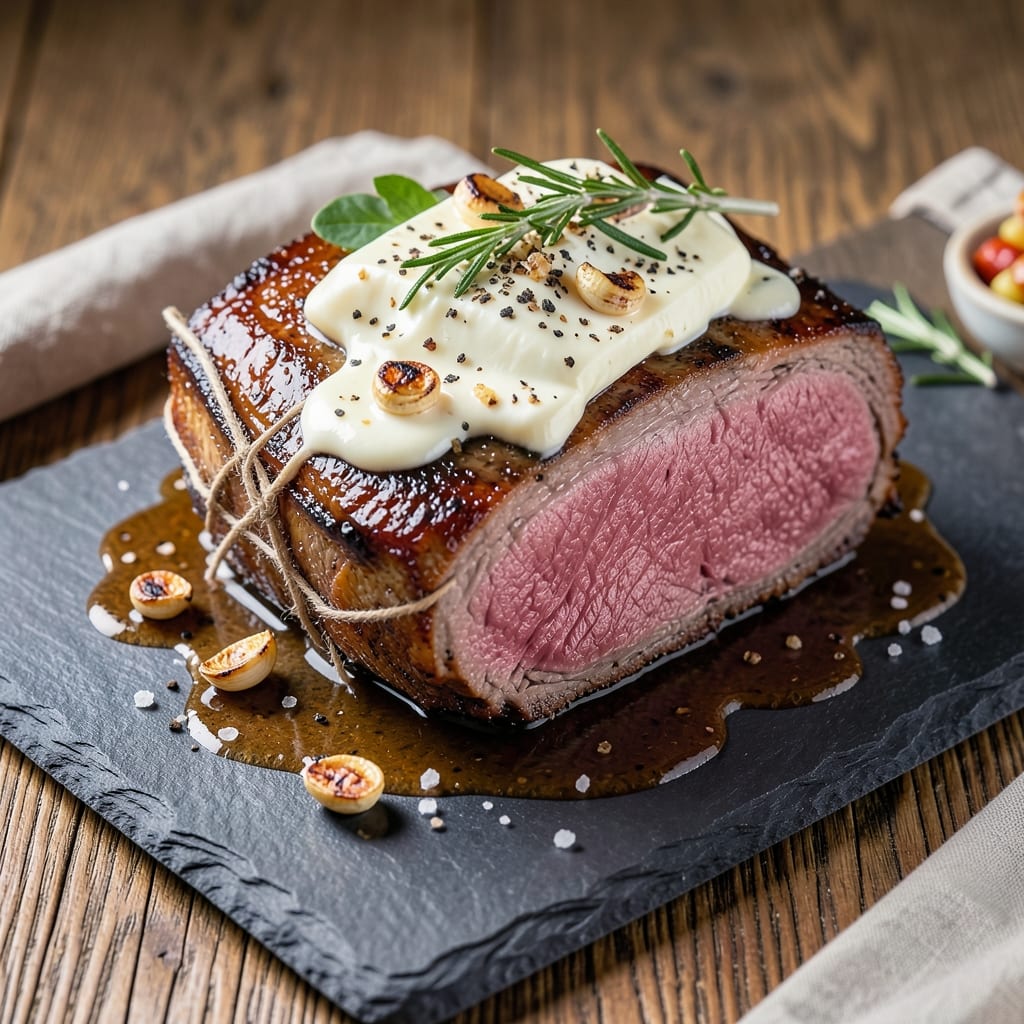
This Angus beef ribeye roast recipe delivers the perfect balance of a blade-tender crust and a buttery core—exactly what makes a premium steak unforgettable. The secret lies in dry-brining, reverse searing, and precise temperature control to ensure every slice melts in your mouth while maintaining that coveted caramelized exterior. I’ve perfected this method over years of holiday dinners, where it becomes the centerpiece of the meal without requiring hours of fuss.
The process starts with a 24-hour dry brine that transforms the beef’s surface, locking in moisture and enhancing flavor. Then, a low-and-slow oven roast ensures even cooking, followed by a high-heat sear to create that irresistible crust. This technique guarantees medium-rare perfection—135°F internal temperature—where the fat remains velvety and the meat stays juicy. Optional basting with garlic butter adds an extra layer of richness that elevates the dish from exceptional to restaurant-worthy.
What you’ll end up with is a showstopping roast that slices effortlessly, revealing a deep pink center and a crispy, golden-brown exterior. The aroma alone will have everyone gathering at the table, and the first bite delivers that perfect harmony of texture and flavor that makes Angus beef worth every penny. Pair it with roasted heritage potatoes or a bold red wine reduction to complete the experience.
This isn’t just a recipe—it’s a weekend project that turns a simple roast into a memorable centerpiece. Whether you’re hosting a holiday feast or treating yourself to a special dinner, this method ensures foolproof results that will impress even the most discerning guests. Let’s get started on creating a roast that’s worth the wait.
Ingredients for angus beef ribeye roast
Six premium ingredients transform a simple roast into a restaurant-worthy centerpiece.
| Ingredient | Amount | Notes |
|---|---|---|
| Angus Beef Ribeye Roast 🥩 | 4 lb | Bone-in preferred, 1-1.5 inches thick |
| Kosher Salt 🧂 | 1 tbsp | Diamond Crystal preferred |
| Freshly Ground Black Pepper 🌶️ | 1 tsp | Coarse grind for texture |
| Unsalted Butter 🧈 | ½ cup | Cold, cubed for basting |
| Garlic Cloves 🧄 | 6 cloves | Minced for butter compound |
| Fresh Rosemary 🌿 | ¼ cup | Chopped, organic preferred |
| Fresh Thyme 🌿 | ¼ cup | Leaves only, stems removed |
| Extra-Virgin Olive Oil 🫒 | 2 tbsp | For searing and basting |
| Red Wine Reduction 🍷 | ½ cup | Optional finishing sauce |
| Heritage Potatoes 🥔 | 2 ½ lb | Yukon Gold or Russet, quartered |
| Yellow Onion 🧅 | 1 whole | Thinly sliced for garnish |
The Angus beef ribeye is non-negotiable here—look for USDA Prime certification and marbling throughout the cut. Costco or specialty butchers like Snake River Farms carry the best quality, but any reputable grocery store with a good meat department will have a suitable option. A 4-pound bone-in roast balances yield and tenderness; trim excess fat to ¼-inch thickness for even cooking. For the dry brine, Diamond Crystal kosher salt dissolves more easily than table salt, creating a superior crust. Fresh herbs are a must—organic rosemary and thyme from the grocery store’s produce section (not the dried aisle) provide that vibrant, restaurant-quality aroma.
No kosher salt? Diamond Crystal is essential—substitute with 1.5 tsp table salt, but expect slightly less crust development. Running short on fresh herbs? Dried rosemary at ¼ the amount works in a pinch, but the flavor won’t be as bright. The red wine reduction can be swapped for a balsamic glaze (simmer ½ cup balsamic vinegar with 1 tbsp brown sugar) if you’re avoiding alcohol. For the potatoes, Yukon Golds hold their shape better than Russets when roasted alongside the beef. Pre-slice them before roasting to ensure even cooking—no need to peel unless you prefer a smoother texture. The garlic butter compound is where flavor magic happens; don’t skip the mincing—a microplane works best for fine, even texture.
Store the raw roast uncovered on a wire rack in the fridge for 24 hours before cooking—this is critical for the dry brine to work. Once cooked, slice against the grain and serve immediately for the best texture. Leftovers keep for 3-4 days in the fridge, but reheating can dry out the meat—wrap tightly in foil and reheat in a 350°F oven for 15 minutes. The herb butter can be made 2 days ahead and stored in the fridge; bring it to room temperature before basting. For a holiday feast, double the herb butter and potatoes—this recipe scales beautifully for 8-10 servings with minimal adjustments.
Why You'll Love This Recipe
- Foolproof Roast: I swear by this method—just a dry rub of salt and pepper, a sear in butter, and garlic tucked into the crevices. No fancy tools, no second-guessing.
- Butter-Basted Magic: That crispy crust with tender, juicy meat inside? The butter basting while it roasts does all the heavy lifting. Honestly, I’ve tried fancy marinades—this beats them every time.
- Leftovers That Shine: Slice it thin for sandwiches the next day or cube it into a hearty beef hash. It’s the kind of roast that turns into multiple meals without feeling like a chore.
- Weeknight Hero: Between us, this is my go-to when I don’t want to fuss. Thirty minutes in the oven, and dinner’s done—no last-minute takeout calls. (Yes, even on a Tuesday night.)
Step-by-step instructions for perfectly roasted ribeye roast
Master this technique and you'll achieve a ribeye roast with a blade-tender crust and buttery core every time.
Prepare and Season the Roast
Remove the 4 lb Angus Beef Ribeye Roast from the refrigerator and pat it completely dry with paper towels. This drying step is critical—it allows for maximum browning and crisping of the crust. I press down firmly on all sides, especially the thickest portions, to ensure no moisture remains trapped.
In a small bowl, combine the 1 tbsp Kosher Salt and 1 tsp Freshly Ground Black Pepper. Rub this mixture evenly over the entire surface of the roast, pressing it into the meat so it adheres well. Pay special attention to the fat cap and edges where seasoning often gets missed. Let the seasoned roast sit at room temperature for 30 minutes before roasting—this ensures even cooking from edge to center.
Sear the Roast for Maximum Flavor
Preheat your oven to 425°F with a rack positioned in the lower third. Heat a large oven-safe skillet over high heat and add the 2 tbsp Extra-Virgin Olive Oil. Once the oil shimmers, place the roast fat-side down in the skillet and sear for 4-5 minutes until the fat renders and the bottom develops a deep golden-brown crust.
Flip the roast and sear the other side for another 4-5 minutes. The goal is to create a flavorful crust while keeping the interior cool enough to cook through evenly in the oven. Transfer the skillet to the preheated oven and roast for 25-30 minutes, or until the internal temperature reaches 130°F (medium-rare). I use a meat thermometer inserted into the thickest part of the roast to monitor this precisely.
Create the Herb Butter Basting Compound
While the roast is searing, prepare the basting compound by combining the 0.5 cup Unsalted Butter, 6 cloves Garlic Cloves (minced), 0.25 cup Fresh Rosemary (chopped), and 0.25 cup Fresh Thyme (leaves only) in a small bowl. Mix well to distribute the herbs evenly throughout the butter. This compound will infuse the roast with aromatic flavors while keeping it moist.
Once the roast has reached 130°F, remove it from the oven and transfer it to a cutting board. Spoon the herb butter mixture over the top of the roast, making sure it coats all surfaces. Return the roast to the oven and continue roasting for another 15-20 minutes, basting with additional herb butter every 5 minutes, until the internal temperature reaches 135°F. This basting step ensures a rich, flavorful crust while maintaining the roast's tenderness.
Rest and Slice for Optimal Texture
Once the roast reaches 135°F, remove it from the oven and tent loosely with aluminum foil. Let it rest for 15-20 minutes before slicing. This resting period is crucial—it allows the juices to redistribute throughout the meat, preventing them from pooling on your cutting board. The roast's internal temperature will rise to 140-145°F during this time, resulting in a perfectly medium-rare finish.
Slice the roast against the grain into ½-inch thick portions. The slices should be tender enough to cut easily with a sharp knife but still retain their shape. Serve immediately with the 0.5 cup Red Wine Reduction spooned over the top and the 1 whole Yellow Onion (thinly sliced) and 2.5 lb Heritage Potatoes (roasted or mashed) on the side. The combination of the buttery crust, tender meat, and aromatic herbs creates a restaurant-quality dining experience at home.
Pro Tips For Making Angus Beef Ribeye Roast
- CRANK THE HEAT FIRST: High heat for the first 5 minutes—seriously, crank it up to 475°F. This sears the ribeye’s surface fast, locking in juices and building that crust we all crave. (Yes, even if you’re impatient like me, resist the urge to rush this part.)
- SALT THE MEAT 24 HOURS EARLY: I learned this the hard way—dry-brining the ribeye overnight with kosher salt (about 1 teaspoon per pound) keeps it juicy and lets the crust form better. Skip this, and you’ll end up with a dry exterior that sticks to the pan like glue.
- USE COLD BUTTER, NOT MELTED: Toss the roast with cold, cubed unsalted butter and crushed garlic cloves right before roasting. The butter melts into a flavor bomb as it cooks, but if you use melted butter, it just pools at the bottom of the pan—wasted.
- LET IT REST UNDER FOIL: After pulling the roast from the oven, tent it loosely with foil and let it sit for 15 minutes. This keeps it warm while the juices redistribute—cutting into it too soon means dry slices. (Your future self will thank you.)
Creative variations of this recipe
Herb-Infused Variations
Swap the rosemary and thyme for fresh sage and black pepper to create a classic Italian-inspired roast. Use 2 tbsp chopped sage and 1 tsp cracked black peppercorns (lightly toasted) instead of the original herbs. This variation pairs beautifully with a balsamic glaze instead of red wine reduction. For a Mediterranean twist, add 1 tbsp chopped oregano and 1 tsp lemon zest to the herb butter—this brightens the flavor profile perfectly. 🌿
Spicy Cajun Crust
Transform your ribeye into a Cajun-style roast by mixing 1 tbsp Cajun seasoning (like Tony Chachere’s) with the kosher salt before dry-brining. For extra heat, add ½ tsp cayenne pepper to the herb butter. Serve with cornbread and collard greens for a full Southern feast. This version is ideal for those who love bold, smoky flavors with a kick. 🌶️
Garlic and White Wine Reduction
Elevate the finishing sauce by making a garlic-white wine reduction instead of the classic red wine version. Sauté 4 minced garlic cloves in 2 tbsp olive oil until golden, deglaze with ½ cup dry white wine, then reduce by half with 1 tbsp butter. Finish with a pinch of salt and black pepper. This sauce adds a sophisticated, bright contrast to the rich beef. 🍷
Smoked Paprika Dry Rub
For a smoky depth, replace the herb butter with a smoked paprika dry rub. Mix 1 tbsp kosher salt, 1 tsp smoked paprika, ½ tsp garlic powder, and ½ tsp onion powder, then coat the roast thoroughly before searing. Baste with garlic butter during the final roasting stage. This variation works exceptionally well with charred corn and black beans as sides. 🔥
Beer-Basted Ribeye
Infuse the roast with malty beer flavors by basting it with a stout or porter reduction. Simmer ½ cup beer with 2 tbsp butter and 1 tbsp brown sugar until reduced by half. Brush this glaze over the roast during the last 10 minutes of cooking. The caramelized beer adds a rich, slightly sweet contrast to the beef’s natural richness. 🍺
Holiday Glaze Options
For festive occasions, try a honey-mustard glaze by combining 2 tbsp honey, 1 tbsp Dijon mustard, and 1 tbsp apple cider vinegar, then reducing until syrupy. Drizzle over the sliced roast before serving. Another crowd-pleaser is a chocolate-peppercorn glaze—melt ¼ cup dark chocolate with 2 tbsp heavy cream and 1 tbsp crushed peppercorns, then drizzle over the top. These glazes add a decadent, unexpected twist to your roast. 🎄
Nutrition facts
Frequently asked questions
Can I cook this ribeye roast without a meat thermometer?
You can estimate doneness using the touch test, but it's less precise. For medium-rare, press your finger gently on the roast—it should feel like pressing your thumb against your palm (firm but yielding). For medium, it should feel like pressing your thumb against your index finger (softer). Remember, the roast will rise 5-10°F while resting, so aim for slightly lower internal temps if using this method.
How far ahead can I prepare the herb butter?
The herb butter can be made 2 days ahead and stored in the fridge. Bring it to room temperature before basting to ensure even coating and proper flavor infusion. For best results, mix the butter and herbs just before the final basting stage if cooking the same day.
What if my roast comes out unevenly cooked?
Uneven cooking often happens if the roast wasn't at room temperature or if the oven temp fluctuated. For next time, let the roast sit uncovered on a wire rack for 30 minutes before cooking, and use an oven thermometer to verify your oven's accuracy. If this happens, slice the roast and serve the more done portions first while finishing the undercooked slices in a 400°F oven for 5-10 minutes.
Can I use a different cut of beef for this recipe?
While ribeye is ideal for its marbling and flavor, you can use strip loin or New York strip as substitutes. These cuts have slightly less fat but still deliver excellent results. Avoid leaner cuts like sirloin or flank—they won't yield the same tender, juicy texture. If substituting, reduce cooking time by 5-10 minutes since they cook faster.
How do I reheat leftover ribeye roast?
Reheat slices in a 350°F oven for 10-15 minutes wrapped tightly in foil with a splash of beef broth to maintain moisture. For quick reheating, use a skillet over medium heat for 1-2 minutes per side—just enough to warm through without overcooking. Never microwave, as it can dry out the meat.