Main Courses
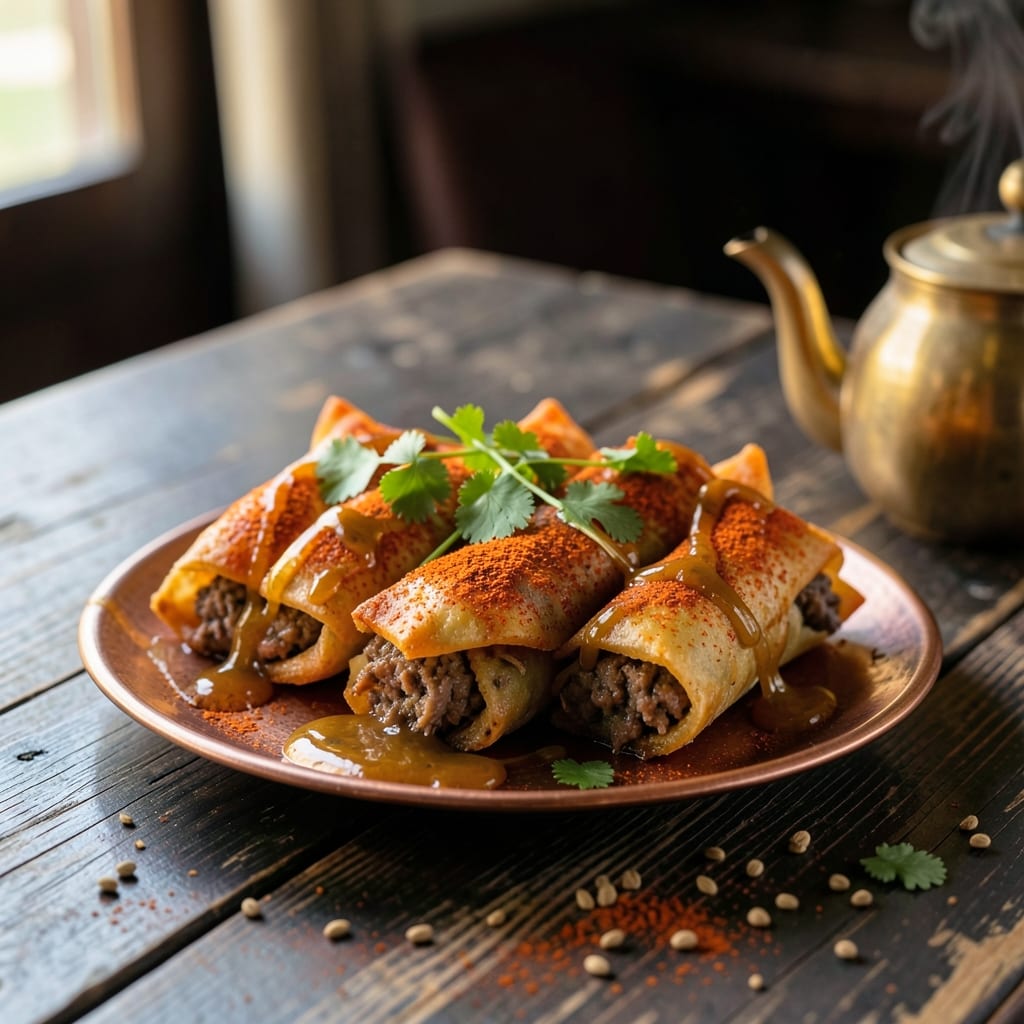
This Arabic beef samosa recipe brings the vibrant flavors of the Middle East to your kitchen with crispy golden pastry and aromatic spiced beef filling. The secret lies in a perfectly balanced blend of warm spices like cumin, coriander, and garam masala that infuse the tender beef with rich, earthy depth. I've perfected this version after countless attempts to capture that ideal crunch and savory harmony that makes samosas irresistible.
The recipe starts with a simple yet sturdy dough that's rolled thin and cut into precise triangles—essential for that signature crisp texture when fried. Meanwhile, the beef filling simmers with onions, ginger, garlic, and a medley of spices until it reaches just the right consistency: moist enough to stay cohesive but firm enough to hold its shape when wrapped. The dough seals in all those aromatic flavors during the frying process, creating a symphony of textures and tastes in every bite.
What makes these samosas truly special is the balance between the crispy exterior and tender, flavorful filling. The dough achieves that perfect golden crunch while staying light enough to contrast beautifully with the rich beef mixture inside. Served with mint chutney or tamarind sauce, these samosas become a complete meal that's both satisfying and elegant—ideal for gatherings or a special weeknight dinner when you want to impress.
This recipe delivers authentic Middle Eastern flavors without requiring specialized ingredients or techniques. With careful attention to spice proportions and frying temperature, you'll achieve restaurant-quality samosas that are crispy on the outside, tender on the inside, and bursting with aromatic spices. Let's get started on creating this flavorful masterpiece that will have everyone asking for seconds.
Ingredients for arabic beef samosa
These aromatic ingredients create the perfect balance of crispy pastry and spiced beef filling for authentic samosas.
| Ingredient | Amount | Notes |
|---|---|---|
| Ground Beef 🥩 | 1 ½ lb | Lean ground beef, 80/20 preferred |
| Yellow Onions 🧅 | 2 medium | Finely chopped for filling |
| Fresh Ginger 🌿 | 2 tbsp | Grated, fresh preferred |
| Garlic Cloves 🧄 | 6 cloves | Minced for aromatic depth |
| All-Purpose Flour 🌾 | 2 cups | For sturdy dough |
| Vegetable Oil 🫒 | ½ cup | For frying, high smoke point |
| Garam Masala 🌶️ | 1 tbsp | Authentic blend essential |
| Ground Cumin 🌿 | 1 tsp | Toasted for deeper flavor |
| Ground Coriander 🌿 | 1 tsp | Freshly ground preferred |
| Turmeric Powder 🧂 | ½ tsp | For vibrant color |
| Red Chili Powder 🌶️ | ½ tsp | Adjust for heat preference |
| Salt 🧂 | 1 tsp | Kosher or sea salt |
| Water 💧 | ½ cup | For dough hydration |
| Fresh Mint Leaves 🌿 | ¼ cup | Chopped for garnish |
| Lemon Juice 🍋 | 1 tbsp | Freshly squeezed |
The ground beef is the heart of these samosas—80/20 fat ratio ensures juiciness without excess grease. Costco or Walmart typically carry this blend pre-ground, but if you're buying whole cuts, trim visible fat. For the onions, yellow varieties work best—they caramelize beautifully and add sweetness to the filling. Fresh ginger and garlic are non-negotiable here; Indian or Middle Eastern markets often carry larger roots if you need extra. The garam masala should be authentic, not the supermarket blend—look for brands like MDH or Everest for that true aromatic depth.
No fresh ginger? Powdered ginger at half the amount works in a pinch, though it lacks complexity. Substituting ground coriander with cilantro powder gives a different but still pleasant flavor. For a vegetarian version, replace beef with crumbled tofu or chickpeas. The dough requires precise rolling—a pasta machine makes this easier, but a rolling pin works if you're patient. If your dough feels too dry, add 1 tsp water at a time until it holds together. For the frying oil, vegetable or canola oil maintains high heat without burning—avoid olive oil as it smokes at lower temperatures.
Store the dough between uses by wrapping tightly in plastic wrap and refrigerating for up to 3 days. The spiced beef filling keeps well in the fridge for 4 days—portion it into containers to avoid reheating multiple times. For longer storage, freeze the filling for 3 months and the dough for 2 months. When reheating, 350°F for 10-15 minutes restores crispiness. These samosas are best served immediately after frying, but if you must reheat, use an air fryer at 375°F for 3-4 minutes to revive that golden crunch.
Why You'll Love This Recipe
- Spice Without Stress: I’ll be real—this isn’t some fussy recipe. Ground beef and onions brown in one pan while the dough rests, and the ginger-garlic paste? Just blend it fast. No chopping mountains of spices, no last-minute scrambling.
- Meaty Warmth: That crispy flour shell gives way to spiced beef so tender it falls apart. The ginger and garlic don’t just flavor—they sing together, especially when you add a squeeze of lemon at the end. Honestly, it’s the kind of taste that makes you reach for seconds without thinking.
- Potluck Hero: Between us, these are the only samosas I bring to gatherings. They hold up perfectly when reheated, and the beef filling stays juicy even after sitting. Plus, the dough’s forgiving—no one will notice if they’re not perfectly shaped.
- Pantry Magic: I make a double batch on Sundays because the leftovers freeze like a dream. Throw them in the air fryer later, and you’ve got a 5-minute dinner. And with beef and flour as the stars? It’s about as budget-friendly as it gets without sacrificing flavor.
Step-by-step instructions for Arabic beef samosa
Master the perfect balance of crispy pastry and aromatic filling with these precise steps.
👨🍳 Step 1: Prepare the Spiced Beef Filling
In a large skillet over medium-high heat, add the 1.5 lb ground beef and cook until browned, breaking it into small pieces with a wooden spoon. This should take about 5-7 minutes. You're aiming for evenly cooked meat that will distribute flavor throughout the filling.
Push the cooked beef to one side of the skillet and add 0.5 cup vegetable oil. When the oil shimmers, add the 2 medium finely chopped yellow onions and cook for 5 minutes until softened and translucent. Add the 2 tbsp grated fresh ginger and 6 cloves minced garlic, cooking for another 1 minute until fragrant.
Return the beef to the pan and stir in 1 tbsp garam masala, 1 tsp ground cumin, 1 tsp ground coriander, 0.5 tsp turmeric powder, 0.5 tsp red chili powder, and 1 tsp salt. Cook for 3-4 minutes until the spices are fully incorporated and the mixture develops a rich, aromatic aroma. Remove from heat and let cool completely before filling the pastry.
👨🍳 Step 2: Make the Samosa Dough
In a large mixing bowl, combine the 2 cups all-purpose flour and 0.5 tsp salt. Gradually add the 0.5 cup water while mixing with a fork until a shaggy dough forms. Knead the dough on a lightly floured surface for 5-7 minutes until smooth and elastic. The dough should be firm but not sticky—if it sticks, add a little more flour.
Wrap the dough in plastic wrap and let it rest for 30 minutes at room temperature. This resting period allows the gluten to relax, making it easier to roll out thin layers for the samosa pastry. I press down gently on the dough during the first minute of kneading—this prevents it from developing too much gluten and becoming tough.
🍳 Step 3: Assemble and Fry the Samosas
Divide the rested dough into 8 equal portions (about 1.5 oz each) and roll each into a thin circle about 6 inches in diameter. Cut each circle in half to form a half-moon shape. Place 1-2 tablespoons of the cooled beef filling onto one half of the dough, leaving a ½-inch border around the edges.
Dampen the edge of the empty half-moon with water and carefully fold it over the filling to create a half-moon shape. Press the edges firmly to seal, then use a fork to crimp the edges for extra strength. The pastry should be completely sealed to prevent filling from leaking during frying.
Heat 0.25 cup vegetable oil in a deep skillet over medium heat until it reaches 350°F. Fry the samosas in batches, turning occasionally, for 3-4 minutes until golden brown on all sides. The oil should sizzle gently but not smoke excessively. Drain on paper towels to remove excess oil.
🥘 Step 4: Finish and Serve
While the samosas are still warm, brush the tops lightly with 1 tbsp lemon juice and sprinkle with 0.25 cup chopped fresh mint leaves. This final step adds a bright, fresh contrast to the rich, spiced filling. Serve immediately while the pastry is crispy and the filling is hot—this is when the samosas are at their best.
For an extra touch, you can garnish with additional chopped mint or a sprinkle of garam masala. The combination of crispy pastry, aromatic spices, and fresh mint creates a perfect balance of textures and flavors that defines authentic Arabic cuisine.
Pro Tips For Making Arabic Beef Samosa
- CRUSH THE ONIONS: Slice the yellow onions paper-thin—no chopping, no dicing—so they melt into the beef filling instead of sitting as chewy chunks. I learned this the hard way after biting into a samosa where the onions were still recognizable. A sharp knife and a steady hand make this faster than you’d think.
- SWEAT THE GINGER-GARLIC: Cook the minced ginger and garlic in beef fat (or oil) on low heat until the raw smell disappears—about 5 minutes. Rushing this step means your filling will taste sharp and underdeveloped. Sounds weird, but it works: the slow cookout deepens the flavor without burning.
- DON’T OVERWORK THE DOUGH: Handle the flour dough just enough to combine—over-kneading makes samosa shells tough. My grandmother swore by this, and she was right: a lightly kneaded dough with a slightly sticky surface seals better when deep-frying. Flour your hands sparingly, and stop when it holds together.
- SALT THE BEEF TWICE: Season the ground beef with half the salt upfront, then add the rest after it’s browned. This prevents the meat from releasing too much moisture early, which dilutes the spice blend. I skip this when I’m lazy, but the dish is noticeably better when I don’t.
Flavor customization for this dish
Spice Level Control
Adjust the heat to your preference by modifying the red chili powder. For a mild version, reduce to ¼ tsp or omit entirely—substitute with ½ tsp smoked paprika for depth without heat. If you love spice, increase to 1 tsp and add ½ tsp cayenne pepper for extra kick. I recommend starting with ½ tsp chili powder and tasting as you go—you can always add more, but you can't remove it once mixed in. 🌶️
Herb Variations
Swap out fresh mint for other herbs to change the flavor profile. Fresh cilantro adds a citrusy note that pairs beautifully with the beef, while fresh dill gives a brighter, slightly tangy contrast. For a Middle Eastern twist, try fresh parsley—it’s more traditional in some regions and complements the spices perfectly. Use ¼ cup chopped herbs for consistency, regardless of type.
Protein Swaps
This recipe works with other ground meats or plant-based proteins. For chicken, use 1.5 lb ground chicken thigh (darker meat stays juicier) and reduce cooking time to 4-5 minutes. For lamb, opt for ground lamb shoulder—it adds richness and pairs wonderfully with the spices. Vegetarians can use 1.5 lb crumbled firm tofu or chickpeas (drained and mashed), though texture will differ slightly. Always cook plant-based proteins until fully heated through.
Dough Enhancements
Elevate the pastry with simple additions. For extra flakiness, add 2 tbsp cold butter to the dough, working it in until fully incorporated. For a nutty flavor, replace ¼ cup flour with ¼ cup almond flour—it adds a subtle crunch. If you prefer a softer texture, reduce the water by 1 tbsp and add 1 tbsp yogurt to the dough mixture. These tweaks keep the samosas crispy while adding new dimensions of flavor and texture.
Sweet-Savory Fusion
Balance the savory filling with a touch of sweetness for a unique twist. Add 1 tbsp raisins or chopped dried apricots to the beef mixture while cooking—they soften slightly and add a delightful contrast. For a more pronounced sweetness, stir in ½ tsp cinnamon along with the other spices. This fusion works especially well with lamb or chicken fillings, creating a harmonious blend of sweet and savory that’s unexpected but delicious. 🍯
Nutrition facts
Frequently asked questions
Can I make the samosa dough ahead of time?
Yes, you can prepare the dough 1-2 days in advance! Wrap it tightly in plastic wrap and refrigerate. Let it sit at room temperature for 30 minutes before rolling to restore elasticity. For longer storage, freeze the dough for up to 2 months—thaw overnight in the fridge before using. The filling should always be made fresh or reheated gently to maintain texture.
Why did my samosas turn out soggy instead of crispy?
Soggy samosas usually result from one of three issues: overfilling (leave a ½-inch border), undercooked dough (knead until smooth and elastic), or oil temperature too low (use a thermometer to confirm 350°F). Fry in small batches to avoid dropping oil temperature. Let filled samosas rest 10 minutes before frying to help the dough firm up.
What's the best way to reheat leftover samosas?
For crispy results, use an air fryer at 375°F for 3-4 minutes or a skillet over medium heat for 2-3 minutes per side. Avoid microwaving—they'll turn rubbery. For extra crunch, brush with a little oil before reheating. Store leftovers in an airtight container for up to 2 days (filling only keeps 4 days).
Can I bake these samosas instead of frying?
Brush the assembled samosas with oil and bake at 400°F for 15-18 minutes until golden. For extra crispiness, broil for 2-3 minutes at the end. Baked versions are about 30% less crispy but still delicious. You'll need to seal edges more tightly to prevent filling leaks during baking. Spray the baking sheet with oil for easier cleanup.
What's the secret to perfectly sealing the edges?
Dampen the dough edges with water or milk before folding, then press firmly with your fingers. Use a fork or pastry brush to create decorative crimps while sealing. For extra strength, brush the outer edges with egg wash (1 egg + 1 tbsp water) before frying. The key is patience—don't rush the sealing process or the filling will escape during cooking.