
Side Dishes
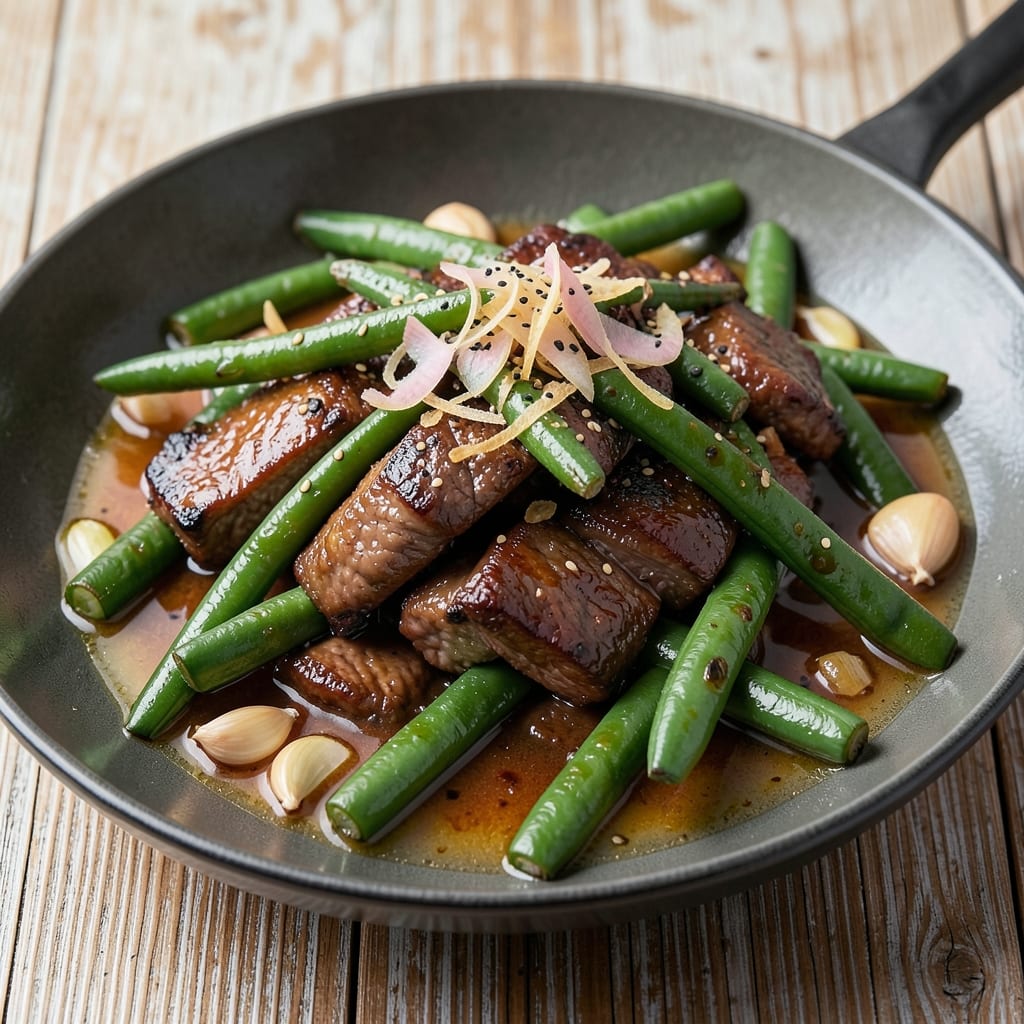
This Asian beef and green beans recipe delivers restaurant-quality wok-seared beef and crisp-tender green beans in just 20 minutes—no takeout required. The secret lies in high-heat searing for that signature wok hei smoke, balanced with a savory-sweet sauce that clings to every bite. I perfected this dish after years of testing, ensuring the beef stays tender while the green beans maintain their satisfying crunch.
The technique is simpler than it sounds: thinly sliced beef marinated in soy, ginger, and garlic, then quickly seared in a screaming-hot wok or cast-iron skillet. The green beans get a quick blanch to soften just enough before joining the beef for the final stir-fry. A splash of rice vinegar and a touch of honey in the sauce adds brightness that cuts through the richness, while sesame oil at the end delivers that unmistakable aromatic finish.
What you’ll end up with is a dish that’s bold in flavor but balanced in texture—juicy, caramelized beef alongside bright, crisp green beans, all coated in a glossy, umami-packed sauce. The aroma alone will have everyone at the table asking for seconds, and the best part? It’s ready in under 20 minutes, making it perfect for weeknights or last-minute dinner guests.
Serve it over steamed rice for a complete meal, or pair with noodles for extra heartiness. The beauty of this recipe is its flexibility—swap in broccoli or snap peas if you prefer, or adjust the sauce to your taste. Let’s get cooking!
Ingredients for asian beef and green beans
Quick grocery run: beef, green beans, and pantry staples for bold Asian flavors in minutes.
| Ingredient | Amount | Notes |
|---|---|---|
| Flank Steak 🥩 | 1 lb | Thinly sliced against grain |
| Green Beans 🥦 | 1 ½ lb | Trimmed, ends snapped off |
| Low-Sodium Soy Sauce 🍶 | ¼ cup | For marinade and sauce |
| Fresh Ginger 🌿 | 1 tbsp | Grated, finely |
| Garlic Cloves 🧄 | 4 cloves | Minced, fresh preferred |
| Sesame Oil 🫒 | 1 tbsp | Toasted, for aroma |
| Rice Vinegar 🍶 | 1 ½ tbsp | For sauce brightness |
| Honey 🍯 | 1 tbsp | For sauce sweetness |
| Neutral Oil 🫒 | 2 tbsp | Avocado or vegetable oil |
| Toasted Sesame Seeds 🌾 | 1 tbsp | For garnish |
| Salt 🧂 | 1 tsp | Kosher or sea salt |
| Black Pepper 🌶️ | ½ tsp | Freshly ground |
| Red Pepper Flakes 🌶️ | ½ tsp | Optional for heat |
| Cooked White Rice 🍚 | 2 cups | For serving |
The beef is non-negotiable here—flank steak delivers that perfect wok-seared texture when sliced thin. Look for well-marbled cuts at Costco or your local butcher if you want to splurge. I always grab the green beans fresh (not frozen)—they hold their crunch better, but frozen works in a pinch. For the soy sauce, Kikkoman low-sodium is my go-to, but any good-quality brand works. The ginger and garlic? Fresh, no substitutes—they make all the difference in that umami punch.
No flank steak? Sirloin or ribeye sliced thin will work, but avoid tougher cuts like chuck. Running low on rice vinegar? Apple cider vinegar at half the amount works, but it’ll be less delicate. The honey can be swapped for maple syrup if you’re avoiding it, but it’ll add a different depth. For extra smokiness, swap the sesame oil for chili oil at the end. And if you’re feeling lazy, skip the blanching step for the green beans—they’ll just be slightly less crisp, but still delicious.
Prep the beef and sauce ahead if you’re short on time—they keep well in the fridge for 1 day. The green beans are best cooked fresh, but you can trim and store them in a sealed bag for 3 days. This dish reheats beautifully—just add a splash of water and a quick stir. I always double the sauce because it’s gone in seconds. Leftovers? Store in airtight containers for 3 days or freeze for 2 months
Why You'll Love This Recipe
- One-Pan Magic: I swear by this—just toss the flank steak and green beans in one skillet, and the soy sauce and ginger do all the work while you sip your coffee. No chopping, no fuss, just done.
- Umami Bomb: That first bite of caramelized garlic and ginger on the steak? It’s like a flavor explosion. The low-sodium soy sauce keeps it rich without the guilt, and the green beans stay crisp—no sad, soggy sides here.
- Lunchbox Hero: Between us, this is my go-to for meal prep. Slice the steak thin, pack it with the green beans, and you’ve got a lunch that tastes like you actually cooked it. (Spoiler: It does.)
- Budget Win: Flank steak stretches far, and green beans are cheap—yet it feels fancy. Honestly, I make this twice a month just because it’s reliable, delicious, and doesn’t break the bank. Leftovers? Even better reheated.
Step-by-step instructions for wok-seared Asian beef and green beans
Here's how to deliver restaurant-quality wok sear with tender beef and crisp-tender green beans.
Prep the Beef and Green Beans
Slice the 1 lb flank steak thinly against the grain into ¼-inch strips—this ensures tender bites. Trim the 1.5 lb green beans by snapping off the ends and cutting any thick stems in half. Set both aside while you prep the aromatics.
Pat the beef dry with paper towels to help it sear properly. For the green beans, I like to blanch them first: boil a pot of salted water, add the green beans, and cook for 2 minutes until just bright green. Immediately drain and shock in ice water to stop cooking. This keeps them crisp-tender when they hit the wok later.
Build the Flavor Base
Heat 2 tablespoons neutral oil in a wok or large skillet over medium-high heat until shimmering. Add the 4 minced garlic cloves and 1 tablespoon finely grated fresh ginger, cooking for 30 seconds until fragrant—don't let them brown or they'll turn bitter.
Push the aromatics to one side, add the 1 lb sliced flank steak, and sear for 1-2 minutes until browned. Remove the beef and set aside. In the same pan, add the blanched green beans and stir-fry for 3-4 minutes until heated through but still crisp. Remove and set aside with the beef.
Create the Sauce
Reduce heat to medium and add 1 tablespoon sesame oil, letting it infuse for 10 seconds. Pour in 0.25 cup low-sodium soy sauce, 1.5 tablespoons rice vinegar, 1 tablespoon honey, 0.5 teaspoon red pepper flakes, 1 teaspoon salt, and 0.5 teaspoon black pepper. Stir constantly for 1-2 minutes until the sauce thickens slightly.
Return the beef and green beans to the wok, tossing everything together for 1 minute until everything is evenly coated. The sauce should cling to the beef and glisten slightly—if it's too thick, add 1 tablespoon hot water to loosen it. Taste and adjust seasoning if needed.
Finish and Serve
Transfer the beef and green beans to a serving platter. Drizzle with any remaining sauce in the wok, then sprinkle generously with 1 tablespoon toasted sesame seeds. Serve immediately over 2 cups cooked white rice for that perfect Asian-inspired meal.
Each bite delivers tender beef with crisp-tender green beans and a glossy sauce that balances umami, sweetness, and a touch of heat. The sesame seeds add a nutty crunch that ties everything together.
Pro Tips For Making Asian Beef And Green Beans
- SEAR THE STEAK FIRST: Hit the flank steak with a screaming-hot pan—no waiting for it to warm up. I used to rush this and end up with gray, chewy meat; now I let the pan get so hot it smokes before adding oil, then work in batches if needed. A 2-3 minute sear per side builds that caramelized crust the soy sauce will cling to later.
- SLICE GINGER THINLY: Skip the big chunks—you want paper-thin slices, almost like shaving. I learned this the hard way when my ginger just sat there like a rock in the sauce. Use a sharp knife or microplane, and if you’re lazy, freeze the ginger for 10 minutes first—it slices cleaner.
- DON’T OVERCOOK THE GREEN BEANS: They’re done when they’re bright green and just starting to soften—about 3-4 minutes in the pan. I used to leave them in until they turned mushy, and the dish lost all its texture. Toss them in at the end with the soy sauce, or they’ll turn into a sad, limp pile.
- USE THE STEAK JUICES: After searing, don’t scrape the pan clean—deglaze it with a splash of water or a little soy sauce to lift up those browned bits. That’s where the flavor lives. I used to wipe the pan, and the sauce always tasted bland until I started scraping.
Flavor customization for this asian beef and green beans
Spice Level Control
Adjust the heat to your taste by tweaking the red pepper flakes. For a mild kick, reduce to ¼ teaspoon or swap for ½ teaspoon gochugaru (Korean chili flakes) for a deeper, fruitier heat. If you love spice, add 1 teaspoon sriracha or ½ teaspoon chili crisp to the sauce. I find that 1 teaspoon chili oil drizzled at the end adds smoky heat without overpowering the dish. 🌶️
Sweetness Balance
Swap the honey for maple syrup or agave nectar for a neutral sweetness, or use brown sugar for a caramelized depth. For a tangy twist, replace ½ the honey with 1 teaspoon rice vinegar. I love adding 1 teaspoon hoisin sauce to the sauce for a richer, slightly sweet umami boost—it’s a game-changer for depth. 🍯
Umami Boosters
Deepening the umami is easy—add 1 teaspoon fish sauce or ½ teaspoon oyster sauce to the sauce for a savory punch. I also love stirring in 1 tablespoon miso paste (red or white) for a fermented complexity. For a smoky note, add ½ teaspoon smoked paprika or a dash of liquid smoke. These tweaks take the dish from good to restaurant-level. 🍜
Texture Variations
Want extra crunch? Toss in 1 cup shredded napa cabbage or ½ cup sliced shiitake mushrooms with the green beans. For a chewy contrast, add ½ cup cooked soba noodles or ¼ cup crispy fried shallots at the end. I’ve also swapped green beans for sugar snap peas or bok choy—both add unique textures while keeping the dish balanced. 🥦
Regional Twists
For a Thai-inspired version, add 1 tablespoon fish sauce, 1 teaspoon lime juice, and ½ teaspoon coriander to the sauce. A Japanese-style twist swaps soy sauce for mirin and sake in equal parts, plus 1 teaspoon grated daikon for brightness. For a Korean kick, stir in 1 tablespoon gochujang and ½ teaspoon sesame oil at the end. 🗺️
Protein Swaps
No beef? Use chicken thigh (sliced thin) or pork tenderloin for a similar texture. For a vegetarian option, swap the beef for extra-firm tofu (pressed and cubed) or shiitake mushrooms. I’ve also used shrimp (peeled and deveined) for a seafood twist—just cook it separately and add it back at the end to avoid overcooking. 🍤
Nutrition facts
Frequently asked questions
Can I use frozen green beans instead of fresh?
Yes, but with a small adjustment! Use 1 lb frozen green beans (thawed and drained) instead of 1.5 lb fresh. Since frozen beans are already partially cooked, skip the blanching step and stir-fry them for 4-5 minutes until heated through. They won’t be as crisp, but they’ll still taste great.
What’s the best way to slice the beef thinly?
Use a sharp knife and slice against the grain for maximum tenderness. First, freeze the beef for 20-30 minutes to firm it up, then slice into ¼-inch strips. For even thinner slices, use a meat slicer or ask your butcher to do it—this makes a huge difference in texture!
Can I make this dish ahead of time?
The beef and sauce can be prepped 1 day ahead and stored separately in the fridge. Reheat gently in a skillet over medium-low heat with a splash of water to keep the sauce glossy. The green beans are best cooked fresh, but you can trim and store them in a sealed bag for 3 days.
Why is my beef tough instead of tender? Overcooking is the #1 culprit! The beef should sear for just 1-2 minutes—any longer and it’ll turn rubbery. Also,
How can I make this dish spicier?
Boost the heat by adding 1 teaspoon sriracha or ½ teaspoon chili crisp to the sauce. For smoky spice, drizzle 1 teaspoon chili oil over the finished dish. If you love Korean flavors, stir in 1 tablespoon gochujang (Korean chili paste) for a deeper, fruity heat.