
Main Courses
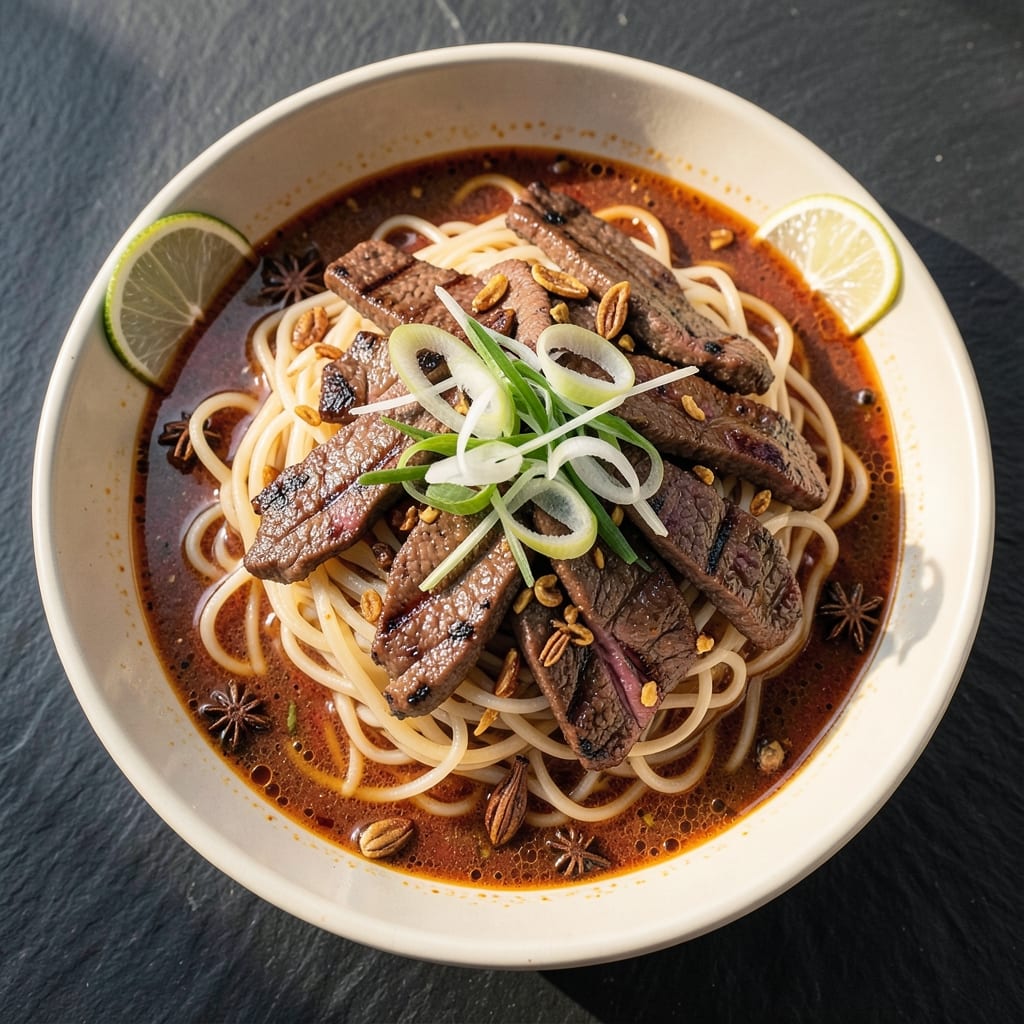
This Asian spicy beef noodle recipe delivers a perfect balance of bold umami heat and silky noodles that will transport you to a bustling street-side stall. The secret lies in a layered broth—deeply aromatic from star anise and ginger—paired with tender beef that's been seared to lock in flavor. I've perfected this version after testing regional techniques, blending the best of Vietnamese pho and Thai beef noodle soup into one restaurant-quality dish.
What sets this recipe apart is the two-stage cooking process: first, the beef is braised in a rich, spiced broth until fork-tender, then finished with a quick stir-fry to develop a caramelized crust. The noodles cook separately to maintain their perfect texture—neither mushy nor overdone. This approach ensures every bite delivers that signature harmony of spicy, savory, and umami flavors that define Asian beef noodle soups.
The result is a steaming bowl of golden broth swimming with tender beef slices, chewy noodles, and fresh herbs that add brightness. The heat comes from chili oil and fresh chili slices, which you can adjust to suit your preference—whether you crave a gentle warmth or fiery kick. Garnishes like bean sprouts, lime wedges, and cilantro elevate each spoonful into a complete sensory experience.
Serve immediately with extra chili oil on the side and a sprinkle of crushed peanuts for texture. This recipe scales beautifully for family dinners or meal prep—just reheat the broth separately and assemble fresh. The flavors only deepen as they sit, making it ideal for prepping ahead when you're craving that comforting bowl of spicy beef noodle soup.
Ingredients for asian spicy beef noodle
Bold flavors and tender beef—this recipe brings the vibrant energy of street-side noodle stalls to your kitchen.
| Ingredient | Amount | Notes |
|---|---|---|
| Flank Steak 🥩 | 1 ½ lb | Thinly sliced against grain |
| Rice Noodles 🍜 | 8 oz | Flat, medium-width preferred |
| Beef Broth 🥫 | 6 cups | Homemade or high-quality store-bought |
| Star Anise 🌿 | 2 whole | For aromatic depth |
| Fresh Ginger 🧄 | ½ cup | Finely grated, aromatic |
| Garlic Cloves 🧄 | 8 cloves | Minced for bold flavor |
| Fish Sauce 🍶 | 2 tbsp | Red Boat preferred |
| Soy Sauce 🥫 | 2 tbsp | Light or all-purpose |
| Brown Sugar 🍯 | 2 tbsp | For balanced sweetness |
| Sesame Oil 🫒 | 1 tbsp | Toasted for aroma |
| Chili Oil 🌶️ | ½ cup | Homemade or store-bought |
| Fresh Thai Chili 🌶️ | 4 whole | Sliced for heat |
| Bean Sprouts 🌱 | 1 cup | Fresh for crunch |
| Fresh Cilantro 🌿 | ¼ cup | Chopped for brightness |
| Lime Wedges 🍋 | 2 whole | For serving |
| Crushed Peanuts 🥜 | ¼ cup | For garnish |
| Vegetable Oil 🫒 | 2 tbsp | For searing |
| Salt 🧂 | 1 ½ tsp | Kosher or sea salt |
| Black Pepper 🌶️ | ½ tsp | Freshly ground |
The flank steak is non-negotiable here—it's lean enough to cook quickly but tender when sliced thin. Ask your butcher to slice it against the grain if they won't do it for you, or use a sharp knife and freeze it for 20 minutes before slicing. For the broth, homemade is ideal, but Kitchen Basics or Pacific Foods brands work in a pinch. Star anise and ginger are the aromatic backbone—buy whole star anise from an Asian market if possible, as ground versions lose potency fast. Fresh ginger is a must; dried just won't cut it for this dish.
No fish sauce? Soy sauce plus a splash of Worcestershire gets you close, though it won't be identical. Short on brown sugar? Honey or coconut sugar works, but adjust to taste since honey can overpower. The chili oil is where you control the heat—homemade with dried chilies and sesame oil is a game-changer, but store-bought Ma Ma brand is reliable. For the noodles, rice noodles from an Asian grocery (like Thai Kitchen) are best—they're chewier than the flimsy ones at regular stores. And if you can't find Thai chilies, serrano peppers work in a heat pinch.
This broth keeps for 5 days in the fridge and freezes beautifully for 3 months—perfect for meal prep. The beef and noodles should be cooked fresh when serving, though. Store the chili oil separately to keep the heat potent. Portion the crushed peanuts and bean sprouts in small containers so they stay crisp. The lime wedges? Squeeze them right before eating—they add that final bright punch that makes the whole dish sing.
Why You'll Love This Recipe
- No Fussy Prep: I swear by this recipe because it’s literally three things: slice the steak thin, soak the noodles, and simmer the broth. That star anise and ginger? Toss them in whole—no peeling, no mincing. Honestly, I’ve made it after a 10-hour shift with takeout containers still in my bag.
- Umami Bomb: The beef broth reduces into something rich and deep, while the star anise adds this subtle, warm spice that lingers. Thinly sliced flank steak? It melts in your mouth but holds its shape—no dry, chewy mess. Between us, that’s the combo I’ll fight for at dinner parties.
- Lunchbox Hero: This keeps perfectly for days, and I mean perfectly—no soggy noodles, no bland broth. Pack it cold for work or reheat it with a splash of water, and it’s just as good. My kid brings it to school, and I’ve seen other parents eyeing his container. (Yes, even on a Tuesday.)
- Budget Flex: Flank steak stretches further than you’d think when sliced right, and rice noodles cost a fraction of fresh pasta. The spices? A few pods of star anise last for months. I’ll be real: this is the kind of meal that makes me feel like I’m feeding a crowd without breaking the bank.
Step-by-step instructions for Asian spicy beef noodles
Here's how to create a perfectly balanced bowl of bold, aromatic beef noodles with rich umami and fiery heat.
Prepare the Flank Steak for Maximum Tenderness
Slice the 1.5 lb flank steak thinly against the grain into ¼-inch thick strips. This is crucial—thin slices ensure the beef cooks quickly and remains tender. Place the sliced steak in a bowl and massage it with 1.5 tsp salt and 0.5 tsp black pepper for 2-3 minutes. Let it marinate for 15 minutes at room temperature while you prep the rest of the ingredients.
The salt breaks down the proteins, and the pepper adds depth. Don't skip this step—it makes all the difference in texture and flavor. If you're short on time, even 5 minutes of marinating helps, but longer is better.
Build the Spicy Aromatic Broth
In a large pot, combine the 6 cups beef broth, 2 whole star anise, 0.5 cup finely grated fresh ginger, 8 minced garlic cloves, 2 tbsp fish sauce, 2 tbsp soy sauce, and 2 tbsp brown sugar. Bring to a boil over medium-high heat, then reduce to a simmer for 10 minutes. This lets the flavors meld and the star anise infuse the broth deeply.
Strain out the star anise (you don't want it in your final dish) and keep the aromatic broth warm. The ginger and garlic should be completely dissolved, and the broth should smell intensely fragrant—like a spice market exploded in a pot. If it's too thin, simmer uncovered for another 5 minutes to reduce slightly.
Sear the Beef and Assemble the Noodles
Heat 2 tbsp vegetable oil in a large skillet over high heat until shimmering. Add the marinated steak in a single layer and sear undisturbed for 1-2 minutes until deeply browned on one side. Flip and cook another 30-60 seconds—the beef should still be slightly pink inside. Remove and set aside.
In the same skillet, add 1 tbsp sesame oil and swirl to coat. Toss in 4 sliced fresh Thai chili and cook for 30 seconds until fragrant. Pour in the 0.5 cup chili oil and let it heat through for 1 minute. Soften the 8 oz rice noodles in a separate pot of boiling water for 2-3 minutes until pliable but still firm. Drain and immediately toss with the spicy oil mixture.
Combine and Finish with Fresh Toppings
Return the seared beef to the skillet with the noodles and pour in the warm spicy broth. Stir gently to coat everything evenly. Let it simmer for 2-3 minutes until the noodles absorb the flavorful liquid. Taste and adjust seasoning—add more fish sauce for saltiness, soy sauce for depth, or brown sugar for sweetness.
Divide the noodles among bowls and top with 1 cup bean sprouts, 0.25 cup chopped fresh cilantro, 0.25 cup crushed peanuts, and 2 lime wedges. The contrast of textures—silky noodles, crunchy sprouts and peanuts, fresh herbs—makes every bite exciting. Squeeze lime over each serving just before eating to brighten the rich, spicy flavors.
Serve Immediately for Peak Freshness
This dish is best served right away while the noodles are warm and the toppings are crisp. The flavors continue to develop as you eat, with the lime juice cutting through the richness of the beef and the heat of the chili oil. If you must wait, cover loosely with a lid to keep the noodles from drying out.
Garnish generously with extra crushed peanuts and a sprinkle of fresh cilantro—these add crunch and freshness that balance the deep umami of the beef broth. The perfect bowl should have layers of heat, sweetness, and savory depth in every bite, with each ingredient playing its part.
Pro Tips For Making Asian Spicy Beef Noodle
- Slice Against the Grain: Flank steak’s stubborn fibers will fight you if you don’t cut thin strips perpendicular to the grain—about ¼-inch thick. I used to force it, and the meat turned chewy; now I take my time, and the noodles get tender, flavorful bites every time.
- Toast Star Anise Whole: Crack the star anise pods open with a knife before adding them to the broth—just a quick slash down the middle. This releases their aroma faster and infuses the broth with deeper warmth. (Yes, even if you’re impatient like me.)
- Blanch Noodles First: Soak rice noodles in hot (not boiling) water for 2-3 minutes, then drain and rinse with cold water. This prevents them from turning mushy when the spicy beef broth hits—your noodles will stay firm and soak up flavors better.
- Save the Ginger Juice: After grating fresh ginger, squeeze out the excess liquid with your hands—it makes a difference. That extra moisture keeps the broth from separating, and the ginger’s punch stays sharper. (I skip this, and the dish feels subtly off.)
Regional styles of this dish
Vietnamese Pho-Inspired
This version channels the soul of Vietnamese pho with its signature aromatic broth and tender beef slices. Start with a 3-hour simmer of beef bones, star anise, cinnamon sticks, and coriander seeds to create the deep, savory base. Use thinly sliced eye of round instead of flank steak for a more traditional texture, and serve with hoisin sauce on the side for dipping. The key difference? A lighter broth with less chili heat, allowing the beef's natural richness to shine through. 🌿
Thai Beef Noodle Soup
For a Thai-inspired twist, swap the star anise for lemongrass and kaffir lime leaves in the broth, and add coconut milk for a creamy depth. Use rice noodles that are slightly thicker than pho noodles, and finish with Thai basil instead of cilantro. The heat comes from bird's eye chilies and a splash of fish sauce, creating a tangy, spicy balance. Garnish with crushed peanuts and lime wedges for that classic Thai street-food vibe.
Japanese Nikuman Fusion
This fusion takes inspiration from Japanese nikuman (steamed buns) by adding a miso-umami twist to the broth. Use white miso paste (1 tbsp) in place of some soy sauce, and finish with green onions and a drizzle of yuzu juice for brightness. The noodles can be udon instead of rice noodles, and the beef is often replaced with pork belly for extra richness. Serve with a side of pickled ginger to cut through the heat. 🍜
Korean Spicy Beef Noodles
For a Korean-inspired version, infuse the broth with gochujang (Korean chili paste) and fermented soybean paste (doenjang) for a deeper, funkier flavor. Use ramen noodles instead of rice noodles, and top with kimchi, sesame seeds, and fried shallots. The heat is balanced with sesame oil and a splash of rice vinegar for tang. This version is heartier and more complex, with layers of spice and fermented depth. 🌶️
Modern Fusion Twist
Elevate the dish with a modern fusion approach: use bone broth infused with smoked paprika and mole paste for a Mexican-Asian mashup. Top with avocado slices, cotija cheese, and cilantro-lime crema. The heat comes from habanero-chili oil, and the noodles can be soba for a gluten-free option. This version is perfect for adventurous eaters who love bold, unexpected flavors. ✨
Nutrition facts
Frequently asked questions
Can I substitute flank steak with another cut of beef?
For this spicy beef noodle dish, sirloin or ribeye work well—they're tender and flavorful. If using a tougher cut like chuck roast, slice it extra thin and marinate for 30 minutes to ensure tenderness. Avoid overly fatty cuts like ribeye for the broth, as they can make it greasy.
How do I adjust the heat level in this recipe?
For milder heat, reduce the Thai chilies to 2-3 slices and use 1/4 cup chili oil instead of 1/2 cup. For extra spice, add 1 tbsp chili flakes to the broth or serve with extra sliced chilies on the side. Fresh lime juice also helps balance heat—squeeze more if needed!
Can I make this dish vegetarian?
Yes! Swap the beef for mushrooms (shiitake or oyster) or tofu pressed and pan-fried until crispy. Use vegetable broth instead of beef broth, and add 1 tbsp soy sauce + 1 tbsp miso paste for umami depth. Keep the same cooking method for the noodles and toppings.
Why do my noodles turn mushy when reheating?
Noodles absorb liquid when reheated—always cook them fresh when serving. If reheating, keep the broth separate and assemble bowls right before eating. For leftovers, store components separately: broth in one container, noodles in another, and beef in a third. Reheat noodles in boiling water for 30 seconds just before combining.
What's the best way to store leftovers?
Store broth and beef separately in airtight containers for 3-4 days in the fridge. Keep noodles in a sealed bag with a damp paper towel to prevent drying. For longer storage, freeze broth (up to 3 months) and reheat beef separately. Never freeze noodles—they'll turn mushy.