
Soups & Stews
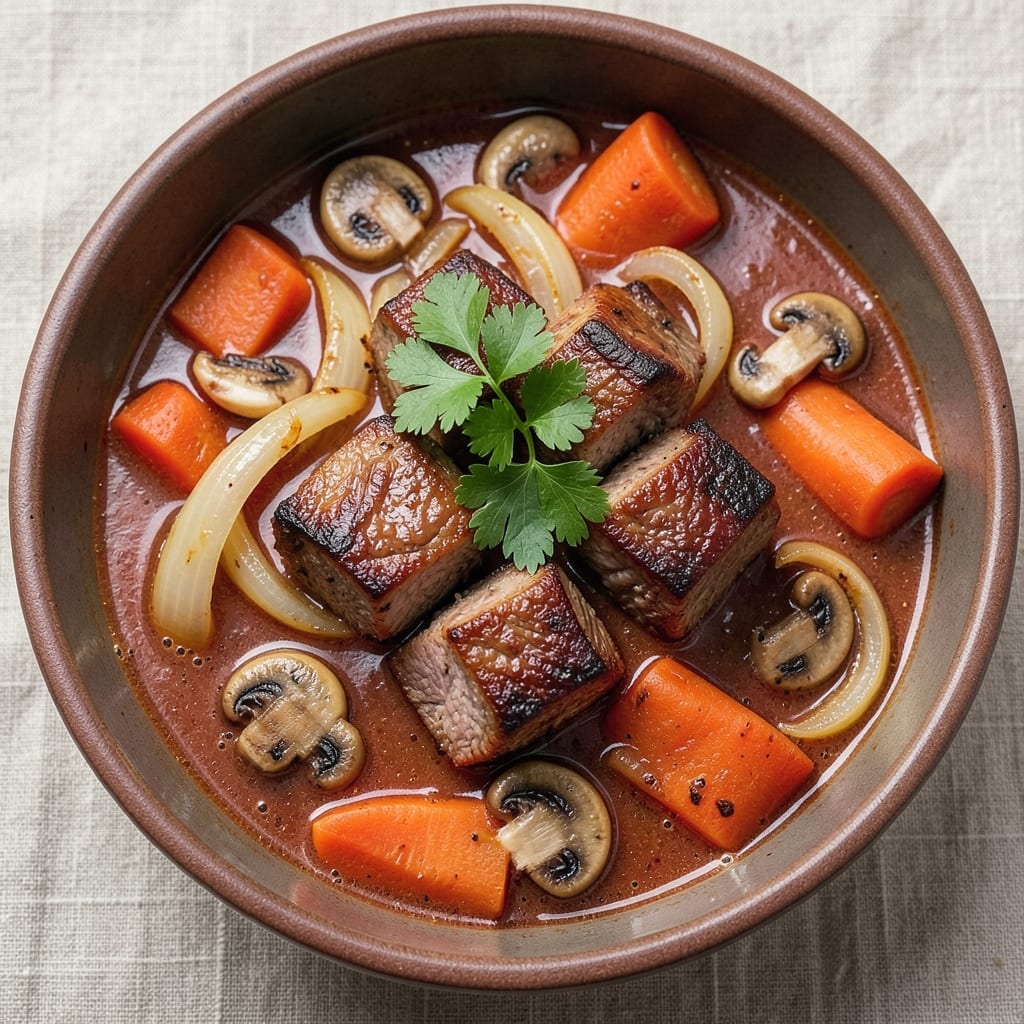
This Au Bon Pain beef stew recipe delivers the kind of deep, umami-rich braise that transforms tough cuts into melt-in-your-mouth perfection. The secret lies in slow-cooked beef, caramelized onions, and aromatic vegetables that infuse the broth with layers of flavor over hours. I've perfected this technique to recreate the restaurant-quality results you crave at home, using traditional French braising methods that build complexity through time.
The process begins with properly browning the beef—this critical step develops the deep, meaty foundation of the stew. Deglazing the pan with red wine captures all those flavorful browned bits, while slow simmering allows the vegetables to soften and the broth to develop a velvety texture. What you end up with is a hearty, comforting stew where every spoonful delivers tender beef, caramelized onions, and mushrooms in a rich, savory sauce.
This recipe is designed for those who appreciate the rewards of slow cooking—it requires patience, but the results are worth every minute. The beef becomes so tender it practically falls apart, while the vegetables maintain their structure just enough to add satisfying texture. Serve it with crusty bread to soak up every last drop of that flavorful broth, or garnish with fresh herbs for a touch of brightness.
Perfect for chilly evenings or when you want to impress guests with a restaurant-worthy meal, this beef stew is the ultimate comfort food. The combination of techniques and ingredients ensures a dish that's both impressive and deeply satisfying, bringing a taste of Parisian bistros to your dinner table.
Ingredients for au bon pain beef stew
French bistro flavors start with these umami-rich ingredients for melt-in-your-mouth beef stew perfection.
| Ingredient | Amount | Notes |
|---|---|---|
| Beef Chuck Roast 🥩 | 2 lb | Cut into 1.5-inch cubes |
| Yellow Onions 🧅 | 2 whole | Thinly sliced for caramelizing |
| Garlic Cloves 🧄 | 6 cloves | Minced for depth of flavor |
| Carrots 🥕 | 4 whole | Cut into thick rounds |
| Cremini Mushrooms 🍄 | 8 oz | Quartered for texture |
| Tomato Paste 🍅 | 2 tbsp | For umami richness |
| Red Wine 🍷 | 1 cup | Bold dry variety preferred |
| Beef Broth 💧 | 3 cups | Homemade or high-quality store-bought |
| Olive Oil 🫒 | 2 tbsp | Extra-virgin for browning |
| Fresh Thyme 🌿 | 2 sprigs | Leaves only for garnish |
| Fresh Rosemary 🌿 | 1 sprig | For aromatic depth |
| Bay Leaves 🍃 | 2 whole | Removed before serving |
| Salt 🧂 | 1 ½ tsp | Diamond Crystal preferred |
| Black Peppercorns 🌶️ | 1 tsp | Freshly cracked for heat |
| All-Purpose Flour 🌾 | 1 tbsp | For thickening sauce |
The beef is non-negotiable—chuck roast delivers that signature fall-apart texture. Costco or Whole Foods carry excellent cuts, but any well-marbled chuck will work. Look for pieces with good fat distribution (the white streaks) for maximum flavor and tenderness. If you're buying a whole roast, cube it yourself—pre-cut pieces often include connective tissue that won't break down properly. The onions? Yellow or red both work, but yellow caramelizes slightly better. Thinly slice them (about 1/8-inch) for maximum surface area. For the mushrooms, cremini or baby bella have the best meaty texture—avoid the pre-sliced packs at the store (they brown too fast).
No red wine? Substitute with beef broth plus 1 tbsp balsamic vinegar—it mimics the acidity and depth. Fresh thyme and rosemary are ideal, but dried works at one-third the amount. If you're using dried, toast the spices in the olive oil for 30 seconds before adding to the pan—this releases their essential oils and intensifies the flavor. The tomato paste can be the squeeze-tube kind from Trader Joe's (it lasts forever and has no waste). For the flour, King Arthur or Bob's Red Mill are reliable choices—they thicken evenly without clumping. And if you're worried about the wine's alcohol content, don't be: it cooks off completely during the long simmer.
This stew tastes even better the next day as flavors meld. Store in an airtight container for up to 5 days in the fridge, or freeze for 3 months. I always make a double batch—one for dinner and one for lunches. The beef reheats beautifully; just add a splash of broth if it's too thick. For serving, garnish with fresh thyme leaves (a few sprigs tossed in the pot at the end) and a drizzle of the cooking liquid. The crusty bread? Baguette from the bakery section—none of that sad pre-sliced stuff. Toast it lightly and serve with extra stew for dipping.
Why You'll Love This Recipe
- One-Pot Magic: I swear by this recipe because it’s that kind of dish—dump everything in one pot, walk away, and come back to something that smells like a hug. The beef chuck roast practically melts into tender perfection while you’re chopping onions or scrolling through your phone.
- Umami Bomb: Between the deep caramelized onions, earthy cremini mushrooms, and that slow-cooked beef, every spoonful is a flavor party. Honestly, the garlic cloves get toasted just enough to add a little oomph without overpowering—it’s the kind of taste that makes you close your eyes and sigh.
- Weeknight Workhorse: This stew is my go-to when I’m too tired to think but still need a meal that feels special. It reheats beautifully for lunch the next day, and the carrots and mushrooms add enough texture that it never gets boring. (Yes, even on a Tuesday night.)
- Budget-Friendly Feast: A single beef chuck roast stretches across multiple meals, and the veggies—onions, carrots, mushrooms—are cheap but pack serious flavor. I’ll be real: it’s the kind of recipe that makes me feel like I’m feeding a crowd without breaking the bank. Leftovers? Always.
Step-by-step instructions for Au Bon Pain beef stew
This classic French-inspired stew delivers rich, tender beef with caramelized onions and deep umami flavor.
Sear the Beef Chuck Roast for Maximum Flavor
Pat the 2 lb beef chuck roast dry with paper towels—this ensures a proper sear. Heat 1 tablespoon of the olive oil in a heavy Dutch oven over medium-high heat until shimmering. Add the beef cubes in a single layer and sear undisturbed for 2-3 minutes per side until deep golden brown with crisp edges. This step develops the Maillard reaction, creating that irresistible caramelized crust.
Transfer the seared beef to a plate and set aside. In the same pot, add the remaining 1 tablespoon olive oil and increase heat to medium-high. Add the 2 whole yellow onions and cook for 5-6 minutes, stirring occasionally, until they begin to soften and develop golden edges. This is your foundation for that signature Au Bon Pain caramelized flavor.
Build Layers of Flavor with Aromatics and Wine
Reduce heat to medium and add the 6 minced garlic cloves, cooking for 30 seconds until fragrant—don't let them brown or they'll turn bitter. Stir in the 2 tablespoons tomato paste and cook for 1 minute, allowing it to deepen in color and develop its umami notes.
Pour in the 1 cup red wine and scrape up any browned bits from the bottom of the pot with a wooden spoon. These bits contain concentrated flavor that will dissolve into your stew. Let the wine simmer for 3-4 minutes until reduced by half, intensifying its richness. This reduction is crucial for balancing the final sauce consistency.
Develop the Stew Base with Vegetables and Herbs
Add the 4 thick carrot rounds, 8 ounces quartered cremini mushrooms, 3 cups beef broth, 1.5 teaspoons salt, and 1 teaspoon cracked black peppercorns to the pot. Bring to a gentle simmer, then add the 2 sprigs fresh thyme, 1 sprig fresh rosemary, and 2 whole bay leaves. Stir to combine all ingredients.
Return the seared beef to the pot, along with any accumulated juices. The beef should be mostly submerged in the liquid, but that's okay—it will release more moisture as it cooks. Cover the pot with a tight-fitting lid and reduce heat to low. This gentle simmer is where the magic happens, allowing the beef to tenderize slowly while absorbing all those beautiful flavors.
Braise Until Fork-Tender Perfection
Let the stew cook uncovered for 2 hours, stirring occasionally to prevent the bottom from sticking. After 2 hours, check the beef for tenderness by piercing a piece with a fork—it should slide in easily with minimal resistance. If the beef isn't quite tender yet, continue cooking for another 30-60 minutes.
Here's the thing about beef stew timing—it varies based on your oven and pot. I've found that the beef is typically done when the liquid reduces to about 2 cups and the vegetables are tender but still hold their shape. The exact time depends on your heat source, so trust your fork test over the clock.
Thicken and Finish the Stew
Once the beef is tender, remove the thyme sprigs, rosemary sprig, and bay leaves from the stew. In a small bowl, whisk together the 1 tablespoon all-purpose flour with 2 tablespoons cold water to create a slurry. Slowly pour this into the stew while stirring constantly to prevent lumps from forming.
Simmer the stew uncovered for an additional 5-7 minutes until it thickens slightly to your desired consistency. The sauce should coat the back of a spoon but still be spoonable. Taste and adjust seasoning if needed—you might need a touch more salt or pepper to balance the flavors after all that cooking. Serve hot with crusty bread to soak up every last drop of that rich, umami-packed sauce.
Pro Tips For Making Au Bon Pain Beef Stew
- SEAR THE ROAST LONG ENOUGH: The first 10 minutes at high heat aren’t just about browning—they’re about building flavor. I used to rush this, but now I wait until the beef develops a deep, caramelized crust in spots. That’s where the real depth comes from, especially when you’re working with chuck roast that can be tough if not handled right.
- CHOP MUSHROOMS UNIFORMLY: Small, even pieces cook faster and soak up the broth better than random chunks. I learned this after serving a stew where some mushrooms were still tough while others turned to mush. Aim for ½-inch slices—big enough to hold shape but small enough to melt into the sauce.
- DON’T SKIP THE FAT RENDERING: Let the onions and garlic cook in their own juices for 5 minutes before adding liquid. This extracts more flavor and prevents the broth from turning cloudy. I know it’s tempting to rush, but that extra step makes a real difference—especially when you’re using cremini mushrooms, which can otherwise taste bland.
- USE COLD BROTH AT THE END: After the meat and veggies have simmered, stir in cold broth at the very end. It resets the sauce, making it silky instead of gluey. I was skeptical until I tried it—now I do it every time, even if it means a quick trip to the fridge for an ice bath. The texture changes completely.
Troubleshooting perfect results
Beef Too Tough?
If your beef isn't tender after 3 hours of cooking, it likely needs more time. The key is patience—chuck roast requires low and slow cooking to break down collagen. I’ve found that cooking it at 300°F in a slow cooker for 8 hours on low works wonders. For stovetop, keep the lid on and maintain a gentle simmer. Never rush this step, or you’ll end up with chewy meat instead of melt-in-your-mouth perfection. 💪
Broth Too Thin?
A watery stew usually means the broth wasn’t reduced enough or the vegetables released too much liquid. To fix this, simmer the stew uncovered for an extra 15-20 minutes to evaporate excess moisture. If it’s still too thin, mix 1 tablespoon cornstarch with 2 tablespoons cold water, stir it into the stew, and cook for another 5 minutes until thickened. Avoid flour if you’re gluten-sensitive—cornstarch works just as well. 🍲
Onions Burning?
Caramelizing onions can go wrong fast if the heat is too high. Keep the temperature at medium-low and stir frequently to prevent burning. If they start to brown too quickly, reduce the heat and add a splash of water or broth to deglaze. For extra insurance, remove the onions once they’re soft and set them aside before adding the wine. You can always add them back later once the wine has reduced. 🧅
Mushrooms Too Mushy?
Mushrooms lose their texture when overcooked. To keep them firm, add them to the stew only in the last 30-45 minutes of cooking. If they’ve already turned mushy, remove them and replace them with fresh ones in the final stages. For extra texture, try adding a handful of pearl onions or shallots—they hold up better during long cooking. 🍄
Sauce Too Acidic?
If the stew tastes too tangy from the wine or tomato paste, balance it with a pinch of sugar or a splash of beef broth. A ½ teaspoon of brown sugar or 1 tablespoon of honey can mellow out harsh acidity without overpowering the flavors. Taste as you go—this is where a little goes a long way. 🍯
Flavor Fading?
If the stew tastes bland, it likely needs more depth. Boost umami by adding 1 teaspoon soy sauce or ½ teaspoon Worcestershire sauce (if you’re not avoiding gluten). For a richer taste, stir in 1 tablespoon of beef bouillon powder** and simmer for another 10 minutes. Fresh herbs like thyme or rosemary can also brighten up the flavors—just add them back in the last 5 minutes of cooking. ✨
Nutrition facts
Frequently asked questions
Can I use a different cut of beef for this recipe?
While chuck roast is ideal for its marbling and tenderness, you can substitute with brisket or short ribs. These cuts have more connective tissue, so they'll need an extra 30-60 minutes of cooking time. Avoid lean cuts like sirloin—they'll dry out. For best results, choose a cut with visible fat marbling to keep the meat juicy.
How do I make this stew ahead of time?
This stew actually tastes better the next day as flavors meld! Store in an airtight container in the fridge for up to 5 days. Reheat gently on the stovetop over medium-low heat, adding a splash of beef broth if needed. For freezing, portion into individual servings and freeze for up to 3 months. Thaw overnight in the fridge before reheating.
What's the secret to getting that deep Au Bon Pain flavor?
The magic happens in three key steps: browning the beef for caramelization, reducing the wine to concentrate flavors, and slow simmering (at least 2 hours) to develop depth. Don't skip the deglazing step—those browned bits on the bottom contain concentrated flavor. Fresh herbs added at the end also brighten the dish.
Can I make this recipe in a slow cooker? Brown the beef and onions in a skillet first, then transfer everything to your slow cooker. Cook on low for 8 hours or high for 5-6 hours. The slow cooker's gentle heat mimics the traditional braising method perfectly. Just
What's the best wine to use for this recipe?
Use a dry red wine with moderate tannins and good acidity, like Cabernet Sauvignon, Merlot, or Pinot Noir. Avoid sweet wines—they'll make the stew taste cloying. If you're using a bold wine, reduce it longer (up to 5 minutes) to soften its intensity. For non-alcoholic versions, substitute with beef broth plus 1 tbsp balsamic vinegar.