Main Courses
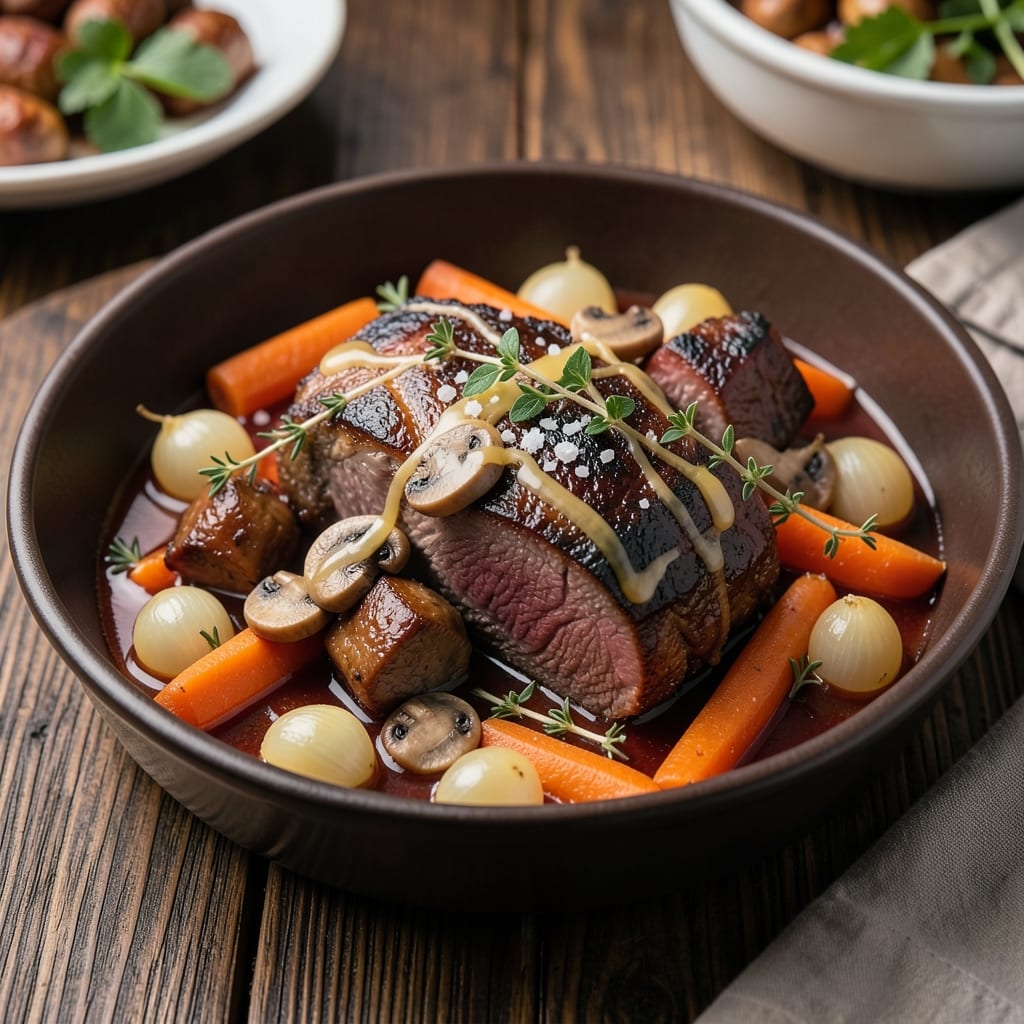
Auguste Escoffier's beef bourguignon recipe transforms humble beef and wine into a dish that defines French comfort food. The master chef's technique—browning meat, deglazing with red wine, and slow braising—creates velvety richness that lingers long after the last bite. This isn't just a recipe; it's a culinary masterclass in balancing acidity, depth, and texture.
The process begins with searing beef chuck in batches to develop deep caramelization, then deglazing with red wine to capture every flavorful bit. Mushrooms, pearl onions, and carrots join the pot, simmering until tender while absorbing the wine-reduced sauce. Escoffier's method ensures the beef becomes fork-tender without losing its natural flavor, while the sauce achieves that signature velvety consistency.
What you'll achieve is a dish that's rich yet balanced, with beef that falls apart at the touch of a fork and a sauce so luxurious it deserves to be served in a fine-dining setting. The aroma alone—warm spices, red wine, and caramelized aromatics—will have everyone anticipating dinner. This is the kind of recipe that transforms weeknight meals into memorable experiences.
The final result should be plated with a garnish of fresh parsley and served with crusty bread to soak up every drop of that deep wine sauce. Leftovers only improve as the flavors meld further, making this an ideal make-ahead dish for gatherings. Let's create a classic that honors Escoffier's legacy in your own kitchen.
Ingredients for auguste escoffier beef bourguignon
French technique meets rustic richness—these ingredients honor Escoffier's masterpiece.
| Ingredient | Amount | Notes |
|---|---|---|
| Beef Chuck Roast 🥩 | 2 lb | Cut into 1.5-inch cubes, trimmed of fat |
| Dry Red Wine 🍷 | 2 cups | Bold variety like Cabernet Sauvignon or Merlot |
| Pearl Onions 🧅 | 1 lb | Peeled, halved horizontally |
| Carrots 🥕 | 1 lb | Peeled, cut into 1-inch chunks |
| Cremini Mushrooms 🍄 | 16 oz | Whole, wiped clean |
| Fresh Thyme 🌿 | 2 tbsp | Leaves only, stems removed |
| Fresh Rosemary 🌿 | 1 tbsp | Leaves only, finely chopped |
| Garlic Cloves 🧄 | 6 cloves | Peeled, smashed |
| All-Purpose Flour 🌾 | 2 tbsp | For thickening sauce |
| Beef Stock 🥄 | 2 cups | Homemade or high-quality store-bought |
| Tomato Paste 🍅 | 2 tbsp | Smooth, canned |
| Olive Oil 🫒 | 3 tbsp | For searing beef |
| Diamond Crystal Kosher Salt 🧂 | 1 ½ tsp | Adjust to taste |
| Freshly Ground Black Pepper 🌶️ | 1 tsp | Freshly cracked |
| Fresh Flat-Leaf Parsley 🌿 | ¼ cup | Chopped, for garnish |
The beef chuck is non-negotiable for this dish. Look for well-marbled cuts at specialty butchers or the meat department at Whole Foods—the fat renders beautifully during searing. If you can't find chuck, chuck roast or even short ribs work as substitutes, though texture will differ slightly. The red wine should be dry and bold—Cabernet Sauvignon or Merlot are classic choices, but whatever you have open that's not too fruity will do. For the mushrooms, cremini or wild mushrooms add depth, but white button mushrooms work in a pinch. Fresh thyme and rosemary should be vibrant green with no wilting—Trader Joe's or local farmers markets often carry the freshest varieties.
No beef stock? Substitute with a combination of red wine and vegetable broth (1:1 ratio) for a similar depth. The tomato paste can be skipped entirely if you prefer a more traditional preparation, though it adds a subtle sweetness that balances the acidity. For the flour, all-purpose works perfectly, but if you're aiming for authenticity, pastry flour creates a slightly silkier sauce. The garlic should be fresh—no powdered substitutes here. If you're using dried herbs, reduce to one-third the amount of fresh, but fresh is always preferred for that authentic Escoffier touch. The pearl onions can be tricky to peel, so blanching them first makes the task significantly easier.
This dish tastes even better the next day as flavors meld. Store in an airtight container in the refrigerator for up to 5 days, though the sauce will thicken further. For longer storage, freeze portions for up to 3 months. Reheat gently on the stove with a splash of water or stock to restore the sauce's velvety texture. The parsley garnish should be added just before serving—it wilts quickly when exposed to heat. Serve with crusty bread to soak up every luxurious drop of that wine-infused sauce, a true hallmark of Escoffier's technique.
Why You'll Love This Recipe
- One-Pot Magic: I swear by this recipe because it’s all in one pot—no chopping boards full of mess, no last-minute cleanup. Just brown the beef, toss in the onions, carrots, and mushrooms, then let the wine and time do the work. That rich, deep sauce? It practically makes itself.
- Wine-Infused Richness: Honestly, the moment that red wine hits the pan, my kitchen smells like a Parisian bistro. The beef gets so tender it falls apart, and those mushrooms? They soak up all the velvety sauce like little flavor sponges. It’s the kind of dish that makes you slow down and savor every bite.
- Leftovers That Shine: Between us, this recipe begs to be made in bulk. The flavors only get better the next day—reheat it, and suddenly you’ve got a fancy lunch or a quick dinner. I’ve even turned it into a sandwich filling (yes, it works) when I’m too tired to cook.
- Budget-Friendly Luxury: A beef chuck roast is affordable, and the veggies stretch the meal effortlessly. You’re getting restaurant-quality depth without the price tag. Plus, the pearl onions and mushrooms add that gourmet touch without breaking the bank. It’s my go-to for feeding a crowd without stress.
Step-by-step instructions for Escoffier-style beef bourguignon
Master this classic French technique with precise timing and layering for authentic depth.
Sear the Beef Chuck Roast in Batches
Heat 3 tablespoons olive oil in a heavy Dutch oven over medium-high heat until shimmering. Working in batches to avoid crowding, sear the 2 lb beef chuck roast cubes on all sides until deeply browned, about 3-4 minutes per side. The beef should develop a rich mahogany crust—this Maillard reaction forms the foundation of the dish's complex flavor.
Remove the seared beef and set aside. If your Dutch oven contains more than ¼ inch of rendered fat, carefully pour off all but 2 tablespoons for the next step. This ensures proper heat conduction without overpowering the sauce later. Never skip this searing step—it builds flavor that can't be replicated through simmering alone.
Sauté Vegetables and Deglaze with Wine
In the same Dutch oven, add 1 lb pearl onions and 1 lb carrots cut into chunks. Cook for 5 minutes until lightly caramelized, stirring occasionally. Add the 16 oz cremini mushrooms and cook for another 4 minutes until they release their moisture and begin to soften.
Push the vegetables to one side of the pot, add the 6 smashed garlic cloves, and cook for 30 seconds until fragrant. Immediately pour in the 2 cups dry red wine, scraping up all the browned bits from the bottom with a wooden spoon. This deglazing step captures all the caramelized flavor that would otherwise burn. Let the wine reduce by half—about 5-6 minutes—until it reaches a syrupy consistency.
Build the Sauce with Herbs and Tomato
Stir in the 2 tbsp tomato paste and cook for 1 minute to deepen its flavor. Sprinkle the 2 tbsp all-purpose flour over the mixture and whisk vigorously for 2 minutes until completely incorporated and smooth. This creates a roux that will thicken the sauce beautifully.
Add the 2 tbsp fresh thyme, 1 tbsp fresh rosemary, 1.5 tsp Diamond Crystal kosher salt, and 1 tsp freshly ground black pepper. Pour in the 2 cups beef stock and bring to a gentle simmer. Return the seared beef to the pot, along with any accumulated juices. The liquid should come up about halfway up the beef—if it's too thin, reduce it further before proceeding.
Braise Until Fork-Tender
Cover the Dutch oven and transfer to a 325°F oven. Braise for 2.5 to 3 hours, turning the beef occasionally, until it reaches an internal temperature of 205°F and can be easily pierced with a fork. The vegetables should be tender but still hold their shape. This long, slow cooking time transforms the tough chuck roast into melt-in-your-mouth tenderness.
Real talk: Your oven might run hot, so start checking at the 2-hour mark. The sauce should be thick and glossy, coating the beef and vegetables completely. If it's too thin, uncover and simmer for 10-15 minutes to reduce further. The key is patience—the longer it braises, the more the flavors meld together.
Finish and Garnish
Remove the beef and vegetables from the pot and strain the sauce through a fine-mesh sieve into a clean saucepan. Discard the solids. Return the sauce to medium heat and simmer for 5-7 minutes until it reaches your desired consistency—it should coat the back of a spoon but still be fluid enough to drizzle.
Return the beef and vegetables to the sauce and heat through for 2 minutes. Stir in the 0.25 cup chopped fresh flat-leaf parsley just before serving. This classic dish should be served immediately from the Dutch oven, with each bite delivering layers of wine-reduced richness, tender beef, and caramelized vegetables.
Pro Tips For Making Auguste Escoffier Beef Bourguignon
- SEAR THE ROAST HARD: I used to treat the beef chuck like a delicate fillet, and it paid for it later. Crank your pan to medium-high, add 2 tablespoons of oil, and let that roast sit undisturbed for 4-5 minutes per side until it’s deep brown—almost black in spots. That crust is what carries the flavor through the long braise, and skipping it means bland beef no matter how good the wine.
- PEEL THOSE ONIONS RIGHT: Pearl onions are a pain to peel if you’re not careful. I learned this the hard way—cut off the root end, then blanch them in boiling water for 30 seconds before peeling. The skins slide off like magic, and you won’t end up with a pot full of onion bits later. (Yes, even if you’re impatient like me.)
- DEGLAZE WITH THE WINE STRAIGHT AWAY: As soon as you remove the roast, pour in that dry red wine immediately—don’t wait for the pan to cool. Scrape up every last bit of fond with a wooden spoon while it’s hot, or you’ll be left with a dry, flavorless sauce. This isn’t the prettiest method, but it’s the tastiest.
- ADD MUSHROOMS LATE: I was skeptical until I tried it: toss the cremini mushrooms in during the last 15 minutes of cooking, not at the start. They’ll soak up the liquid and turn tender without turning to mush. If you add them early, you’ll end up with a watery sauce and sad, soggy mushrooms—neither of which Escoffier intended.
Troubleshooting great auguste escoffier beef bourguignon
Undercooked Beef Fix
If your beef isn’t tender after 3 hours of braising, don’t panic—it’s salvageable. First, check the internal temperature with a meat thermometer; it should reach 205°F. If it’s lower, return the pot to the oven for another 30-60 minutes. For extra help, add ½ cup beef stock and cover tightly to steam the beef gently. I’ve rescued many a tough cut this way! 💪
Sauce Too Thin?
A watery sauce can happen if you didn’t reduce the wine enough or overloaded the pot with liquid. To fix it, remove the beef and vegetables, then simmer the sauce uncovered on medium-high heat for 10-15 minutes, stirring occasionally. For a quicker fix, mix 1 tbsp cornstarch with 2 tbsp cold water, stir into the sauce, and cook for 2 minutes until thickened. Escoffier himself would approve of this little trick!
Burnt Onions or Mushrooms
If your pearl onions or mushrooms take on a bitter, burnt flavor, it’s usually from cooking them too long before adding the wine. To prevent this, add them to the pot after deglazing and keep them moving. If it’s already happened, simply remove the burnt pieces and continue cooking. The remaining flavors will still shine through—just strain the sauce afterward for a cleaner finish. 🍄
Wine Overpowering
Too much wine can make your bourguignon taste harsh or overly acidic. Balance it by adding 1 tbsp tomato paste or 1 tsp sugar to mellow the acidity. If the wine taste still dominates, reduce the sauce longer or add a pinch of salt to enhance the beef’s natural richness. I’ve found that a splash of beef stock also helps dilute the alcohol while adding depth.
Vegetables Too Mushy
Overcooked vegetables turn to mush when braised too long. To fix this, remove them from the pot and set aside while you finish cooking the beef. Reheat them separately in the sauce for just 2-3 minutes before serving. For next time, add them later in the braising process—after the first 1.5 hours—so they absorb flavor without turning to mush. 🥕
Leftover Sauce Gone Dry
If your sauce thickens too much when reheating leftovers, simply add 2-3 tablespoons of beef stock or water and simmer gently until it reaches the perfect consistency. For extra richness, stir in 1 teaspoon of butter at the end. Store leftovers in an airtight container, and always reheat on low heat to preserve the sauce’s velvety texture. This is how Escoffier would have handled it! ⏰
Nutrition facts
Frequently asked questions about Escoffier's beef bourguignon
Why does this recipe require searing the beef in batches?
Searing in batches prevents overcrowding, which steams the meat instead of browning it. This crucial step creates the Maillard reaction, producing deep caramelized flavors that form the foundation of the dish. Escoffier's method ensures maximum flavor extraction from both the beef and the rendered fat.
Can I substitute red wine with something else?
While traditional bourguignon uses red wine, you can substitute with grape juice (for a non-alcoholic version) or beef stock (though it will lack acidity). For best results, use a bold red wine like Cabernet Sauvignon—its tannins help tenderize the beef during braising.
How do I know when the beef is perfectly tender?
The beef is done when it reaches 205°F internally and can be easily pierced with a fork. For extra assurance, press a piece—it should fall apart completely. If it's still tough after 3 hours, extend the cooking time or add ½ cup beef stock to steam it gently.
What's the best way to reheat leftovers?
Reheat gently on the stove with a splash of beef stock or water to restore the sauce's velvety texture. Never microwave—it creates a watery mess. For extra richness, stir in 1 teaspoon butter at the end. Leftovers actually improve as flavors meld further!
Can I make this dish ahead of time?
This dish tastes even better the next day. Store in an airtight container in the refrigerator for up to 5 days. The sauce will thicken further, intensifying the flavors. For serving, simply reheat gently and garnish with fresh parsley just before eating.