
Soups & Stews
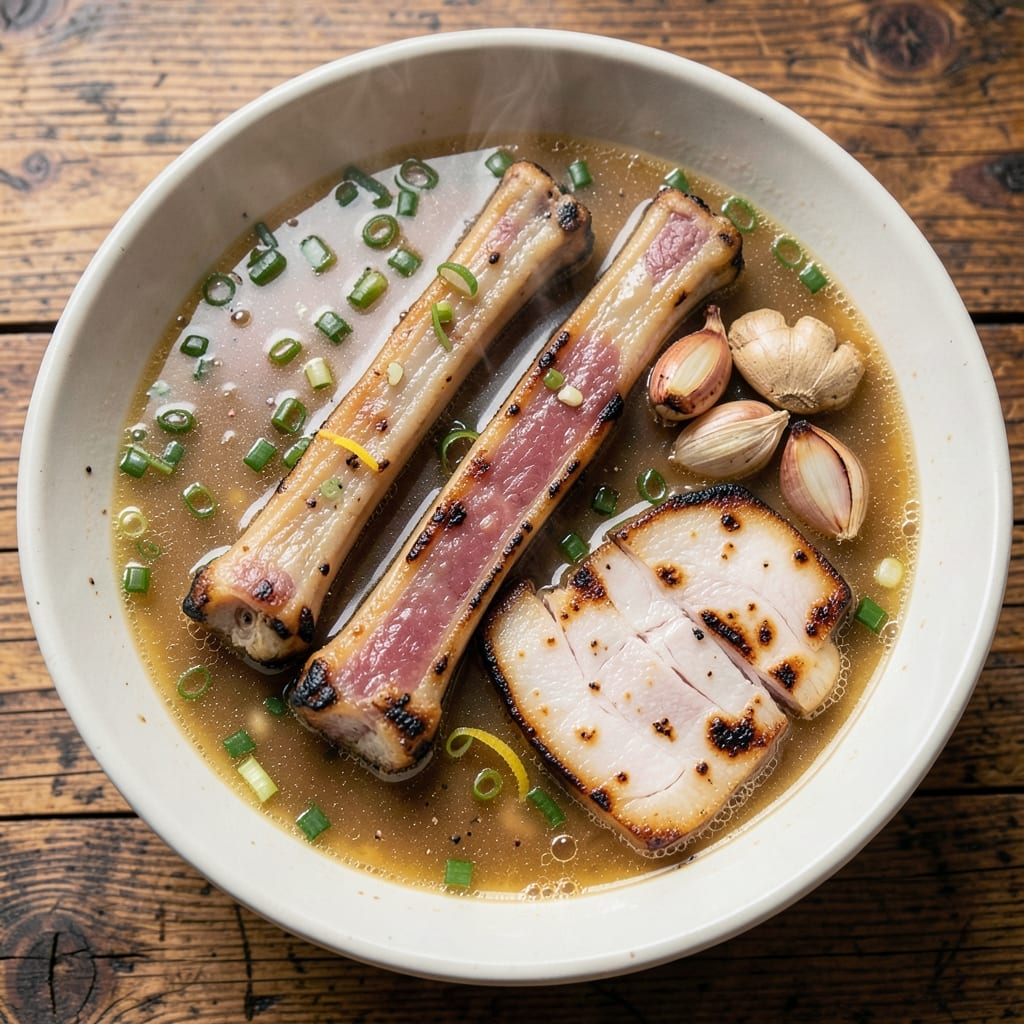
This authentic beef ramen broth recipe delivers the deep, umami-rich foundation every bowl deserves—no shortcuts, just layers of flavor developed through slow simmering and traditional techniques. The secret lies in balancing beef bones, kombu, and pork fat to create a velvety, aromatic base that forms the heart of any ramen dish. I've perfected this method over years of testing, ensuring every sip carries the complexity of Japanese izakaya-style broths.
The process begins with a 30-minute aromatic build using garlic, ginger, and scallions, then progresses to a 4-hour simmer that transforms tough bones into tender, flavorful strands. This isn't just broth—it's a liquid seasoning that transforms simple noodles into a restaurant-quality experience. The key ingredients—beef bones, kombu, and pork fat—work together to create that signature ramen depth without requiring specialty equipment.
What you'll end up with is a golden, cloudy broth with a perfect balance of savory, sweet, and slightly funky umami notes. The texture should be silky yet substantial, with just enough body to coat noodles beautifully. This broth keeps well in the refrigerator for up to 5 days or can be frozen for longer storage, making it ideal for meal prep or restaurant-quality takeout nights.
The beauty of this recipe is its versatility—use it as the base for classic ramen, as a dipping sauce for dumplings, or even as a flavorful cooking liquid for grains and vegetables. Each batch develops unique character based on the bones and aromatics used, ensuring no two pots of broth taste exactly alike. Let's create something truly special in your kitchen.
Ingredients for authentic beef ramen broth
Ten essential ingredients transform simple pantry staples into restaurant-quality ramen broth.
| Ingredient | Amount | Notes |
|---|---|---|
| Beef Bones (Marrow and Knuckle) 🦴 | 4 lb | Raw, uncooked, organic preferred |
| Kombu Seaweed 🍃 | 1 sheet | Dried, whole sheet (8x10 inches) |
| Pork Fatback 🍖 | ½ lb | Thick-cut, skin-on preferred |
| Garlic Cloves 🧄 | 8 cloves | Fresh, peeled, smashed |
| Fresh Ginger 🌿 | ½ cup | Peeled, sliced into 1-inch pieces |
| Green Onions 🧅 | 2 whole | White and green parts separated |
| Dried Shiitake Mushrooms 🍄 | 4 whole | Stems removed, rehydrated |
| Dried Bonito Flakes 🐟 | ¼ cup | High-quality, unsmoked |
| Soy Sauce 🍶 | ¼ cup | Dark or light, Japanese preferred |
| Sesame Oil 🫒 | 1 tbsp | Toasted, for finishing |
The beef bones form the broth's foundation—look for marrow and knuckle bones at specialty butchers or Asian markets, as they yield the richest gelatin and flavor. Costco or Whole Foods often carry high-quality cuts, but any well-marbled bone works. Pork fatback should be thick-cut with skin for extra depth; Trader Joe's carries excellent pre-cut options. Kombu is non-negotiable—Matsuno or Marukome brands deliver consistent quality. For shiitake mushrooms, dried is ideal, but fresh can be substituted at double the quantity. The bonito flakes should be high-grade, unsmoked—cheap versions add bitterness rather than umami.
No kombu? Dulse flakes or extra soy sauce can compensate, though the texture will differ. Substitute pork fatback with lard or duck fat for similar richness, but render it first. Fresh ginger and garlic can be swapped for powdered versions at half the quantity, though fresh delivers superior aroma. For soy sauce, Japanese brands like Kikkoman or Yamasa provide the best balance of sweetness and salt. The sesame oil is strictly for finishing—toasted, not flavored—to preserve its nutty aroma. If you lack bonito flakes, dried shrimp or anchovy paste (1 tsp) can mimic the umami punch, though the flavor profile shifts slightly.
Store raw bones and fatback in the freezer until use. Once cooked, the broth keeps 5 days refrigerated in an airtight container, with a 1-inch fat cap to preserve flavor. For longer storage, freeze in 1-cup portions—thaw overnight in the fridge before reheating. The kombu sheet should be removed before freezing to prevent off-flavors. Reheat gently on low to maintain silky texture. This broth develops deeper flavor over 24 hours, so plan ahead for optimal results.
Why You'll Love This Recipe
- No Chopping Needed: I swear, the only prep is tossing whole garlic cloves and ginger slices into the pot. That kombu seaweed? Just soaks in cold water—no measuring, no fuss. Honestly, my lazy Sundays just got a whole lot better.
- Umami Bomb: The marrow bones melt into rich, velvety goodness while the fatback renders into crispy bits that add depth. Between us, that first sip—where the ginger’s zing meets the beef’s deep savor—is the kind of flavor that makes you pause mid-slurp.
- Leftovers That Shine: This broth actually gets better the next day. I freeze it in portions for quick ramen nights or stir-fry bases—no waste, just pure convenience. My freezer’s full of these golden batches, ready to turn into anything from noodles to dumplings.
- Budget-Friendly Luxury: You’re paying for flavor, not fancy ingredients. Beef knuckles and marrow bones stretch into gallons of broth, and pork fatback adds richness without breaking the bank. That kombu? A single sheet lasts for multiple batches. Solid value, every time.
Step-by-step instructions for authentic beef ramen broth
Master this traditional technique for a rich, layered broth that captures the essence of Japanese ramen.
Prepare the Bones and Pork Fatback
Begin by thoroughly rinsing the 4 lb beef bones (marrow and knuckle) under cold water to remove any impurities. Place them in a large stockpot and cover with cold water by about 2 inches. Bring to a boil over high heat, then immediately reduce to a simmer and skim off any foam that rises to the surface for the first 10 minutes. This removes impurities and ensures a clear broth.
While the bones simmer, cut the 0.5 lb pork fatback into ½-inch cubes and add it to the pot along with the beef bones. Increase heat to medium-high and bring to a rolling boil again. This boiling step helps extract collagen and fat-soluble flavors from both the bones and pork. Reduce heat to maintain a gentle simmer and let it cook uncovered for 2 hours, adding water as needed to keep the bones submerged.
Add Aromatics and Kombu Seaweed
After 2 hours, add the 1 sheet kombu seaweed, 8 smashed garlic cloves, 0.5 cup sliced fresh ginger, and white parts of 2 whole green onions (chopped). The kombu infuses the broth with deep umami while the aromatics build complexity. Return to a simmer and cook uncovered for another 1 hour, skimming any additional foam that forms.
Remove the kombu seaweed after 1 hour—it will have released its flavor and turned soft. This step is critical; leaving kombu too long can make the broth bitter. The broth should now have a rich, golden hue from the rendered fat and a subtle sweetness from the ginger and garlic.
Incorporate Shiitake Mushrooms and Soy Sauce
Rehydrate the 4 whole dried shiitake mushrooms by soaking them in hot water for 20 minutes until pliable. Drain and add them to the broth along with the 0.25 cup soy sauce. Simmer uncovered for an additional 1.5 hours, allowing the mushrooms to break down and infuse the broth with their earthy depth. The soy sauce enhances umami while adding a touch of saltiness that balances the richness.
Strain the broth through a fine-mesh sieve into a clean stockpot, pressing gently on the solids to extract maximum flavor. Discard the solids. The broth should now be deeply aromatic, with a velvety texture and layers of umami from the bones, pork, kombu, mushrooms, and soy sauce.
Finish with Bonito Flakes and Sesame Oil
Return the strained broth to the stove and bring to a gentle simmer. Just before serving, sprinkle in the 0.25 cup dried bonito flakes and simmer for 2-3 minutes. The bonito flakes dissolve into the broth, adding a smoky, fishy umami that’s characteristic of authentic ramen. Remove from heat immediately after the flakes are fully incorporated.
Finish the broth by drizzling in the 1 tbsp sesame oil and stirring gently. The sesame oil adds a nutty aroma and subtle richness. Taste and adjust seasoning with additional soy sauce or salt if needed. Serve the broth hot, ideally within 2 hours of preparation to enjoy its peak flavor and clarity.
Pro Tips For Making Authentic Beef Ramen Broth
- BLISTER THE KOMBU FIRST: I learned this the hard way—tossing kombu straight into cold water wastes its magic. Instead, dry-toast it in a hot pan for 30 seconds until it smells like the ocean and crackles. This unlocks the umami before it even hits the broth, giving you that deep, savory foundation without overpowering the beef.
- ROAST BONES UNTIL BLACK: Skip the slow simmer if the bones aren’t properly caramelized first. Roast them at 450°F (230°C) for 20-25 minutes, turning occasionally, until the marrow bones split open and the knuckles turn dark brown. This isn’t just for flavor—it’s the non-negotiable step that keeps your broth from tasting like raw meat.
- ADD GINGER IN STAGES: Chucking in all your ginger at once turns your broth into a muddy, bitter swamp. Start with 1-inch slices in the initial simmer, then add thinly sliced or grated pieces later for brightness. The first batch mellows into depth; the later additions keep it fresh—like a two-act play for your taste buds.
- PRESSURE-CRACK MARROW BONES: Don’t just hope the marrow melts out—smash the ends with the flat side of a cleaver or heavy knife before roasting. This releases the fat and collagen into the broth instead of pooling at the bottom like a lazy chef’s regret. (Yes, even if it looks brutal.)
Regional styles of this dish
Japanese Izakaya Style
The izakaya approach focuses on bold umami and deep caramelization from slow-cooked bones. Use beef knuckle bones (not marrow) for maximum collagen, and simmer 5-6 hours for a darker, richer broth. Add 1 tbsp mirin at the 3-hour mark to balance acidity and enhance sweetness. The result is a deep amber broth with a slightly funky edge—perfect for hearty ramen bowls. 🍜
Taiwanese Beef Noodle Broth
Taiwanese-style broth leans lighter and sweeter, with a focus on pork fat rather than beef. Replace half the beef bones with pork trotter or belly, and add 1 tbsp oyster sauce and 1 tsp rock sugar during the final 30 minutes of simmering. The broth should be golden and slightly cloudy, with a milder umami and honey-like sweetness. This version pairs beautifully with chewy wheat noodles. 🌟
Korean Dakgalbi-Inspired
For a Korean twist, swap the kombu for 1 tbsp gochujang (Korean chili paste) and add 1 tbsp fermented soybean paste (doenjang) at the end. Use chicken bones alongside beef for a lighter, spicier broth. Simmer with 1-inch slices of pear (for natural sweetness) and finish with 1 tsp sesame oil + 1 tsp toasted sesame seeds. The result is a bold, slightly spicy broth ideal for noodle stews. 🌶️
Hong Kong-Style Char Siu Broth
This version incorporates char siu (Chinese BBQ pork) for a smoky-sweet depth. After the initial bone simmer, add ½ lb char siu cubes and 1 tbsp hoisin sauce during the last 45 minutes. The broth develops a caramelized aroma with hints of five-spice from the pork. Finish with 1 tsp Shaoxing wine for brightness. Perfect for wonton noodle soup or egg drop soup upgrades. 🔥
Modern Fusion Approach
For a contemporary take, blend ½ cup miso paste into the final broth (after straining) and finish with 1 tbsp truffle oil and crispy fried shallots. This fusion version balances traditional umami with gourmet richness. Use it as a dipping sauce for dumplings or a luxury ramen base. The truffle oil adds earthy depth, while the miso provides fermented complexity. 💫
Nutrition facts
Frequently asked questions
Can I substitute pork fatback with another fat?
Yes! For similar richness, use lard, duck fat, or beef suet instead of pork fatback. Render the fat first if using suet, then add it to the pot during the initial 2-hour simmer. Avoid vegetable oils—they lack the animal fat's depth and mouthfeel.
Why does my broth look cloudy even after straining?
Cloudiness is normal and actually desirable in authentic ramen broth! It comes from collagen breakdown and fat emulsification during the long simmer. For a clearer broth, strain through a cheesecloth-lined sieve or chill overnight—the fat will solidify on top, leaving a cleaner liquid underneath. The cloudiness indicates a rich, velvety texture.
How can I make this broth in a slow cooker?
Transfer all ingredients to your slow cooker and cook on low for 8-10 hours instead of stovetop simmering. Skip the initial boil and foam-skimming steps—slow cookers handle impurities differently. Add water as needed to keep bones submerged. The result will be slightly less concentrated but still deeply flavorful. Perfect for hands-off prep!
What's the best way to store leftover broth?
Let the broth cool completely, then store in airtight glass containers with a 1-inch fat cap on top (the fat preserves flavor). Refrigerate for up to 5 days or freeze in 1-cup portions for up to 3 months. Thaw overnight in the fridge before reheating—never microwave from frozen. The fat layer should be skimmed off before reheating for best results.
Can I use chicken bones instead of beef?
While possible, chicken bones yield a lighter broth with less body. For a beef-like result, use chicken thighs and backs (they contain more fat/marrow) and add 1 extra tablespoon of soy sauce to compensate for the milder flavor. The texture will be clearer, but the umami depth will differ significantly. For true authenticity, stick with beef bones.