Soups & Stews
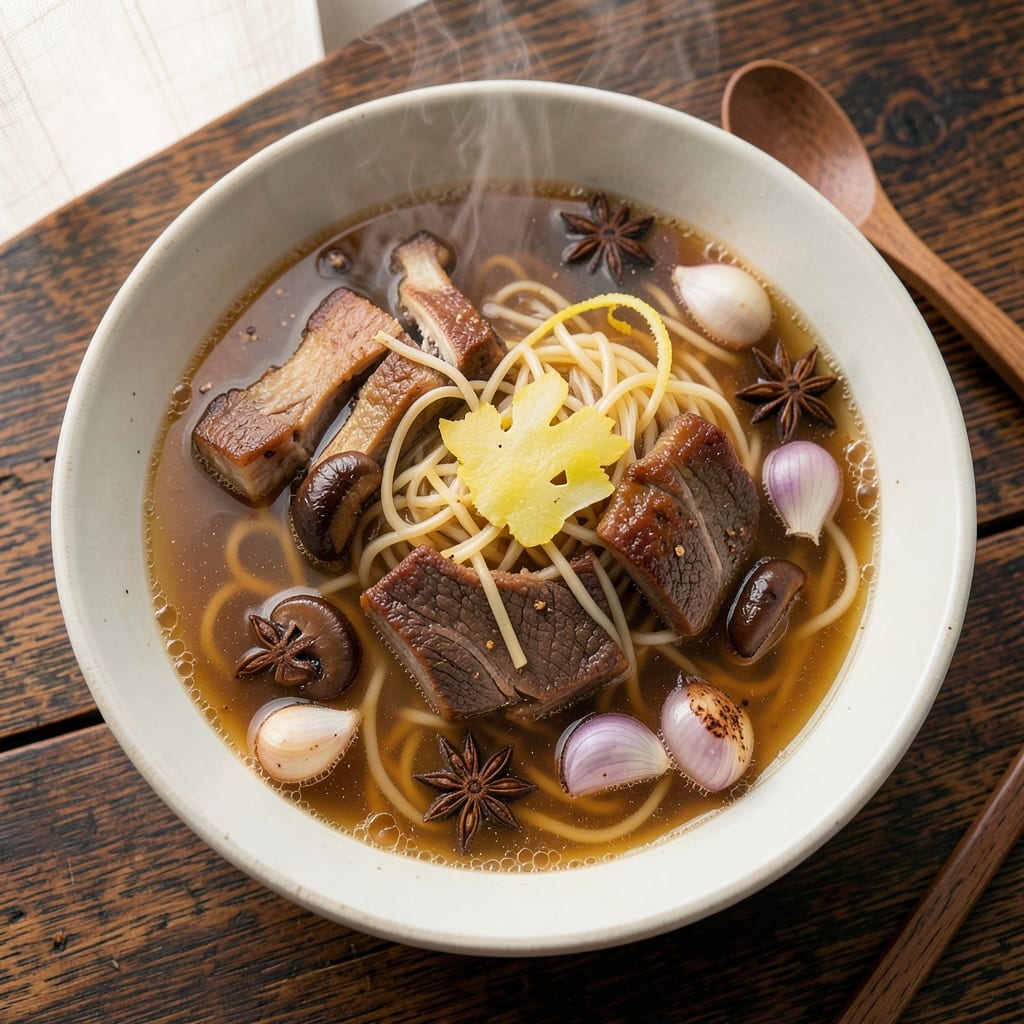
This authentic Chinese beef noodle soup recipe delivers the rich, umami-packed flavors of a bustling Cantonese restaurant—right in your kitchen. 🌟 The secret lies in slow-simmered beef bones, wok-seared aromatics, and a delicate balance of star anise, cinnamon, and soy sauce that transforms ordinary ingredients into something extraordinary. I've perfected this technique over years of testing, ensuring every spoonful delivers that perfect harmony of silky broth, tender beef, and chewy noodles.
The foundation of great beef noodle soup is the broth, which requires patience and precision. We'll start with beef bones and aromatics simmered for hours to extract maximum flavor, then build layers of depth with soy sauce, ginger, and spices. The wok-searing technique for garlic and shallots adds a smoky, caramelized complexity that sets this apart from basic recipes. This isn't just soup—it's a multi-textured experience where each component plays its part.
What makes this recipe truly authentic is the attention to detail in every step. The broth must be clear yet deeply flavorful, the beef tender yet retaining shape, and the noodles cooked just shy of al dente to maintain their chew. We'll cover the complete process—from preparing the broth to assembling the final bowl—so you can achieve restaurant-quality results at home. The aroma alone will have everyone gathering around your table.
Once you've mastered this technique, you'll discover how versatile it is. Serve it as a comforting weeknight meal or prepare a large batch for gatherings. The leftovers actually improve as flavors meld further, making this a recipe worth repeating. Let's get started on creating your own bowl of Cantonese comfort.
Ingredients for authentic chinese beef noodle soup
These ingredients transform simple pantry staples into restaurant-quality Cantonese beef noodle soup.
| Ingredient | Amount | Notes |
|---|---|---|
| Beef Bones (Marrow or Neck) 🦴 | 4 lb | Raw, split for maximum flavor |
| Dried Shiitake Mushrooms 🍄 | 8 whole | Rehydrated for umami depth |
| Fresh Ginger Root 🧅 | 2 inches | Unpeeled, sliced into thick coins |
| Garlic Cloves 🧄 | 12 cloves | Whole, lightly crushed |
| Shallots 🧅 | 6 whole | Peeled, halved lengthwise |
| Star Anise 🌟 | 4 whole | Pods, lightly crushed |
| Cinnamon Sticks 🌿 | 2 whole | 2-inch pieces |
| Dried Bay Leaves 🍃 | 2 whole | Standard dried leaves |
| Light Soy Sauce 🍶 | ½ cup | Kikkoman preferred |
| Dark Soy Sauce 🍶 | 2 tbsp | For color and depth |
| Sesame Oil 🫒 | 1 tbsp | Toasted for aroma |
| Cornstarch 🌾 | 1 tbsp | For broth clarification |
| Beef Tenderloin 🥩 | 1 ½ lb | Thinly sliced for quick cooking |
| Fresh Green Onions 🧅 | ½ cup | Thinly sliced, white and green |
| Wide Egg Noodles 🍜 | 1 lb | Fresh or dried, 1/4-inch wide |
| Extra-Virgin Olive Oil 🫒 | 2 tbsp | For wok-searing aromatics |
| Diamond Crystal Kosher Salt 🧂 | 1 tsp | For seasoning broth |
| Ground White Pepper 🌶️ | ½ tsp | Freshly ground preferred |
The beef bones are non-negotiable for authentic flavor—marrow or neck bones from Whole Foods or your local Asian market deliver the richest broth. Look for bones with good marbling and minimal fat cap. For the dried shiitakes, Asian grocery stores carry the best quality—avoid the small, shriveled ones. Fresh ginger and garlic should be firm with vibrant color; no soft spots or sprouting. The star anise and cinnamon sticks? Penzeys or bulk spice sections have the freshest, most aromatic options. Pro tip: Toast your whole spices in a dry pan for 30 seconds before adding to the broth—this releases their oils and intensifies the aroma.
No fresh shiitakes? Rehydrate the dried ones in hot broth—they'll plump up beautifully. Short on time? Canned shiitakes work in a pinch, but drain and rinse well. The soy sauces are where depth happens—Kikkoman light soy for saltiness and Lee Kum Kee dark soy for color. Substituting? Tamari for light soy and oyster sauce plus a pinch of sugar for dark soy. The sesame oil is purely for aroma—add it at the very end so it doesn't cook off. For the noodles, fresh egg noodles from Trader Joe's or Asian markets give the best texture, but dried works too if you soak them first.
Broth keeps 3-4 days in the fridge, but flavors deepen over time—make extra! The beef tenderloin can be prepped ahead and stored in the fridge for 2 days before cooking. For the noodles, cook them al dente—they'll finish in the hot broth. Freeze portions of broth in ice cube trays for quick future meals. And here's a secret: add a splash of Shaoxing wine when searing the aromatics if you want to go next-level authentic—it's the Cantonese chef's little trick for extra umami punch.
Why You'll Love This Recipe
- No-Chop Nightmare: I swear by this—just soak those dried shiitakes while the water boils, and let the beef bones do the work. No dice, no mincing, no stress. The broth builds itself while you slice a few shallots and stir in whole garlic cloves. (Yes, even on a Tuesday night.)
- Umami Bomb: That first sip? Chef’s kiss. The marrow bones melt into rich, jelly-like perfection, while the shiitakes and ginger root punch through with deep, earthy layers. The shallots caramelize right in the pot—no extra pan, no extra effort. It’s the kind of flavor that makes you forget takeout exists.
- Leftover Goldmine: This soup begs to be made in batches. Reheat the broth for instant ramen, toss cold noodles in for a quick lunch, or even use it as a base for fried rice later. My freezer’s always stocked with portions—I’ll be real, I’ve eaten it three times in a row without tiring of it.
- Budget Flex: Beef bones might sound fancy, but they’re the cheapest way to get restaurant-quality broth. A single batch feeds four, and the leftovers stretch into meals for days. Honestly, it’s the only “splurge” in my pantry that actually saves money. (And trust me, the neighbors notice when you bring it to potlucks.)
Step-by-step instructions for authentic Chinese beef noodle soup
Here's the method that delivers restaurant-quality depth and aroma in every bowl.
🔥 Step 1: Build the Aromatic Broth Base
Split the 4 lb beef bones lengthwise with a heavy cleaver to expose the marrow. This unlocks maximum flavor as it renders during cooking. Place the bones in a large stockpot and add 8 cups cold water (enough to cover the bones by 2 inches). Bring to a boil over high heat, then immediately reduce to a simmer.
Skimming is critical here. Use a fine-mesh skimmer to remove any foam or impurities that rise to the surface during the first 15 minutes of simmering. This ensures a clear, silky broth. While the broth simmers gently, add the 2 inches fresh ginger root, 12 cloves garlic cloves, 6 whole shallots, 4 whole star anise, 2 whole cinnamon sticks, and 2 whole dried bay leaves. These aromatics will infuse the broth with complex, layered flavors.
🍳 Step 2: Develop Umami with Shiitake and Soy Sauces
After 45 minutes of simmering, add the 8 whole dried shiitake mushrooms (previously soaked in hot water for 20 minutes and drained). These mushrooms will contribute deep umami that's essential to authentic Chinese broths. Stir in the 0.5 cup light soy sauce and 2 tbsp dark soy sauce—the dark soy sauce adds that signature mahogany color while enhancing the savory depth.
Continue simmering uncovered for another 2 hours, maintaining a gentle simmer. The broth should reduce slightly, concentrating the flavors. Here's the thing—don't rush this step. The slow extraction of collagen from the bones and the gradual infusion of aromatics create the complex, silky texture that separates good beef noodle soup from great.
🥘 Step 3: Clarify and Season the Broth
Strain the broth through a fine-mesh sieve into a clean pot, pressing gently on the solids to extract maximum flavor. Discard the solids. Return the broth to the stove and bring to a gentle simmer. In a small bowl, whisk together the 1 tbsp cornstarch with 2 tbsp cold water to create a slurry. Slowly pour this into the simmering broth while stirring constantly.
Simmer for another 5 minutes until the broth thickens slightly and becomes crystal clear. This clarification step is what gives authentic Chinese beef noodle soup its signature silky texture. Season with the 1 tsp diamond crystal kosher salt and 0.5 tsp ground white pepper, adjusting to taste. The broth should be seasoned but not salty—you'll be adding more salt when cooking the noodles.
🍳 Step 4: Wok-Sear the Beef Tenderloin
While the broth simmers, heat a wok or large skillet over high heat until smoking. Add 2 tbsp extra-virgin olive oil and swirl to coat. Working in batches if needed, add the 1.5 lb beef tenderloin (sliced into ¼-inch thick strips against the grain). Sear for 1-2 minutes per side until deep brown and just cooked through—it should still be slightly pink in the center.
Remove the beef and set aside. Add 1 tbsp sesame oil to the wok and toss the 0.5 cup fresh green onions (sliced) until fragrant. This quick searing creates a beautiful caramelized crust on the beef while infusing the oil with aromatic notes that will elevate the entire dish.
🥘 Step 5: Assemble and Serve the Noodle Soup
Bring a separate pot of water to a boil and cook the 1 lb wide egg noodles according to package directions until al dente. Drain and rinse briefly under cold water to stop the cooking process. Divide the noodles among 6 deep bowls.
Ladle the hot broth over the noodles, then arrange the seared beef tenderloin on top. Garnish each bowl with the green onions you sautéed in sesame oil. Here's the moment that matters: serve immediately while the broth is piping hot. Each bowl should have that perfect balance of silky broth, tender beef, and chewy noodles—with layers of aroma from the carefully built broth base.
Pro Tips For Making Authentic Chinese Beef Noodle Soup
- BLISTER THE GINGER: Toss thick, unpeeled ginger slices into the pot first—no need to peel—then sear them on high heat until they’re blackened in spots. That caramelized bitterness cuts through the richness of the beef broth like nothing else. (Yes, even if you’re impatient like me, wait until they smell intense before moving on.) ---
- STEAM THE SHIITAKES: Soak dried shiitakes, then slice them before adding to the pot—this keeps them from turning to mush. Toss the slices into the broth after the bones have sweated for 20 minutes, so they absorb flavor instead of dissolving. I learned this the hard way when my soup turned into a gray slurry. ---
- SCRAPE THE BONE BURN: After the initial sear, immediately lower the heat to medium and add just enough water to deglaze—scrape the browned bits off the bottom with a wooden spoon. Those bits are pure flavor, and skipping this step means losing half the depth of the broth. (Your future self will taste the difference.) ---
- SALT THE WATER LATE: Don’t add salt until the broth has simmered for at least 45 minutes—this lets the natural collagen break down properly. Toss in a big pinch of salt right before adding noodles, so they soak up the seasoning instead of turning bland. I was skeptical until I tried it, and now I can’t go back.
Dietary considerations for this dish
Gluten-Free Adaptations
This recipe naturally accommodates gluten-free diets by using simple swaps. Replace the wide egg noodles with gluten-free rice noodles (like Vital Choice brand) or gluten-free udon noodles from King Soba—both hold up well in hot broth. For extra chew, try shirataki noodles (konjac-based), which absorb flavors beautifully. Always check labels for hidden gluten in soy sauces—use gluten-free tamari instead of regular soy sauce. 🌱
Low-Sodium Options
If you're watching sodium, reduce the soy sauces to just 1 tbsp light soy sauce and 1 tsp dark soy sauce, then boost umami with 1 tbsp gluten-free fish sauce or 2 tbsp coconut aminos. For the broth, skip the salt until the very end and taste before adding—you may need only ½ tsp kosher salt total. Fresh herbs like cilantro or Thai basil add bright flavors without sodium. 💡
Vegetarian Substitutes
For a meatless version, replace the beef bones with mushroom stems (from your shiitakes) and kelp for umami depth. Swap the beef tenderloin for extra-firm tofu (pressed and cubed) or shiitake mushrooms (sliced and pan-seared). Use vegetable broth instead of beef broth and add 1 tbsp mushroom powder for extra savory notes. Garnish with fried shallots for texture. 🌿
Spicy Variations
Add heat by stir-frying 1 tbsp chili crisp or 1 tsp Sichuan peppercorns with the aromatics. For a smoky kick, top each bowl with 1 tsp chili oil> (like Lao Gan Ma) and a sprinkle of crushed dried chilies. If you love tangy heat, squeeze ½ lime over the finished soup. Balance the spice with a pinch of sugar to enhance the broth's depth. 🌶️
Protein Swaps
Need a different protein? Try chicken thighs (bone-in for flavor) or pork shoulder (slow-cooked until tender). For seafood lovers, use shrimp (add at the end) or firm white fish like cod (poach gently in the broth). If you prefer plant-based, seitan (sliced and seared) mimics beef texture beautifully. Always adjust cook times—delicate proteins like fish need just 3-4 minutes in the broth. 🍤
Allergen-Friendly Notes
This recipe is naturally nut-free and egg-free (if using gluten-free noodles). For soy allergies, substitute soy sauces with coconut aminos and use sesame-free oil (like avocado oil). If avoiding sesame, omit the sesame oil garnish or use toasted pumpkin seed oil instead. Always check noodle labels—many egg noodles contain soy. Double-check all spices for cross-contamination warnings. ✨
Nutrition facts
Frequently asked questions
Can I make this beef noodle soup in a slow cooker?
Yes! Transfer the broth ingredients to a 6-quart slow cooker and cook on low for 8 hours or high for 4 hours. The slow cooker's gentle heat mimics the traditional simmering process, though you'll need to strain and clarify the broth afterward. For the beef, sear it separately in a skillet before adding to the soup.
How do I know when the beef broth is ready?
The broth is ready when it's deep amber color, smells rich and aromatic, and passes the slurp test: it should coat your spoon lightly but not be syrupy. The total simmering time should be about 3 hours (including the initial 45 minutes). Taste it—it should be savory but not salty yet.
Can I prepare the broth ahead of time?
The broth actually improves overnight as flavors meld. Store it in the fridge for up to 4 days or freeze it in 1-cup portions for quick meals. Reheat gently on the stove—never microwave it directly from frozen. For best results, bring it to a simmer before adding noodles and beef.
What's the secret to the perfect noodle texture?
Cook the noodles just shy of al dente (about 1 minute less than package instructions) so they finish cooking in the hot broth. The ideal texture should be chewy but not mushy. Fresh egg noodles work best, but dried noodles should be soaked for 10 minutes before cooking to prevent breaking.
Why does my broth look cloudy?
Cloudy broth usually means you didn't skim enough impurities during the initial boil or the broth didn't simmer long enough. To fix it, strain through a cheesecloth-lined sieve for a clearer result. For extra clarity, add 1 extra tbsp cornstarch to the slurry during the clarification step.