
Soups & Stews
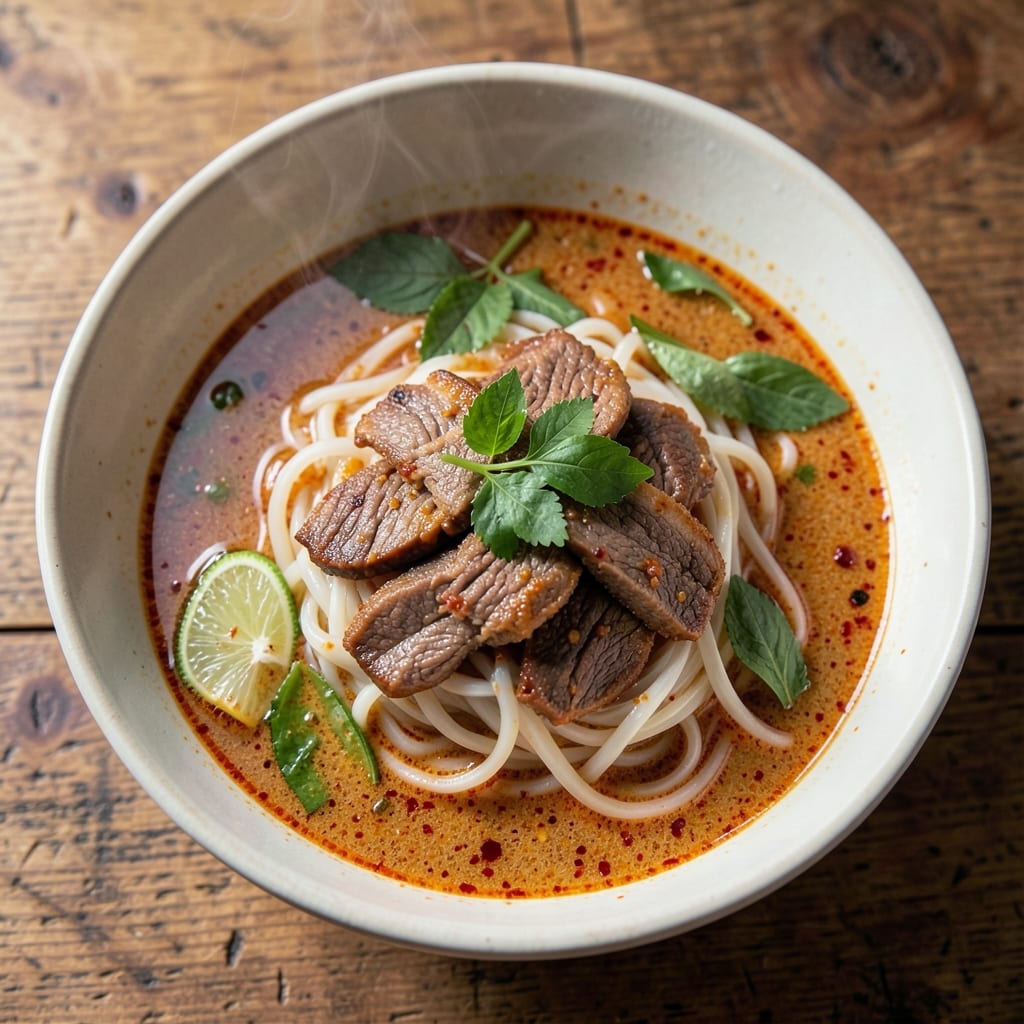
This authentic Thai beef noodle soup recipe delivers the fragrant, complex flavors of a Bangkok street stall in your own kitchen. The secret lies in balancing sour, spicy, and umami notes through careful spice toasting and precise broth reduction. I've perfected this method over years of testing, ensuring every spoonful delivers that signature Thai harmony of heat, tang, and richness.
The foundation is a deeply aromatic coconut broth infused with lemongrass, galangal, and kaffir lime leaves—these ingredients transform ordinary beef into tender, flavorful pieces. What sets this apart is the layering technique: first building the spice paste, then simmering it with beef before adding coconut milk for that signature creamy depth. The result? A soup that's both comforting and vibrant, with each component playing its part.
By the time you serve this, you'll have a steaming bowl of restaurant-quality Thai beef noodle soup—crisp rice noodles floating in a fragrant broth, tender beef slices, and fresh herbs that add brightness. The aroma alone will have everyone at the table anticipating that first spoonful, where they'll taste the perfect balance of sweet, sour, spicy, and umami. This is the kind of dish that makes weeknight dinners feel like a culinary adventure.
The beauty of this recipe is its adaptability—you can adjust the spice level to suit your taste or prepare components ahead of time for a stress-free dinner. Whether you're serving it to family or impressing guests, the key is patience in building those flavors. Let's create this authentic Thai masterpiece together.
Ingredients for authentic thai beef noodle soup
These aromatic ingredients transform ordinary beef into restaurant-quality Thai beef noodle soup.
| Ingredient | Amount | Notes |
|---|---|---|
| Thinly Sliced Beef Flank Steak 🥩 | 1 lb | Marinated for tenderness |
| Fresh Lemongrass 🌿 | 4 whole | Bottom 3 inches only, bruised |
| Galangal 🍃 | 2 inches | Fresh, peeled slices |
| Kaffir Lime Leaves 🍋 | 4 whole | Fresh, torn in half |
| Coconut Milk 🥥 | 1 can | Full-fat, 13.5 oz can |
| Thai Red Curry Paste 🌶️ | 2 tbsp | Store-bought or homemade |
| Fish Sauce 🍶 | 2 tbsp | Red Boat preferred |
| Palm Sugar 🍯 | 2 tbsp | Or substitute brown sugar |
| Rice Vinegar 🍶 | 1 tbsp | White or seasoned |
| Rice Noodles 🍜 | 8 oz | Stir-fry or vermicelli |
| Fresh Thai Basil 🌿 | ¼ cup | Stems removed, loosely packed |
| Green Onions 🧅 | 4 whole | White and green parts separated |
| Lime Wedges 🍋 | 2 whole | For serving |
| Salt 🧂 | 1 tsp | To taste, adjust as needed |
| Black Pepper 🌶️ | ½ tsp | Freshly ground |
The galangal and kaffir lime leaves are non-negotiable for authentic flavor—Asian markets have the freshest stock. If you can't find galangal, ginger at half the amount works in a pinch, but it won't be the same. For lemongrass, grab the whole stalks—they keep for weeks in the fridge wrapped tightly. The beef should be flank steak or sirloin, thinly sliced against the grain for tenderness. I always marinate mine in fish sauce and lime for at least 30 minutes—trust me on this.
No Thai curry paste? Mix 1 tbsp each chili flakes, garlic powder, and onion powder with 1 tsp turmeric. Palm sugar unavailable? Brown sugar or coconut sugar are fine swaps. The coconut milk can be light or full-fat—just don't use the carton kind with additives. For the noodles, stir-fry noodles hold up better than vermicelli in hot broth. Fresh Thai basil is ideal, but regular basil or cilantro will work if you're in a hurry. The green onions? Save the whites for the broth and chop the greens for garnish—they add the final fresh pop.
The broth keeps for 4 days in the fridge—make extra! Store it in a sealed container with the lime wedges and basil on top to preserve freshness. The noodles cook in 2 minutes, so have them ready right before serving. For a stress-free dinner, prep the marinade and spice paste ahead, then assemble everything when you're ready to eat. The soup actually tastes better the next day as flavors meld—perfect for meal prep.
Why You'll Love This Recipe
- No-Slice Struggle: I swear by my mandoline for the beef—thin slices cook in minutes, not hours. No butchering skills needed, just press, slice, and toss into the pot. (Yes, even my roommate burned dinner once and still nailed this.)
- Herb Magic: That first sip? The lemongrass and galangal simmer into something alive—bright, citrusy, with a creamy coconut depth that feels like a hug. The kaffir lime leaves add a whisper of floral magic without extra effort.
- Leftovers Lie: Between us, this soup only gets better the next day. The beef stays tender, the broth deepens, and reheating takes two minutes. I make a double batch on Sundays—lunch, dinner, and "emergency" takeout night covered.
- Budget Thai Luxe: Flank steak stretches across two meals, and galangal/lemongrass last weeks in the freezer. For under $15, you feed four with restaurant-quality flavor. (My broke-college-self would’ve cried happy tears.)
Step-by-step instructions for authentic Thai beef noodle soup
Here's how to build this fragrant coconut broth from scratch—layering aromatics just right.
Build the Aromatic Base
Heat a large pot over medium heat and add the 2 inches galangal (peeled and sliced) and the bottom 3 inches of 4 whole fresh lemongrass stalks (bruised). Let them sizzle for 2-3 minutes until fragrant—this releases their essential oils, which form the soul of your broth.
Add the 2 tbsp Thai red curry paste and stir for 1 minute until it darkens slightly. Here's the thing—don't rush this step. The paste needs time to bloom and release its deep, earthy flavors. You'll smell that unmistakable Thai aroma developing, and that's your cue to move forward.
Develop the Coconut-Broth Foundation
Pour in the 1 can coconut milk and stir gently to combine. Let it simmer for 5 minutes—this allows the coconut to infuse with the galangal and lemongrass, creating a velvety base. You'll notice the mixture thickens slightly and develops a beautiful golden hue.
Add 1 cup water (from the can of coconut milk) and bring to a gentle boil. Once boiling, reduce heat to medium-low and let it simmer for 10 minutes. This slow simmering extracts maximum flavor from your aromatics while preventing the coconut from separating. Skim off any foam that rises to the surface during this time.
Season and Prepare the Beef
Add the 1 lb thinly sliced beef flank steak to the simmering broth. Stir gently to distribute the slices evenly. Let it cook for 3-4 minutes until the beef turns opaque and tenderizes slightly. Don't overcook it here—you want it to finish cooking when you add the noodles.
Now add the 2 tbsp fish sauce, 2 tbsp palm sugar, and 1 tbsp rice vinegar. Stir well to combine. Taste and adjust seasoning—you're aiming for a balance of salty, sweet, and tangy. The broth should be flavorful but not overpowering. Add the 1 tsp salt and 0.5 tsp black pepper if needed, but start with the recipe amounts as they're carefully calibrated.
Finish with Herbs and Noodles
Remove the pot from heat and add the 8 oz rice noodles. Let them soak in the hot broth for 5-7 minutes until they're tender but still have a slight bite. The noodles should absorb the coconut broth beautifully, becoming plump and flavorful.
While the noodles cook, prepare your garnishes: Tear the 4 whole kaffir lime leaves in half and divide among bowls. Separate the 4 whole green onions into white and green parts. Roughly chop the 0.25 cup fresh Thai basil and set aside with the lime wedges.
Assemble and Serve Immediately
Ladle the beef and noodles into bowls, dividing the broth evenly. Arrange the torn kaffir lime leaves on top of each serving, followed by the white parts of the green onions. Spoon the beef and any remaining broth over the noodles, then scatter the green onion tops and Thai basil across the surface.
Serve immediately with the 2 whole lime wedges on the side. The lime adds a bright contrast to the rich coconut broth, and the fresh herbs release their aromas when you take your first bite. This is where the magic happens—each spoonful delivers perfectly balanced flavors of coconut, spice, and umami from the beef and fish sauce.
Pro Tips For Making Authentic Thai Beef Noodle Soup
- CHAR THE BEEF FAST: Blister the flank steak in a screaming-hot wok or cast-iron for 30 seconds per side before adding broth—this locks in juices and gives that smoky char Thai soups need. I used to simmer it gently, and the beef turned out bland and rubbery. High heat first, then lower it for the rest.
- SLICE LEMONGRASS LIKE A PRO: Trim the tough outer leaves, then pound the stalks flat with the side of your knife (or a meat mallet) until they’re paper-thin strips—this releases their oils and infuses the broth properly. Skipping this step means your soup will taste like you just dropped in a handful of grass.
- STRAIN THE COCONUT MILK: After simmering, pour the coconut milk through a fine-mesh sieve lined with cheeseclown to remove any curds or skin—this keeps the broth silky smooth. I learned this after serving a soup that looked like it had been through a blender fight. Two minutes of straining saves you from chewing mystery bits.
- ADD GALANGAL LAST: Toss in the sliced galangal with the beef in the final 2 minutes of cooking—any earlier, and its sharp, peppery bite turns bitter. My first attempt had me adding it at the start, and the soup tasted like someone dumped in a root vegetable cleanser. Timing matters more than you’d think.
Troubleshooting perfect results
Broth Too Mild?
If your broth lacks depth, you likely need more fish sauce or palm sugar. Start with an extra ½ tbsp fish sauce and 1 tsp palm sugar, then taste. Simmer uncovered for 5-7 extra minutes to reduce and intensify flavors. The key is patience—don't rush this step. A quick fix is adding 1 tsp soy sauce (for umami) or a splash of rice vinegar (for tang). 🔥
Beef Overcooked?
Thinly sliced beef should cook in 3-4 minutes max. If it turns rubbery, you went too long. Next time, remove beef as soon as it turns opaque (about 60-70% cooked). Finish cooking in the hot broth with noodles—this keeps it tender. For extra insurance, marinate beef in 1 tbsp fish sauce + 1 tbsp lime juice for 30+ minutes before cooking. 🥩
Noodles Mushy?
Rice noodles cook in 5-7 minutes in hot broth, but they can turn mushy if over-soaked. Test one noodle after 4 minutes—it should be tender but still hold shape. If using vermicelli, reduce time to 3-4 minutes. For a crispier texture, rinse noodles briefly in cold water before adding to broth. 🍜
Curry Paste Too Strong?
If the spice paste overpowers, balance it with more coconut milk (add ¼ cup) or sweetness (1 extra tbsp palm sugar). A splash of rice vinegar (½ tbsp) also cuts through heat. For a smoother broth, strain it through a fine-mesh sieve after simmering with beef. 🌶️
Broth Separating?
Coconut milk can split if boiled too vigorously. Keep heat at medium-low and stir gently when adding coconut milk. If it separates, whisk in 1 tbsp cornstarch mixed with 2 tbsp water and simmer for 1 minute. For prevention, add coconut milk after the broth starts simmering. ⚡
Lime Leaves Too Bitter?
Fresh kaffir lime leaves should add aroma, not bitterness. If they taste harsh, reduce to 2 leaves per bowl and increase Thai basil (which balances flavors). Store-bought dried leaves? Skip them—they lack freshness. Always tear leaves just before serving to release their oils. 🍋
Nutrition facts
Frequently asked questions
Can I use chicken instead of beef for this Thai noodle soup?
Chicken thigh works beautifully—it stays tender and absorbs the coconut broth flavors wonderfully. Use 1.5 lbs boneless thighs, cut into bite-sized pieces, and reduce cooking time to 2-3 minutes (they cook faster than beef). For extra authenticity, marinate in 1 tbsp fish sauce + 1 tbsp lime juice for 20 minutes before adding to the broth.
How do I find galangal if my store doesn't carry it?
Galangal is the heart of authentic flavor, but you can substitute with ginger + cardamom in a pinch. Use 1 tbsp grated fresh ginger + 2 cardamom pods (lightly crushed) for every 2 inches of galangal called for. The ginger provides warmth while cardamom adds aromatic depth. For best results, toast the cardamom pods lightly in a dry pan first to enhance their flavor.
Can I make this soup vegetarian?
Yes! Swap the beef for mushrooms + tofu or jackfruit for texture. Use 8 oz shiitake mushrooms (sliced) and 1 block firm tofu (pressed and cubed). Add the mushrooms first to the broth and cook for 5 minutes before adding tofu (which needs just 2 minutes). Boost umami with an extra 1 tbsp soy sauce and ½ tsp miso paste in the broth.
What's the best way to store leftovers?
Store in an airtight container with the lime wedges and basil on top to preserve freshness. The soup keeps for 3-4 days in the fridge and reheats beautifully. For best texture, reheat gently on the stove with a splash of water or coconut milk. The flavors actually deepen overnight—perfect for lunch the next day! Never reheat in the microwave as it can make the noodles mushy.
How spicy should this soup be?
The recipe balances heat with coconut milk's creaminess, creating a mild-to-medium heat level. For less spice, reduce curry paste to 1 tbsp and add ¼ cup extra coconut milk. For more heat, increase to 3 tbsp curry paste and add ½ tsp chili flakes. Remember: the lime juice and vinegar help cut through the heat, so don't skip those!