
Soups & Stews
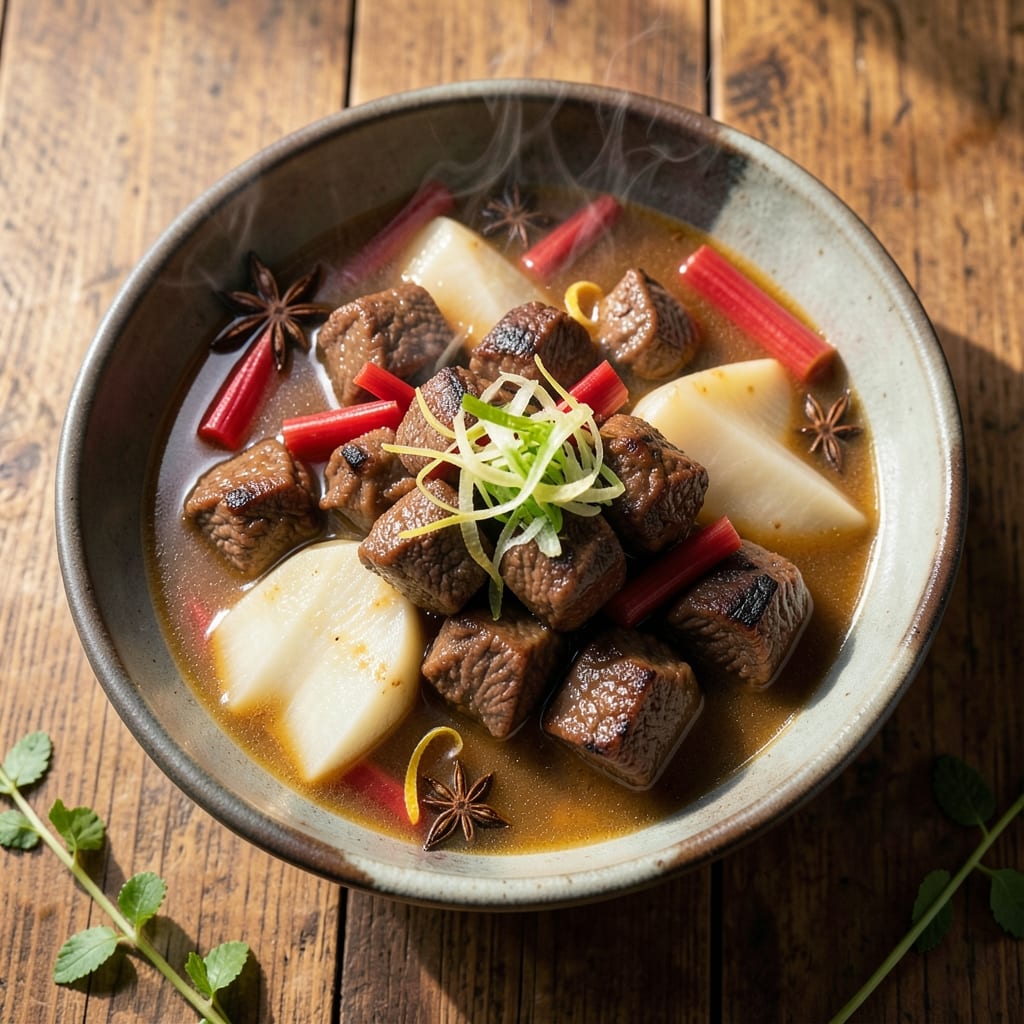
This authentic Chinese beef stew transforms tough cuts into melt-in-your-mouth perfection through slow braising—a technique that builds deep, aromatic flavors over hours. The secret lies in balancing soy sauce, star anise, and cinnamon while letting the beef tenderize in its own juices, creating a dish that tastes like home. I developed this recipe after years of studying regional variations, ensuring every spoonful delivers the rich, silky texture and complex spice profile that define Chinese comfort food.
The process begins with searing the beef to lock in juices, then simmering it low and slow until the meat practically falls apart. Aromatic vegetables like daikon radish and celery add subtle sweetness, while ginger and garlic ground the flavors. What sets this apart is the star anise—its subtle licorice notes infuse the broth, creating layers of depth that store-bought versions simply can’t match. The result is a stew so tender and flavorful, it becomes the centerpiece of any meal.
Serve this stew over steamed jasmine rice to soak up every drop of that velvety broth, or pair it with fluffy mantou buns for a heartier experience. The slow cooking ensures the beef remains juicy and the broth reduces to a perfect consistency—never watery, never overpowering. This isn’t just a stew; it’s a taste of home, made richer with each simmer. Ready to master the art of braising?
For those eager to explore further, I’ll share regional twists like Sichuan’s fiery chili oil addition or Hong Kong’s lighter soy-forward approach. But first, let’s focus on nailing this foundational recipe—the one that makes every bite unforgettable.
Ingredients for authentic chinese beef stew
Authentic flavors start with these carefully chosen ingredients for rich, silky beef stew.
| Ingredient | Amount | Notes |
|---|---|---|
| Beef Chuck Roast 🥩 | 2 lb | Cut into 1.5-inch cubes |
| Soy Sauce 🍶 | ½ cup | High-quality dark soy preferred |
| Star Anise 🌿 | 4 whole | Whole pods for infusion |
| Fresh Ginger Root 🧄 | 2 tbsp | Finely grated, peeled |
| Daikon Radish 🥕 | 1 whole | Cut into 1-inch chunks |
| Celery Stalk 🧅 | 2 whole | Cut into 2-inch pieces |
| Garlic Cloves 🧄 | 6 cloves | Smashed, not minced |
| Cinnamon Sticks 🌿 | 2 whole | For aromatic depth |
| Brown Sugar 🍯 | ¼ cup | Lightly packed |
| Shaoxing Wine 🍷 | ¼ cup | Substitute dry sherry if unavailable |
| Green Onions 🧅 | 4 whole | White and green parts separated |
| Cornstarch 🌾 | 1 tbsp | For thickening broth |
| Vegetable Oil 🫒 | 2 tbsp | For searing beef |
| Salt 🧂 | 1 ½ tsp | Kosher or sea salt |
| Black Peppercorns 🌶️ | 1 tsp | Crushed lightly |
The beef cut matters most here—chuck roast with good marbling breaks down beautifully during braising. Look for pre-cut cubes at Asian markets or butcher shops for convenience, but if buying whole, ask for 1.5-inch chunks to ensure even cooking. Costco or H Mart typically carry high-quality chuck at reasonable prices. Star anise is non-negotiable; skip the powdered version—whole pods infuse flavor far better. For ginger, fresh is essential—the dried powder lacks the bright, zesty punch this dish needs. Daikon radish adds subtle sweetness, but if unavailable, substitute extra celery (just increase to 3 stalks).
No Shaoxing wine? Dry sherry or mirin works perfectly—just reduce the amount to 2 tbsp to avoid overpowering. The soy sauce should be dark soy for color, but if you only have light, add 1 tsp molasses to compensate. For the cornstarch slurry, use cold water—hot water creates lumps. Green onions get separated because the whites cook down while the greens stay fresh for garnish. If you're short on time, pre-cut all vegetables** while the beef sears—they'll be ready to add later. The cinnamon sticks can be removed after 30 minutes of simmering if you prefer a smoother texture.
This stew tastes even better the next day as flavors meld. Store in an airtight container in the fridge for up to 5 days, or freeze for 3 months by portioning into containers. For reheating, add 2 tbsp water per serving and simmer gently—never microwave, as it turns the broth rubbery. The broth reduces beautifully, so if you prefer extra sauce, add 1/4 cup water during the last 10 minutes of simmering. Garnish with fresh cilantro or sesame oil for extra brightness before serving.
Why You'll Love This Recipe
- One-Pot Magic: I swear by this—just toss in the beef, daikon, and a few whole spices, then walk away. No chopping, no fuss, and that star anise turns the whole kitchen into a fragrant dream while you’re busy with life.
- Deep Umami Love: The soy sauce and ginger root work their magic slowly, turning tough chuck into melt-in-your-mouth beef with a broth so rich, it’ll make you forget takeout exists. Honestly, the first bite is always the hardest to stop after.
- Leftover Goldmine: This stew tastes better the next day—like a cozy hug for your lunchbox. I make a double batch on Sundays because it reheats perfectly, and my kids actually eat their veggies (the daikon, mostly).
- Budget Warrior: A single chuck roast feeds my family for days, and the spices? A few pods of star anise and a thumb of ginger stretch forever. It’s the kind of meal that makes grocery day less stressful and your wallet happier.
Step-by-step instructions for authentic Chinese beef stew
Master this traditional technique for melt-in-your-mouth beef with deep aromatic flavors.
Prepare the Beef and Aromatics
Cut the 2 lb beef chuck roast into 1.5-inch cubes—uniform size ensures even cooking. Pat each piece dry with paper towels to promote browning. In a small bowl, combine the 1.5 tsp salt, 1 tsp crushed black peppercorns, and 2 tbsp finely grated fresh ginger root. Rub this mixture over each beef cube until fully coated. This seasoning blend penetrates the meat while adding essential warmth.
For the aromatics, cut the 1 whole daikon radish into 1-inch chunks and the 2 whole celery stalks into 2-inch pieces. Smash the 6 garlic cloves lightly with the side of your knife—this releases their oils without turning to paste. Separate the 4 whole green onions into white and green parts for garnish later. The daikon and celery will soften beautifully during the long braise, adding subtle sweetness and texture.
Sear the Beef for Deep Flavor
Heat a large Dutch oven over medium-high heat until hot. Add the 2 tbsp vegetable oil and swirl to coat the bottom. Working in batches to avoid crowding, add the seasoned beef cubes and sear for 2-3 minutes per side until they develop a deep golden-brown crust. This step is critical—it locks in juices and creates the rich fond that forms the stew's foundation. Don't rush; let the beef develop color before moving it to a plate.
Once all beef is seared, reduce heat to medium and add the smashed garlic cloves, 2 whole cinnamon sticks, and 4 whole star anise. Stir for 30 seconds until fragrant—you should smell warm spices and garlic filling your kitchen. This aromatic base will infuse the entire stew with complex depth. The star anise and cinnamon sticks will dissolve completely during cooking, leaving only their essence behind.
Build the Braising Liquid
Pour in the 0.5 cup soy sauce and 0.25 cup Shaoxing wine, scraping up any browned bits from the bottom of the pot. Add the 0.25 cup lightly packed brown sugar and stir until dissolved. The sugar will caramelize slightly, adding another layer of sweetness to balance the savory elements. Bring the mixture to a gentle simmer, then add the daikon radish chunks and celery pieces. Return the seared beef to the pot, along with any accumulated juices.
Bring the liquid to a rolling boil, then immediately reduce heat to low. The liquid should barely bubble—this gentle simmer prevents the beef from toughening. Cover the pot with a tight-fitting lid and let it cook for 2 hours. During this time, the beef will transform from tough chuck roast into fork-tender morsels. Check occasionally to ensure liquid hasn't evaporated completely; add 2-3 tablespoons of hot water if needed to maintain coverage.
Thicken and Finish the Stew
After 2 hours, remove the lid and increase heat to medium. In a small bowl, whisk together the 1 tbsp cornstarch with 2 tablespoons of water to create a slurry. Slowly pour this mixture into the stew while stirring constantly. The cornstarch will thicken the cooking liquid into a glossy, velvety sauce that clings beautifully to the beef. Simmer uncovered for 5-7 minutes until the sauce coats the back of a spoon and the beef is fork-tender.
Taste and adjust seasoning—you may need to add a splash more soy sauce or a pinch of salt to balance flavors. The stew should be rich but not overly salty, with a perfect harmony of sweet, savory, and aromatic notes. Remove the cinnamon sticks and star anise (they've done their job), then stir in the white parts of the green onions for a final touch of freshness.
Rest and Serve
Transfer the stew to a serving dish and let it rest for 10 minutes before serving. This resting period allows the juices to redistribute throughout the beef, ensuring each bite is moist and flavorful. Garnish with the green parts of the green onions just before serving—this adds a bright contrast to the deep, savory stew.
Serve the beef stew hot over steamed jasmine rice or egg noodles, allowing diners to ladle the rich sauce over their choice of starch. The result should be silky beef that falls apart at the touch, infused with star anise and ginger, all balanced by the glossy, slightly sweet sauce. This authentic Chinese technique delivers restaurant-quality results at home.
Pro Tips For Making Authentic Chinese Beef Stew
- BLOOM THE STAR ANISE: Toss the whole pods into the pot after the beef has browned—this way, they infuse the broth without burning. I learned this the hard way when my first batch tasted bitter; low and slow is key, but timing matters too.
- SEAR THE DAIKON FIRST: Cut the daikon into thick chunks and sear them in the pot for 2-3 minutes before adding liquid—this caramelizes the edges and deepens the flavor. Skip this, and you’ll end up with a bland, watery vegetable instead of a rich, textured base.
- DON’T BOIL THE SOY SAUCE: Add soy sauce after the broth has simmered for 30 minutes, not at the start—boiling it destroys the delicate umami compounds. Stir it in when the beef is nearly tender, and the sauce will mingle without turning harsh.
- REST THE GINGER LONGER: Peel and slice the ginger thick (about ½-inch pieces) and let it sit in the broth for the full 2 hours—thin slices get mushy and overpower the dish. Sounds counterintuitive, but the slow release of heat builds real depth.
Wine and beer pairings for this recipe
Red Wine Pairings
For this rich, aromatic beef stew, I reach for a medium-bodied Chinese red wine like Gewürztraminer or Cabernet Franc—both complement the star anise and ginger without overpowering. A dry Riesling from Germany also works beautifully, as its crisp acidity cuts through the stew’s velvety texture while enhancing the soy sauce’s umami. If you prefer boldness, a lightly oaked Shiraz (like those from Australia) brings warmth that mirrors the cinnamon and brown sugar. 🍷
Light Beer Options
A crisp Chinese lager such as Tsingtao or Snow Beer cleanses the palate between bites, letting the beef’s depth shine. For something more adventurous, try a Belgian witbier—its citrus notes (from coriander) play off the ginger and star anise. Avoid heavy stouts or IPAs, which would clash with the stew’s delicate balance. A Pilsner (like Heineken) is another safe bet for its refreshing carbonation. 🍺
Fortified Wine Twist
For a truly authentic touch, serve the stew with a dry sherry like Fino or Marsala. The nutty, slightly sweet profile echoes the stew’s star anise and brown sugar, creating a harmonious pairing. I often drizzle a splash of sherry over the stew at the table—it adds a luxurious finish that feels like a restaurant secret. 🥂
Non-Alcoholic Pairings
Don’t overlook jasmine tea or pu-erh tea for a caffeine-free option. The floral notes of jasmine tea brighten the dish, while pu-erh’s earthy depth mirrors the stew’s complexity. For something fizzy, a ginger beer (like Feather) adds a zesty kick that complements the ginger in the stew. 🍵
Regional Wine Adaptations
In Sichuan, where chili oil is often added, pair with a spicy Riesling to match the heat. For Cantonese-style stews (lighter soy profiles), a Pinot Noir from China’s Yantai region offers subtle fruitiness. Always let the wine’s acidity balance the dish’s richness—this is the golden rule. ✨
Nutrition facts
Frequently asked questions
Can I substitute beef chuck roast with another cut?
Yes, but choose wisely! Beef brisket or short ribs work beautifully—they're well-marbled and braise wonderfully. Avoid lean cuts like sirloin, as they'll dry out. For a quicker option, pork shoulder also works, but reduce cooking time to 1.5 hours since pork tenderizes faster.
Why does my stew taste too salty?
This usually happens when using light soy sauce instead of dark soy, or adding extra salt during seasoning. To fix it, stir in 1/4 cup hot water and 1 tbsp cornstarch slurry to dilute the saltiness. For prevention, taste the soy sauce first—it should be slightly salty before adding. The stew's sweetness from brown sugar helps balance flavors naturally.
How do I make this stew spicier?
For heat, add 1-2 tbsp chili oil (Sichuan-style) during the last 10 minutes of simmering, or stir in 1 tsp red pepper flakes with the aromatics. For depth, include 1-2 dried chili peppers (like Sichuan peppers) with the star anise. Remove them before serving if you prefer less texture.
Can I make this stew in a slow cooker?
Sear the beef first, then transfer everything to a 6-quart slow cooker. Cook on low for 8 hours or high for 5 hours. In the last 30 minutes, stir in the cornstarch slurry to thicken. The slow cooker's gentle heat ensures tender beef without drying it out. Just skip the final uncovered simmer—it's not needed.
What's the best way to reheat leftovers?
Reheat gently on the stovetop with 1-2 tbsp water to prevent drying. Never microwave, as it makes the sauce rubbery. For best results, cover and simmer on low heat for 10-15 minutes. The beef will stay juicy, and the flavors will meld even more beautifully. Store leftovers in an airtight container for up to 5 days.