
Main Courses
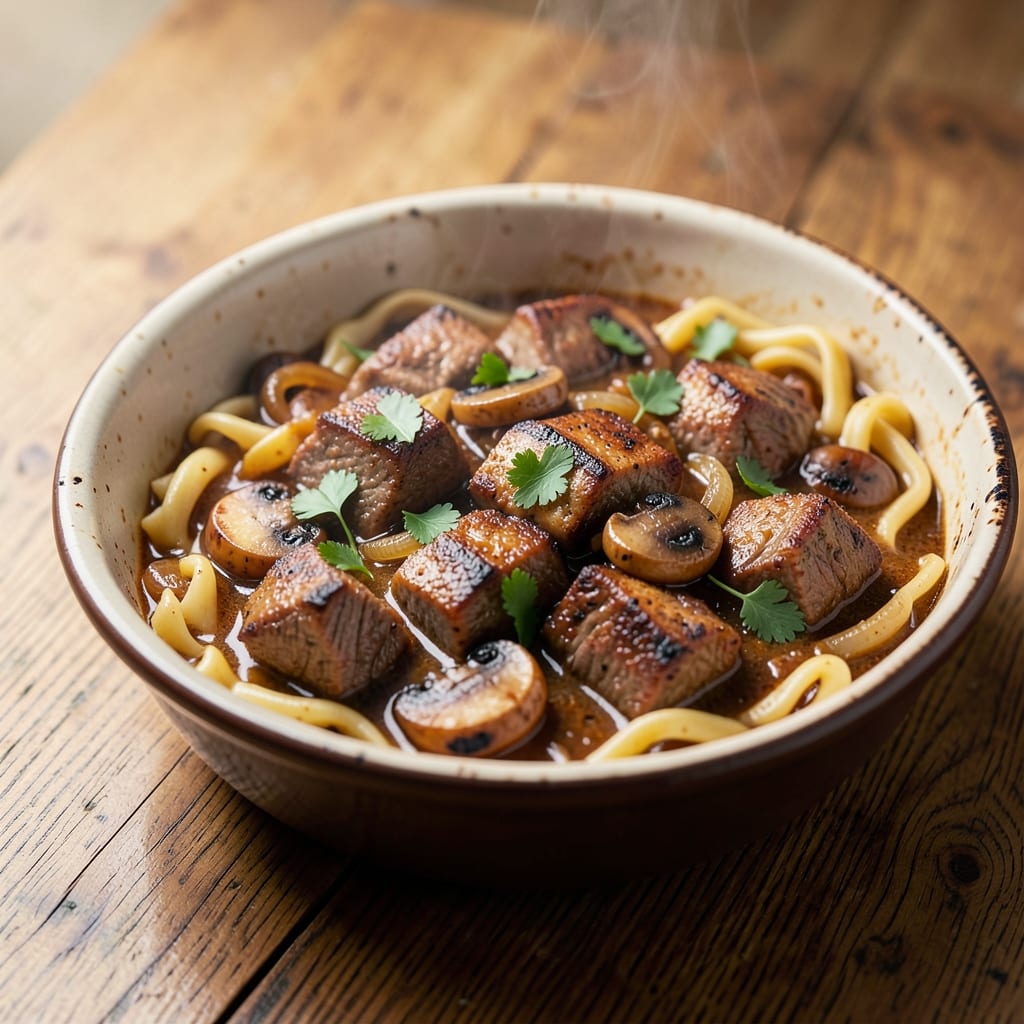
This authentic German beef stroganoff transforms traditional stroganoff into a hearty, paprika-infused masterpiece with deep umami flavors and velvety mushroom cream. The secret lies in slow-braising the beef with German mustard and beer, then finishing with a rich sauce that balances tangy, smoky, and creamy notes—just like my grandmother’s recipe from Bavaria. Every bite delivers tender beef, earthy mushrooms, and a sauce so flavorful it feels like a hug in a bowl.
The key to authenticity is the marinade: a blend of German dark beer, Dijon mustard, and sweet paprika that tenderizes the beef while infusing it with bold, savory depth. Unlike lighter stroganoff versions, this recipe relies on slow cooking—not quick searing—to develop rich, caramelized flavors. The mushrooms, sautéed until golden, become the sauce’s star, absorbing all the aromatic spices and beer reduction.
What sets this dish apart is the creamy yet balanced sauce, thickened with a touch of cornstarch and finished with a splash of crème fraîche for tang. Served over egg noodles or fluffy spaetzle, it becomes a comforting, restaurant-worthy meal that’s surprisingly simple to recreate at home. The aroma alone—smoky paprika, malty beer, and buttery mushrooms—will have your kitchen feeling like a German beer hall.
Perfect for family dinners or cozy weeknight meals, this stroganoff is foolproof once you master the slow-cooking technique. The leftovers reheat beautifully, making it ideal for meal prep. Whether you’re serving it to guests or treating yourself, this recipe delivers the authentic German flavors you’ve been craving—without the fuss of a traditional German kitchen.
Ingredients for authentic german beef stroganoff
These German-inspired ingredients bring authentic Bavarian flavors to your stroganoff—rich, smoky, and deeply comforting.
| Ingredient | Amount | Notes |
|---|---|---|
| Beef Chuck Roast 🥩 | 1 ½ lb | Pre-cubed, 1-inch pieces preferred |
| German Dark Beer 🍺 | 1 cup | Dortmunder or Bock style recommended |
| Dijon Mustard 🍯 | 2 tbsp | High-quality, smooth variety |
| Sweet Paprika 🌶️ | 1 tbsp | Hungarian or Spanish for authentic flavor |
| Smoked Paprika 🌶️ | 1 tsp | For depth and smokiness |
| Garlic Cloves 🧄 | 4 cloves | Minced, fresh preferred |
| Shallots 🧅 | 2 whole | Minced, or sub with yellow onion |
| White Mushrooms 🍄 | 16 oz | Sliced, cremini or baby bella work too |
| Heavy Cream 🥛 | ½ cup | Full-fat for velvety texture |
| Crème Fraîche 🧀 | ¼ cup | Or substitute sour cream |
| Cornstarch 🌾 | 1 tbsp | For perfect sauce thickening |
| Extra-Virgin Olive Oil 🫒 | 2 tbsp | For sautéing mushrooms |
| Unsalted Butter 🧈 | 2 tbsp | European-style preferred |
| Diamond Crystal Kosher Salt 🧂 | 1 ½ tsp | Adjust to taste |
| Freshly Ground Black Pepper 🌶️ | ½ tsp | Freshly cracked for best flavor |
| Egg Noodles 🍝 | 8 oz | Or spaetzle for authentic touch |
The beef chuck roast is non-negotiable for authentic texture—pre-cubed saves time, but if you're feeling ambitious, trim and cube yourself. German dark beer (like Dortmunder or Bock) adds malty depth that American lagers can't match. I always grab mine from the beer section at Whole Foods—their selection is better than most grocery stores. For the paprika, Hungarian sweet gives that classic red hue, while smoked paprika adds subtle complexity. Don't skimp on the quality here: Penzeys or Spicewalla have excellent options if you're willing to splurge.
No German beer? Non-alcoholic dark beer or even stout stout works in a pinch, though the flavor won't be identical. Dijon mustard should be smooth—Maille is my go-to, but any good brand works. The mushrooms are where the magic happens: white, cremini, or baby bella all work, but shrooms from the farmers market have better texture. For the cream, full-fat is essential—crème fraîche adds tang, but sour cream is a solid substitute if you're in a hurry. The cornstarch is your secret weapon for that silky sauce consistency—don't skip it.
This dish tastes even better the next day, so double the recipe if you're feeding a crowd. Store leftovers in an airtight container for up to 4 days in the fridge, or freeze for 3 months. The sauce thickens as it cools, so add a splash of warm water when reheating. For serving, egg noodles are classic, but homemade spaetzle (if you're feeling ambitious) takes it to the next level. The aroma alone—smoky paprika, malty beer, and buttery mushrooms—will have your kitchen smelling like a Bavarian beer hall.
Why You'll Love This Recipe
- Beer Does the Work: That German dark beer isn’t just a flavor booster—it tenderizes the beef chuck while you sip your own glass. No fancy marinating or hours of braising; the acidity and malt do the heavy lifting in one pot.
- Smoky Depth in Minutes: Sweet and smoked paprika team up to create that rich, slightly charred taste without standing over a grill. A quick toast in the pan? That’s all it takes for layers of flavor that’ll make you forget takeout exists.
- Leftovers That Beg for More: The sauce thickens beautifully when reheated, so you’ll find yourself making double batches. My freezer’s full of these—perfect for lazy Mondays or when unexpected company drops by.
- Budget-Friendly Crowd-Pleaser: Chuck roast stretches across meals, and a single bottle of dark beer covers multiple servings. Honestly, this is how I feed my whole family for under $15—no one complains, either.
Step-by-step instructions for authentic German beef stroganoff
Here's how to craft this rich, paprika-infused dish with deep German roots and velvety texture.
Sear the Beef for Maximum Flavor
Pat the 1.5 lb beef chuck roast dry with paper towels and cut into 1-inch cubes. Heat 2 tablespoons extra-virgin olive oil in a large Dutch oven over medium-high heat until shimmering. Working in batches, add the beef and sear for 3-4 minutes per side until deeply browned—this builds the foundation for your sauce.
Once browned, remove the beef and set aside. The goal here is to develop a rich, caramelized crust that will infuse the sauce with deep umami flavor. Don't rush this step; you want each piece to develop that perfect golden-brown sear before moving to the next batch.
Build the Paprika-Kissed Base
In the same Dutch oven, reduce heat to medium and add 2 tablespoons unsalted butter. Melt completely, then add the 2 whole minced shallots and 4 cloves minced garlic. Sauté for 2-3 minutes until the shallots soften and become translucent, releasing their sweet aroma.
Stir in the 1 tablespoon sweet paprika and 1 teaspoon smoked paprika, toasting for 30 seconds until fragrant. This is where the authentic German flavor profile comes through—don't skip the toasting step. Then add the 1 cup German dark beer and 2 tablespoons Dijon mustard, scraping up any browned bits from the bottom of the pot.
Simmer the Mushroom Cream Sauce
Return the seared beef to the pot along with any accumulated juices. Add the 16 oz sliced white mushrooms and bring to a gentle simmer. Cover and cook for 15 minutes, stirring occasionally, until the beef is tender but not falling apart. The mushrooms should release their moisture and meld with the sauce.
Reduce heat to low and stir in the 0.5 cup heavy cream and 0.25 cup crème fraîche. In a small bowl, whisk together 1 tablespoon cornstarch with 1 tablespoon cold water, then stir this slurry into the sauce. Simmer for another 5 minutes until the sauce thickens to a velvety consistency that coats the back of a spoon.
Finish with Seasoning and Noodles
Season the stroganoff with 1.5 teaspoons Diamond Crystal kosher salt and 0.5 teaspoon freshly ground black pepper. Taste and adjust the seasoning—this is where you'll notice if the paprika needs more depth or if the mustard needs balancing. The sauce should be rich but not overpowering.
Meanwhile, cook the 8 oz egg noodles in salted boiling water according to package instructions until al dente. Drain and immediately add the noodles to the stroganoff sauce, tossing gently to coat. Let it sit for 1-2 minutes so the noodles absorb the flavorful sauce without becoming mushy.
Serve with Authentic German Flair
Transfer the stroganoff to serving plates, garnishing with additional freshly ground black pepper if desired. The dish should have a beautiful golden-brown hue from the seared beef and paprika, with a velvety sauce that clings to each strand of noodle. Serve immediately with a side of steamed green beans or a simple cucumber salad.
This authentic German stroganoff delivers the perfect balance of smoky paprika, rich beer depth, and creamy texture that makes it a hearty comfort dish. The key is in the slow simmering and proper seasoning—don't rush either step if you want that restaurant-quality result at home.
Pro Tips For Making Authentic German Beef Stroganoff
- SEAR THE CHUCK FIRST: I used to skip this step, thinking the beer would handle it—but a proper 4-5 minute sear in a screaming-hot pan (with 2 tablespoons of oil) builds a crust that holds up through the slow simmer. The beef won’t fall apart later, and the flavor stays concentrated. (Yes, even if you’re impatient like me, don’t rush this—just let the pan get ridiculously hot first.)
- USE FULL-BODIED DARK BEER: That light lager you grabbed for the stroganoff? Swap it. A German dark beer (like a Münchner Dunkel or even a doppelbock) adds depth the recipe actually needs—malty sweetness and a slight roastiness that cuts through the richness. If you’re stuck with a lighter beer, reduce it by half first to avoid a watery sauce. (I learned this the hard way after making stroganoff taste like weak tea.)
- DEGLAZE WITH THE BEER STRAIGHT AWAY: As soon as you pull the beef out of the pan, splash in that cold beer—immediately. The residual heat will lift all the browned bits (the real flavor) off the bottom, and you’ll end up with a sauce that’s actually worth drinking. Scrape with a wooden spoon like you’re digging for gold. (This isn’t the prettiest method, but it’s the tastiest—trust me.)
- TOAST THE PAPRIKAS TOGETHER: Mix the sweet and smoked paprika in a dry pan over medium heat for 30 seconds—just until you smell that earthy aroma. Then whisk it into the mustard and beer before adding it to the sauce. The heat deepens their flavors without burning them, and the combo balances the beer’s bitterness. (Sounds weird, but it works—skip this, and the paprika just tastes like dust.)
Pro cooking tips for perfect results
Beer Selection Matters
Using the right German dark beer makes all the difference—Dortmunder or Bock styles add malty depth that American lagers simply can't replicate. I always reach for Paulaner Dunkel or Ayinger Altbairisch Dunkel from the beer section at Whole Foods or my local Total Wine. If you can't find German beer, non-alcoholic dark beer or even stout works in a pinch, though the flavor won't be identical. The beer should be room temperature before adding to the sauce to avoid cooling it down too much. 🍺
Slow Cooking for Tender Beef
This isn't a quick sear-and-sauce dish—slow cooking is key to tender beef. After searing, simmer the beef covered for 15 minutes at a gentle boil. The goal is to break down the connective tissue without overcooking. I use a Dutch oven because it retains heat well, but a heavy-bottomed pot works too. If your beef feels tough after 15 minutes, add 2-3 tablespoons of beer and cook another 5 minutes.
Toast the Paprika
Never skip toasting the sweet and smoked paprika—this step unlocks their aromatic oils. Heat the butter until foamy, then add the paprika and toast for 30 seconds until fragrant. This creates a deeper, nuttier flavor that's essential for authentic German stroganoff. If you're using Penzeys or Spicewalla paprika, you'll notice the difference immediately. Stir constantly to avoid burning, which can turn bitter.
Cornstarch Slurry Secret
The cornstarch slurry (1 tbsp cornstarch + 1 tbsp cold water) is your secret weapon for a silky sauce. Whisk it vigorously to avoid lumps, then stir it into the simmering sauce. The sauce should thicken within 2-3 minutes—if it doesn't, add another ½ teaspoon cornstarch mixed with water. Over-thickening is worse than under-thickening, so err on the side of caution. 💡
Beer Reduction Technique
After adding the beer and mustard, let the mixture reduce by half before adding the mushrooms. This concentrates the flavors and prevents a watery sauce. Simmer uncovered on medium heat until the liquid reduces to about ¼ cup. The aroma alone—malty, smoky, and slightly sweet—will transform your kitchen into a Bavarian beer hall. If it reduces too quickly, lower the heat to a gentle simmer.
Noodle Timing Trick
Cook the noodles al dente, then drain and immediately add them to the stroganoff sauce. Let them sit for 1-2 minutes so they absorb the flavorful sauce without becoming mushy. For extra authenticity, use homemade spaetzle—they soak up the sauce beautifully. If serving to guests who prefer firmer noodles, toss them in just before plating. The sauce should coat the noodles but not turn them into a soggy mess. ✨
Nutrition facts
Frequently asked questions
Why does this recipe use beer instead of wine like traditional stroganoff?
German beer brings malty depth and a unique richness that wine can't replicate. The dark beer (like Dortmunder) adds caramelized sweetness and a subtle bitterness that balances the paprika's smokiness. This is a key difference from Russian stroganoff, which often uses white wine—here, we're embracing German flavors with authentic ingredients.
Can I substitute the German beer with something else?
Yes, but expect flavor differences. Try non-alcoholic dark beer or stout for depth, or use beef broth plus 1 teaspoon malt vinegar for a similar tang. Avoid light lagers—they'll make the sauce watery and less flavorful. If substituting, reduce liquid by 2 tablespoons since beer evaporates during cooking.
How do I make this dish less creamy if I prefer lighter sauces?
Replace half the heavy cream with low-sodium beef broth and reduce the crème fraîche to 2 tablespoons. For extra tang without richness, add 1 tablespoon lemon juice at the end. The paprika and beer will still provide depth, but the sauce will be lighter while keeping authentic flavors.
What's the best way to reheat leftovers?
Gently reheat on low heat with 1-2 tablespoons of water or beer to prevent drying. The sauce thickens when cooled, so add liquid gradually. For best texture, reheat only until warmed through (3-5 minutes)—overheating can make the noodles mushy. Store leftovers in an airtight container for up to 4 days.
Can I make this gluten-free?
Yes, but with adjustments. Use gluten-free beer (like Omission) and ensure your Dijon mustard is certified GF. Replace egg noodles with gluten-free pasta or cauliflower rice. The sauce remains gluten-free, but check all ingredients—especially paprika and spices—for hidden gluten. The flavor profile stays authentic with these swaps!