
Main Courses
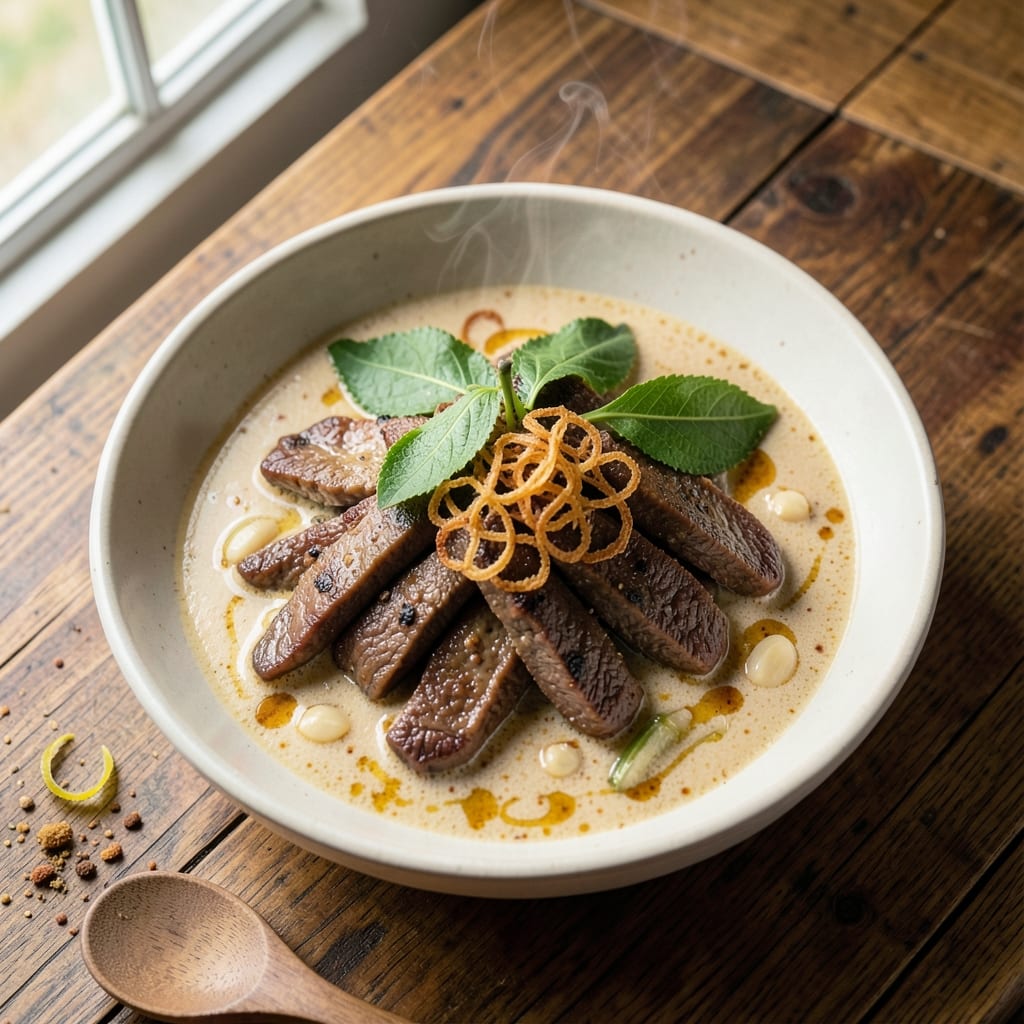
This authentic Thai beef curry recipe brings the bold flavors of Bangkok to your kitchen, where fragrant lemongrass and coconut milk create a symphony of sweet, spicy, and umami notes. 🌟 The secret lies in balancing traditional Thai spices—galangal, kaffir lime leaves, and fresh herbs—to deliver restaurant-quality depth without shortcuts. I’ve perfected this version over years of testing, ensuring every bite captures the complexity of street-side curries while staying approachable for home cooks.
The process starts with building a vibrant curry paste from scratch (or using a high-quality store-bought version), then simmering tender beef in rich coconut milk until the sauce thickens into a velvety, aromatic broth. The key is patience—letting flavors meld over 30 minutes at a gentle simmer transforms simple ingredients into something extraordinary. This isn’t just a curry; it’s a full sensory experience, where the first whiff of lemongrass and garlic sends your taste buds on a journey.
By the end, you’ll have a dish that’s restaurant-quality—golden, fragrant, and packed with tender beef swimming in a sauce that’s perfectly balanced between creamy coconut and bright, tangy lime. The aroma alone will have everyone gathering at the table, and the first bite delivers layers of flavor that feel like a hug from a Thai street vendor. Serve it over jasmine rice, garnished with fresh cilantro and Thai basil, for the full experience.
What makes this recipe truly special is its adaptability. Adjust the heat to your preference, swap in shrimp or tofu for a vegetarian twist, or add a splash of fish sauce for extra umami depth. The method is foolproof, but the results are anything but ordinary—this is curry as it should be made, with respect for tradition and a touch of home-cook magic. Let’s get cooking!
Ingredients for authentic thai beef curry
Fragrant lemongrass, zesty lime leaves, and tender beef—this curry's magic starts with these essential ingredients.
| Ingredient | Amount | Notes |
|---|---|---|
| Thinly Sliced Beef 🥩 | 1 ½ lb | Sirloin or flank steak preferred |
| Coconut Milk 🥥 | 1 can | Full-fat, 13.5 oz can |
| Lemongrass 🌿 | 3 stems | Bruised, lower 3 inches only |
| Galangal 🌿 | 1 piece | About 3 inches, peeled |
| Kaffir Lime Leaves 🍃 | 4 whole | Bruised, stems removed |
| Garlic Cloves 🧄 | 6 cloves | Peeled and smashed |
| Shallots 🧅 | 6 whole | Sliced into half-moons |
| Red Curry Paste 🌶️ | 2 tbsp | High-quality store-bought or homemade |
| Fish Sauce 🍶 | 2 tbsp | Red Boat preferred |
| Palm Sugar 🍯 | 2 tbsp | Or brown sugar |
| Thai Chili Paste 🔥 | 1 tbsp | Adjust for heat preference |
| Fresh Cilantro 🌿 | ¼ cup | Chopped, for garnish |
| Thai Basil 🌿 | ¼ cup | Chopped, for garnish |
| Vegetable Oil 🫒 | 2 tbsp | For cooking |
| Salt 🧂 | 1 tsp | To taste |
Galangal and kaffir lime leaves are the heart of authentic Thai flavor—find them at Asian markets or well-stocked grocery stores like H Mart. If you can't locate galangal, ginger works in a pinch, but it won't be exactly the same. Lemongrass should be bright green and firm—avoid any with brown spots. The beef? Sirloin or flank steak slices thinly against the grain for that perfect melt-in-your-mouth texture. I always buy mine pre-sliced from the butcher counter to save time, but if you're ambitious, a sharp knife and steady hand work wonders. For the curry paste, Maesri or Thai Kitchen brands are my go-tos—they've got that perfect balance of heat and depth.
No galangal? Ginger at half the amount gets you close, but you'll miss that citrusy kick. Running out of kaffir lime leaves? Substitute lime zest plus a splash of lime juice, though it won't be identical. The fish sauce is non-negotiable here—Red Boat is the gold standard, but any reputable brand works. Palm sugar? Brown sugar works just fine if you can't find it. For heat, adjust the Thai chili paste to your preference—start with less if you're sensitive to spice. The coconut milk should be full-fat for that creamy texture, but if you're watching calories, light coconut milk works too. Just know the flavor will be slightly lighter.
This curry tastes even better the next day as the flavors meld together. Store leftovers in an airtight container in the fridge for up to 4 days, or freeze for 3 months. I like to portion mine into containers with a scoop of jasmine rice so lunches are ready to grab. The fresh herbs? Wait to add those until serving—otherwise, they'll wilt in the hot sauce. If you're making this ahead for a party, prep everything except the garnish and keep it warm in a slow cooker on low heat.
Why You'll Love This Recipe
- One-Pot Magic: I swear by this recipe—just a pot, a few stalks of lemongrass, and that first whiff of galangal simmering in coconut milk. No chopping boards full of mess, no last-minute scrambling to find extra bowls. The beef practically cooks itself while you stir in the kaffir lime leaves, and suddenly, you’ve got restaurant-quality depth without the fuss.
- Flavor Bomb: Between us, the galangal’s sharp citrus bite cuts through the richness of the coconut milk, while the kaffir lime leaves add this lift—like someone sprinkled sunshine and a whisper of lime zest into every spoonful. Thinly sliced beef? It melts into the sauce, tender and soaking up every aromatic drop. Honestly, I’ve made curries that tasted "fine," but this? This is the kind of dish that makes you pause mid-bite.
- Leftovers That Win: This curry tastes just as good the next day—maybe even better, because the flavors meld overnight. I’ll be real: my freezer’s got three containers of it right now, and I don’t even care. It reheats like a dream, and the texture? Still velvety, never soggy. Plus, it’s the kind of meal that doubles as lunch, dinner, or a lazy Sunday brunch when you’re too tired to plan.
- Budget-Friendly Luxury: Thinly sliced beef might sound fancy, but you’d be surprised how far a pound goes when it’s breaking down into the sauce. Coconut milk’s a pantry staple, and lemongrass/galangal? Often cheaper than fresh herbs at the grocery store. Here’s what sold me—it feels like a splurge without the splurge. One batch feeds four, and the leftovers stretch into another meal. That’s smart cooking.
Step-by-step instructions for authentic Thai beef curry
Here's how to build this fragrant curry with layers of flavor—just like Thai home cooks do.
🍳 Step 1: Build the Aromatic Base
Heat the 2 tablespoons vegetable oil in a heavy pot over medium-high heat. Add the 6 whole shallots and cook for 3-4 minutes until they turn golden brown and caramelize slightly—this adds sweet depth. Toss in the 6 cloves garlic cloves and 1 piece galangal (peeled and sliced into thin rounds) and cook for 1 minute until fragrant.
Here's the thing—galangal has a peppery, citrusy kick that's essential for authentic flavor. If you can't find it, ginger works in a pinch, but it won't be exactly the same. Add the 3 stems lemongrass (bruised and cut into 3-inch pieces) and 4 whole kaffir lime leaves (bruised) next. Cook for another 1 minute until everything smells like a Thai market. This aromatic base is the soul of your curry.
🍳 Step 2: Cook the Beef Until Browned
Add the 1.5 lb thinly sliced beef to the pot and stir to coat in the aromatics. Let it sear for 2-3 minutes until the beef turns a rich brown color—this develops the Maillard reaction that creates deep flavor. Don't overcrowd the pan or the beef will steam instead of brown.
Once browned, add the 2 tablespoons red curry paste and stir vigorously for 1 minute to toast the spices. You'll see the paste darken slightly—this releases its complex flavors. Here's where it gets good: add 1 tablespoon thai chili paste and cook for another 30 seconds to blend the heat evenly.
🥘 Step 3: Simmer with Coconut Milk and Seasonings
Pour in the 1 can coconut milk and stir gently to combine. Add 2 tablespoons fish sauce and 2 tablespoons palm sugar (or brown sugar), then bring to a gentle simmer. The curry should bubble softly—if it's too vigorous, reduce the heat to medium-low. Let it simmer uncovered for 15-20 minutes, stirring occasionally, until the beef is tender and the sauce thickens slightly.
I know it seems like a long time, but this slow simmer lets all the flavors meld together. You'll notice the sauce reduces and becomes glossy—that's when you know it's ready. Taste and adjust seasoning with 1 teaspoon salt if needed, or add more fish sauce for saltiness or palm sugar for sweetness.
🔪 Step 4: Finish and Garnish Like a Pro
Remove the pot from heat and let the curry rest for 5 minutes. This resting period allows the flavors to settle and the sauce to thicken just right. Before serving, stir in the 0.25 cup thai basil and 0.25 cup fresh cilantro—these herbs add freshness that cuts through the richness of the coconut.
Here's a little secret: the kaffir lime leaves and lemongrass can be removed before serving if you prefer a cleaner presentation. But I like to leave them in for maximum authenticity. Serve immediately with steamed jasmine rice to soak up every last drop of that fragrant, spicy, sweet, and savory curry.
Pro Tips For Making Authentic Thai Beef Curry
- Bloom the Aromatics First: I used to toss everything in at once and wonder why my curry tasted flat. Instead, fry the lemongrass, galangal, and kaffir lime leaves in oil for 2-3 minutes until fragrant—this unlocks their flavors before they even hit the beef. (Yes, even if you’re impatient like me, resist the urge to rush this.)
- Slice Beef Against the Grain: Thinly sliced beef is key, but direction matters more than you’d think. Cut against the grain for tenderness, and pat it completely dry before cooking—wet slices steam instead of sear. I learned this the hard way when my curry ended up mushy.
- Simmer, Don’t Boil: After adding coconut milk, keep the heat low and let the curry bubble gently. Boiling splits the milk into a greasy mess, and you’ll end up with a thin, watery sauce. A slow simmer (15-20 minutes) builds depth—no shortcut here.
- Toast the Paste, Skip the Crowding: If you’re using a store-bought red curry paste, dry-toast it in the pot for 30 seconds before adding oil—this deepens the flavor. And for the love of Thai food, don’t toss in all the beef at once. Cook in batches to avoid steaming instead of browning. (Your future self will thank you.)
Common mistakes when making this recipe
Overcooking the Beef
One of the biggest mistakes is letting the beef turn tough instead of tender. Since we're using thinly sliced sirloin or flank steak, it only needs 2-3 minutes of searing before adding the curry paste. Overcooking transforms that melt-in-your-mouth texture into something chewy. I've ruined many batches by walking away and letting it cook too long - always keep an eye on it after adding the beef. 🔥
Skipping the Aromatic Base
Rushing through the aromatic base step is a flavor killer. Those 3-4 minutes of cooking the shallots until golden and the 1 minute for garlic and galangal are crucial for building depth. I once tried skipping this step to save time and ended up with a bland curry. The caramelized shallots add sweetness that balances the heat, while the galangal and lemongrass provide that signature Thai complexity.
Using Low-Quality Ingredients
Don't cut corners on the key ingredients - they make or break authentic flavor. Using regular ginger instead of galangal, cheap coconut milk, or store-brand fish sauce will result in a curry that lacks depth. I recommend investing in Red Boat fish sauce and full-fat coconut milk for that creamy, rich texture. The 2 tablespoons red curry paste should be high-quality too - brands like Maesri or Thai Kitchen make a noticeable difference.
Ignoring the Simmer Time
The 15-20 minute simmer isn't optional - it's where the magic happens. I've seen many cooks rush this step, thinking the curry is ready sooner. But this is when all the flavors meld together and the sauce develops its signature glossy texture. If you're impatient, you'll end up with a sauce that's either too thin or has unbalanced flavors. Trust the process and let it simmer gently.
Not Balancing Flavors
Thai curry is all about balance - sweet, sour, spicy, and umami must work together. Many home cooks either make it too spicy or too bland. Taste your curry as you go and adjust with fish sauce for saltiness, palm sugar for sweetness, or more Thai chili paste for heat. I always keep a small bowl of each on hand while cooking so I can make quick adjustments.
Adding Fresh Herbs Too Early
Fresh cilantro and Thai basil should only be added in the final minute of cooking or right before serving. Adding them earlier will make them wilt in the hot sauce, ruining their fresh, bright flavor. I've made this mistake too - the herbs just turn mushy and lose their vibrant color. Wait until the very end to get that perfect pop of freshness that cuts through the rich coconut milk. ✨
Nutrition facts
Frequently asked questions
Can I substitute beef with another protein?
This curry works beautifully with chicken thighs (bone-in for extra flavor), shrimp (add at the end to avoid overcooking), or tofu (for a vegetarian version). If using shrimp, add them during the last 3-4 minutes of cooking to prevent rubberiness. For chicken, increase cooking time to 25-30 minutes to ensure tenderness.
How do I adjust the spice level?
Thai curries balance four key flavors: sweet, sour, spicy, and umami. For milder heat, reduce the Thai chili paste to ½ tablespoon or omit it entirely. Want more fire? Add ½ teaspoon chili flakes or a dash of Thai bird's eye chili powder at the end. Always taste as you go—adjust with fish sauce (saltiness) or palm sugar (sweetness) to keep balance.
What’s the best way to store leftovers?
Store leftovers in an airtight container in the fridge for up to 4 days, or freeze for 3 months. The flavors actually improve overnight! Reheat gently on the stove over low heat with a splash of water or coconut milk to restore creaminess. Never microwave—it ruins the texture. For reheating, stir occasionally and add a pinch of salt to enhance flavor.
Can I make this curry in a slow cooker?
Yes! Sauté the aromatics and beef as directed, then transfer everything to a slow cooker. Add the coconut milk and seasonings, then cook on low for 4-5 hours or high for 2-3 hours. The slow cooker’s gentle heat enhances the beef’s tenderness and lets flavors meld beautifully. Just skip the final resting time—it’s ready when the sauce thickens slightly.
Why does my curry taste bland?
Bland curry usually means one of three things: rushed cooking, weak seasoning, or low-quality ingredients. Double-check that you simmered for 15-20 minutes—this is when flavors develop. Boost umami with an extra 1 teaspoon fish sauce or ½ teaspoon soy sauce. For depth, add a splash of lime juice (sour) or 1 teaspoon palm sugar (sweet). If using store-bought curry paste, try a different brand—some lack the complexity of homemade.