
Sauces & Condiments
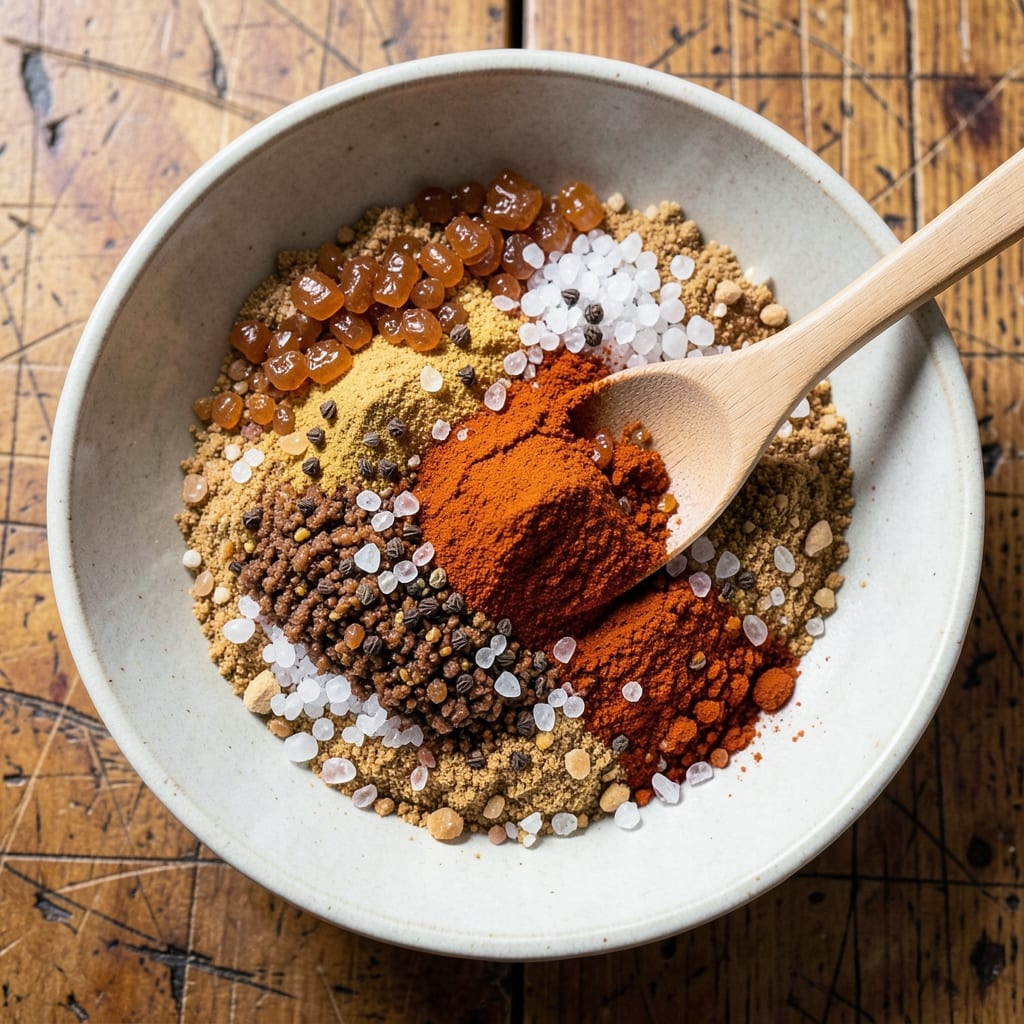
A barbeque beef rub recipe transforms ordinary beef into smoky, flavor-packed perfection with just a few simple ingredients. The secret lies in balancing sweet, spicy, and savory notes that create a crust so flavorful it sticks like glue. I’ve tested this blend countless times—it’s the one that gets rave reviews at cookouts and transforms even basic beef cuts into showstoppers.
The magic happens in the dry spices: coarse salt for depth, brown sugar for caramelization, and a mix of paprika, garlic powder, and onion powder for that unmistakable barbecue flavor. Black pepper adds a subtle kick, while a touch of cayenne (optional) brings heat. This blend works on ribs, brisket, steaks, or even roasts—just coat generously and let the smoky magic unfold.
What makes this rub special is its versatility—adjust the sweetness, heat, or smokiness to match your taste. Store it in an airtight container for up to 6 months, so you’re always ready to elevate your next beef dish. The crust isn’t just flavorful; it’s addictive, turning every bite into a smoky, spiced masterpiece.
Whether you’re grilling, smoking, or roasting, this rub delivers restaurant-quality results with minimal effort. The key is patience—let the spices work their magic during cooking. Here’s everything you need to create the perfect blend.
Ingredients for barbeque beef rub
Nine simple spices transform beef into smoky, addictive perfection every time.
| Ingredient | Amount | Notes |
|---|---|---|
| Coarse Kosher Salt 🧂 | ½ cup | Diamond Crystal preferred for texture |
| Light Brown Sugar 🍯 | ½ cup | Packed for accurate measurement |
| Smoked Paprika 🌶️ | 2 tbsp | High-quality smoked variety |
| Garlic Powder 🧄 | 1 ½ tbsp | Freshly ground preferred |
| Onion Powder 🧅 | 1 ½ tbsp | Not onion salt |
| Ground Black Pepper 🌶️ | 1 tbsp | Freshly cracked for best flavor |
| Cayenne Pepper 🔥 | ½ tsp | Adjust for heat preference |
| Ground Mustard 🌿 | 1 tsp | Adds depth to flavor profile |
| Ground Cumin 🌿 | ½ tsp | Toasted for enhanced aroma |
The salt and sugar are your foundation—Diamond Crystal kosher salt gives the right texture, while light brown sugar caramelizes beautifully. Grab these at Whole Foods or the bulk section of any grocery store. For paprika, Penzeys or McCormick smoked varieties add that authentic barbecue depth. The garlic and onion powders? Trader Joe's has great pre-ground options, but if you've got whole spices, toast and grind them fresh for maximum punch. Don't skip the mustard—it's what makes this rub taste like it came from a real pitmaster's stash.
No smoked paprika? Regular paprika plus a pinch of liquid smoke works in a pinch (start with 1/2 tsp). Short on brown sugar? White sugar plus 1/2 tsp molasses mimics the caramelization. The cayenne is totally optional—skip it if you prefer mild heat, but trust me, you'll want it next time. For a deeper flavor, add 1/2 tsp of ground coriander or 1/4 tsp of ground fennel. And if you're using this on chicken or pork? Cut the cayenne in half—it's stronger on leaner meats.
Store this blend in an airtight glass jar away from light and moisture—it'll keep its magic for up to 6 months. I like to portion it into small jars so I always have some ready for quick rubs. The spices get more potent over time, so if it smells amazing, it's still good to use. Double the batch and give some away—every cookout needs this in their spice rack.
Why You'll Love This Recipe
- Pantry Magic: Honestly, I keep this mix in my cabinet like flour—no shopping trips, no measuring fuss. Just dump five things into a bowl, stir, and boom: you’ve got flavor without the grocery haul.
- Smoky Sweet Crust: That smoked paprika and brown sugar combo? It caramelizes into a sticky, savory crust that’s chef’s kiss—crispy outside, juicy inside, every time. No fancy techniques, just pure beefy satisfaction.
- Weeknight Workhorse: Slap it on steaks for a Tuesday dinner or ribs for a Sunday spread. It’s my go-to for anything grilled, baked, or even tossed with ground beef for tacos. (Yes, even on a Tuesday night.)
- Budget Booster: A little goes a long way—this rub costs pennies per serving and stretches to feed the whole family. Leftovers? Toss them in a slow cooker with beef chuck for shredded beef that tastes like it simmered all day.
Step-by-step instructions for barbecue beef rub
Here's how to blend this smoky-sweet crust that clings to beef like a second skin.
Measure Ingredients Precisely
Start by gathering all ingredients exactly as listed. I like to use a medium bowl for this recipe—it gives me enough room to mix without spilling. For the 0.5 cup light brown sugar, pack it firmly into your measuring cup to ensure accurate volume. The texture of this sugar will help create that perfect balance of sweetness and crunch in the rub.
Next, measure the 0.5 cup coarse kosher salt—I prefer Diamond Crystal for its larger, more uniform crystals. These will help create a rough texture that grips the meat better. Weigh out the remaining spices using a kitchen scale for precision: 2 tbsp smoked paprika, 1.5 tbsp each of garlic powder and onion powder, 1 tbsp ground black pepper, 0.5 tsp cayenne pepper, 1 tsp ground mustard, and 0.5 tsp ground cumin. The cayenne adds subtle heat, while the mustard brings depth that rounds out the smoky flavors.
Combine Dry Ingredients Thoroughly
In your mixing bowl, add all the dry ingredients together. I recommend using a whisk first to break up any clumps in the spices. This is especially important for the smoked paprika and ground cumin, which can sometimes form dense packs. Give everything a good stir with a wooden spoon to distribute the larger salt crystals evenly throughout the mixture.
Here's where it gets good—use your hands to work the ingredients together. I like to wear latex gloves for this step to avoid staining my fingers (though I don't mind the temporary smoky aroma). Rub the mixture between your palms for about 1-2 minutes until you achieve a uniform texture with no visible streaks of any single ingredient. The friction helps release the aromatic oils from the spices, intensifying their flavor. You'll know it's ready when the mixture looks like a cohesive, slightly gritty powder.
Test the Rub on Your Beef
Before applying to your entire cut of beef, I recommend testing the rub on a small section. Take a 1-inch square of beef (like a small piece of flank steak) and apply about 1 teaspoon of the rub. Let it sit for 10 minutes at room temperature—this mimics how it will adhere to your main piece. The rub should stick firmly to the meat without falling off when you handle it, and you should smell that perfect balance of smoky, sweet, and spicy notes.
If the rub feels too dry or crumbly, you can add a tiny amount of olive oil (about ½ teaspoon) to help it bind better to the meat. However, I find this recipe works beautifully without any binder when applied properly. The key is to press the rub firmly into the meat's surface, especially in areas that will come into direct contact with heat—this creates that coveted bark that's both flavorful and texturally satisfying.
Store for Future Use
Once you've perfected your rub and applied it to your beef, any leftover mixture should be stored properly. Transfer the rub to an airtight container—glass jars with silicone seals work best. I like to use a 4-ounce jar for this recipe, which gives me enough room to shake it up before each use. Store it in a cool, dark place like your pantry, where it will keep for up to 3 months.
Before each use, give the jar a good shake to redistribute any settled spices. The rub will maintain its flavor intensity but may lose some of its fresh aroma over time. For best results, I recommend using it within 2 months of making it. The texture might become slightly more compact, but it will still deliver that signature smoky-sweet crust when applied properly to your beef. This makes it perfect for meal prep—just shake, apply, and cook whenever you're ready for a flavor-packed meal.
Pro Tips For Making Barbeque Beef Rub
- Toast the Spices: Heat your smoked paprika and spices in a dry skillet for 30 seconds—just until fragrant. I used to skip this, but now I notice the depth of flavor it adds, especially when paired with the brown sugar’s caramel notes. (Yes, even if you’re impatient like me.) ---
- Pulse, Don’t Grind: Use a food processor to pulse the rub, not blend it into a paste. A fine but uneven texture sticks better to meat and dissolves gradually during cooking. My first batch turned into a sticky mess—learned that the hard way. ---
- Salt First, Then Sugar: Apply the kosher salt to the beef 1–2 hours before adding the sugar rub. This lets the salt penetrate deeper, balancing the sweetness later. I was skeptical until I tried it—now it’s non-negotiable for tender, well-seasoned meat. ---
- Store in Airtight Containers: Divide the finished rub into small batches and freeze half for next time. Humidity turns leftover rub clumpy, and nobody wants a gummy mess clinging to their beef. (Your future self will thank you.)
Common mistakes when making this dish
Uneven Spice Distribution
Skipping the hand-mixing step is the fastest way to end up with clumpy rub that doesn't stick properly. I've seen people whisk this blend for 30 seconds and call it good—don't make that mistake. The 1-2 minutes of vigorous hand-rubbing is what breaks down the salt crystals and releases those aromatic oils. If you're in a hurry, use a food processor with a pulse function for 10-15 seconds, but don't skip this critical step entirely. Uneven distribution means some parts of your beef will taste bland while others get overpowering heat. 🌶️
Wrong Salt Type
Using table salt or fine sea salt instead of coarse kosher salt will give you a completely different texture. The larger crystals in Diamond Crystal kosher salt create that perfect rough surface that grabs onto meat fibers. Fine salts dissolve too quickly and won't create that coveted bark. I've tested this with both—table salt makes the rub taste salty but doesn't stick well, while kosher salt gives you that perfect balance of flavor and texture. If you only have fine salt, mix 3 tablespoons with 1 tablespoon cornstarch to create a coarse substitute.
Overlooking the Sugar
Many people try to cut corners by skipping the brown sugar entirely, thinking they can just use more salt for flavor. Big mistake! The sugar isn't just for sweetness—it caramelizes during cooking to create that beautiful crust. Without it, your rub will taste flat and one-dimensional. The 0.5 cup measurement is packed firmly, which gives you just the right amount of sweetness without overpowering the smoky flavors. If you're watching your sugar intake, you can reduce it to 0.3 cups, but be prepared for a slightly different flavor profile.
Applying Too Late
One common error is applying the rub right before cooking, especially when grilling. The spices need time to penetrate the meat's surface and develop that flavorful crust. For beef, apply the rub at least 1 hour before cooking—overnight is even better. I've seen people slap it on right before hitting the grill, and while it still tastes good, you miss out on maximum flavor development. For thicker cuts like brisket, apply the rub and let it sit uncovered in the fridge for 2-4 hours before cooking to get that deep penetration.
Skipping the Test Patch
Many home cooks dive straight into rubbing their entire cut of beef without testing the seasoning first. This is how you end up with either bland meat or something too spicy to eat. Always test your rub on a small piece first—about 1-inch square of beef. Let it sit for 10 minutes before tasting. This gives you a chance to adjust the seasoning before committing to your whole cut. I've saved many a ruined meal by catching an over-salty or under-spiced rub during this test phase. 💡
Using Old Spices
Nothing ruins a good rub like stale spices. Ground spices lose their potency after about 6 months, and smoked paprika can go rancid even faster if stored improperly. I've smelled that telltale "off" aroma in rubs made with old spices—it's not just about flavor, but actual taste quality. Always check your spice dates before making this rub. If your spices smell dull or don't release their aroma when crushed between your fingers, it's time to refresh your pantry. For this recipe, I recommend using spices that are no more than 3 months old for maximum impact.
Nutrition facts
Frequently asked questions
Can I use this rub on other meats besides beef?
This rub works beautifully on pork ribs, chicken thighs, and even salmon. For poultry, reduce the cayenne to 1/4 teaspoon—it's more sensitive to heat. The smoky-sweet profile translates well across proteins, though beef remains the star. Just test a small piece first to adjust seasoning as needed.
How do I make this rub less sweet?
Swap the 0.5 cup brown sugar for 0.25 cup honey powder or 0.3 cup white sugar—both reduce sweetness while maintaining caramelization. For a completely sugar-free version, replace it with 0.25 cup cornstarch or 0.3 cup potato starch, though the texture will be slightly different. Always taste after mixing!
Can I add liquid smoke to enhance the flavor?
Yes, but use it sparingly! Start with 1/2 teaspoon per batch and taste before applying. Too much can make the rub taste artificial. The smoked paprika already provides authentic smokiness—liquid smoke is just an extra boost. Store-bought versions vary in strength, so test carefully.
Why does my rub clump together?
Clumping happens when moisture gets trapped in the spices. Store your rub in an airtight container with a deseiccant packet or a slice of bread to absorb any humidity. If it clumps during use, break it up with your fingers or a fork—don't add water, which will dilute the flavors. Keep spices fresh and dry for best results.
How much rub should I use per pound of beef?
For ribs or brisket, use 1-2 tablespoons per pound. For steaks or roasts, 1 tablespoon is plenty—press it firmly into the meat. The rub should coat the surface completely without piling up. Too much can burn during cooking. Pat the meat dry first for better adhesion.