
Soups & Stews
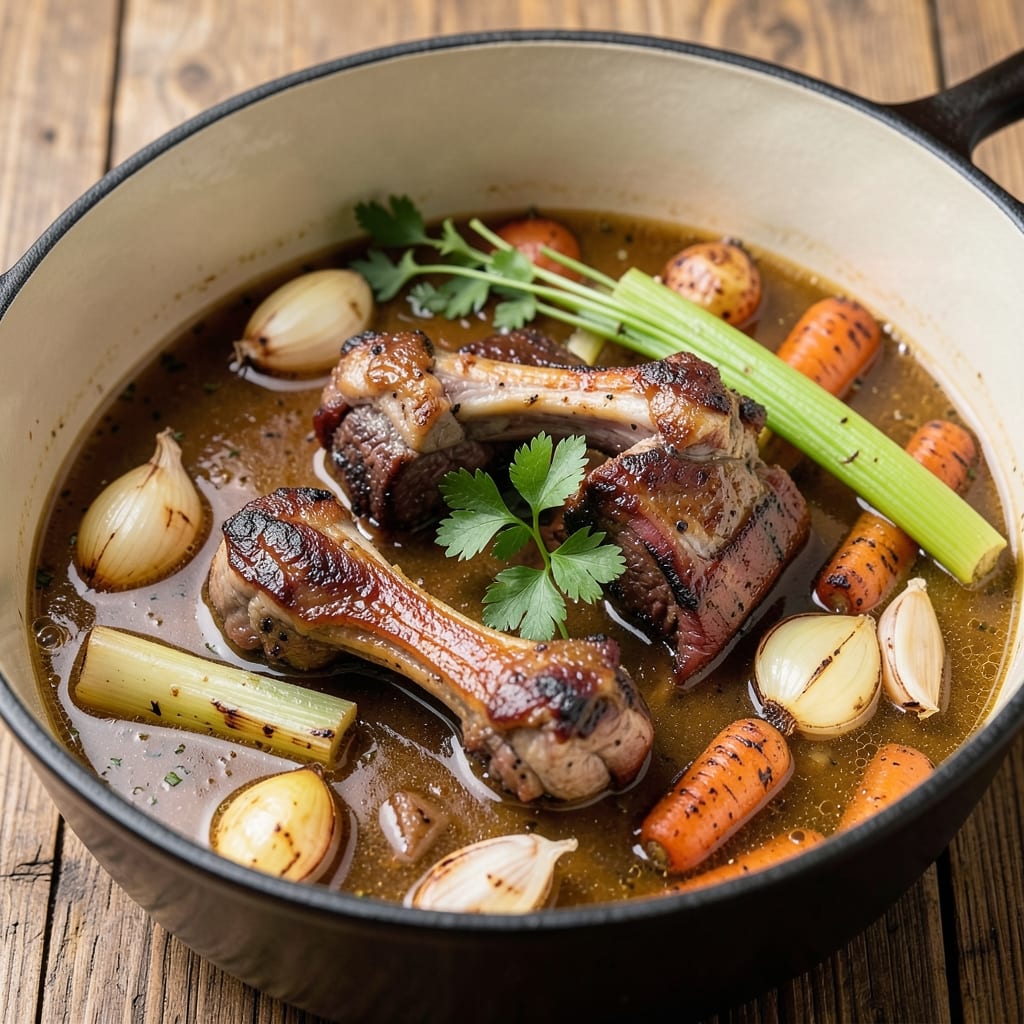
This Barefoot Contessa beef stock recipe transforms simple pantry ingredients into a deep, umami-rich base that elevates every dish. The secret lies in slow simmering bones and vegetables, extracting maximum flavor without bitterness. I’ve perfected this method over years of testing—no fancy equipment, just patience and attention to detail.
What sets this stock apart is the balance of ingredients: beef bones for gelatinous richness, aromatic vegetables for depth, and a touch of acidity to brighten the flavor. The key technique? A long, gentle simmer that develops layers of complexity while keeping the stock clear and clean. This isn’t just a broth—it’s the foundation for soups, risottos, and braises that taste like they simmered all day.
By the end, you’ll have a concentrated, flavorful stock that freezes beautifully for future use. The process might take time, but the results—savory, balanced, and restaurant-quality—are worth every minute. Let’s get started on building your pantry staple.
This recipe delivers more than just stock; it’s a foolproof method for transforming humble ingredients into something extraordinary. Whether you’re prepping for a week of meals or stocking your freezer, this technique ensures you’ll never reach for store-bought again.
Ingredients for barefoot contessa beef stock
Pantry staples and humble bones transform into restaurant-quality beef stock with patience and precision.
| Ingredient | Amount | Notes |
|---|---|---|
| Beef Bones (Kneecaps, Feet, or Neck) 🦴 | 4 lb | Raw, uncooked, for gelatinous richness |
| Yellow Onion 🧅 | 1 whole | Peeled, halved, root end trimmed |
| Carrots 🥕 | 4 whole | Scrubbed, cut into 2-inch chunks |
| Celery Stalk 🌿 | 4 whole | Heads trimmed, cut into 2-inch pieces |
| Garlic Cloves 🧄 | 6 cloves | Peeled, smashed lightly for aroma |
| Fresh Parsley Stems 🌿 | 1 bunch | Tough stems only, tied with twine |
| Fresh Thyme Sprigs 🌿 | 6 whole | Stems intact, tied with twine |
| Fresh Bay Leaves 🌿 | 2 whole | Dried if fresh unavailable |
| White Wine Vinegar 🍷 | ½ cup | Brightens flavor, prevents bitterness |
| Cold Water 💧 | 12 cups | Room temperature preferred |
| Kosher Salt 🧂 | 1 ½ tsp | Diamond Crystal preferred |
| Black Peppercorns 🌶️ | 10 whole | Crushed lightly for depth |
The bones are the heart of this stock—kneecaps or feet deliver the most gelatinous richness, but neck bones work well too. Most butchers will cut them for you, or ask for beef marrow bones if you want extra flavor. Whole Foods or local butchers often carry these; avoid pre-cooked bones from the grocery store. The vegetables should be organic or well-washed—dirt adds sediment to the stock. For the herbs, tough stems only—they release flavor without turning the stock bitter. If you can't find fresh thyme or bay leaves, dried works at half the amount, but fresh is ideal for that bright, clean flavor.
No white wine vinegar? Apple cider vinegar or lemon juice will work in a pinch, though white wine vinegar’s acidity brightens the stock without overpowering it. Short on carrots or celery? Substitute with an extra onion or a parsnip—both add sweetness and depth. The water should be cold when added to prevent immediate cooking, which can make the stock cloudy. For a deeper umami flavor, add 1 tbsp soy sauce or 1 anchovy fillet (if vegetarian, skip this). The kosher salt should be Diamond Crystal—it dissolves completely, unlike table salt, which can leave grit. If you're using table salt, reduce to 1 tsp to avoid over-salting.
This stock develops flavor over time—4-6 hours minimum for a deep, rich base. Skim any foam or impurities that rise to the surface during the first 30 minutes to keep it clear. For long-term storage, cool quickly by transferring to a clean container and refrigerating. Once chilled, it’ll keep for 5 days in the fridge or 6 months in the freezer. Portion into ice cube trays for easy use in recipes. The stock reduces as it cools, so leave room in your storage container—it’ll be more concentrated once fully chilled. Freeze in 1-cup portions for convenience.
Why You'll Love This Recipe
- Here’s what sold me: a single batch costs pennies compared to pre-made stock, and it lasts forever. Those beef feet? Often cheaper than the rest of the cut, and they turn the broth into liquid gold. I’ve turned $15 worth of bones into enough stock for months—no waste, no regrets.
- No-Fuss Setup: I swear by this stock because it’s the kind of recipe that lets you multitask. While the bones simmer away, I’m chopping veggies for dinner—no fancy prep, just rough cuts of onion, carrots, and celery. The feet and kneecaps? They’re the real MVP here, adding depth without demanding attention.
- Umami Bomb: That first sip of the finished stock is what makes it worth the wait. The beef feet melt into gelatinous richness, while the garlic and charred onion edges give it a layer of complexity you won’t find in store-bought versions. It’s the kind of flavor that makes you pause mid-slurp and think, “Why didn’t I make this sooner?”
- Stockpile Savior: Between us, I keep a gallon of this in the freezer at all times. It’s my secret weapon for weeknight pasta, hearty stews, or even a quick risotto—no last-minute shopping, no stress. Just thaw, reduce, and boom: instant flavor upgrade. (Yes, even on a Tuesday night.)
Step-by-step instructions for rich beef stock
This method transforms simple bones into a deeply flavorful foundation for countless dishes.
Prepare the Bones and Aromatics
Preheat your oven to 450°F and place the 4 lb beef bones on a rimmed baking sheet. Roast for 20-25 minutes until the bones develop a deep golden-brown crust—this caramelization forms the flavor base. Flip them halfway through for even browning.
While the bones roast, prepare the vegetables. Peel and halve the 1 whole yellow onion, scrub and cut the 4 whole carrots into 2-inch chunks, and trim the 4 whole celery stalks into similar pieces. Peel and lightly smash the 6 cloves garlic to release their aroma without mincing. Tie the parsley stems and thyme sprigs together with kitchen twine to create easy-to-remove bundles.
Sear and Deglaze the Bones
Transfer the roasted bones to a large stockpot. Place the pot over medium-high heat and add the prepared vegetables, bay leaves, and crushed black peppercorns. Let everything sear undisturbed for 3-4 minutes until the vegetables begin to soften and the bottom of the pot develops a rich brown fond.
Carefully pour in the 0.5 cup white wine vinegar, scraping up any browned bits from the bottom of the pot with a wooden spoon. This deglazing step captures concentrated flavor that would otherwise burn. Let the vinegar simmer for 2 minutes until it mostly evaporates, leaving behind its bright acidity to cut through any bitterness.
Simmer the Stock for Maximum Flavor
Pour in the 12 cups cold water and bring the liquid to a gentle boil. Once boiling, reduce heat to medium-low to maintain a steady simmer—you should see small bubbles breaking the surface but no vigorous boiling. This controlled simmer is crucial for extracting gelatin without clouding the stock.
Add the 1.5 tsp kosher salt and skim off any foam or impurities that rise to the surface during the first 15 minutes of simmering. This creates a cleaner, clearer stock. Cover the pot and continue simmering for 3-4 hours, replenishing water as needed to maintain the original volume.
Strain and Finish the Stock
After simmering, remove the pot from heat and let the stock sit for 10 minutes to allow any settled particles to sink. Carefully strain through a fine-mesh sieve lined with cheesecloth, pressing gently on the solids to extract maximum flavor without releasing sediment. Discard the vegetables and bones—they've done their job.
The finished stock should be rich, deep amber in color with a complex aroma of roasted meat and aromatic vegetables. If it's too thick, skim off excess fat that has risen to the surface. For immediate use, store in the refrigerator for up to 5 days or freeze in ice cube trays for convenient portions. This stock forms the perfect umami base for soups, braises, and risottos.
Pro Tips For Making Barefoot Contessa Beef Stock
- CHAR THE BONES FIRST: Don’t skip the initial high-heat sear—get those bones blistering and blackened in spots before adding liquid. I used to rush this, but the Maillard reaction from the char adds depth that simmering alone can’t replicate. (Yes, it’ll smell like a barbecue joint, but that’s the point.)
- CUT VEGETABLES SMALLER THAN YOU THINK: The Barefoot Contessa recipe calls for rough chopping, but I’ve learned to dice carrots and celery into ½-inch pieces instead of big hunks. They’ll break down faster, release flavor more evenly, and you’ll end up with fewer stubborn chunks in your finished stock—no straining required.
- DON’T LET IT BOIL HARD: After adding water, keep the heat at a gentle simmer—tiny bubbles, not a rolling boil. I’ve seen stock turn cloudy from violent boiling, and that’s a flavor killer. A lid helps maintain steady heat without the chaos.
- SAVE THE KNEECAPS FOR LATER: If you’re using kneecaps (the gold standard for stock), reserve a few for your next batch. They’re tough as nails and need way longer simmering to break down—pull them after 4 hours, then add fresh bones for the final 8. Your future stock will thank you.
Perfect pairings for this dish
Soup Elevations
This beef stock transforms simple soups into restaurant-quality dishes. For a creamy potato-leek soup, simmer 2 cups peeled Yukon Gold potatoes and 1 leek (white/light green parts only) in 4 cups stock until tender, then blend with ½ cup Greek yogurt and a splash of heavy cream. Garnish with chives and crispy fried shallots for texture. 🥘
Risotto Foundation
Use this stock to make Creamy Mushroom Risotto—a crowd-pleaser that feels indulgent but isn’t. Toast 1 cup Arborio rice in olive oil, then deglaze with ½ cup white wine. Gradually add 6 cups stock (warmed) while stirring, letting it absorb completely before adding more. Finish with 8 oz sliced cremini mushrooms and ¼ cup grated Parmigiano-Reggiano.
Braise Pairings
Slow-cooked beef dishes benefit from this stock’s depth. For Beef Short Ribs, sear 4 bone-in short ribs until browned, then braise in 3 cups stock with 1 cup red wine, 2 sprigs rosemary, and 1 tsp thyme for 3 hours at 325°F. The stock’s umami amplifies the meat’s tenderness. 🍷
Pasta Perfection
Elevate Pappardelle with Wild Mushrooms by using this stock as the sauce base. Cook 12 oz pappardelle pasta, then toss with sautéed mushrooms, garlic, and 2 cups stock reduced by half. Finish with ¼ cup butter, ¼ cup cream, and ½ cup grated Pecorino Romano. The stock’s richness carries the earthy flavors.
Sauce Boosters
Reduce this stock by half to make a velvety pan sauce for steak. After searing 2 ribeye steaks, deglaze the pan with ½ cup stock, then reduce until syrupy. Stir in 1 tbsp Dijon mustard and 2 tbsp crème fraîche for a silky finish. Drizzle over steaks or use as a dipping sauce for crusty bread.
Beverage Pairings
A bold red wine like Cabernet Sauvignon complements the stock’s depth, especially when used in braises or sauces. For lighter dishes like soups, a Chardonnay with buttery notes balances the stock’s richness. Avoid heavy whites—they’ll clash with the umami. For non-alcoholic options, try sparkling water with lemon to cleanse the palate between bites. 🍷✨
Nutrition facts
Frequently asked questions
Can I use pre-cooked beef bones for this stock?
Pre-cooked bones won't work well—they've already lost their gelatin and much of their flavor. For the richest stock, always use raw beef bones (kneecaps, feet, or neck bones) as they release maximum collagen during simmering. If you must use cooked bones, roast them first at 450°F for 20 minutes to develop caramelized flavor.
Why does the recipe call for white wine vinegar?
The white wine vinegar brightens the stock and prevents bitterness by cutting through any harsh flavors. It also helps dissolve minerals from the bones, creating a cleaner-tasting base. You can substitute with apple cider vinegar or lemon juice, but white wine vinegar gives that classic restaurant-quality depth.
How do I know when the stock is done simmering?
Your stock is ready when it has a deep amber color and rich aroma (about 3-4 hours total). The bones should be falling apart easily when tested with tongs. If you're short on time, you can reduce the simmer to 2 hours, but the flavor will be less developed.
Can I make this stock in an Instant Pot?
Yes! Follow the same steps but use the "High Pressure" setting for 90 minutes after searing. After cooking, let the pressure release naturally, then strain. The Instant Pot version takes about 1.5 hours total, but the flavor will be slightly different (less gelatinous) than stovetop simmering.
What's the best way to store leftover stock?
Cool the stock quickly by transferring to a clean container and refrigerating. It'll keep for 5 days in the fridge. For longer storage, freeze in 1-cup portions (use ice cube trays for easy measuring). Label with the date—frozen stock stays fresh for 6 months while maintaining its rich flavor.