
Soups & Stews
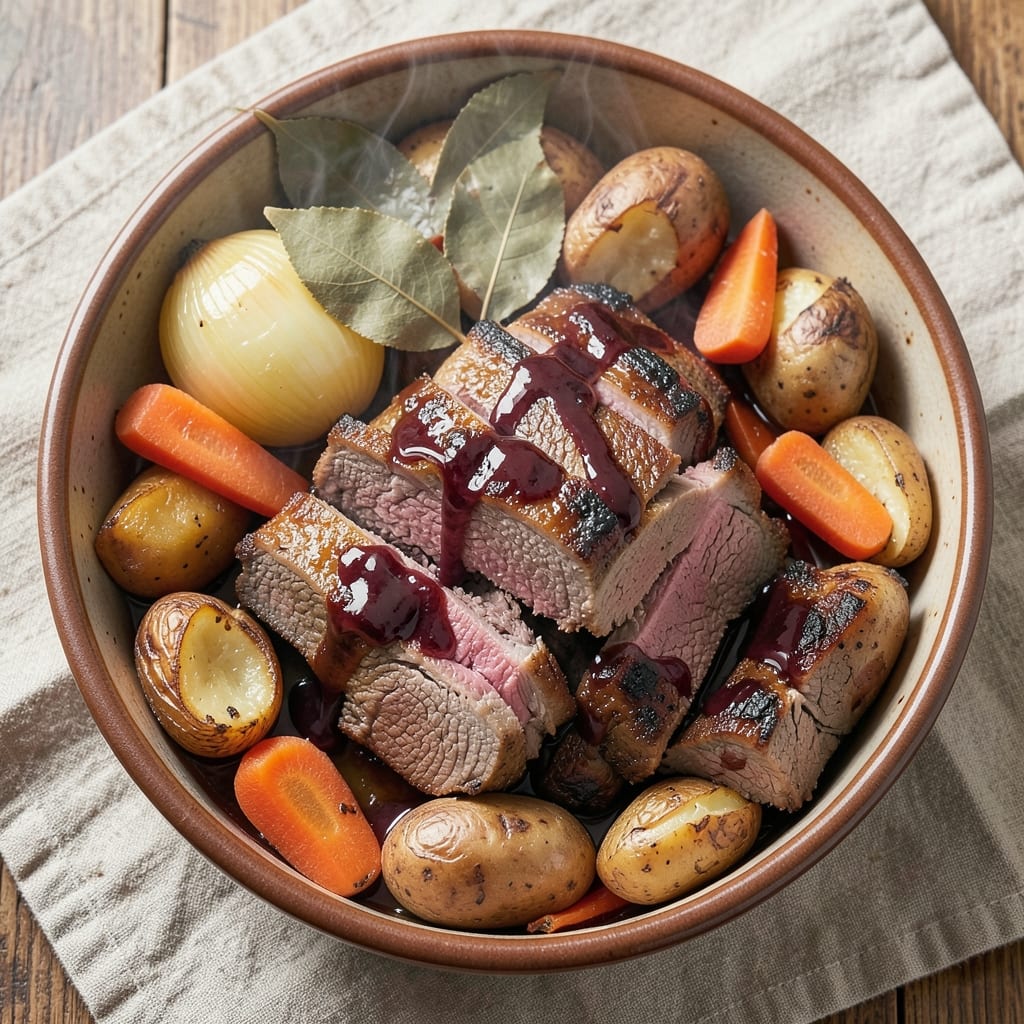
This Portuguese beef a casa recipe transforms tough beef into melt-in-your-mouth tenderness through a slow-simmered cider and onion sauce—just like Nonna used to make. The secret lies in hours of gentle cooking that develops deep, caramelized flavors without any heavy cream or shortcuts. I first tasted this dish in a small village kitchen where the aroma alone filled the entire house, making it impossible to resist seconds.
The dish centers on beef chuck roast, slow-cooked until fork-tender in a rich sauce made from Portuguese cider, onions, and aromatic herbs. Traditional versions often include potatoes and carrots cooked directly in the pot, creating a one-pan meal that's both hearty and comforting. What makes this recipe truly special is how the cider transforms from a simple ingredient into the backbone of the sauce, adding a subtle tang that balances the meat's richness.
By the time you're done, you'll have perfectly tender beef that practically falls apart at the touch, surrounded by caramelized onions and vegetables that soak up all the flavorful juices. The sauce thickens naturally as it simmers, creating a luxurious gravy that coats every bite. This is the kind of dish that tastes even better the next day, making it perfect for meal prep or Sunday family dinners.
Serve it with crusty bread to soak up every last drop of sauce or alongside a simple green salad for balance. The leftovers reheat beautifully, and the flavors only deepen over time. Here's how to make this Portuguese classic in your own kitchen with professional results.
Ingredients for beef a casa portuguese
Six ingredients transform tough beef into melt-in-your-mouth luxury—just like Nonna's Portuguese kitchen magic.
| Ingredient | Amount | Notes |
|---|---|---|
| Beef Chuck Roast 🥩 | 3 lb | Well-marbled for tenderness |
| Yellow Onions 🧅 | 3 whole | Thinly sliced for caramelization |
| Portuguese Cider 🍶 | 2 cups | Dry, unflavored variety preferred |
| Carrots 🥕 | 4 whole | Medium size, peeled and halved |
| Russet Potatoes 🥔 | 4 whole | Peeled and quartered |
| Fresh Bay Leaves 🌿 | 2 whole | For aromatic depth |
| Garlic Cloves 🧄 | 6 cloves | Minced for even distribution |
| Olive Oil 🫒 | ¼ cup | Extra-virgin for richness |
| Fresh Thyme 🌿 | ½ oz | Or 1 tbsp dried thyme |
| Salt 🧂 | 1 ½ tsp | Kosher or sea salt |
| Black Pepper 🌶️ | 1 tsp | Freshly ground preferred |
| Tomato Paste 🍅 | 2 tbsp | For depth of flavor |
| Fresh Parsley 🌿 | ¼ cup | Chopped for garnish |
The beef is everything here. Chuck roast with good marbling melts into tender perfection—sirloin or ribeye won't cut it. Most grocery stores carry it pre-cut, but if you're buying a whole roast, ask the butcher to cube it for you. I always grab mine from Whole Foods or Costco—their cuts are consistently well-marbled. The onions? Yellow onions caramelize best, but red onions add a nice color contrast if you're feeling fancy. For the cider, Portuguese dry cider (like those from the Alentejo region) gives the most authentic flavor, but any dry apple cider works in a pinch.
No Portuguese cider? Dry white wine or apple juice gets you close—just add a splash of vinegar to mimic the tang. Fresh bay leaves are ideal, but if you only have dried, crush them lightly first to release the oils. The tomato paste might seem like an odd addition, but those 2 tbsp add a depth that's essential for balancing the sweetness of the cider. Short on thyme? Oregano or rosemary works, but thyme's that earthy, herbal note is what makes this dish sing. For the potatoes, Russets hold up best to long cooking—they'll break down just enough to soak up all that sauce.
This dish tastes even better the next day, so make extra. Store in the fridge for 4-5 days or freeze portions for 3 months. I always portion mine into containers with the sauce—it reheats beautifully in the microwave or oven. The sauce thickens as it cools, so if it seems too thin when reheating, just warm it up uncovered for a minute or two. For serving, crusty bread is a must—it's the perfect vehicle for all that rich sauce. And save some of that parsley for garnish—it adds a fresh pop of color that makes the dish look restaurant-worthy.
Why You'll Love This Recipe
- One-Pot Magic: I swear by this recipe—just toss the beef, veggies, and cider in one pot, let it simmer, and walk away. No chopping boards to clean, no extra pans to wash. That Portuguese cider? It does half the work by tenderizing the meat while you sip your wine.
- Cider Kiss: Between us, the cider transforms everything. It’s not just a drink—it’s the secret weapon that turns tough chuck into melt-in-your-mouth beef, while caramelizing the onions into something sweet and deep. The potatoes soak up that flavor like sponges, and suddenly, you’ve got a dish that tastes like it simmered all day (even if it didn’t).
- Weeknight Workhorse: This is my go-to when I’ve got friends over or need to feed a crowd without stress. The leftovers? Even better the next day—reheat the beef with a splash of cider, and it’s like a second dinner. Honestly, I’ve served it at potlucks, family dinners, and lazy Sundays, and no one’s ever asked what it is—just when they can have it again.
- Budget Beef Boost: A chuck roast is cheap, but it feels special. The cider adds a touch of luxury without breaking the bank, and the veggies stretch the meal into a full spread. I’ll be real: my grocery bill stays sane, but my dinner table doesn’t. Plus, the potatoes and carrots make it feel like a proper meal, not just another protein-and-sauce night.
Step-by-step instructions for beef a casa Portuguese recipe
Here's how to transform simple ingredients into a rich, comforting Portuguese masterpiece.
Prepare the Beef and Vegetables
Pat the 3 lb Beef Chuck Roast dry with paper towels—this helps the seasoning adhere and creates a better crust. In a small bowl, mix together 1.5 tsp Salt, 1 tsp Black Pepper, and 2 tbsp Tomato Paste until smooth. Rub this mixture all over the beef, pressing it into the surface. Let it sit at room temperature while you prep the vegetables.
Peel and halve the 4 whole Carrots lengthwise, then slice each half into 3-4 pieces. Peel and quarter the 4 whole Russet Potatoes. Thinly slice 2 of the 3 whole Yellow Onions (you'll save one for later). Mince the 6 cloves Garlic Cloves finely. Chop the 0.5 oz Fresh Thyme leaves and the 0.25 cup Fresh Parsley. Set everything aside—you'll use these in the next steps.
Build the Flavor Base
Heat the 0.25 cup Olive Oil in a large Dutch oven over medium heat. Add the sliced onions and cook for 8-10 minutes, stirring occasionally, until they turn soft and translucent. Add the minced garlic and cook for 30 seconds until fragrant—don't let it brown or it'll turn bitter.
Stir in the tomato paste and cook for 1 minute to toast it slightly. This step deepens the flavor and removes the raw taste. Pour in the 2 cups Portuguese Cider and scrape up any browned bits from the bottom of the pot. Bring to a gentle simmer, then add the 2 whole Fresh Bay Leaves and the chopped thyme leaves.
Slow-Simmer the Beef
Place the seasoned beef in the Dutch oven, along with the carrots and potatoes. Pour in enough water to come about halfway up the sides of the beef—this ensures everything cooks evenly and prevents drying. Bring to a boil, then immediately reduce heat to low and cover tightly with a lid.
Simmer gently for 3 hours, turning the beef occasionally with tongs. You're looking for a gentle rolling boil that maintains steady heat without boiling over. After 2 hours, add the remaining whole Yellow Onion to the pot. The beef is done when it's fork-tender and the juices run clear when pierced with a knife.
Finish and Serve
Once the beef is tender, remove it from the pot and let it rest on a cutting board for 15 minutes. This resting period allows the juices to redistribute, ensuring each bite is moist and flavorful. Skim any excess fat from the surface of the broth, then taste and adjust seasoning if needed.
Slice the beef against the grain into ½-inch thick pieces. Spoon the vegetables and some of the rich cider broth over the beef. Garnish with the chopped parsley just before serving. This dish tastes even better the next day, so plan ahead if possible—it's perfect for meal prep!
Pro Tips For Making Beef A Casa Portuguese
- Sear the Chuck Roast First: Don’t skip this step—high heat for 3-4 minutes per side builds flavor that slow cooking alone can’t match. I used to rush this, and the final dish always tasted flat until I committed to letting the meat develop that crust.
- Slice Onions Thinly: Cut the yellow onions into ¼-inch slices so they cook through without turning to mush. Thick rings? They’ll stay crunchy and bitter—no one wants that in a rich stew.
- Deglaze with Cold Cider: After browning the meat, pour in cold Portuguese cider instead of hot. The temperature shock keeps the onions from burning while extracting every last bit of flavor from the pan.
- Add Potatoes Last: Toss the Russet potatoes in at the 45-minute mark to avoid them turning to glue. They’ll absorb the cider and beef juices perfectly, giving you that creamy texture without overcooking.
Perfect pairings for beef a casa portuguese
Bread Pairings
Nothing complements this rich beef dish like crusty Portuguese bread—specifically pão de ló or broa. The slightly sweet, dense texture soaks up the cider sauce beautifully. For an authentic touch, toast slices until golden and crisp, then serve alongside the beef. If you can't find Portuguese bread, sourdough or baguette work perfectly too. 🥖
Wine Pairings
Portuguese red wines elevate this dish to new heights. A red Vinho Verde like Bairrada (made from Touriga Nacional grapes) offers bright acidity that cuts through the richness. For something bolder, try a Douro red—its dark fruit notes complement the caramelized onions. If you prefer white, a crisp Alvarinho from the Minho region balances the dish's depth. 🍷
Side Dish Ideas
Serve with roasted green beans tossed in olive oil and garlic for a fresh contrast. Another classic pairing is Portuguese cabbage salad—thinly sliced cabbage with a tangy vinaigrette of red wine vinegar, olive oil, and mustard. For extra heartiness, add buttered egg noodles to catch the sauce drippings. 🥦
Cheese Pairings
Finish the meal with Queijo da Serra (a Portuguese sheep's milk cheese) for a salty, nutty contrast. Its crumbly texture pairs wonderfully with the tender beef. If you can't find it, aged Manchego or Parmigiano-Reggiano work too. Serve small cubes alongside the bread for a satisfying ending. 🧀
Dessert Pairings
End the meal with Bolo de Bolacha (Portuguese cookie cake) or Arroz Doce (cinnamon rice pudding) for a sweet finish. Both desserts complement the savory flavors without overpowering them. For a lighter option, fresh fruit like peaches or plums add a refreshing contrast. 🍑
Nutrition facts
Frequently asked questions
Why does this Portuguese beef recipe use cider instead of wine?
Portuguese cider adds a unique sweet-tart balance that wine can't replicate—it's the heart of this dish's authentic flavor. The acidity tenderizes the beef while caramelizing the onions, creating a sauce that's richer than wine-based versions. Traditional recipes rely on cider for its subtle apple notes that complement the beef's depth.
Can I make this recipe without a Dutch oven?
Yes! Use a heavy-bottomed pot with a tight-fitting lid. A 6-quart stockpot works well, though you may need to add ½ cup extra liquid to prevent drying. The key is maintaining a gentle simmer—never let it boil vigorously or the sauce will reduce too quickly.
How do I know when the beef is fully tender?
The beef is done when it reaches an internal temperature of 195°F and pierces easily with a fork. The juices should run clear, not pink. For extra assurance, cut into a small piece—if it falls apart, it's perfect. The long simmer time (3 hours) ensures melt-in-your-mouth texture without drying.
What if I don't have Portuguese cider?
No problem! Use dry apple cider or substitute with 1 cup dry white wine + 1 cup apple juice. For extra tang, add 1 tsp lemon juice. The dish will still be delicious—just slightly less authentic. The key is avoiding sweet ciders, which can make the sauce cloying.
Can I prepare this ahead of time?
This dish tastes even better the next day. Store in the fridge for 4-5 days or freeze for 3 months. Reheat gently in the oven at 325°F until warmed through. The flavors meld beautifully overnight, making it perfect for meal prep.