
Main Courses
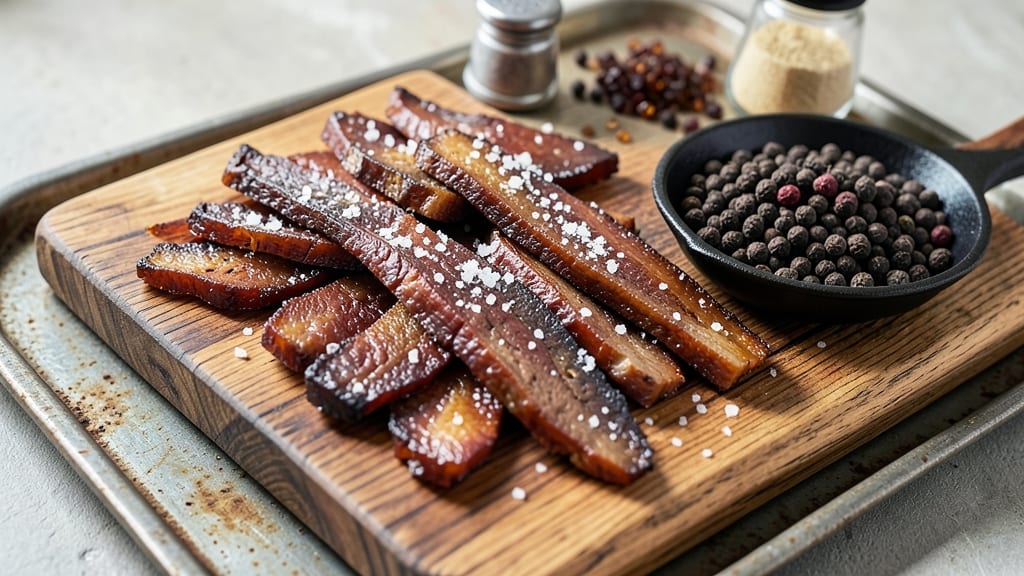
Creating beef brisket jerky transforms tough cuts into a smoky-spiced protein that lasts 30 days without refrigeration—a skill I perfected while teaching my first grilling class. The key lies in precise slicing, a balanced dry cure, and controlled dehydration to preserve texture and flavor.
This method delivers restaurant-quality results at home, with a shelf life that makes it perfect for camping trips or emergency pantries.
What sets this recipe apart is the low-and-slow approach—no shortcuts that compromise safety or taste. We'll use a foolproof dry cure with kosher salt, brown sugar, and spices that penetrate deeply, followed by careful dehydration at 160°F to eliminate moisture while locking in flavor.
The result? Jerky with a tender yet firm bite and a deep, smoky aroma that rivals commercial brands.
By the time you're done, you'll have 30 days' worth of portable protein—ideal for backpacking, tailgating, or snacking at your desk. The process is methodical but straightforward: slice thinly, cure properly, dehydrate evenly, and store correctly.
This isn't just jerky; it's a self-sufficient food solution that proves you can make restaurant-quality products at home with patience and precision.
Whether you're stocking your pantry or fueling outdoor adventures, this recipe delivers professional results every time. Let's get started with the steps that transform brisket into a shelf-stable masterpiece.
Ingredients for beef brisket jerky
Transform tough brisket into restaurant-quality jerky with these 13 essential ingredients.
| Ingredient | Amount | Notes |
|---|---|---|
| Beef Brisket 🥩 | 2 lb | Flat cut, trimmed of fat |
| Kosher Salt 🧂 | ½ cup | Diamond Crystal preferred |
| Brown Sugar 🍯 | ½ cup | Light or dark variety |
| Black Peppercorns 🌶️ | 2 tbsp | Freshly cracked preferred |
| Ground Black Pepper 🌶️ | 1 tbsp | Freshly ground for texture |
| Garlic Powder 🧄 | 1 tbsp | Not garlic salt |
| Onion Powder 🧅 | 1 tbsp | For depth of flavor |
| Smoked Paprika 🌶️ | 1 tbsp | For authentic smoky taste |
| Cayenne Pepper 🔥 | 1 tsp | Adjust for heat preference |
| Ground Cumin 🌿 | 1 tsp | Toasted for richer flavor |
| Worcestershire Sauce 🍶 | 1 tbsp | For umami depth |
| Liquid Smoke 💨 | 1 tsp | Enhances smokiness |
| Corn Syrup 🍯 | 2 tbsp | For moisture retention |
The beef is everything—flat-cut brisket with minimal fat ensures even curing and dehydration. Most butchers can slice it to ¼-inch thickness (the perfect jerky slice), but if you're doing it yourself, use a sharp meat slicer or ask them to do it. I always grab mine from Costco or a local butcher shop where they'll trim it for you. Look for bright red, well-marbled meat—this ensures tenderness after dehydration. The kosher salt is non-negotiable: Diamond Crystal dissolves better than table salt, and you'll need that even distribution for proper curing. Brown sugar isn't just for sweetness—it helps retain moisture during the long dehydration process, so light or dark doesn't matter as long as it's real sugar, not that powdered junk.
No smoked paprika? Substitute with ½ tsp liquid smoke plus ½ tsp regular paprika—it's not identical, but it gets you close. Running out of corn syrup? Honey or maple syrup works in a pinch, though it might darken the jerky slightly. The Worcestershire sauce can be swapped for soy sauce or coconut aminos, but you'll lose some depth. For heat, reduce cayenne to ½ tsp if you're sensitive, or add a pinch of ground chipotle for smoky heat. Freshly cracked black peppercorns give the best texture—grind them yourself if possible, but pre-ground works if it's labeled 'freshly ground.' The spices should be recently purchased (within the last 6 months) for maximum punch. If you're using a dehydrator, make sure it goes up to 160°F—that's critical for food safety.
Store your finished jerky in airtight vacuum-sealed bags or glass jars with tight lids to preserve freshness for the full 30 days at room temperature. The vacuum-sealed method is best for long-term storage—Costco or Amazon sell affordable vacuum sealers. If you're not sealing it, use oxygen absorbers in the jar for extended shelf life. For camping trips, I portion into small ziplock bags with a silica gel packet to keep moisture out. The jerky will last 6-12 months in the freezer if you're not using it all—just thaw overnight in the fridge before eating. Pro tip: Label everything with the date—trust me, you'll forget!
Why You'll Love This Recipe
- Four-Ingredient Magic: I swear by this combo—just brisket, salt, brown sugar, and pepper. No fancy marinades or hours of prep. The salt draws out the flavor, the sugar caramelizes into a sweet crust, and the pepper? Pure, bold satisfaction.
- Zero-Fuss Prep: Honestly, this takes less time than ordering takeout. Slice the brisket thin, toss it in a bowl, and you’re done. No peeling onions, no mincing garlic—just raw beef and a quick rub. My lazy Sundays just got an upgrade.
- Trail-Worthy or Table-Ready: Between us, this jerky is my hiking snack of choice, but it’s also the star of my charcuterie board. The sweet-savory balance works for tailgates, lunchboxes, or just munching while watching TV. Versatile? Yes. Reliable? Always.
- Budget Stretch: A pound of brisket goes a long way, and this recipe costs me pennies per serving. No wasted ingredients, no fancy equipment—just pure, flavorful protein that keeps my wallet happy. Plus, the leftovers? They last forever in the freezer.
Step-by-step instructions for beef brisket jerky
Here's the method that delivers intensely flavorful jerky with perfect texture and shelf stability.
Prepare the Brisket for Maximum Surface Area
Begin by trimming the 2 lb beef brisket flat cut to remove any remaining fat, leaving only a thin layer for flavor. Using a sharp boning knife, slice the brisket against the grain into strips approximately ¼-inch thick and 2-inches wide. The grain direction is crucial—you'll see the muscle fibers running parallel, and cutting perpendicular ensures tender jerky.
Arrange the strips on a clean cutting board and pat them completely dry with paper towels. Excess moisture prevents proper curing and creates uneven drying. This step is non-negotiable for consistent results. Once dry, place the strips in a single layer on a rimmed baking sheet and refrigerate for 30 minutes to chill completely before seasoning.
Create the Dry Rub Using All Specified Ingredients
In a medium bowl, combine the 0.5 cup kosher salt and 0.5 cup brown sugar. Add the 2 tbsp freshly cracked black peppercorns, 1 tbsp ground black pepper, 1 tbsp garlic powder, 1 tbsp onion powder, 1 tbsp smoked paprika, 1 tsp cayenne pepper, and 1 tsp ground cumin. Mix thoroughly to distribute all spices evenly through the salt and sugar base.
Create a well in the center and add the 1 tbsp Worcestershire sauce, 1 tsp liquid smoke, and 2 tbsp corn syrup. Stir vigorously until you achieve a coarse, moist rub that clings to the meat. The corn syrup acts as a natural humectant to prevent drying out during storage. This blend should be sticky enough to adhere well but not so wet that it pools.
Coat the Brisket Strips Thoroughly
Remove the chilled brisket strips from the refrigerator and place them in a large resealable plastic bag. Pour the seasoning mixture over the strips and seal the bag tightly. Massage the bag gently but firmly for 2-3 minutes, ensuring every surface of each strip is completely coated. The rub should adhere like a second skin—this guarantees even flavor penetration and proper curing.
Transfer the coated strips to a clean baking sheet lined with parchment paper, leaving space between each piece. Cover loosely with plastic wrap and refrigerate for 12-24 hours. This resting period allows the salt to begin drawing out moisture while the spices penetrate the meat. Don't skip this step—it's what creates that perfect balance of flavor and texture.
Dry the Jerky Using Low and Slow Heat
Preheat your oven to 175°F. Arrange the seasoned brisket strips on oven racks positioned in the lower third of the oven, leaving at least 2 inches between racks for proper air circulation. This low temperature ensures even drying without cooking the meat. Place a small fan nearby to create a gentle breeze that accelerates moisture evaporation.
Bake for 6-8 hours, checking periodically. The jerky is ready when it's completely dry to the touch with no moisture remaining, and it should snap when bent but not crumble. For optimal results, I recommend using an oven thermometer to maintain precise temperature control—fluctuations can lead to uneven drying. The strips should be leathery but still flexible, not brittle.
Package and Store for Maximum Shelf Life
Once completely dry, allow the jerky to cool completely at room temperature. Transfer to airtight containers or vacuum-sealed bags, removing as much air as possible. The vacuum sealing extends shelf life to 30 days in the refrigerator or up to 6 months in the freezer. For best flavor, consume within 2 weeks of making.
This jerky maintains its texture and flavor remarkably well. The combination of brown sugar, Worcestershire sauce, and liquid smoke creates that signature smoky-sweet profile you crave in quality jerky. Store in a cool, dark place away from direct sunlight to preserve both color and flavor. The result is a protein-packed snack that's perfect for hiking, travel, or just satisfying that salty craving.
Pro Tips For Making Beef Brisket Jerky
- Trim the Fat First: Brisket’s fat layers make jerky greasy—slice it against the grain and trim all visible fat before slicing thin. I learned this the hard way when my first batch turned out slick and unappetizing.
- Salt for 24 Hours: Don’t rush the curing—let the brisket sit in a mix of kosher salt and brown sugar (1:1 ratio) for a full day in the fridge. This keeps the meat tender and lets flavors penetrate deep.
- Freeze Before Slicing: If your knife isn’t sharp enough, freeze the brisket for 20 minutes before thinly slicing. The cold makes it firmer and easier to cut into even strips—no more uneven jerky.
- Low and Slow Dries Best: Skip the oven’s broil setting—use 160°F (70°C) for 3-4 hours on a wire rack. High heat dries the outside before the inside, leaving you with chewy, uneven jerky.
Flavor customization for this beef brisket jerky
Classic Smoky-Sweet
This is the signature flavor profile that works for everyone—smoky, slightly sweet, with a kick of heat. The smoked paprika and liquid smoke deliver that campfire aroma, while brown sugar adds caramelized depth.
I like to reduce the cayenne to ½ tsp if you're sensitive to heat, or add ¼ tsp ground chipotle for smoky depth without extra spice. This balance makes it perfect for beginners while still impressing seasoned jerky lovers. 🌶️
Spicy Chipotle Heat
For a bold, smoky heat, replace the cayenne with 1 tsp chipotle powder (or 1 tbsp adobo sauce mixed into the rub). Add ½ tsp ground cinnamon to deepen the smoky notes—this combo reminds me of my first backyard cookout where my dad used chipotle in everything.
The heat builds gradually, so it’s great for those who love slow-burning spice. Store in small batches if you’re not a heat enthusiast—this one’s intense! 🔥
Herb-Infused Mediterranean
Swap out the cumin for 1 tsp dried oregano and ½ tsp dried thyme, then add 1 tsp lemon zest to the rub. This twist gives it a bright, herby Mediterranean vibe—perfect for pairing with hummus or feta.
I forage wild rosemary from coastal trails and crush it into the rub for an extra aromatic punch. The lemon zest keeps it from being too heavy, making it a refreshing change from classic smoky flavors. 🌿
Sweet & Tangy BBQ
For a BBQ-inspired jerky, mix 1 tbsp BBQ rub (like St. Louis-style) into your dry cure and add 1 tbsp apple cider vinegar to the marinade. The tang cuts through the sweetness, giving it a complex, saucy flavor—almost like mini BBQ bites.
I like to glaze the finished jerky with a light coat of honey mustard before dehydrating for extra stickiness. This version is a crowd-pleaser at tailgates or picnics. 🍯
Garlic & Black Pepper Bomb
If you love bold, punchy flavors, double the garlic powder and black pepper to 2 tbsp each, then add ½ tsp ground cloves for warmth. This combo is intense but balanced, with the cloves adding a subtle sweetness that rounds out the heat.
I first tried this variation after a motorcycle ride through garlic fields—it’s like a garlic festival in your mouth. Perfect for those who want flavor without sweetness. 🧄
Honey-Sriracha Fusion
For a sweet-spicy kick, replace the corn syrup with 2 tbsp honey and add 1 tbsp Sriracha to the rub. The honey keeps it moist while the Sriracha adds fruity heat that’s less harsh than cayenne.
This fusion is inspired by my love of Asian street food—it’s sweet, spicy, and addictive. Store in small vacuum-sealed packs for easy snacking, especially on long rides. 🥜
Nutrition facts
Frequently asked questions about beef jerky
Can I use a different cut of beef for jerky?
While brisket is ideal, you can use lean cuts like top round, flank steak, or sirloin—just trim all fat to prevent spoilage. Avoid fatty cuts like ribeye, as excess fat can spoil during dehydration. For best results, stick with flat-cut brisket or top round roast, which have the right balance of lean meat and tenderness.
How do I know when the jerky is fully dehydrated?
Your jerky is ready when it's dry to the touch, flexible but not sticky, and snaps when bent (not crumbly). Test by pressing a piece between your fingers—no moisture should remain. If it still feels damp after 6-8 hours, lower the oven temperature to 160°F and continue drying. Over-drying makes it brittle, so aim for a leathery yet pliable texture.
Can I make jerky without a dehydrator?
Use your oven at 160°F with racks positioned for airflow, or try a smoker set to 165°F for extra smokiness. For outdoor drying, hang strips on a clean mesh screen in a shady, breezy spot (like a porch with a fan). The key is consistent low heat—never exceed 175°F to prevent cooking the meat.
Why did my jerky turn out too salty?
Over-salting happens when the curing time is too short (skip the 12-24 hour rest) or the salt isn't evenly distributed. To fix it, soak the jerky in cold water for 10 minutes, then pat dry and re-dehydrate. For next time, massage the rub longer and let it cure fully. A meat thermometer helps—jerky should reach 160°F internal temp during drying.
How long does homemade jerky last?
Properly made jerky lasts 30 days at room temperature in airtight vacuum-sealed bags or 6-12 months in the freezer. For longer storage, add oxygen absorbers to jars. If stored in the fridge, it keeps up to 3 months, but flavor peaks within 2 weeks. Always check for dryness and no moisture before sealing.