
Main Courses
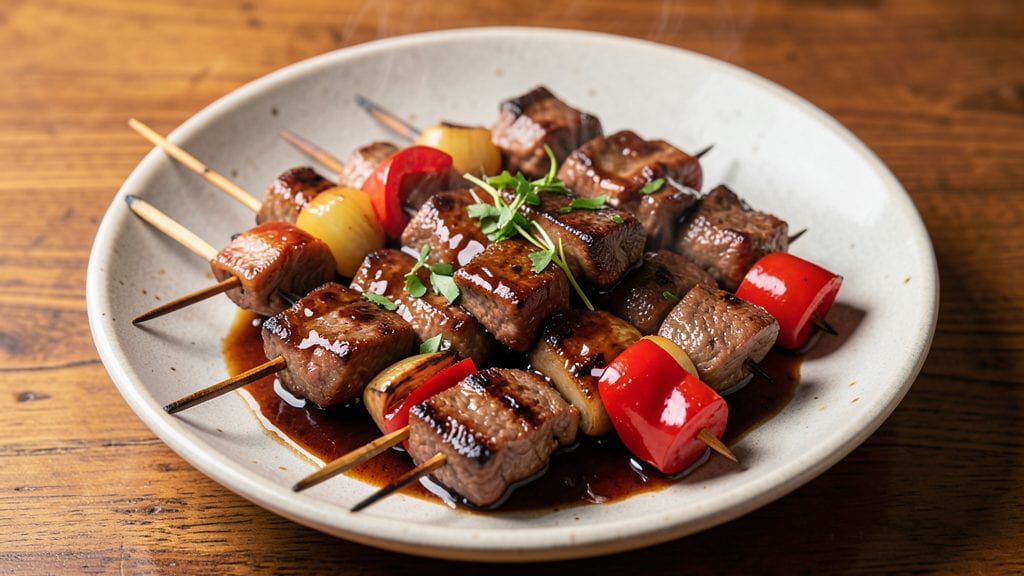
This beef kushiyaki recipe delivers authentic Japanese grill bites with a perfect balance of smoky char and sweet-savory glaze—just like your favorite izakaya skewers.
The secret lies in marinating thinly sliced beef in a soy-ginger base for deep flavor penetration, then grilling over high heat to create those signature grill marks. I developed this method after years of experimenting with different marinades and cooking techniques, and it consistently delivers restaurant-quality results at home.
What sets this recipe apart is the combination of traditional Japanese flavors with approachable techniques. You'll work with thinly sliced beef (about 1/4-inch thick) arranged on skewers with onions and bell peppers for natural sweetness and texture contrast.
The marinade—soy sauce, mirin, sake, and grated ginger—infuses the beef with umami and aromatic depth while keeping the process simple enough for weeknight cooking.
When you serve these skewers, you'll have perfectly charred beef with tender yet slightly crisp edges, all coated in a glossy glaze that caramelizes beautifully. The aroma alone will transform your kitchen into a Japanese grill station, and the balance of sweet, salty, and smoky flavors makes these skewers irresistible.
Serve with steamed rice, miso soup, and a side of pickled vegetables for an authentic experience.
For those looking to modernize the dish, you can substitute the traditional glaze with a teriyaki variation or add a touch of honey to intensify the sweetness. The recipe scales perfectly for parties, making it ideal for entertaining while keeping the preparation manageable.
Let's get started on creating these flavorful grill bites that will impress anyone who tries them.
Ingredients for beef kushiyaki
Thinly sliced beef, vibrant bell peppers, and aromatic marinades transform into izakaya-worthy skewers.
| Ingredient | Amount | Notes |
|---|---|---|
| Thinly Sliced Beef Top Round 🥩 | 1 ½ lb | Cut into 1/4-inch thick slices |
| Red Bell Peppers 🍅 | 2 whole | Cut into 1-inch chunks |
| Yellow Onions 🧅 | 1 whole | Cut into 1-inch chunks |
| Wooden Skewers 🪵 | 12 whole | Soaked in water for 30 minutes |
| Japanese Soy Sauce 🥄 | ½ cup | Kikkoman preferred for authenticity |
| Dry White Sake 🍶 | ¼ cup | Substitute with dry sherry |
| Mirin 🍶 | ¼ cup | Sweet rice wine, non-alcoholic version works |
| Fresh Ginger 🌿 | 2 tbsp | Grated, not powdered |
| Neutral Oil 🫒 | 1 tbsp | Avocado or vegetable oil |
| Sesame Oil 🫒 | 1 tsp | For finishing, toasted sesame seeds optional |
| Garlic Cloves 🧄 | 3 cloves | Minced for marinade |
| White Sugar 🍯 | 1 tbsp | Or substitute with honey |
| Diamond Crystal Kosher Salt 🧂 | ½ tsp | For seasoning |
| Black Pepper 🌶️ | ¼ tsp | Freshly cracked preferred |
| Unsalted Butter 🧈 | 2 tbsp | For basting skewers |
The beef is everything here—top round gives you that perfect balance of tenderness and chew. Look for pre-sliced beef at Whole Foods or your local Asian market, or ask your butcher to slice it 1/4-inch thick. If you're slicing yourself, freeze the beef for 30 minutes first to make it easier. For the bell peppers, Japanese sweet peppers (shishito) are ideal, but regular red bell peppers work perfectly fine. The onions? Yellow or white both add sweetness as they char, but yellow has a slightly deeper flavor. Soak your skewers in water for at least 30 minutes before using to prevent burning.
No sake on hand? Dry sherry or even white wine will work in a pinch, though sake's subtle sweetness is key. Mirin is non-negotiable for that authentic caramelized glaze, but if you can't find it, substitute with 1 tbsp honey plus 1 tbsp water. Fresh ginger is a must—powdered lacks the aromatic punch. For extra depth, add a pinch of red pepper flakes to the marinade. The butter for basting? Unsalted so you control the saltiness, and it adds a luxurious richness that takes these skewers to the next level. If you're serving this for a crowd, double the marinade and prep everything the night before—just keep the skewered meat refrigerated until ready to grill.
Marinate the beef for at least 2 hours, but overnight is even better—flavor penetration is everything. Store any leftover marinade in an airtight container in the fridge for up to 5 days, though I rarely have leftovers. The skewers themselves keep for 2 days in the fridge, but they're best served immediately after grilling. For make-ahead prep, marinate the beef and chop all veggies the night before, then assemble skewers right before cooking. The grilled skewers reheat beautifully—just warm in a 350°F oven for 5-7 minutes, basting with a little extra soy sauce and butter to restore that glossy finish.
Why You'll Love This Recipe
- No Knife Skills Needed: Honestly, the beef just slices itself—no butchering required. Grab a sharp knife, press down gently, and you’ve got paper-thin strips ready for skewering in under 5 minutes. (Yes, even on a Tuesday night.)
- Umami Bomb Combo: That Japanese soy sauce? It’s the secret weapon—deep, savory, and just sweet enough to balance the beef’s richness. Add the charred bell peppers and onions, and you’ve got a flavor punch that’ll make your taste buds do a happy dance.
- Weeknight or Party Star: Between us, this skewers any occasion. Toss it together for a quick dinner, double the batch for a potluck, or serve it as a crowd-pleasing appetizer. The same simple prep works every time—no last-minute stress.
- Budget Meal That Feeds: Thinly sliced top round stretches far, and bell peppers/onions bulk it up without breaking the bank. Leftovers? Reheat the skewers or toss them into a stir-fry—no waste, all flavor. My wallet thanks me weekly.
Step-by-step instructions for beef kushiyaki
Here's the method for perfectly balanced skewers with tender beef and glossy glaze.
Prepare the Marinade and Soak Skewers
In a medium bowl, combine the 0.5 cup Japanese soy sauce, 0.25 cup dry white sake, 0.25 cup mirin, 2 tbsp freshly grated ginger, 3 minced garlic cloves, 1 tbsp white sugar, 0.5 tsp Diamond Crystal kosher salt, and 0.25 tsp black pepper. Whisk vigorously until the sugar fully dissolves and the mixture becomes aromatic. The marinade should smell complex—bright from the sake, sweet from the mirin, and tangy from the ginger.
While the marinade rests, soak the 12 wooden skewers in water for at least 30 minutes. This prevents them from burning on the grill. I like to use a shallow dish and change the water halfway through to ensure they're fully saturated. The skewers should feel slippery to the touch when ready—this guarantees they won't snap when threading the beef.
Thread and Marinate the Skewers
Cut the 1.5 lb thinly sliced beef top round into 1-inch pieces if needed for even distribution. Thread alternating pieces of beef, 1-inch red bell pepper chunks, and 1-inch yellow onion chunks onto each skewer, starting and ending with beef. You should have 4 skewers with each vegetable and meat combination. Place them in a single layer in a shallow dish and pour the marinade over, ensuring each piece is coated. Cover and refrigerate for at least 2 hours, or preferably overnight.
Here's the thing—don't skip the marinating time. The acidity in the sake and mirin tenderizes the beef while the soy sauce builds depth of flavor. After 2 hours, the beef will absorb enough marinade to develop that signature umami richness without becoming mushy. If you're short on time, marinate for at least 1 hour, but you'll sacrifice some tenderness.
Grill or Broil Until Caramelized
Preheat your grill or broiler to medium-high heat (400°F). Brush the grates with the 1 tbsp neutral oil to prevent sticking. Arrange the skewers in a single layer, leaving space between them for even cooking. Grill for 8-10 minutes, turning occasionally, until the beef reaches 145°F internally and develops grill marks. The vegetables should soften slightly but remain crisp.
Watch the skewers carefully—you want the beef to sear without burning. If the marinade starts to pool too much, move them to a cooler part of the grill. The vegetables will release moisture, but the beef should develop a beautiful caramelized crust. You'll know it's ready when the edges of the beef turn golden brown and the skewers release easily from the grill.
Finish with Butter and Sesame Oil
Remove the skewers from heat and transfer them to a plate. In a small saucepan, melt the 2 tbsp unsalted butter over low heat until it foams. Pour the melted butter over the skewers, letting it drip down and coat each piece. Then drizzle with the 1 tsp sesame oil and toss gently to distribute. The butter adds richness while the sesame oil contributes a nutty aroma that ties everything together.
Let the skewers rest for 2-3 minutes before serving. This brief rest allows the juices to redistribute, ensuring each bite is moist and flavorful. Serve immediately with steamed rice and a side of pickled vegetables to balance the richness. The contrast of temperatures and textures makes this dish truly special—crisp vegetables, tender beef, and that glossy, sweet-savory glaze.
Pro Tips For Making Beef Kushiyaki
- Soak Skewers First: Wooden skewers absorb moisture like sponges, turning your kushiyaki into soggy sticks. Toss them in warm water for 20 minutes before threading—this prevents splitting and keeps the beef from sticking. (Yes, even if you’re impatient like me, trust the process.)
- Salt Beef 30 Minutes Early: Top round is lean and dries out fast, but salting it 30 minutes before cooking lets the seasoning penetrate and keeps it tender. Pat it dry afterward—wet slices won’t sear, and you’ll end up with tough, flavorless bites.
- Cut Onions Paper-Thin: Thick onion slices burn before the beef cooks through. Use a sharp knife and slice them as thin as you can—almost translucent—so they caramelize without turning to ash. (Your future self will thank you.)
- Marinate in Soy After Searing: I used to drown the beef in soy sauce upfront, but that turns the skewers into a mushy, salty mess. Instead, sear the beef first, then brush with a light coat of soy sauce at the end—just enough to glaze, not flood. The beef stays tender, and the flavor sticks.
Pro cooking tips for great beef kushiyaki
Skewer Assembly Secrets
Alternate beef, bell peppers, and onions in a 1:1:1 ratio for even cooking. Start and end each skewer with beef to maximize searing time. I use 1-inch chunks of vegetables to prevent overcrowding—this ensures they char beautifully without steaming.
For extra stability, thread a small piece of onion at the very end of each skewer to act as a counterweight. 🪵
Marinade Mastery
The soy-ginger-sake trio is non-negotiable for authentic flavor. Whisk the marinade until the sugar dissolves completely—this prevents graininess. For maximum tenderness, marinate beef for at least 4 hours (overnight is ideal).
I like to add 1 tsp honey to the marinade if I want extra caramelization during grilling. Always reserve 2 tbsp of marinade to use as a basting sauce later.
Grill Temperature Control
Maintain a consistent 400°F on your grill or broiler—this is critical for even cooking. I use a meat thermometer to monitor internal beef temperature, aiming for 145°F. If your grill flares up, move skewers to the cooler side and let flames die down before returning them.
For extra smoky flavor, add hickory or cherry wood chips to your charcoal grill 10 minutes before cooking.
Butter Basting Technique
Melt butter in a small saucepan over low heat until it just foams—never boil it, or it will lose flavor. Pour the butter over skewers in one continuous motion to create a glossy finish.
For extra richness, add 1 tsp grated ginger to the melted butter before basting. The butter should coat the beef evenly, adding a luxurious mouthfeel that balances the savory-sweet flavors. 🧈
Vegetable Prep Tips
Cut bell peppers lengthwise into 1-inch strips for even cooking. For onions, use yellow or white varieties—they caramelize better than red. Remove seeds and membranes from peppers to prevent bitterness.
If you're using shishito peppers, leave them whole for a milder flavor. Always pat vegetables dry before threading to prevent sticking to the grill.
Resting and Serving
Let skewers rest for 2-3 minutes after grilling—this crucial step prevents juices from running out when you cut. Serve immediately with steamed jasmine rice and a side of quick-pickled cucumbers to cut through the richness.
For a restaurant-style presentation, arrange skewers on a platter with toasted sesame seeds sprinkled on top. The contrast of hot skewers with cool pickles is what makes this dish truly special. 🍚
Nutrition facts
Frequently asked questions
Can I use regular wooden skewers or do I need metal ones?
Wooden skewers work perfectly for this recipe, but they must be soaked in water for at least 30 minutes before using to prevent burning. Metal skewers are an option if you're concerned about burning, though they won't impart the same rustic charm. Just ensure they're well-oiled to prevent sticking.
What's the best way to slice beef for kushiyaki?
Use thin slices about 1/4-inch thick for even cooking. Ask your butcher to slice top round against the grain for maximum tenderness. If slicing yourself, freeze the beef for 30 minutes first to make it easier. Cut into 1-inch pieces for perfect skewer distribution.
How do I prevent the vegetables from burning before the beef cooks?
Arrange vegetables on the outer edges of each skewer so they get less direct heat. Use 1-inch chunks and keep them slightly away from the grill grates. If they start to char too quickly, move skewers to a cooler part of the grill. The beef will catch up in 8-10 minutes at 400°F.
Can I make beef kushiyaki without sake or mirin?
Yes! Substitute 0.25 cup dry sherry for sake and mix 1 tbsp honey + 1 tbsp water for mirin. The dish will still be delicious, though the authentic caramelization will be slightly different. For extra depth, add 1 tsp honey directly to the marinade.
How long can I keep leftover beef kushiyaki?
Store cooked skewers in an airtight container in the fridge for up to 2 days. Reheat in a 350°F oven for 5-7 minutes, basting with extra soy sauce and butter to restore moisture. For best flavor, serve fresh off the grill. The vegetables may soften further when reheated.