
Main Courses
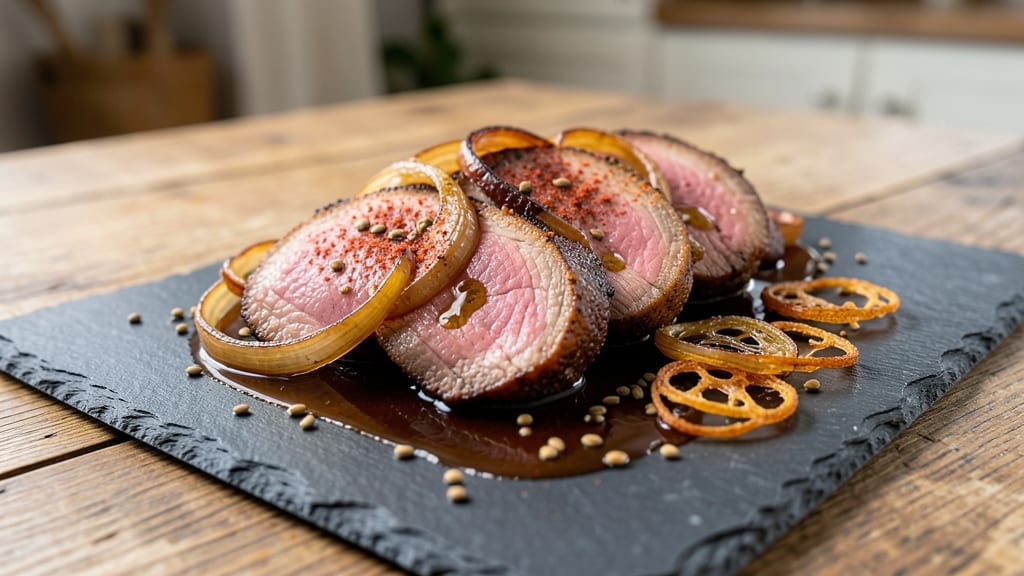
Mastering a beef lengua recipe transforms a humble cut into a showstopping centerpiece that commands attention at any table. This South American specialty delivers rich, tender meat with a deep, smoky character that pairs beautifully with bold spices and slow-cooked techniques.
I first encountered it during a trip to Argentina, where it was served at family gatherings—juicy, flavorful, and impossible to resist.
The key to perfect beef lengua lies in the preparation: a long, slow braise or simmer that breaks down the connective tissue while building layers of flavor. Unlike quicker cuts, lengua requires patience—typically 4 to 6 hours—but the result is worth every minute.
The texture becomes melt-in-your-mouth tender, with a surface that caramelizes into a crispy, savory crust when seared or grilled at the end.
What sets this dish apart is its versatility—serve it sliced thin for tacos, shredded in hearty stews, or grilled whole for a dramatic presentation. The spice blend, often featuring cumin, smoked paprika, and garlic, infuses the meat with warmth and depth.
With just a few simple ingredients and a foolproof method, you’ll create a dish that feels both rustic and refined.
Whether you're hosting a dinner party or craving a comforting weeknight meal, this recipe delivers restaurant-quality results without the fuss. Let’s get started—your taste buds will thank you.
Ingredients for beef lengua
Six bold ingredients, one unforgettable South American centerpiece—this smoky, spiced beef lengua delivers restaurant-quality flavor at home.
| Ingredient | Amount | Notes |
|---|---|---|
| Beef Lengua (Cow Tongue) 🥩 | 3 lb | Fresh, cleaned, trimmed of excess fat |
| Olive Oil 🫒 | ½ cup | Extra-virgin, for searing and braising |
| Yellow Onion 🧅 | 1 whole | Medium, sliced into half-moons |
| Garlic Cloves 🧄 | 6 cloves | Fresh, peeled, smashed |
| Smoked Paprika 🌶️ | 2 tbsp | For deep smoky flavor |
| Ground Cumin 🌿 | 1 ½ tbsp | Toasted for warmth |
| Dried Oregano 🍃 | 1 tbsp | Mexican oregano preferred |
| Bay Leaves 🌿 | 2 whole | Fresh or dried |
| Beef Broth 💧 | 2 cups | Homemade or high-quality store-bought |
| Red Wine 🍷 | 1 cup | Malbec or Cabernet Sauvignon |
| Tomato Paste 🍅 | 2 tbsp | Smooth, not chunky |
| Salt 🧂 | 1 ½ tsp | Diamond Crystal kosher salt |
| Black Peppercorns 🌶️ | 1 tsp | Freshly cracked |
| Lemon Juice 🍋 | 1 tbsp | Freshly squeezed |
The beef lengua is the star—look for bright red, plump tongues at specialty butchers or Latin markets. Costco and Whole Foods often carry them pre-cleaned, but if you’re buying whole, soak in cold water for 30 minutes to remove any blood. The fat cap should be trimmed—it’s tough and doesn’t render nicely. I’ve used both cow and bull tongues; cow is milder and more tender, while bull has a deeper, gamier flavor. For the best quality, ask your butcher for grass-fed if possible—it’s noticeably richer. If you can’t find lengua, beef shank is a decent substitute, though the texture won’t be identical.
No smoked paprika? Chimichurri powder or a pinch of liquid smoke works in a pinch, but it’s not the same. The cumin and oregano are non-negotiable—they build that warm, earthy backbone. Running low on red wine? Beef broth with a splash of balsamic vinegar mimics the depth. Fresh bay leaves add complexity, but if you’ve got dried, halve the amount. The tomato paste can be swapped for sun-dried tomatoes (soaked and chopped), though it’ll change the texture slightly. For extra richness, add a splash of soy sauce—trust me, it balances the smokiness beautifully.
This dish tastes even better the next day, so make it ahead if you’re hosting. Store the cooked lengua in its braising liquid in the fridge for up to 5 days—the flavors meld like crazy. For longer storage, freeze the whole thing (liquid included) for up to 3 months. When reheating, simmer gently with a splash of water or broth. The tongue keeps its moisture beautifully, so you won’t need to worry about drying out. Slice it thin for tacos, shred it for stews, or serve it whole as a showstopper—just sear it in a hot pan for 2 minutes per side before serving for that crispy crust.
Why You'll Love This Recipe
- One-Pan Magic: I swear by this recipe when I’m too tired to wash dishes—just sear the lengua, toss in onions and garlic, sprinkle that smoked paprika, and let the oven do the work. The tongue absorbs all the flavors without needing a fancy technique.
- Rich, Smoky Depth: Between us, the smoked paprika and slow-cooked onions turn this into something special. That crispy exterior with the tender, almost buttery inside? It’s the kind of dish that makes people ask, “What is this?” (And then they beg for the recipe.)
- Weeknight Crowd-Pleaser: Honestly, it’s my go-to for game days or when friends drop by—no one expects beef tongue, but they all finish their plates. Serve it sliced thick on crusty bread, and suddenly you’re the host who nailed it.
- Budget Stretch: I buy lengua on sale, and one cut feeds my family for days. Reheat slices in a pan with a splash of water, and it’s just as good the second time around. (Yes, even on a Tuesday night.)
Step-by-step instructions for braised beef lengua
Here's how to transform tough cow tongue into melt-in-your-mouth perfection.
Prepare and Sear the Beef Lengua
Start by trimming any remaining fat from the 3 lb beef lengua and pat it completely dry with paper towels. This step is crucial—moisture prevents proper searing. Place the tongue in a large Dutch oven and add the 0.5 cup olive oil. Heat the Dutch oven over medium-high heat until the oil shimmers.
Sear the beef lengua on all sides until it develops a deep golden-brown crust, about 8-10 minutes total. Flip carefully using tongs—this dense cut needs gentle handling. The exterior should be richly caramelized while the interior remains firm to the touch. Remove the seared tongue and set it aside on a plate.
Build the Flavor Base
In the same Dutch oven, add the sliced yellow onion and cook over medium heat for 5 minutes until softened but not browned. Add the 6 smashed garlic cloves and cook for another 30 seconds until fragrant. Here's where the magic happens: sprinkle in the 2 tbsp smoked paprika, 1.5 tbsp ground cumin, and 1 tbsp dried oregano, stirring constantly for 1 minute to toast the spices and release their aromas.
Pour in the 1 cup red wine and scrape up any browned bits from the bottom of the pot. Let it simmer for 3-4 minutes until reduced by half. Stir in the 2 tbsp tomato paste and cook for 2 minutes until it darkens slightly. This creates a rich, flavorful foundation for the braise.
Braise with Aromatics and Liquid
Return the seared beef lengua to the Dutch oven. Add the 2 whole bay leaves, 1.5 tsp salt, and 1 tsp freshly cracked black peppercorns. Pour in the 2 cups beef broth, making sure the tongue is mostly submerged. Bring to a gentle simmer, then reduce heat to low. Cover tightly with a lid and braise for 3 hours, turning the tongue occasionally to ensure even cooking.
After 3 hours, check for doneness by inserting a fork into the thickest part. The tongue should be fork-tender with no resistance. If it's not quite there, continue braising for another 30-60 minutes. The liquid should reduce to a thick, flavorful sauce that coats the back of a spoon.
Finish and Serve
Remove the beef lengua from the braising liquid and transfer it to a cutting board. Let it rest for 10 minutes before slicing. The resting period allows the fibers to relax and makes slicing much easier. Skim any excess fat from the braising liquid, then stir in the 1 tbsp freshly squeezed lemon juice. This brightens the deep, smoky flavors and cuts through the richness.
Slice the beef lengua against the grain into ½-inch thick pieces. Serve immediately with the reduced braising sauce spooned over the top. The texture should be incredibly tender, almost melting in your mouth, with a rich, complex flavor profile that balances smoky, spicy, and tangy notes. This dish pairs beautifully with crusty bread to soak up every last drop of that incredible sauce.
Pro Tips For Making Beef Lengua
- SCORE THE CRUST FIRST: After browning the lengua in olive oil, resist the urge to flip it right away—let that first side develop a deep, caramelized crust for 8-10 minutes. I used to rush this, and the flavor was always flatter; patience here makes the difference between good and unforgettable.
- TRIM THE FAT, NOT THE FLAVOR: Scrape off any thick fat deposits from the lengua before cooking—it’s not about losing flavor, but about avoiding grease splatter that’ll make your kitchen smell like a barbecue joint for hours. Use a sharp knife and work over the sink; this step saves cleanup and keeps your pan from steaming like a fog machine.
- LOW AND SLOW AFTER SEARING: Once the lengua is browned, drop the heat to low and cover the pan—even if it feels counterintuitive. I learned this the hard way when a rushed cook turned my tender tongue into chewy leather. Let it steam gently for 15-20 minutes, checking occasionally, or risk overcooking before the center gives way.
- SMASH THE GARLIC: Instead of mincing garlic cloves, smash them flat with the side of your knife first—this releases more aroma and prevents burning. Toss them directly into the hot oil with the onions, and let them bloom for 2 minutes before adding the smoked paprika. It’s a tiny tweak, but the depth of flavor jumps noticeably.
Best sauces and condiments for this beef lengua
Smoky Chipotle Sauce
This sauce transforms beef lengua into a smoky, spicy sensation. Start by simmering 1 cup tomato sauce, 2 tbsp adobo sauce (from canned chipotles), 1 tbsp honey, and 1 tsp cumin for 10 minutes until thickened.
Strain and pour over sliced lengua just before serving—it clings beautifully to the tender meat. 🌶️
Creamy Avocado Lime Dressing
For a refreshing contrast, blend 1 ripe avocado, ½ cup sour cream, juice of 1 lime, ¼ cup chopped cilantro, and salt to taste until smooth.
Drizzle over sliced lengua for a creamy, citrusy finish that balances the richness. I love this with charred corn on the side for extra texture.
Spiced Red Wine Reduction
Use the braising liquid from your beef lengua to create a luxurious sauce. Reduce it by half over medium-high heat, then stir in 1 tbsp butter and 1 tsp fresh thyme.
Finish with a splash of Malbec wine to deepen the flavor. This sauce is perfect for drizzling over sliced lengua or using as a dip for crusty bread.
Tangy Mango-Habanero Salsa
For a tropical twist, blend 1 cup diced mango, ½ habanero pepper, ¼ cup red onion, 2 tbsp lime juice, and salt.
Let it sit for 15 minutes to let the flavors meld. Serve alongside sliced lengua for a sweet-spicy contrast that’s perfect for warm weather gatherings.
Garlic-Herb Butter
Melt ½ cup unsalted butter with 3 minced garlic cloves, 1 tbsp chopped parsley, and ½ tsp smoked paprika until fragrant. Drizzle over seared beef lengua slices just before serving for a rich, aromatic finish. This works especially well if you’ve grilled your lengua instead of braising it.
Pickled Red Onions
Quick-pickle 1 cup thinly sliced red onions in ½ cup apple cider vinegar, 1 tbsp sugar, and ½ tsp salt for 30 minutes. The bright acidity cuts through the richness of the beef lengua, adding a crisp, tangy bite.
I like to scatter them over the top right before serving for a pop of color and freshness. 💛
Nutrition facts
Frequently asked questions
How do I know when beef lengua is fully cooked?
Beef lengua is done when it's fork-tender with no resistance in the thickest part—typically after 3 to 4 hours of braising. The exterior should be caramelized, and the meat should pull apart easily. If it's still firm, return it to the pot for another 30-60 minutes. Overcooking can make it dry, so check frequently.
Can I substitute beef shank for beef lengua?
While beef shank works in a pinch, it won't replicate the same texture or flavor. Lengua has a unique, gelatinous quality that shank lacks. If you must substitute, use beef cheek or pork tongue for closer results. For a shank-based dish, adjust cooking time to 2-3 hours and add extra aromatics to compensate.
Why does my beef lengua turn out tough?
Toughness usually means it wasn't cooked long enough or the meat wasn't properly rested. Ensure you braise for at least 3 hours and let it rest for 10 minutes before slicing. Also, avoid overcrowding the pot—this can steam the meat instead of searing it. For extra tenderness, add 1 tsp vinegar to the braising liquid to help break down fibers.
How should I store and reheat cooked beef lengua?
Store cooked beef lengua in its braising liquid in the fridge for up to 5 days or freeze for 3 months. To reheat, simmer gently in the liquid until warmed through (10-15 minutes). Never microwave—it makes the meat rubbery. For best results, reheat in a skillet with a splash of water or broth to keep it moist.
What are the best ways to serve beef lengua?
Slice thinly against the grain for tacos, sandwiches, or salads. Serve whole as a dramatic centerpiece with a smoky sauce. It also works shredded in stews or as a filling for empanadas. Pair with crusty bread, pickled onions, or a bright salsa to balance the richness. For a modern twist, try it in a beef lengua nachos platter with avocado and lime crema.