
Sauces & Condiments
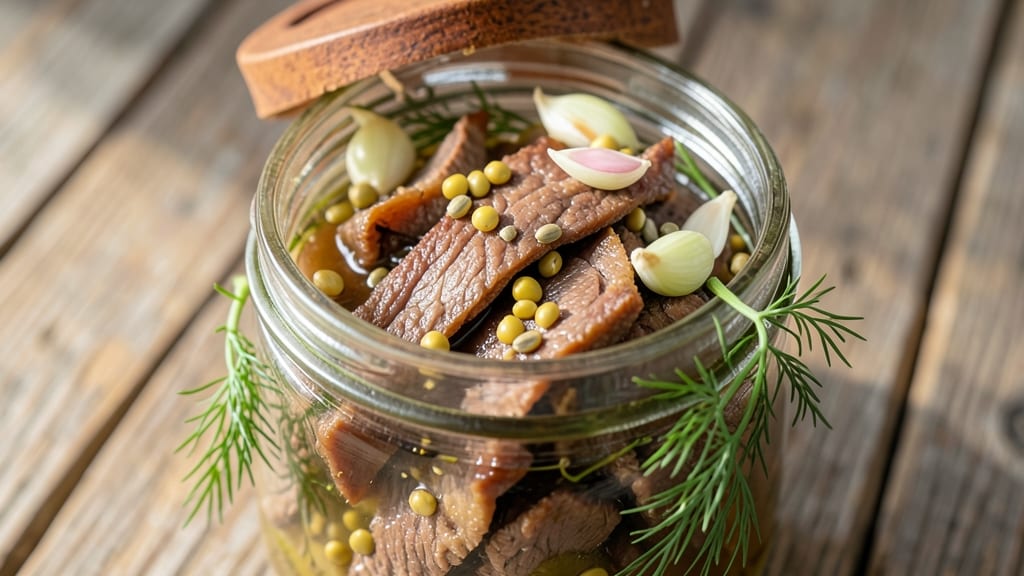
This beef pickle recipe delivers tangy, crunchy bites that rival any jarred version—except these taste fresher and pack more flavor. The secret lies in a carefully balanced brine of vinegar, spices, and aromatic herbs that tenderize the beef while preserving its texture.
I first discovered this method while researching Southern comfort food traditions, where beef pickles became a beloved side dish for barbecues and fried chicken dinners.
The process involves curing thinly sliced beef in a vinegar-based brine infused with mustard seeds, garlic, and dill—key ingredients that create that signature tangy punch. Unlike store-bought versions, this recipe lets you control the sweetness and spice levels, ensuring every bite is perfectly balanced.
The beef develops a satisfying crunch while staying tender, making it a versatile addition to sandwiches, salads, or as a standalone snack.
By the time you’re done, you’ll have a jar of brightly flavored beef pickles that stay crisp for weeks when stored properly. The vinegar brine not only preserves the texture but also enhances the natural flavors of the beef, creating a dish that’s both nostalgic and refined.
Whether you’re serving them at a picnic or adding them to a charcuterie board, these pickles will elevate any meal with their bold, tangy profile.
This method is perfect for those who love homemade condiments with restaurant-quality results. The recipe scales easily, so you can make a large batch to enjoy throughout the week. Let’s get started on creating beef pickles that will impress even the most seasoned food lovers.
Ingredients for beef pickle
Tangy, crunchy bites start with these 12 simple ingredients—no fancy stuff needed.
| Ingredient | Amount | Notes |
|---|---|---|
| Top Round Beef 🥩 | 1 ½ lb | Thinly sliced, 1/4-inch thick |
| White Vinegar 💧 | 2 cups | Distilled white preferred |
| Yellow Mustard Seeds 🌶️ | 2 tsp | Toasted for extra flavor |
| Garlic Cloves 🧄 | 4 cloves | Smashed, not minced |
| Dill Seed 🌿 | 1 tsp | Or 1 tbsp fresh dill |
| Celery Seed 🥬 | 1 tsp | Ground for texture |
| Black Peppercorns 🌶️ | 1 tsp | Crushed lightly |
| Bay Leaves 🍃 | 2 whole | Fresh or dried |
| Red Onion 🧅 | 1 whole | Thinly sliced, white part |
| Granulated Sugar 🍚 | ¼ cup | Adjust to taste |
| Salt 🧂 | 1 ½ tsp | Kosher or sea salt |
| Water 💧 | 1 cup | Filtered preferred |
The beef is key—top round stays tender while slicing thin. Ask the butcher to cut it for you, or use a sharp knife and freeze for 20 minutes first. Costco or local butchers often have pre-sliced beef for pickling—just check the package. If you can't find top round, sirloin or flank steak works too, but trim off any fat. The vinegar? White vinegar from Trader Joe's has the cleanest taste, but any white vinegar works. Toast the mustard seeds in a dry pan for 30 seconds—they'll smell amazing and add depth. Fresh dill is ideal, but dried works if you've got it (use half the amount).
No mustard seeds? Dijon mustard at 1 tbsp adds tang without the texture. Short on garlic? Garlic powder at 1 tsp is fine, but fresh is better. Swap red onion for green onion tops if that's what you have. The sugar? Adjust to taste—some like it sweeter, some prefer it sharper. If you're worried about the beef getting too soft, add an extra 1/2 cup vinegar to the brine. The brine should cover the beef by about 1 inch—if not, add more vinegar or water. This keeps the texture perfect for weeks.
Store in a clean, airtight jar in the fridge. They'll stay crisp for 3-4 weeks—way longer than store-bought. For extra long storage, pack in a sealed jar and freeze. Thaw overnight in the fridge before eating. These pickles are perfect for BBQ sandwiches, charcuterie boards, or just snacking straight from the jar. Double the batch—they disappear fast.
Why You'll Love This Recipe
- No-Sew-Up Night: I swear, this takes less time than waiting for takeout. Slice the beef, toss it in vinegar and spices, and let it sit—no stirring, no babysitting. Honestly, I’ve made it while watching a movie.
- Tangy Garlic Magic: That first bite? The vinegar cuts through the beef’s richness while the garlic and mustard seeds add a punch. The dill seeds give it a subtle earthiness that makes it taste like a home-cooked secret.
- Pickle Party Everywhere: Use it on sandwiches, toss it into salads, or serve it cold with crackers. My kids even ask for it in their lunchboxes—yes, even on a Tuesday night. It’s the one dish that works for picnics, potlucks, or lazy Sundays.
- Budget-Friendly Pantry Hero: Top round beef is affordable, and the rest of the ingredients? You’re probably already using them. I’ve made a whole batch for under $15 and still had leftovers for days. Zero waste, maximum flavor.
Step-by-step instructions for beef pickle recipe
Here's how to make crispy, tangy beef bites that stay crunchy for days.
Prepare the Beef for Maximum Crunch
Slice the 1.5 lb top round beef into ¼-inch thick strips against the grain. This thinness ensures they stay tender while developing that perfect crunch. Pat each strip dry with paper towels - any moisture will prevent proper crisping during cooking.
In a small skillet over medium-high heat, add the beef strips in a single layer without crowding. Cook for 2-3 minutes per side until they're light golden brown and still slightly pink in the center. You want them cooked through but not fully tough - they'll finish cooking in the brine. Transfer the cooked beef to a large bowl and set aside.
Create the Flavor-Packed Brine
In a medium saucepan, combine the 2 cups white vinegar, 1 cup water, 0.25 cup granulated sugar, 1.5 tsp salt, 2 whole bay leaves, 4 smashed garlic cloves, 1 whole red onion (sliced), 2 tsp yellow mustard seeds, 1 tsp dill seed, 1 tsp celery seed, and 1 tsp black peppercorns. Stir just until the sugar and salt dissolve completely.
Bring the mixture to a gentle boil over medium heat, then immediately reduce to a simmer for 5 minutes. This allows the flavors to meld together. The onion should soften slightly, and you'll notice the aromatic seeds releasing their oils. Remove from heat and let the brine cool completely to room temperature.
Combine and Cure the Beef Pickles
Pour the cooled brine over the cooked beef in the bowl. Stir gently to coat all the beef pieces evenly. Here's the thing - you want every surface to touch the liquid so the flavors penetrate completely. Cover the bowl and refrigerate for at least 24 hours, though I recommend 48 hours for maximum tanginess and crunch.
After the initial 24 hours, give everything a good stir and return to the fridge. The acidity will work its magic, tenderizing the beef while creating that signature tangy bite. The longer they cure, the more intense the flavor becomes - but don't exceed 72 hours or they'll become too soft.
Drain and Serve with Perfect Texture
After curing, drain the beef pickles in a colander, pressing gently to remove excess liquid. The pickles should be firm but still slightly pliable - if they feel too soft, they've over-cured. Return them to the fridge uncovered to allow any surface moisture to evaporate, which helps maintain that satisfying crunch.
For serving, I like to arrange them on a platter with any reserved brine drizzled around. The pickles will keep in the fridge for up to 2 weeks if stored properly in an airtight container. They make an amazing snack straight from the fridge, or you can add them to salads, sandwiches, or charcuterie boards for that extra tangy kick.
Pro Tips For Making Beef Pickle
- Trim the Fat First: Top round beef has stubborn fat layers—slice those off before pickling. I learned this the hard way when my first batch turned greasy and muddled the vinegar’s sharpness. Clean cuts mean brighter flavor and easier slicing later.
- Toast the Seeds: Dry-toast yellow mustard seeds and dill seeds in a pan for 30 seconds until fragrant—this unlocks their flavor. Skipping this step means your pickle will taste like vinegar and regret.
- Simmer, Don’t Boil: Keep the vinegar mixture at a gentle simmer (tiny bubbles, not rolling) to prevent the beef from toughening. I used to blast it on high, and the meat turned rubbery—now I watch it like a hawk.
- Use Cold Beef: Chill the sliced beef for 15 minutes before adding it to the vinegar. Cold meat absorbs the marinade faster and stays tender, while warm beef just gets soggy. (Yes, even if you’re impatient like me.)
Common mistakes when making your beef pickle
Skipping the Pre-Cook
One of the biggest mistakes is skipping the initial sear of the beef strips. Without this step, the beef will turn mushy during the curing process. I always cook the beef first over medium-high heat for 2-3 minutes per side—this ensures they stay tender while developing that signature crunch.
If you're in a hurry, you might be tempted to skip this, but trust me, it makes all the difference. 🔥
Using the Wrong Vinegar
Not all vinegars are created equal, and this is especially true for pickling. Using apple cider vinegar or balsamic instead of white vinegar will give you a cloudy brine and a less crisp texture.
I always reach for distilled white vinegar—it's the cleanest and most effective for preserving that perfect crunch. If you're using a substitute, make sure it's at least 5% acidity to ensure proper preservation.
Overcrowding the Brine
When combining the beef with the brine, it's easy to overcrowd the bowl, which prevents the beef from absorbing the flavors evenly. The beef should be submerged in the brine but not packed tightly.
I like to use a large glass bowl to give everything room to breathe. If you're making a big batch, consider doing it in batches—this ensures each piece gets properly coated and cured.
Not Toasting the Mustard Seeds
Many recipes call for mustard seeds, but they often forget to toast them first. Toasting the 2 tsp yellow mustard seeds in a dry pan for 30 seconds unlocks their full flavor and adds a nutty depth to the brine.
Skipping this step means you'll miss out on that extra layer of complexity. It’s a small step, but it makes a big difference in the final flavor.
Under-Curing or Over-Curing
Finding the right balance in curing time is crucial. Under-curing for less than 24 hours means the beef won’t be tangy enough, while over-curing beyond 72 hours will make it too soft. I always aim for 48 hours—this gives the beef that perfect balance of tang and crunch.
Keep an eye on the texture; if it feels too soft, it’s time to pull them out of the brine.
Ignoring the Resting Step
After draining the beef pickles, it’s tempting to serve them immediately. However, letting them rest uncovered in the fridge for 30 minutes allows any surface moisture to evaporate, which helps maintain that satisfying crunch.
This step is often overlooked, but it’s what separates good pickles from great ones. Patience here pays off in texture! ✨
Nutrition facts
Frequently asked questions
Can I use a different type of vinegar for beef pickles?
While white vinegar is traditional, you can experiment with apple cider vinegar or rice vinegar for milder flavors. However, these may produce a cloudier brine and slightly softer texture. For the crispest results, stick with distilled white vinegar—it preserves the crunch best while delivering that signature tang.
How long do homemade beef pickles last in the fridge?
Properly stored in an airtight container, these pickles stay crisp for 3-4 weeks. The vinegar brine acts as a natural preservative, but always check for any soft spots before eating. For longer storage, freeze them in a sealed container for up to 6 months. Thaw overnight in the fridge to maintain texture.
What's the best way to serve beef pickles?
They're perfect as a tangy topping for BBQ sandwiches, a crunchy addition to fried chicken dinners, or a bold snack straight from the jar. Try pairing them with sharp cheddar cheese or adding them to salads for extra zing. The brine also makes a fantastic marinade for grilled meats!
Can I make beef pickles without mustard seeds?
Yes! If you don't have mustard seeds, substitute with 1 tablespoon Dijon mustard or 1 teaspoon ground mustard powder. The flavor will be slightly different but still delicious. For extra depth, add 1/2 teaspoon turmeric to the brine—it enhances the color and adds warmth.
Why did my beef pickles turn mushy?
Over-curing (beyond 72 hours) or skipping the initial sear are the most common causes. Always cook the beef first for 2-3 minutes per side and cure for 48 hours max. If they're too soft after curing, try using thinner beef slices next time or adding 1/4 cup extra vinegar to the brine.