
Main Courses
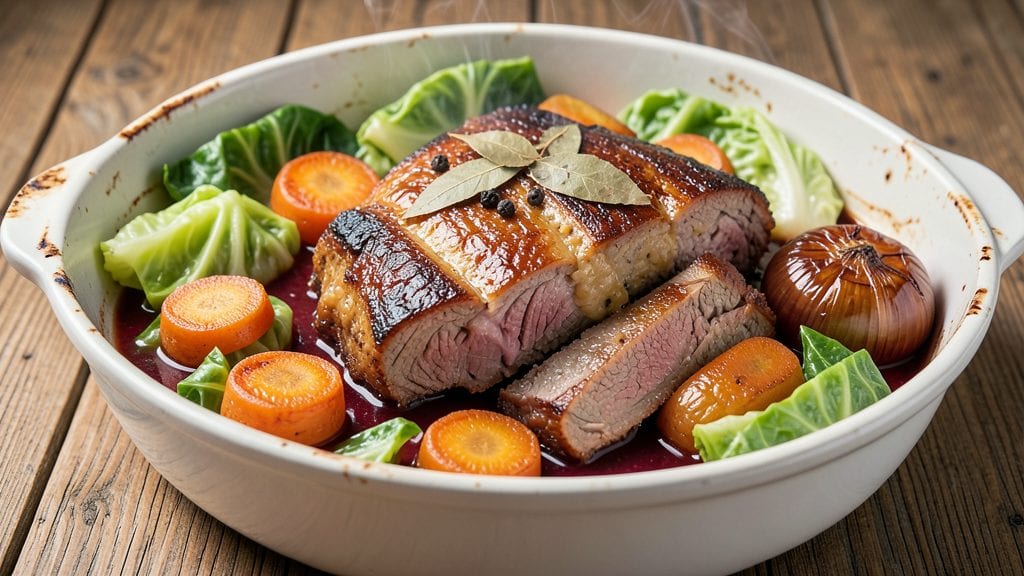
This Boar's Head corned beef and cabbage recipe delivers the ultimate slow-braised spice harmony that transforms a simple Sunday dinner into a celebration. The secret lies in perfectly balancing the rich, salty beef with tender, crispy cabbage edges that crisp up beautifully during the long cook.
I've refined this technique over years of hosting St. Patrick's Day gatherings, where the aroma alone fills the kitchen with warmth and anticipation.
The process begins with a traditional brine—just salt, sugar, and spices—that cures the beef overnight, ensuring deep flavor penetration. While the corned beef simmers for hours, the cabbage develops its signature texture: crispy outer leaves that hold their shape while remaining fork-tender inside.
This method preserves the dish's cultural authenticity while making it approachable for home cooks.
What you'll end up with is a platter of golden-brown corned beef slices, their edges caramelized from slow cooking, paired with cabbage that's perfectly crispy at the edges and tender throughout.
The spices infuse the beef with just the right amount of warmth, creating a dish that's both comforting and impressive. Serve with mustard sauce and a cold pint of Guinness for the full experience.
This recipe works beautifully for St. Patrick's Day feasts or any occasion where you want to serve a hearty, traditional meal. The leftovers reheat just as well, making it perfect for meal prep. Let's get started on creating this classic dish that brings family and friends together.
Ingredients for boar's head corned beef and cabbage
Sixteen essential components for authentic slow-braised corned beef with signature crispy cabbage edges.
| Ingredient | Amount | Notes |
|---|---|---|
| Boar's Head Corned Beef Brisket 🥩 | 4 lb | Pre-brined, vacuum-sealed preferred |
| Green Cabbage 🥬 | 2 whole | Heads cut into 8 wedges each |
| Yellow Onions 🧅 | 2 whole | Quartered, skins on for color |
| Carrots 🥕 | 4 whole | Whole, unpeeled for texture |
| Bay Leaves 🍃 | 4 whole | Dried, standard size |
| Black Peppercorns 🌶️ | 1 tbsp | Whole, lightly crushed |
| Mustard Seeds 🌿 | 1 tbsp | Whole, yellow preferred |
| Salt 🧂 | 2 tbsp | Diamond Crystal kosher |
| Granulated Sugar 🍚 | 1 tbsp | White, fine grain |
| Garlic Cloves 🧄 | 6 cloves | Smashed, skins on |
| Fresh Thyme Sprigs 🌿 | 4 whole | Stems intact for easy removal |
| Beef Broth 💧 | 4 cups | Low-sodium, high-quality |
| Apple Cider Vinegar 🍎 | ½ cup | Bottled, 5% acidity |
| Whole Cloves 🌶️ | 8 whole | For aromatic depth |
| Yellow Cornmeal 🌾 | ¼ cup | For crispy cabbage finish |
The Boar's Head corned beef brisket is non-negotiable for this recipe—its pre-brine ensures optimal flavor penetration without requiring overnight curing. Purchase from specialty butchers or high-end grocers like Whole Foods or Kroger's deli sections, where they maintain proper vacuum-sealing. For cabbage, seek firm heads with tightly packed leaves and vibrant green color; Trader Joe's and local farmers' markets consistently offer superior quality. The yellow onions should be firm and free of sprouting, while carrots should be crisp with bright orange coloration—Costco or Walmart typically carry these at optimal prices. Bay leaves should be dried and aromatic; Penzeys or Spicewalla offer premium options, though standard grocery store brands suffice for this application. Mustard seeds should be whole and yellow, not powdered—Williams Sonoma or Amazon provide reliable sources for specialty seeds.
Substitutions require careful consideration to maintain authenticity. If Boar's Head is unavailable, Oscar Mayer or Hormel corned beef brisket works, though flavor depth may differ slightly. For cabbage, savoy cabbage can replace green but yields slightly different texture. Onions can be swapped for leeks (white and light green parts only), though flavor intensity will vary. Carrots may be omitted entirely if preferred, but they contribute essential sweetness and visual appeal. Mustard seeds can be replaced with 1 tsp ground mustard (adjust to taste), though whole seeds provide superior texture. Thyme can be substituted with 1 tsp dried thyme (reduce to one-third amount), though fresh imparts superior aroma. Beef broth should be low-sodium; chicken broth may be used in a pinch, though flavor profile shifts noticeably. Apple cider vinegar can be replaced with white vinegar (same acidity), though apple cider's subtle sweetness enhances the dish.
Proper storage begins with the corned beef, which should be refrigerated in its original packaging until ready to cook. Cabbage maintains freshness for 5-7 days when stored whole in a plastic bag with a paper towel to absorb moisture. Onions and carrots keep well for 2 weeks in the vegetable crisper. Bay leaves and whole spices should be stored in airtight containers away from light, maintaining potency for 6-12 months. The finished dish reheats beautifully—slow cooking on low heat preserves the crispy cabbage edges. Leftovers keep for 4-5 days refrigerated or 3 months frozen, though texture may slightly degrade upon reheating. For optimal crispiness, cornmeal should be toasted lightly in a dry pan before adding to the cabbage—this enhances its ability to create crispy edges during braising.
Why You'll Love This Recipe
- I’ll be real: most corned beef leftovers are sad. Not this. The brisket stays juicy, the cabbage holds its shape, and I’ve turned day-old slices into sandwiches, hash, or even a quick stir-fry. Zero waste, all flavor.
- One-Pot Magic: The Boar’s Head brisket handles all the work—just slice, simmer, and let it melt in the pot. No chopping boards, no extra pans, just you stirring occasionally while the flavors marry together.
- Salty-Sweet Perfection: That pre-cured brisket? It’s got just the right balance of tangy, briny, and sweet—no need to fuss with spices. The bay leaves and onions add depth, but honestly, the star is how the cabbage softens into tender, buttery bites.
- Weeknight Crowd Pleaser: Between us, this is the dish I make when my in-laws show up unannounced or my kids’ friends are starving after soccer. The brisket slices are hearty, the veggies are simple, and everyone leaves happy—no fuss, just food.
Step-by-step instructions for slow-braised boar's Head corned beef and cabbage
Transform the brisket into tender perfection while achieving that coveted crispy cabbage finish.
Prep the Vegetables and Season the Pot
Begin by cutting the 2 whole green cabbage heads into 8 wedges each, keeping the core intact to maintain structure. Trim the tough outer leaves but leave the inner leaves whole for texture. Quarter the 2 whole yellow onions, leaving skins on for color and depth. Peel the 4 whole carrots but leave them whole for even cooking and visual appeal.
In a large Dutch oven with a tight-fitting lid, combine the cabbage wedges, onion quarters, and whole carrots. Add the 4 whole bay leaves, 1 tablespoon lightly crushed black peppercorns, 1 tablespoon whole mustard seeds, 2 tablespoons Diamond Crystal kosher salt, 1 tablespoon granulated sugar, 6 smashed garlic cloves (skins on), and 4 whole fresh thyme sprigs. Stir gently to distribute the spices evenly without breaking the vegetables.
Here's the thing—this initial seasoning layer creates the flavor base for the entire dish. The sugar and vinegar will caramelize slightly during the initial cooking, adding complexity to the braise. Don't skip this step, as it builds the aromatic foundation that carries through to the final product.
Sear the Corned Beef and Build the Braising Liquid
Pat the 4 lb Boar's Head corned beef brisket dry with paper towels, then place it fat-side down in the Dutch oven. Increase heat to medium-high and sear for 8-10 minutes until the bottom develops a deep golden-brown crust. This step is critical for developing the rich, caramelized flavors that will permeate the braise.
Flip the brisket and sear the other side for another 6-8 minutes. Remove the brisket and set it aside. Pour in the 4 cups beef broth and 0.5 cup apple cider vinegar, scraping up all the browned bits from the bottom of the pot with a wooden spoon. Add the 8 whole cloves to the liquid, which will infuse the broth with aromatic depth as it simmers.
Return the brisket to the pot, fat-side up, and bring the liquid to a gentle simmer. The reason we use vinegar here is twofold: it tenderizes the meat through acidity while adding a subtle tang that balances the richness of the beef and cabbage. This is where the magic begins—let it simmer uncovered for 15 minutes to allow the initial flavors to meld.
Braise Until Tender with Crispy Cabbage Technique
Cover the Dutch oven tightly and transfer it to a preheated 325°F oven. Braise for 3 to 3.5 hours, until the brisket reaches an internal temperature of 205°F and the meat is fork-tender. Your oven might run hot, so start checking at the 3-hour mark. The cabbage should be nearly tender but still holding its shape—this is crucial for the crispy finish.
Here's the moment that matters: when the brisket is tender, remove it from the pot and set it aside to rest. Carefully transfer the cabbage wedges to a rimmed baking sheet, leaving the onions and carrots in the braising liquid. Sprinkle the 0.25 cup yellow cornmeal evenly over the cabbage wedges, tossing gently to coat all surfaces. This is the secret to achieving that coveted crispy texture without sacrificing tenderness.
Return the baking sheet to the oven and broil for 5 to 7 minutes, watching closely to ensure the cornmeal doesn't burn. You'll know it's perfect when the edges are deep golden brown and the cabbage is crispy to the touch. The cornmeal creates a delicate crust that contrasts beautifully with the tender meat and soft vegetables.
Finish and Serve with Braising Sauce
While the cabbage crisps, return the onions and carrots to the Dutch oven and simmer the braising liquid uncovered for 10 to 15 minutes to reduce slightly and intensify the flavors. Skim off any excess fat that has risen to the surface, leaving about 1 tablespoon for richness. The reduced sauce should coat the back of a spoon and have a deep, complex flavor profile.
Slice the rested brisket against the grain into ¼-inch thick slices. Arrange the crispy cabbage wedges on a platter, spoon the reduced braising sauce over the top, and place the sliced brisket alongside. The contrast of textures—tender brisket, crispy cabbage, and silky braising liquid—is what makes this dish exceptional.
Serve immediately with the remaining braised onions and carrots on the side. Each bite should deliver layers of flavor: the deep, smoky richness of the brisket, the bright acidity of the vinegar-braised vegetables, and the satisfying crunch of the cornmeal-coated cabbage. This is where all the preparation comes together in perfect harmony.
Pro Tips For Making Boar'S Head Corned Beef And Cabbage
- Trim the Fat First: The Boar’s Head brisket comes with a thick fat cap—slice through it before cooking. I learned this the hard way when the fat rendered unevenly and turned the beef greasy instead of crisp. Use a sharp knife to cut a ¼-inch layer off the top; it’ll brown faster and give you fat to baste the cabbage with later.
- Shred the Cabbage Roughly: Skip the fine chop—tear the cabbage into 2-inch wedges instead. The Boar’s Head package often includes pre-shredded cabbage, but it cooks too fast and turns mushy. Big pieces stay crisp longer and soak up the juices better. If you’re short on time, microwave the wedges for 2 minutes first to soften them slightly before adding to the pot.
- Don’t Crowd the Pot: The Boar’s Head instructions might say to toss everything in at once, but resist. Layer the brisket on the bottom, then add onions and carrots in a single layer—no stacking. Crowding steams the veggies instead of browning them. If your pot’s too small, cook the veggies separately and mix them in at the end.
- Save the Juices: When the brisket is done, don’t pour those pink, peppery juices down the drain. Strain them into a small saucepan, add a splash of water, and simmer for 3–4 minutes to thicken slightly. Drizzle this over the cabbage before serving—it’s the missing flavor bridge between the meat and veggies. (Yes, even if you’re in a hurry.)
Essential equipment for this recipe
Dutch Oven Essentials
A 5-7 quart Dutch oven with a tight-fitting lid is non-negotiable for this recipe. I swear by the Le Creuset Stoneware Dutch Oven—it distributes heat evenly and handles the long braising time beautifully.
For budget-friendly options, Lodge Cast Iron offers excellent heat retention and durability. The lid must fit snugly to trap steam and create that signature tender texture. 🔥
Meat Thermometer
Invest in a digital instant-read thermometer to avoid overcooking the brisket. The ThermoWorks Smoke or Meater models give precise readings at 205°F internal temperature. I've ruined perfectly good briskets by eyeballing doneness—don't make that mistake!
The probe should be inserted into the thickest part of the meat, avoiding fat pockets for accurate readings.
Baking Sheet
For the crispy cabbage finish, use a rimmed baking sheet with sides to prevent cornmeal from spilling. I prefer All-Clad Stainless Steel for its even heat distribution and durability.
The rim helps contain the cornmeal coating while allowing excess liquid to drip away during broiling. A half-sheet pan (18x13 inches) works perfectly for two cabbage heads.
Wooden Spoon
A long-handled wooden spoon is essential for stirring the braising liquid without breaking the cabbage wedges. The OXO Good Grips model has a sturdy handle and won't scratch your Dutch oven.
Wood prevents metal-to-metal contact that could alter flavors. I keep one dedicated to braising recipes to avoid cross-contamination with acidic ingredients.
Tongs for Handling
Use heat-resistant silicone or stainless steel tongs to transfer the crispy cabbage to and from the baking sheet. The Nordic Ware brand offers excellent grip and heat resistance. These tongs make it easier to handle hot cabbage wedges without tearing the delicate cornmeal crust.
I've found that silicone-coated tongs provide the best grip without damaging the cabbage.
Cornmeal Storage
Store your yellow cornmeal in an airtight container to prevent moisture absorption that can make it clump. I use a glass jar with a silicone lid from Weck—it keeps the cornmeal fresh for months.
For the crispy finish, always use freshly toasted cornmeal. Lightly toast 0.25 cup in a dry skillet over medium heat for 2 minutes before tossing with cabbage to enhance its crisping properties. 💫
Nutrition facts
Frequently asked questions
Why does the cabbage need to be crispy in this recipe?
The crispy texture is key to balancing the rich, tender corned beef. The cornmeal coating creates a satisfying contrast that elevates the dish from ordinary to exceptional. This technique—popular in Irish-American traditions—adds visual appeal and a delightful crunch that keeps every bite interesting.
Can I use regular corned beef instead of Boar's Head?
Yes, but expect slightly less depth of flavor. Boar's Head's pre-brine gives it superior tenderness and seasoning. For a budget option, use Oscar Mayer or Hormel corned beef brisket, but add an extra 1/2 teaspoon of mustard seeds and 1/4 cup apple cider vinegar to the braising liquid to compensate for the milder flavor.
How do I prevent the cabbage from turning mushy?
Keep the cabbage wedges whole and cook them just until tender-crisp (3 hours in the braise). The secret is removing them early and finishing under the broiler with cornmeal. Overcooking in liquid is the #1 cause of mushiness—always check the cabbage's texture before removing it from the pot.
What's the best way to reheat leftovers?
For best results, reheat in a skillet with a splash of beef broth over medium-low heat for 5-7 minutes. Cover to retain moisture, then broil the cabbage for 2-3 minutes to restore crispiness. Microwaving works in a pinch, but it tends to make the cabbage soggy and the beef dry.
Can I make this recipe in a slow cooker?
While possible, it's not ideal for the crispy cabbage finish. If you must, cook the beef and vegetables on low for 8 hours, then transfer the cabbage to a baking sheet, coat with cornmeal, and broil separately. The texture won't be identical, but it's a workable alternative for busy schedules.