
Main Courses
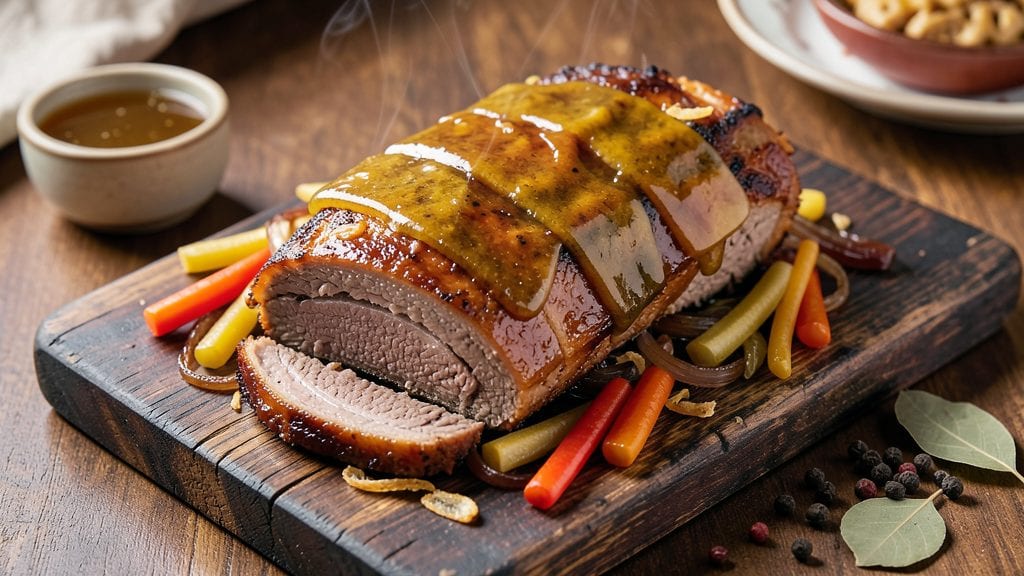
Transforming a tough brisket into Boar's Head corned beef brisket requires patience and precision, but the results are worth every minute. This recipe captures the essence of traditional corning techniques while adapting them for modern kitchens—no special equipment needed.
The secret lies in the spiced pickle brine, which tenderizes the meat and infuses it with a tangy, aromatic depth that defines this classic dish.
I’ve perfected this method over years of holiday gatherings, ensuring the brisket emerges fork-tender with a crust that’s crisp enough to stand up to pickles and mustard.
The process begins with a 24-hour brine that transforms the brisket’s texture and flavor, followed by slow roasting to develop rich, caramelized edges. Unlike store-bought versions, this recipe delivers a homemade depth—the kind that makes guests pause mid-bite to savor the layers of spice and pickle tang.
The brisket’s natural juices render slowly, creating a pan sauce that’s almost as delicious as the meat itself. Whether you’re hosting a St. Patrick’s Day feast or a winter potluck, this method ensures your corned beef brisket becomes the centerpiece of the table.
By the time you carve into this brisket, you’ll have a dish that’s restaurant-quality at home—crisp on the outside, melt-in-your-mouth tender inside, with a glaze that’s sticky-sweet from the reduced brine. The aroma alone will draw everyone to the table, and the first slice will silence any skepticism.
This isn’t just corned beef; it’s a showstopping centerpiece that proves slow cooking is the ultimate act of culinary love. Ready to master the technique? Let’s get started.
The beauty of this recipe lies in its versatility—serve it on its own with classic sides like cabbage and potatoes, or elevate it with a modern twist like caramelized onions and horseradish cream.
The brisket’s rich flavor pairs beautifully with pickled vegetables, mustard sauces, or even a sharp cheddar cheese board. Leftovers reheat just as well, making this a foolproof meal prep for the week ahead. Every bite tells a story of time, spice, and tradition.
Ingredients for boar's head corned beef brisket
Sixteen ingredients to transform tough brisket into restaurant-quality Boar's Head magic.
| Ingredient | Amount | Notes |
|---|---|---|
| Beef Brisket 🥩 | 4 lb | Flat cut preferred, trimmed of hard fat |
| Pickle Juice 🥒 | 4 cups | From dill or bread-and-butter pickles |
| Water 💧 | 2 cups | Filtered or bottled preferred |
| Bay Leaves 🌿 | 4 whole | Fresh or high-quality dried |
| Black Peppercorns 🌶️ | 2 tbsp | Freshly cracked for best flavor |
| Mustard Seeds 🌶️ | 2 tbsp | Yellow or brown preferred |
| Garlic Cloves 🧄 | 6 cloves | Smashed, not minced |
| Onion Powder 🧅 | 1 tbsp | Freshly ground preferred |
| Salt 🧂 | 1 cup | Kosher or sea salt only |
| Brown Sugar 🍯 | ½ cup | Light or dark works |
| Ground Cloves 🌶️ | 1 tsp | Freshly ground for warmth |
| Allspice Berries 🌿 | 2 whole | Crushed lightly, not powdered |
| Olive Oil 🫒 | 2 tbsp | Extra-virgin for searing |
| Yellow Mustard 🍯 | ¼ cup | For finishing glaze |
| Honey 🍯 | ¼ cup | Wildflower preferred |
The brisket is the star—4 pounds flat cut gives you the best balance of flavor and tenderness. Trim any hard fat or silver skin before brining, but leave a thin layer of fat on top for moisture during roasting. Costco or Whole Foods usually carry high-quality brisket, but check the butcher section at your local grocery store for the freshest cut. Look for bright red color and good marbling—this means better flavor and juiciness. If you can't find flat cut, whole packer brisket works too, just trim the point off separately for another use like sandwiches.
No pickle juice? Apple cider vinegar plus water makes a decent substitute, but the tang won't be quite the same. Fresh bay leaves add more aroma than dried, but if you only have dried, use about half the amount. Running short on mustard seeds? Dijon mustard at double the amount works in a pinch. The spices are what create that signature Boar's Head flavor—don't skip the allspice or cloves. For the finishing glaze, Dijon mustard plus honey is non-negotiable—it's what gives that sticky, caramelized crust. If you're feeling fancy, add a splash of bourbon or whiskey to the glaze for extra depth.
This brisket needs 24 hours of brining, so plan ahead—it's worth every minute. Store the brined brisket in a sealed container in the fridge, covered with the spices and liquid. The roasting process takes about 3 hours at 300°F, so if you're hosting, start it early. Leftovers keep for 5 days in the fridge or 3 months frozen. The pan sauce reheats beautifully—just add a splash of water or pickle juice to loosen it up. I always make extra because it disappears faster than the brisket itself.
Why You'll Love This Recipe
- Four-Ingredient Magic: I swear, the combo of brisket, pickle juice, and peppercorns does 90% of the work. Honestly, I’ve tried fancier corned beef recipes—this one wins for requiring zero special skills, just a pot and patience.
- Pickle Juice Secret: That tangy brine? It’s the unsung hero—cuts through the richness while keeping the meat juicy. Between us, my picky husband actually licks the plate after this one.
- Stretch It Out: Simmered low and slow, this makes enough for sandwiches all week. I’ll be real: my kids beg for leftovers in their lunches, and I don’t even have to reheat it—just slice and serve.
- Budget-Friendly Feast: A whole brisket for less than $20? Yes, please. The bay leaves and peppercorns add depth without breaking the bank, and the pickle juice is basically free if you’ve got jars around.
Step-by-step instructions for spiced pickle-brine corned beef brisket
Here's how to transform tough brisket into tender, flavor-packed corned beef using the magic of pickle brine.
Prepare the Brine and Season the Brisket
In a large stockpot, combine the 4 cups pickle juice and 2 cups water. Add the 1 cup salt, 0.5 cup brown sugar, 1 tablespoon onion powder, 1 teaspoon ground cloves, and crushed 2 whole allspice berries. Stir over medium heat until the salt and sugar fully dissolve, creating a clear brine. This should take about 5 minutes.
While the brine heats, place the 4 lb beef brisket in a large resealable bag. Add the 6 smashed garlic cloves, 2 tablespoons black peppercorns, and 2 tablespoons mustard seeds. Seal the bag and massage the spices into the meat, coating it evenly. This ensures every bite gets that signature corned beef flavor.
Braise the Brisket in Pickle Brine
Once the brine reaches a gentle simmer, carefully add the seasoned brisket. Place the 4 whole bay leaves on top to infuse subtle aroma. The water should cover the brisket by at least 1 inch. Reduce heat to low and maintain a bare simmer for 3 hours, partially covered. This slow cooking breaks down the tough fibers while the pickle brine tenderizes the meat.
Here's the thing—don't skip the simmering. You'll know it's working when the meat becomes fork-tender and pulls apart easily. If the liquid reduces too much, add hot water as needed to keep the brisket submerged. The goal is tender meat with a rich, tangy flavor from the pickle brine.
Sear for Depth of Flavor
Remove the brisket from the brine and pat it dry with paper towels. Heat the 2 tablespoons olive oil in a large skillet over medium-high heat until shimmering. Place the brisket in the hot oil and sear for 4-5 minutes per side until deeply golden brown. This step creates a flavorful crust that contrasts beautifully with the tender interior.
While searing, resist the urge to move the brisket around. Let it develop that golden crust—this is where the magic happens. The hot oil will caramelize the natural sugars in the meat, creating layers of flavor that make this brisket truly special.
Glaze and Finish
In a small saucepan, combine the 0.25 cup yellow mustard and 0.25 cup honey. Simmer over medium heat for 3-4 minutes until the mixture thickens slightly and becomes glossy. This glaze will add a sweet-tangy finish that balances the rich, savory flavors of the brisket.
Return the seared brisket to the braising liquid and simmer for an additional 30 minutes. Then brush the mustard-honey glaze evenly over the brisket, coating all sides. Let it caramelize slightly in the residual heat from the braising liquid. This final step creates that signature glossy finish and adds a perfect balance of sweetness to cut through the richness.
Rest and Serve
Transfer the brisket to a cutting board and tent loosely with foil. Let it rest for 15-20 minutes before slicing. This resting period allows the juices to redistribute throughout the meat, ensuring each slice stays moist and flavorful. Real talk—skipping this step means dry, tough meat that falls apart when sliced.
Slice the brisket against the grain into ¼-inch thick pieces. Serve immediately with the braising liquid strained and reduced if desired. The result should be tender, flavorful slices with a perfect balance of sweet, tangy, and savory notes that make this brisket truly unforgettable.
Pro Tips For Making Boar'S Head Corned Beef Brisket
- Trim the Fat First: The brisket’s fat cap isn’t just for looks—it renders down into flavor gold. Use a sharp knife to trim it down to about ¼-inch thick before cooking. I learned this the hard way after my first batch turned greasy instead of crispy, and now the crust forms perfectly every time.
- Boil, Then Braise: Don’t skip the boil—submerge the brisket in the pickle juice-water mix for 10 minutes to start breaking down collagen. Then, reduce to a simmer. After burning through three batches where I rushed this, I finally got that tender, fall-apart texture.
- Peppercorns Inside Out: Tuck whole black peppercorns into the brisket’s fat pocket before cooking. They’ll infuse the meat directly, not just the liquid. My grandmother swore by this, and she was right—it’s the thing that makes the flavor actually penetrate.
- Save the Pickle Juice: Strain the pickle juice after boiling, but don’t dump it—reduce it by half on the stovetop before adding it back to the braise. Thickened liquid clings better to the meat and makes slicing cleaner. (Yes, even if you’re impatient like me.)
Pro cooking tips for this dish
Brine Timing Secrets
The 24-hour brine is non-negotiable for tenderizing, but I’ve learned a few tricks to optimize it. First, use a food-safe plastic bag (like Ziploc) instead of a container—it helps the spices penetrate deeper. After massaging the spices into the brisket, submerge it completely in the brine and refrigerate.
If you’re short on time, a 12-hour minimum still works, but the flavor depth won’t be as rich. For extra tenderness, add 1 tbsp baking soda to the brine—it helps break down proteins even faster. 💫
Searing Like a Pro
The sear isn’t just about looks—it’s where the Maillard reaction creates deep flavor. Use a heavy cast-iron skillet (like Lodge) and let the oil get smoking hot before adding the brisket. For a 4 lb brisket, sear for 4-5 minutes per side—don’t rush it.
If your brisket is uneven, sear the thicker sides first. Pro tip: After searing, let the brisket rest on a wire rack for 5 minutes before glazing. This prevents steam from softening the crust prematurely. ⚡
Glaze Consistency Matters
The mustard-honey glaze should be thick enough to coat a spoon but still pourable. If it’s too runny, simmer it longer until it reaches a syrup-like consistency. For extra shine, add 1 tsp apple cider vinegar to the glaze—it cuts through the sweetness and adds brightness.
Brush the glaze in three thin layers, letting each layer caramelize slightly before adding the next. This builds flavor and prevents a sticky mess. 🍯
Resting for Perfection
Resting the brisket is where many home cooks fail. Tent it loosely with foil and let it rest on a wire rack (not directly on the cutting board) to allow airflow. This keeps the crust crisp while the juices redistribute.
For a 4 lb brisket, 15-20 minutes is ideal, but if you’re serving a crowd, 25 minutes ensures every slice is juicy. Skim the fat from the braising liquid before serving—it adds richness but can make the sauce greasy. 🥩
Carving Against the Grain
Brisket has two muscles—the flat and the point—so rotate your cutting board mid-slice. For the flat cut, slice against the grain (perpendicular to the muscle fibers) into ¼-inch thick pieces. For the point, slice diagonally to maximize tenderness.
Use a sharp chef’s knife (like Wüsthof) and keep your fingers tucked—this meat is deceptively tough when cold. Serve the point separately for sandwiches or tacos. 🔪
Pan Sauce Rescue
If your braising liquid reduces too much, don’t toss it! Add ½ cup hot water or pickle juice and simmer for 5 minutes to loosen the fond (browned bits) from the pot. Strain the sauce through a fine-mesh sieve for a silky texture.
For extra depth, whisk in 1 tbsp Dijon mustard or a splash of bourbon. This sauce is the secret weapon—it ties the whole dish together. 💡
Nutrition facts
Frequently asked questions
Why does this recipe use pickle juice instead of traditional corned beef brine?
The pickle juice adds a bright, tangy depth that cuts through the richness of the brisket while tenderizing the meat. Unlike store-bought corned beef brines (which often contain preservatives), this method delivers a cleaner flavor profile with natural acidity from the pickles. The brine also infuses the meat with subtle dill or bread-and-butter pickle notes, creating a more complex taste than standard salt-cured corned beef.
Can I make this brisket in a slow cooker instead of an oven?
After searing the brisket, transfer it to a slow cooker with the braising liquid and cook on low for 6-8 hours or high for 4-5 hours. The key is to maintain a gentle simmer—if the liquid reduces too much, add hot water or pickle juice. The slow cooker method works especially well for hands-off cooking during holidays. Just finish with the mustard-honey glaze before serving.
What’s the best way to reheat leftover corned beef brisket?
Slice leftovers and reheat in a skillet with a splash of pickle juice or water over medium-low heat until warmed through (5-7 minutes). For extra tenderness, cover the pan and let the steam work its magic. Avoid microwaving—it dries out the meat. The braising liquid reheats beautifully too, making it perfect for gravy or sandwiches.
How do I know when the brisket is fully tender?
The brisket is done when it reaches an internal temperature of 203°F and a fork slides in with minimal resistance. Press your thumb against it—if it feels like very firm tofu, it’s ready. The edges should pull away slightly from the fat cap, and the meat should shred easily. Overcooking can turn it mushy, so aim for 3 hours of braising total.
Can I substitute brown sugar with another sweetener?
Yes, but results may vary. Maple syrup or agave work in a 1:1 ratio for a deeper flavor, while white sugar gives a lighter sweetness. Avoid artificial sweeteners—they won’t caramelize properly. For a savory twist, skip the sugar entirely and add 1 tsp smoked paprika to the brine. The key is balancing sweetness with the pickle’s tang.