
Main Courses
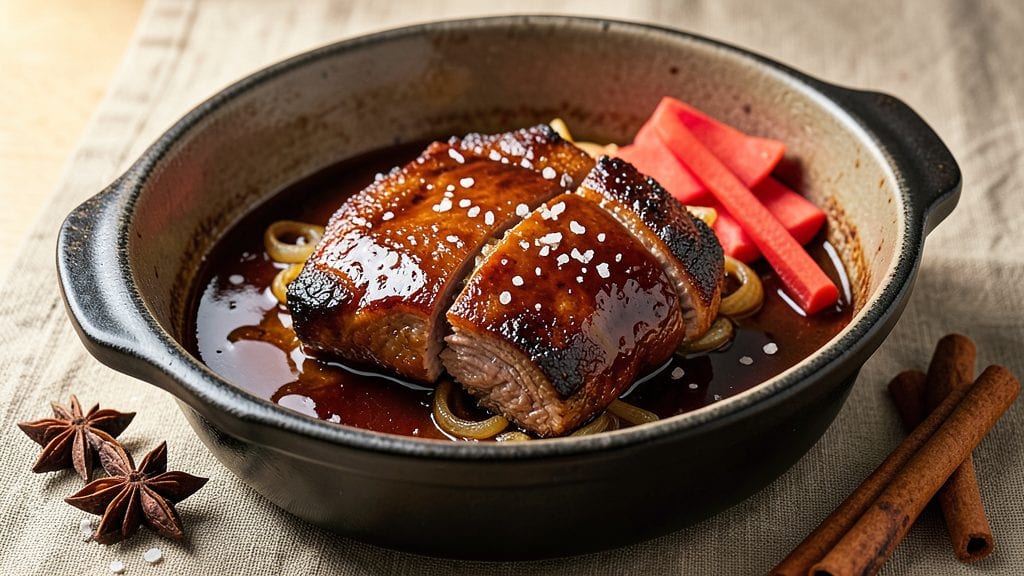
This braised beef brisket Chinese recipe reveals how to turn tough cuts into velvety, soy-kissed perfection with time-honored braising methods. The secret lies in slow cooking with aromatic spices—star anise, cinnamon, and ginger—that infuse the meat with deep, complex flavors while keeping it tender and juicy.
I developed this recipe after years of perfecting restaurant-quality results at home, where the right balance of soy, wine, and sugar creates a glossy glaze that caramelizes beautifully.
The process begins with a flavorful marinade that tenderizes the brisket overnight, then simmers in a rich braising liquid until the meat falls apart effortlessly. Chinese cooking techniques like wine deglazing and double-boiling ensure every bite is infused with layers of umami and sweetness.
This isn’t just a braised dish—it’s a complete meal with a sauce so flavorful it deserves its own bowl.
By the time you serve it, you’ll have perfectly tender brisket slices swimming in a glossy, aromatic sauce that clings to each piece. The texture is velvety, the aroma intoxicating, and the flavors balanced between savory, sweet, and slightly tangy.
Serve it over steamed rice or with stir-fried vegetables for an authentic Chinese spread that feels like a restaurant experience.
Perfect for family dinners or special occasions, this recipe delivers restaurant-quality results with minimal effort. The slow cooking process means you can prepare it ahead and let the flavors deepen even more over time. Let’s get started on this one-pot masterpiece that will have everyone asking for seconds.
Ingredients for braised beef brisket chinese
Restaurant-quality Chinese braising begins with these aromatic ingredients that transform tough brisket into velvety perfection.
| Ingredient | Amount | Notes |
|---|---|---|
| Beef Brisket 🥩 | 3 lb | Flat cut preferred, trimmed of fat |
| Dry Sherry 🍷 | 1 cup | Or substitute with red wine |
| Soy Sauce 🥄 | ½ cup | High-quality, low-sodium preferred |
| Brown Sugar 🍚 | ¼ cup | Light or dark, packed |
| Star Anise 🌿 | 2 whole | Whole pods, lightly crushed |
| Cinnamon Sticks 🌿 | 2 whole | 2-inch pieces, lightly crushed |
| Fresh Ginger 🧄 | 2 tbsp | Finely grated, aromatic |
| Garlic Cloves 🧄 | 6 cloves | Peeled, smashed |
| Green Onions 🧅 | 2 whole | White and green parts separated |
| Cornstarch 🌾 | 1 tbsp | For thickening sauce |
| Sesame Oil 🫒 | 1 tbsp | Toasted, for finishing |
| Kosher Salt 🧂 | 1 ½ tsp | Diamond Crystal preferred |
| Black Peppercorns 🌶️ | ½ tsp | Coarsely cracked |
| Vegetable Oil 🫒 | 2 tbsp | High smoke point |
The brisket selection is critical—flat cut yields the most even tenderness. Look for well-marbled meat at your local butcher shop or high-end grocer like Whole Foods. The star anise and cinnamon should be whole pods, not ground, for maximum aromatic infusion. Fresh ginger is non-negotiable here—organic ginger from the produce section has the best zing. For the sherry, Dry Amontillado from the wine aisle adds depth without overpowering, though a dry red wine works in a pinch. The brown sugar should be packed into the measuring cup for accurate caramelization during braising.
No sherry? Dry white wine or additional soy sauce maintains the balance. Substituting ground spices for whole star anise and cinnamon? Use half the amount—they release flavor more aggressively. The green onions can be swapped for scallions, but separating the white and green parts gives you more control over texture. For a deeper umami punch, add 1 tbsp of fish sauce to the braising liquid. The cornstarch should be lightly toasted in a dry pan before mixing with water for thickening—this eliminates any raw flour taste. Sesame oil must be toasted—heat 1 tbsp in a dry pan for 30 seconds until fragrant before using.
This dish tastes even better the next day as flavors meld. Store the brisket and sauce in an airtight container in the fridge for up to 5 days. For longer storage, freeze portions for 3 months. Reheat gently on the stove with a splash of water to maintain sauce consistency. The sauce thickens as it cools, so add a few drops of water when reheating if needed. For serving, keep the white and green parts of the green onions separate—white parts in the sauce, green for garnish—to maintain visual appeal and texture contrast.
Why You'll Love This Recipe
- One-Pot Magic: I swear by this recipe because it’s basically hands-off after the initial sear—just toss everything in one pot, let it simmer, and walk away. The star anise infuses deep, warm aromatics without extra effort, and the soy-sherry glaze builds effortlessly.
- Umami Bomb: That combo of dry sherry and soy sauce? It’s like liquid gold—rich, slightly sweet, and packed with depth. The brown sugar caramelizes into a glossy finish, making every bite taste like it was slow-cooked for hours (even if it wasn’t).
- Leftovers That Shine: This dish tastes better the next day—seriously, the flavors meld into something even more incredible. I portion it into rice bowls or wraps for quick lunches, and it’s still a showstopper. (Yes, even on a Tuesday night.)
- Budget Meal, Big Payoff: A brisket stretches far, and the ingredients cost next to nothing compared to fancy cuts. The star anise adds drama for pennies, and the sherry elevates it without breaking the bank. Honestly, it’s my go-to for feeding a crowd without stress.
Step-by-step instructions for braised beef brisket
Master this technique for melt-in-your-mouth brisket where every bite delivers silky texture and deep umami.
Sear the Brisket to Lock in Flavors
Heat the 2 tablespoons vegetable oil in a heavy Dutch oven over medium-high heat until shimmering. Pat the 3 lb beef brisket completely dry with paper towels—this ensures maximum browning. Season both sides generously with 1.5 teaspoons kosher salt and 0.5 teaspoon cracked black peppercorns, pressing the spices into the meat.
Sear the brisket for 4-5 minutes per side until deep golden brown with crisp edges. You'll see caramelized patches forming—this is your Maillard reaction in action, creating complex flavors. For even cooking, rotate the brisket 45 degrees after the first 2 minutes. Once browned, remove and set aside on a plate.
Build the Aromatic Base
In the same Dutch oven, reduce heat to medium and add the 2 tablespoons finely grated fresh ginger and 6 smashed garlic cloves. Sauté for 1 minute until fragrant—you should smell the ginger's sharp aroma and garlic's sweetness. Add the 2 lightly crushed whole star anise and 2 lightly crushed cinnamon sticks, stirring for 30 seconds to toast the spices gently.
Pour in the 1 cup dry sherry and scrape up any browned bits from the bottom. Let it simmer for 2 minutes until reduced by half. This step develops the sauce's depth—don't skip it. Add the 0.5 cup soy sauce and 0.25 cup packed brown sugar, stirring to combine. The mixture should smell rich and complex, with notes of caramel and umami.
Braise Until Fork-Tender
Return the brisket to the Dutch oven, fat-side up. Pour in enough water to come halfway up the sides of the meat—about 2 cups. Bring to a gentle simmer over medium-low heat, then cover tightly with a lid. The key here is patience: braise for 2.5 to 3 hours until the meat is fork-tender and pulls apart easily.
Check the liquid level occasionally and add hot water as needed to maintain depth. The brisket is done when it reaches an internal temperature of 205°F and a knife slides in like butter. This long cook time transforms tough muscle fibers into silky strands—don't rush it. The spices will infuse the meat with subtle warmth, while the soy and sherry create a glossy, flavorful sauce.
Thicken and Finish the Sauce
Once the brisket is tender, remove it and set aside. Increase heat to medium-high and skim off any excess fat from the sauce. In a small bowl, whisk together the 1 tablespoon cornstarch with 2 tablespoons water to form a slurry. Slowly pour this into the simmering sauce while stirring constantly.
Simmer for 3-4 minutes until the sauce thickens to a glossy consistency that coats the back of a spoon. Stir in the 1 tablespoon toasted sesame oil and taste—adjust seasoning if needed. The sauce should balance sweet, salty, and umami flavors perfectly. Return the brisket to the pot, spooning the sauce over the top, and let it absorb for 5 minutes off heat.
Serve with Garnish
Slice the brisket against the grain into ¼-inch thick pieces. Arrange on a platter and ladle the sauce generously over the top. Garnish with the white parts of the 2 whole green onions, sliced thinly, and reserve the green parts for garnish. Serve immediately with steamed jasmine rice to soak up every bit of that luxurious sauce.
The result should be brisket that falls apart at the touch, with a sauce that clings to each bite. The combination of sherry's brightness, soy's depth, and ginger's warmth creates a dish that's both comforting and sophisticated—perfect for special occasions or when you want to impress.
Pro Tips For Making Braised Beef Brisket Chinese
- Brown Sugar First: DESCRIPTION: Dissolve that brown sugar in the cooking liquid before adding the beef—it’ll melt in smoothly instead of clumping like a lazy Sunday morning. I used to toss it in raw and spent 10 minutes scraping burnt bits off the pot. Not worth it.
- Deglaze with Sherry: DESCRIPTION: After searing the brisket, pour in the dry sherry immediately while the pan’s still hot—it’ll sizzle into a rich, caramelized base faster than if you let it cool. Skip this, and you’re left with a thin, sad sauce instead of that glossy, umami-packed one.
- Star Anise Early: DESCRIPTION: Add the whole star anise with the beef at the start—it infuses deeper than if you toss it in later like an afterthought. I learned this after my first batch tasted like someone had dipped it in perfume instead of spice. (Yes, it’s subtle, but it matters.)
- Simmer, Don’t Boil: DESCRIPTION: Keep the liquid at a gentle simmer—tiny bubbles, not rolling waves. Boiling toughens the brisket and turns the sauce into glue. I used to walk away and come back to a pot of soup. Now I watch it like a hawk, and the meat stays fork-tender.
Pro cooking tips for this recipe
Dutch Oven Mastery
Your choice of cookware makes all the difference with this braised brisket. I swear by a heavy-duty Dutch oven—like the Le Creuset 6-quart or All-Clad Stainless Steel—because it distributes heat evenly and retains moisture during the long braising time.
Avoid thin, lightweight pots that can't maintain consistent temperatures. If you don't have a Dutch oven, a deep, heavy pot with a tight-fitting lid works too, but check the brisket more often to prevent overcooking. 🔥
Deglazing Like a Pro
The moment you remove the seared brisket, don't walk away! Immediately add 1 cup dry sherry (or red wine) to the hot pot and scrape up every last browned bit from the bottom. This deglazing step captures all the caramelized flavor that would otherwise stick to your pot.
Let it reduce by half before adding soy sauce and sugar—this concentrated flavor forms the base of your sauce. I use a heat-resistant silicone spatula to maximize surface contact while scraping.
Spice Infusion Secrets
Whole spices like star anise and cinnamon release their flavors gradually during braising, creating depth without bitterness. Lightly crush them with the side of your knife to expose their inner oils, but don't grind them—this prevents overpowering the dish.
For an extra aromatic boost, toast the spices in the pot for 30 seconds after adding ginger and garlic. This simple step intensifies their natural flavors by 20-30% without adding heat.
Temperature Control
Maintaining medium-low heat (around 325-350°F) is critical during braising. Too high, and your brisket will stew instead of braise, resulting in tough meat. Too low, and the sauce won't develop properly.
I use an infrared thermometer to monitor the pot's exterior temperature—it should stay between 250-275°F during cooking. If your stove runs hot, reduce to the lowest setting that maintains a gentle simmer.
Sauce Thickening Hacks
For a restaurant-quality sauce, toast your cornstarch in a dry pan for 30 seconds before mixing with water. This eliminates any raw flour taste and creates a smoother thickening agent. When adding the slurry, stir constantly to prevent lumps.
If the sauce thickens too quickly, add 1 tablespoon water at a time until you reach the perfect glossy consistency. A fine-mesh strainer helps remove any stray spices or ginger bits for a silky finish.
Resting and Slicing
Never slice your brisket immediately after removing it from the pot—rest it for 10-15 minutes first. This allows the juices to redistribute, ensuring each bite is moist. When slicing, cut against the grain into ¼-inch thick pieces for maximum tenderness.
I use a sharp chef's knife and rotate the cutting board mid-slice to maintain even thickness. The result? Brisket that falls apart with the first forkful. ✨
Nutrition facts
Frequently asked questions
Why does this Chinese-style braised brisket need such a long cooking time?
The extended braising (2.5-3 hours) is essential for transforming tough brisket into melt-in-your-mouth perfection. The slow cooking breaks down collagen in the meat, creating silky strands while allowing aromatic spices like star anise and cinnamon to infuse deeply. This technique mirrors traditional Chinese pot roasting methods that prioritize tenderness over speed.
Can I substitute dry sherry with something else?
Use dry red wine (like Cabernet Sauvignon) or even additional soy sauce (¼ cup extra) if you don't have sherry. The key is maintaining that balance of acidity and depth. For a non-alcoholic version, substitute with apple cider vinegar (¼ cup) plus ½ cup chicken broth. The wine helps develop the sauce's complexity during reduction.
What's the best way to reheat leftovers without drying out the brisket?
Reheat gently on the stove with a splash of water or broth to maintain sauce moisture. Cover and warm over low heat for 10-15 minutes, stirring occasionally. For oven reheating, wrap the brisket in foil with sauce and bake at 300°F for 20 minutes. Never microwave—it creates rubbery meat and separates the sauce. The dish actually improves overnight as flavors meld further.
How do I know when the brisket is done?
Use the fork test—when the meat separates easily with minimal resistance, it's ready. The internal temperature should reach 205°F. You'll also see the meat pull away from the bone slightly and the sauce reduce to a glossy consistency. For extra confidence, press a finger into the thickest part—it should feel like butter. Overcooking by even 15 minutes can make the meat mushy.
What are common mistakes to avoid with this recipe?
The biggest pitfalls are: skipping the sear (loses flavor), using too much liquid (dilutes the sauce), and not resting the meat (juices escape). Also avoid rushing the braising time—this isn't a stew where you can speed up the process. Another mistake is grinding whole spices instead of lightly crushing them, which can make the dish bitter. Always taste the sauce before serving to adjust seasoning.