
Main Courses
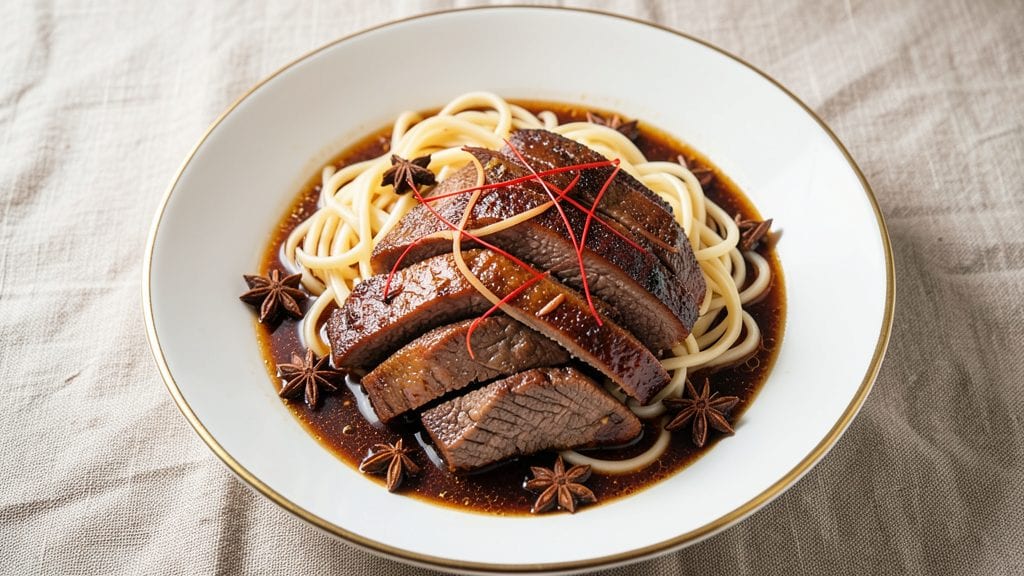
This Cantonese beef brisket recipe delivers the perfect balance of wok-seared crispy bark and silky, tender meat that falls apart with every bite. The secret lies in marinating the brisket overnight with star anise, cinnamon, and five-spice powder—key aromatics that transform tough cuts into melt-in-your-mouth perfection.
My version keeps the traditional flavors while simplifying the process for home cooks, ensuring restaurant-quality results without the fuss.
The brisket is first braised until fork-tender, then finished with a quick sear in a wok or cast-iron skillet to create that coveted crispy bark. This two-step method preserves moisture while delivering the satisfying crunch Cantonese cuisine is famous for.
The dish pairs beautifully with silky egg noodles, which soak up the rich, caramelized sauce while adding a comforting texture contrast.
What you’ll end up with is a dish that’s rich in umami, aromatic with warm spices, and perfectly balanced between tender meat and crispy edges. The sauce—deepened with soy sauce and a touch of brown sugar—ties everything together, creating a flavor profile that’s both familiar and deeply satisfying.
This recipe is designed to impress, whether you’re serving it for a family dinner or a gathering of friends.
Serve it with steamed jasmine rice or extra egg noodles to soak up every last drop of that flavorful sauce. The leftovers reheat beautifully, making this a meal you’ll want to prepare again and again. Let’s get started on creating this classic Cantonese dish at home.
Ingredients for cantonese beef brisket
Sixteen ingredients transform tough brisket into silky, crispy Cantonese perfection.
| Ingredient | Amount | Notes |
|---|---|---|
| Beef Brisket 🥩 | 3 lb | Flat cut, 1-inch thick slices |
| Egg Noodles 🍜 | 12 oz | Fresh or dried, uncooked |
| Soy Sauce 🍶 | ½ cup | Light or dark, high-quality |
| Brown Sugar 🍯 | ¼ cup | Packed firmly, light or dark |
| Shaoxing Wine 🍷 | ¼ cup | Substitute dry sherry if unavailable |
| Star Anise 🌟 | 2 whole | Bay leaves work in a pinch |
| Cinnamon Sticks 🌿 | 2 whole | 1-inch pieces, not powder |
| Five-Spice Powder 🌶️ | 2 tsp | Authentic Chinese blend preferred |
| Garlic Cloves 🧄 | 6 whole | Peeled, smashed lightly |
| Fresh Ginger 🧅 | 2 tbsp | Finely minced, peeled |
| Green Onions 🧅 | 4 whole | White and green parts, sliced |
| Sesame Oil 🫒 | 1 tbsp | Toasted, for finishing |
| Vegetable Oil 🫒 | ½ cup | High smoke point for searing |
| Cornstarch 🌾 | 2 tbsp | For crispy coating |
| Water 💧 | 2 cups | For braising liquid |
The brisket is non-negotiable here—look for well-marbled flat cuts at Whole Foods or your local butcher shop. I always ask for 1-inch slices to ensure even cooking. Costco often carries pre-sliced brisket, but if you're buying whole, trim excess fat to avoid greasy sauce. For the egg noodles, fresh from an Asian market has the best texture, but dried works fine if you're in a hurry. The soy sauce should be light for brightness, dark for depth—I keep both on hand. Star anise and cinnamon sticks add that signature aromatic punch, so don't skip them unless you're using a pre-made five-spice blend with similar notes.
No Shaoxing wine? Dry sherry or even a splash of white wine vinegar gets you close. The five-spice powder is crucial—Penzeys or Spicewalla have great blends, but a mix of cinnamon, cloves, fennel, star anise, and pepper works too. Fresh ginger and garlic are ideal, but powdered ginger at half the amount works in a bind. The green onions add freshness—use scallions if that's what you've got. For the crispy coating, cornstarch creates the best texture—flour makes it gummy. The sesame oil should be toasted—Kadoya or La Choy are my go-tos, but any good-quality toasted sesame oil works.
Braised brisket reheats beautifully—store in its sauce for up to 5 days. The egg noodles keep for 3 months frozen in a sealed bag. For leftovers, I portion the brisket with noodles in containers so they reheat together. The sauce thickens as it cools, so add a splash of water when reheating. This dish tastes even better the next day as flavors meld—make extra for lunches. The crispy bark softens when reheated, so sear fresh slices before serving.
Why You'll Love This Recipe
- One-Pan Magic: The beef brisket and noodles all go in the same pan—no fancy equipment, no extra dishes. Honestly, I just toss in the brisket, let it caramelize with soy and brown sugar, then dump in the noodles at the end. Twenty minutes later, dinner’s ready, and my kitchen looks like it did before I started.
- Sweet-Savory Balance: That Shaoxing wine and brown sugar combo? It’s what makes this dish ridiculously good. The beef gets this glossy, sticky glaze that’s perfect with the egg noodles—salty, sweet, and just a little umami. I’ll be real: my kids ask for it more than any other meal, and they’re not even picky eaters.
- Leftovers for Days: This recipe actually tastes better the next day. The flavors meld together, and the beef gets even more tender. I make a big batch on Sunday, and by Wednesday, I’m still reheating portions for lunch. It’s my go-to for lazy afternoons or when I need to feed a crowd without stressing.
- Budget-Friendly Feast: Beef brisket is affordable, and a single cut stretches across multiple meals. Between us, this is one of those recipes where you get that restaurant-quality taste without the price tag. Plus, the egg noodles are cheap, so you’re basically making a fancy dish for pennies.
Step-by-step instructions for Cantonese beef brisket
Here's how to transform tough brisket into tender, wok-seared perfection with irresistible crispy bark.
Prepare the Brisket for Maximum Flavor and Texture
Begin by slicing the 3 lb beef brisket into 1-inch thick slices against the grain for maximum tenderness. Pat each slice dry with paper towels—this critical step ensures a proper sear and prevents steaming. In a small bowl, combine 2 tbsp cornstarch, 2 tsp five-spice powder, and 1 tbsp sesame oil. Toss each brisket slice in this mixture until evenly coated, pressing gently to adhere the spices. Let them rest for 10 minutes—this allows the cornstarch to form a crispy barrier while the spices penetrate the meat.
While the brisket rests, prepare the braising liquid. In a small saucepan, combine 2 cups water, 0.5 cup soy sauce, 0.25 cup brown sugar, 0.25 cup shaoxing wine, 2 whole star anise, 2 whole cinnamon sticks, 6 whole garlic cloves, and 2 tbsp fresh ginger. Bring to a simmer over medium heat for 10 minutes, then strain out the aromatics. This fragrant liquid will later transform into a rich, caramelized sauce.
Wok-Sear for Irresistible Crispy Bark
Heat a wok or large skillet over high heat until smoking hot. Add 0.5 cup vegetable oil and swirl to coat the surface evenly. Working in batches to avoid crowding, add the coated brisket slices and sear undisturbed for 2-3 minutes per side until deep golden brown with crispy edges. The high heat is crucial—you want that signature wok-seared crust that gives this dish its restaurant-quality appeal. If the oil smokes excessively, reduce heat slightly but maintain a vigorous sizzle.
Once all slices are seared to perfection, transfer them to a plate and set aside. In the same wok, reduce heat to medium and add the reserved braising liquid. Bring to a gentle simmer, scraping up any browned bits from the bottom with a wooden spoon. This step captures all the caramelized flavor that makes the sauce so rich. Let it reduce by half—about 5-7 minutes—until it coats the back of a spoon.
Braise Until Fork-Tender with Perfect Texture
Return the seared brisket slices to the wok with the reduced sauce. Cover and transfer to a 350°F oven for 1.5-2 hours, spooning sauce over the meat occasionally. The brisket is done when it's fork-tender with a deep mahogany color and the sauce has thickened into a glossy glaze. Here's the thing—don't rush this step. The long braise breaks down collagen and infuses the meat with that unmistakable Cantonese depth of flavor.
While the brisket braises, prepare the 12 oz egg noodles according to package instructions until al dente. Drain and toss with 1 tbsp sesame oil to prevent sticking. Slice the 4 whole green onions into 1-inch pieces for garnish—these add a fresh contrast to the rich beef.
Finish with Crispy Edges and Silky Noodles
Remove the brisket from the oven and increase heat to high. Arrange the slices in the wok, spooning all the sauce over them. Let it sizzle for 2-3 minutes until the edges become crispy again and the sauce forms a glossy coating. This final sear intensifies the flavors and creates that signature crispy-tender contrast that makes this dish so special.
To serve, portion the silky egg noodles onto plates, top with 2-3 brisket slices, and ladle the rich sauce generously over the top. Garnish with sliced green onions and an extra drizzle of sesame oil. The result should be a harmonious balance of textures—crispy edges on the beef, silky noodles, and that glossy, caramelized sauce that ties everything together.
Pro Tips For Making Cantonese Beef Brisket
- Sear the Brisket First: High heat, no excuses—get that beef screaming hot in a dry pan for 3-4 minutes per side before adding liquid. I used to skip this, and the sauce would never cling right; now the crust holds the glaze like it’s supposed to.
- Trim the Fat Sparingly: Leave a thin layer of fat (¼-inch max) on the brisket—it renders into flavor, but too much turns your sauce greasy. I learned this after making a batch where the noodles swam in oil instead of sauce.
- Deglaze with Shaoxing Wine: Don’t just dump the wine in—let it sit for 30 seconds after adding to the pan, then scrape up those browned bits. That’s where the umami magic hides, and skipping it means missing half the depth.
- Simmer Low and Slow: Cover the pot and keep it at a bare simmer (tiny bubbles, not a rolling boil) for 1.5–2 hours. I rushed it once, and the sauce turned watery—now I set a timer and walk away. Your patience pays off.
Essential equipment for great cantonese beef brisket
Wok Essentials
Your carbon steel wok is non-negotiable for that authentic Cantonese sear—it heats up fast and retains heat perfectly. I swear by a 14-inch wok from Made In or Lodge, which are affordable yet durable.
If you don’t have a wok, a heavy-bottomed cast-iron skillet (like Lodge’s 12-inch) works in a pinch, though it won’t give you the same dramatic sear. Preheat your wok over high heat for 5 minutes to create that signature wok hei (breath of the wok) flavor. 🔥
High-Heat Tools
A tongs set is your best friend for flipping those brisket slices without tearing the crispy bark. I use OXO Good Grips for their sturdy build and heat-resistant handles.
For scraping up those precious browned bits (fond) from the wok, keep a wooden spoon nearby—metal utensils can scratch your carbon steel over time. A heatproof spatula (like Mercer Culinary’s) helps with transferring seared slices without losing that golden crust.
Precision Cooking
Invest in a meat thermometer—I recommend the ThermoWorks Smoke—to monitor internal temps. The brisket should reach 195°F for fork-tender perfection. For the braising liquid, a small saucepan with a lid (like All-Clad’s 2-quart) ensures even simmering.
If you’re braising in the oven, a Dutch oven (such as Le Creuset’s 6-quart) keeps moisture locked in while allowing the sauce to reduce beautifully. 🌡️
Spice & Prep Gear
For the aromatic marinade, a mortar and pestle (like KitchenAid’s) crushes whole spices like star anise and cinnamon sticks into fine bits for deeper flavor infusion. A fine-mesh strainer (such as OXO’s) separates aromatics from the braising liquid cleanly.
For the cornstarch coating, a small mixing bowl and rubber spatula ensure even distribution. Don’t forget a sharp chef’s knife (like Wüsthof’s 8-inch) for slicing brisket against the grain—precision here makes all the difference.
Serving Tools
Presentation matters! Use wide, shallow serving dishes (like Corelle’s stoneware) to showcase the crispy brisket and silky noodles. A ladle (such as Zyliss’s stainless steel) helps portion the sauce generously. For garnishing, a microplane (like Bar-Ku’s) zests fresh ginger or grates garlic if needed.
Keep a small bowl of toasted sesame oil nearby for that final drizzle—it elevates the dish instantly. ✨
Nutrition facts
Frequently asked questions
Why does Cantonese beef brisket need to be sliced against the grain?
Slicing against the grain shortens the muscle fibers, making the meat tender and easier to chew. This technique is especially important for tougher cuts like brisket. For best results, ask your butcher to cut the brisket into 1-inch thick slices perpendicular to the grain pattern before cooking.
Can I substitute Shaoxing wine with something else?
Yes! Use dry sherry (like Fonthill or Kirin) as a 1:1 substitute. In a pinch, white wine vinegar or even rice vinegar works, but reduce to 1 tablespoon since it's more acidic. The alcohol helps tenderize the meat and deepens the sauce's flavor.
How do I fix brisket that's too tough after braising?
If your brisket isn't fork-tender, it likely didn't braise long enough. Return it to a 325°F oven for another 30-60 minutes with extra sauce. For extra tenderness, shred the meat and return it to the sauce for 10 minutes to absorb more flavor. The cornstarch coating should still create crispy edges when seared again.
What's the best way to reheat leftover Cantonese beef brisket?
Reheat in a skillet over medium heat with 1 tablespoon water or broth to prevent drying. Cover for 5 minutes to restore moisture, then sear briefly to revive the crispy bark. For noodles, reheat separately in a pot of boiling water for 2 minutes—they'll absorb fresh sauce beautifully.
Can I make this recipe with chuck roast instead of brisket?
Yes, but adjust the cooking time. Chuck roast is slightly leaner, so braise for 2-2.5 hours until tender. The cornstarch coating and searing technique remain the same. For extra richness, add 1 tablespoon of hoisin sauce to the braising liquid. The texture will be slightly different but still delicious!