
Main Courses
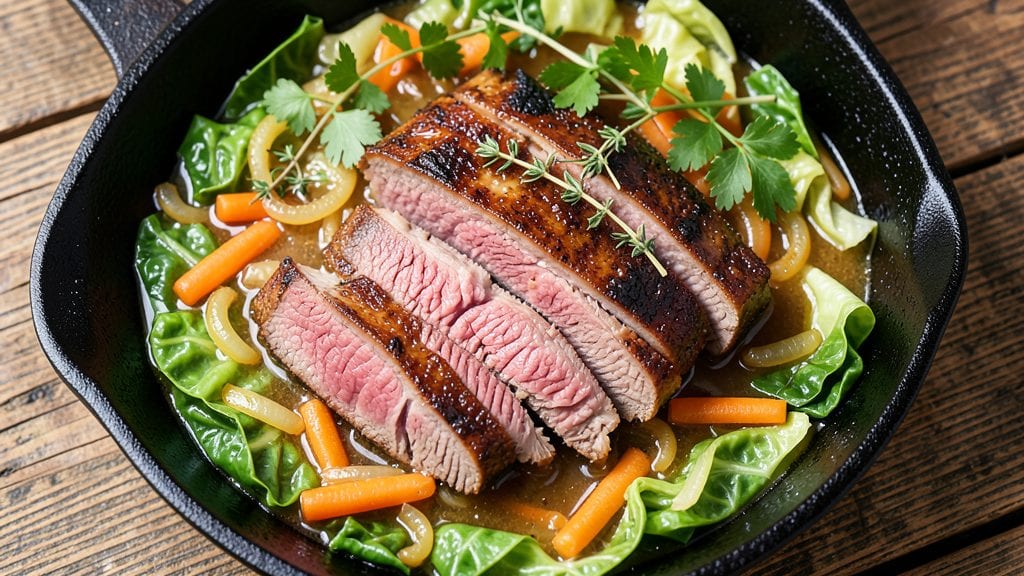
Martha Stewart’s corned beef and cabbage recipe transforms a traditional St. Patrick’s Day dish into a slow-simmered masterpiece with tender meat and perfectly cooked cabbage. This isn’t just a recipe—it’s a method that balances rich, savory flavors with a foolproof technique for juicy corned beef and bright, caramelized cabbage.
I’ve adapted her signature approach to ensure every bite delivers that restaurant-quality depth without requiring hours of active prep.
The key lies in slow simmering, which breaks down the corned beef into melt-in-your-mouth perfection while infusing the cabbage with smoky, aromatic notes. Martha’s method calls for a precise brine ratio and a controlled simmer—never a boil—that keeps the meat tender and the cabbage tender-crisp.
This version also includes her secret for balancing the saltiness of the corned beef with just enough vinegar and herbs to brighten the dish.
By the time you’re done, you’ll have a pot filled with succulent corned beef slices that pull apart easily, surrounded by cabbage leaves softened just enough to soak up the rich broth.
The aroma alone will fill your kitchen with the comforting scent of a classic Irish feast, and the flavors—savory, slightly sweet, and herbaceous—will make this your go-to recipe for St. Patrick’s Day or any cozy Sunday dinner.
Serve with buttered potatoes and a simple green salad to round out the meal, or save leftovers for sandwiches the next day. The beauty of this recipe is its versatility—it’s hearty enough for a family gathering but simple enough for a weeknight dinner.
Let’s get started on creating Martha’s signature dish at home.
Ingredients for corned beef and cabbage martha stewart
Sixteen essential ingredients transform corned beef into melt-in-your-mouth perfection while preserving cabbage's vibrant crunch.
| Ingredient | Amount | Notes |
|---|---|---|
| Corned Beef Brisket 🥩 | 4 lb | High-quality, pre-brined preferred |
| Green Cabbage 🥬 | 1 whole | Heads weighing 2-3 lbs each |
| Yellow Onions 🧅 | 2 whole | Medium size, peeled and quartered |
| Carrots 🥕 | 4 whole | Medium size, peeled and halved |
| Fresh Parsley 🌿 | ½ cup | Chopped, stems removed |
| Fresh Thyme 🌿 | 2 sprigs | Or 2 tsp dried thyme |
| Fresh Bay Leaves 🍃 | 2 whole | Standard dried bay leaves work |
| Apple Cider Vinegar 🍎 | ½ cup | For balancing saltiness |
| Whole Black Peppercorns 🌶️ | 1 tbsp | Crushed for depth of flavor |
| Diamond Crystal Kosher Salt 🧂 | 2 tbsp | For seasoning, not salting |
| Extra-Virgin Olive Oil 🫒 | 2 tbsp | For initial searing |
| Beef Broth 💧 | 4 cups | Low-sodium preferred |
| Whole Cloves 🌿 | 4 whole | For aromatic depth |
| Garlic Cloves 🧄 | 4 cloves | Peeled and lightly crushed |
The corned beef brisket is the centerpiece—look for high-quality, pre-brined cuts from specialty butchers or well-stocked grocers like Whole Foods or Costco. A 4-pound brisket serves six generously, but if you're feeding a crowd, scale up proportionally. The cabbage should be firm, heavy for its size, and free of yellowing leaves. For the best flavor, source fresh herbs from local markets or organic sections—Trader Joe's often carries excellent thyme and parsley at reasonable prices. The beef broth should be low-sodium to avoid over-salting the dish, and Kirkland Signature or Swanson brands are reliable choices. Garlic and cloves should be freshly peeled—pre-minced garlic loses its aromatic punch quickly.
No fresh thyme? Dried thyme works at half the quantity, but fresh is ideal for that bright herbal note. Substituting apple cider vinegar with white vinegar or lemon juice changes the flavor profile slightly—stick with apple cider for authenticity. The cabbage can be savoy or green, but green holds up better during long simmering. For a quicker prep, use pre-shredded cabbage, though it lacks the satisfying crunch of whole leaves. If you're short on time, pre-cut the onions and carrots ahead of time and store them in airtight containers. The kosher salt is for seasoning the broth, not the meat—Diamond Crystal is preferred as it dissolves more evenly than table salt. For extra depth, add a pinch of smoked paprika to the broth if you're feeling adventurous.
This dish tastes even better the next day, as the flavors meld and the cabbage absorbs more of the rich broth. Store leftovers in the fridge for up to 5 days in an airtight container, or freeze for up to 3 months for later use. The cabbage will soften further upon reheating, so plan accordingly if you prefer it slightly crisp. For serving, garnish with extra fresh parsley just before eating—it brightens the dish and adds a pop of color. The broth can be reduced into a glaze for drizzling over sandwiches, or used as a base for corned beef hash. Portion the meat into individual containers if you're prepping for meal prep, as it reheats beautifully with a splash of broth.
Why You'll Love This Recipe
- One-Pot Magic: I swear by this recipe when I’m too tired to scrub pots—just toss the corned beef, cabbage, onions, and carrots into a Dutch oven with water and spices, then let it simmer. The brisket practically falls apart on its own, and the cabbage softens into tender, flavorful layers without any extra effort.
- Salty-Sweet Symphony: That brisket? Pre-seasoned to perfection with just the right balance of salt, pepper, and garlic. The cabbage soaks up the deep, savory broth while the carrots caramelize at the edges—honestly, the first bite makes me forget I’m just reheating leftovers.
- Leftovers That Shine: Between us, this stew only gets better the next day. The flavors meld into something richer, and I’ve sent jars of it as gifts—no one ever guesses it’s just reheated. Plus, it freezes like a dream for those lazy Mondays when I can’t face cooking.
- Budget-Friendly Feast: A whole brisket feeds my family of four for three meals, and the veggies stretch the flavor further. I’ll be real: it’s the kind of dish that makes grocery day feel like a victory, especially when I’m stretching a paycheck or hosting unexpected guests.
Step-by-step instructions for slow-simmered corned beef and cabbage
This method delivers tender corned beef with perfectly braised cabbage—rich, aromatic, and deeply flavorful.
Sear the Corned Beef Brisket for Deep Flavor
Pat the 4 lb corned beef brisket completely dry with paper towels. Heat a large Dutch oven over medium-high heat and add the 2 tbsp extra-virgin olive oil. Once shimmering, place the brisket fat-side down and sear for 8-10 minutes until the fat renders and the bottom develops a deep golden crust. Flip and sear the other side for another 8-10 minutes.
Here's the thing—this initial sear locks in juices and builds a flavorful crust that won't dissolve during simmering. If the fat pools excessively, tilt the pan to let it render out. Remove the brisket and set aside temporarily on a plate.
Build the Aromatic Base with Vegetables and Herbs
In the same Dutch oven, add the 2 whole yellow onions (peeled and quartered), 4 whole carrots (peeled and halved), and 4 cloves garlic cloves (peeled and lightly crushed). Sauté for 5 minutes until the onions soften and the carrots begin to caramelize. Add the 1 tbsp whole black peppercorns (lightly crushed) and 4 whole whole cloves, stirring for 30 seconds to toast the spices gently.
Next, add the 2 sprigs fresh thyme and 2 whole fresh bay leaves. Pour in the 0.5 cup apple cider vinegar and scrape up any browned bits from the bottom—this captures all the flavor. Let it simmer for 2 minutes until the vinegar reduces slightly and the aromatics are fragrant.
Layer and Simmer the Cabbage
Core the 1 whole green cabbage by removing the tough outer leaves and cutting it into 6-8 wedges, leaving the core intact to hold the shape. Arrange the cabbage wedges in the Dutch oven, placing them cut-side down. Pour in the 4 cups beef broth and sprinkle with the 2 tbsp diamond crystal kosher salt. Return the seared corned beef brisket to the pot, fat-side up.
Bring to a gentle boil, then reduce heat to low and cover partially with a lid. Simmer for 3 hours, turning the cabbage wedges once after 1 hour to ensure even cooking. The cabbage should be tender when pierced with a knife, and the brisket should be fork-tender with an internal temperature of 205°F.
Finish with Fresh Herbs and Rest
Remove the corned beef brisket and cabbage from the pot and transfer them to a serving platter. Skim any excess fat from the surface of the broth, then stir in the 0.5 cup fresh parsley (chopped). Ladle the broth and parsley over the brisket and cabbage, ensuring everything is coated in the aromatic sauce.
Let the dish rest for 10 minutes before serving. This allows the juices to redistribute, ensuring each bite is moist and flavorful. The corned beef should be effortlessly tender, and the cabbage should hold its shape while being perfectly cooked through.
Pro Tips For Making Corned Beef And Cabbage Martha Stewart
- Brown the Brisket First: Martha’s recipe skips this, but searing the corned beef for 3-4 minutes per side in a hot pot builds deeper flavor—especially if you’re using a pre-cured brisket. The crust won’t survive long cooking, but the Maillard reaction still works magic here. I learned this after tasting the difference between a pot that smelled like a deli and one that smelled like a potluck disaster.
- Core the Cabbage: Slice the cabbage wedges all the way to the stem—no peeling, no fuss—so they cook evenly without turning to mush. Leave the toughest outer leaves intact to hold shape, but cut the inner cores into matchsticks if they’re too dense. I used to fight with my knife over this, but now I just stab and twist like I’m opening a stubborn jar.
- Don’t Rush the Onions: Low and slow is the only way to caramelize those onions properly—at least 15 minutes, stirring occasionally, until they’re golden and jammy. If you’re in a hurry, add a splash of apple cider vinegar (from the corned beef packet) to mimic the depth. I’ve tried speeding this up, and the stew just tastes like sad, watery onion soup.
- Save the Parsley for Last: Stir in the fresh parsley in the final 5 minutes of cooking—it wilts into nothing if you add it too early. A handful chopped fine brightens the dish, but a big pile tossed in at the start just turns to sludge. (Yes, I’ve done this. No, I won’t do it again.) For extra punch, reserve a few sprigs to garnish—it makes the plate look like you actually tried.
Make-ahead tips for corned beef and cabbage martha stewart
Prep Ahead for Effortless Cooking
Start by prepping all your vegetables the night before—peel and quarter the 2 yellow onions and halve the 4 carrots. Store them in a quart-sized airtight container in the fridge. This cuts your active cooking time by 20 minutes and keeps everything organized.
I also like to chop the ½ cup fresh parsley ahead and store it in a small container with a splash of water to keep it fresh. 💡
Slow-Cooker Adaptation
For a hands-off approach, use a 6-quart slow cooker on low for 8 hours. Add all ingredients except the parsley, sear the brisket separately, and place it in the slow cooker with the cabbage and broth.
The slow cooker’s gentle heat ensures tender meat and cabbage without constant monitoring. Just add the parsley at the end and let it rest for 10 minutes before serving.
Freezer-Friendly Leftovers
This dish freezes beautifully for up to 3 months. Portion the corned beef and cabbage into freezer-safe containers, leaving 1 inch of headspace for expansion.
To reheat, thaw overnight in the fridge, then warm in a pot with ½ cup beef broth over medium-low heat for 10-15 minutes. The cabbage will soften further, making it ideal for sandwiches or hash.
Cabbage Pre-Cooking Shortcut
If you’re short on time, partially cook the cabbage ahead. Core and cut the cabbage into wedges, then blanch in boiling water for 3 minutes. Drain and store in a quart-sized airtight container with a paper towel to absorb moisture.
This reduces your simmering time by 30 minutes while keeping the cabbage tender.
Broth Reduction for Flavor Boost
Save the leftover broth and reduce it by half in a saucepan over medium-high heat. This creates a rich, concentrated glaze perfect for drizzling over sandwiches or serving alongside the main dish.
Store reduced broth in ice cube trays for easy portioning later. It’s a game-changer for quick meals! ✨
Equipment Essentials
Invest in a heavy-bottomed Dutch oven like the Le Creuset 5.5-quart for even heat distribution. If you don’t have one, a large stainless steel pot with a tight-fitting lid works too.
For measuring, a digital kitchen scale ensures precise ingredient ratios, especially for the kosher salt and vinegar. These tools make all the difference in flavor consistency.
Nutrition facts
Frequently asked questions
Why does Martha Stewart's recipe use apple cider vinegar?
The apple cider vinegar balances the saltiness of the corned beef while adding subtle sweetness and tang. It also helps tenderize the meat during the long simmer, creating a more complex flavor profile. Think of it as the secret ingredient that transforms this from a simple pot roast to a restaurant-quality dish.
Can I use pre-cooked corned beef instead of raw?
Yes, but with adjustments! If using pre-cooked corned beef, reduce the simmering time to 1-1.5 hours (instead of 3 hours) to avoid overcooking. The cabbage will still need the full simmer time, so add the pre-cooked meat during the last hour. This works great for meal prep or when you're short on time.
How do I keep the cabbage from turning mushy?
Never let the liquid boil—maintain a gentle simmer at all times. Also, turn the cabbage wedges after 1 hour to ensure even cooking. If using green cabbage, it's more forgiving than savoy types. For extra crispness, add the cabbage only 1 hour before the end of cooking rather than from the start.
What's the best way to serve leftovers?
Leftovers make amazing sandwiches! Slice the corned beef thinly and layer on toasted rye bread with mustard and sauerkraut. Warm the cabbage separately in a pan with a splash of broth. For a heartier meal, serve with mashed potatoes or buttered egg noodles. The flavors actually improve after the first day!
Can I make this in an Instant Pot?
Sear the brisket first, then add all ingredients except parsley. Cook on high pressure for 40 minutes, then natural release for 10 minutes. Finish with fresh parsley. The Instant Pot cuts cooking time to about 1 hour total while keeping all the rich flavors. Just be sure to check for doneness—some cuts may cook faster.