
Main Courses
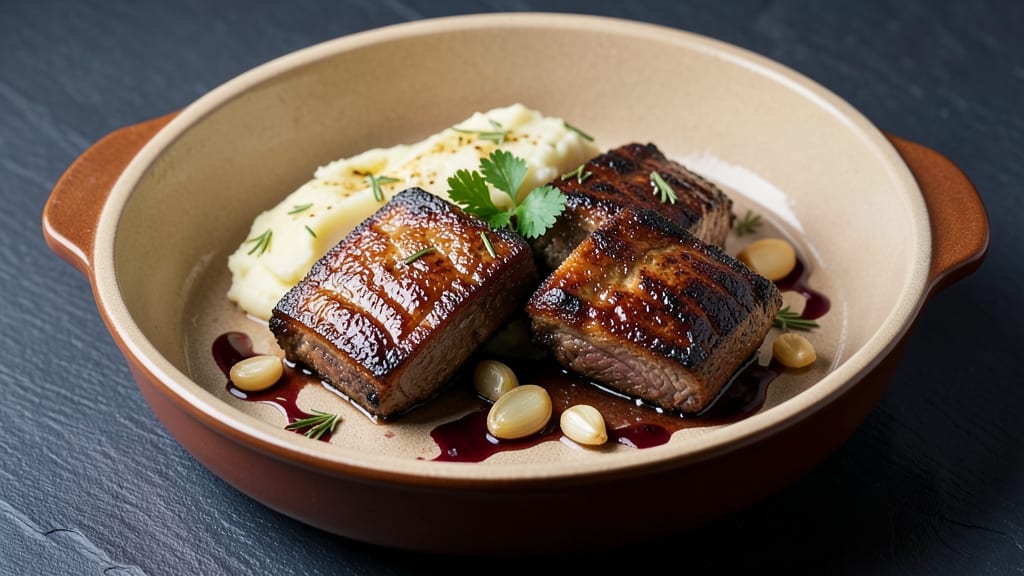
Mastering Gordon Ramsay’s braised beef short ribs transforms tough cuts into melt-in-your-mouth perfection with deep, wine-infused richness. The secret lies in searing the ribs until deeply caramelized, then slow-braising them until they fall apart—all while developing layers of flavor in a single pot.
I’ve refined this technique over years, ensuring every bite delivers that signature restaurant-quality tenderness and bold, savory depth.
This recipe demands patience but rewards you with a dish that feels like a Michelin-starred meal without the fuss. The key steps—deglazing the pan, reducing red wine to a velvety sauce, and braising low and slow—are where the magic happens.
No shortcuts here, just precise timing and technique that Ramsay himself would approve of. The result? Short ribs so tender they practically disintegrate at the touch of a fork, swimming in a glossy, aromatic sauce.
What sets this apart is the balance of flavors: the earthy richness of red wine, the depth of beef stock, and the bright acidity of tomatoes, all harmonized into a sauce that clings to every bite.
Serve it with creamy mashed potatoes or crusty bread to soak up every last drop of that luxurious braising liquid. This isn’t just dinner—it’s an experience that elevates your cooking to professional standards.
The beauty of this method is its versatility. Use it for weeknight dinners or impress guests at a dinner party—either way, the results are consistently spectacular. Once you try this, store-bought short ribs will never compare again. Let’s get started on creating a dish worthy of Ramsay’s kitchen.
Ingredients for gordon ramsay braised beef short ribs
Four pounds of beef short ribs, a bold red wine, and patience—this is all you need for Ramsay-worthy braised ribs.
| Ingredient | Amount | Notes |
|---|---|---|
| Beef Short Ribs 🥩 | 4 lb | Bone-in, 2-2.5 inches thick |
| Red Wine 🍷 | 1 cup | Bold dry like Cabernet Sauvignon |
| Beef Stock 🥛 | 2 cups | High-quality, homemade preferred |
| Tomato Paste 🍅 | 2 tbsp | Smooth, not chunky |
| Garlic Cloves 🧄 | 6 cloves | Freshly smashed, not minced |
| Shallots 🧅 | 2 whole | Minced, or sub with onions |
| Fresh Thyme 🌿 | ¼ cup | Leaves only, stems removed |
| Olive Oil 🫒 | 2 tbsp | Extra-virgin for searing |
| All-Purpose Flour 🌾 | 2 tbsp | For dredging ribs |
| Balsamic Vinegar 🍶 | 1 tbsp | For deglazing |
| Salt 🧂 | 1 ½ tsp | Kosher or sea salt |
| Black Peppercorns 🌶️ | 1 tsp | Freshly cracked |
| Bay Leaves 🍃 | 2 whole | Fresh if possible |
| Unsalted Butter 🧈 | 2 tbsp | For finishing sauce |
The ribs are non-negotiable—bone-in with that thick, meaty bone is key for flavor. Costco or your butcher’s counter usually has the best cuts, but if you’re in a pinch, Kroger’s pre-cut short ribs work. Look for good marbling—fat equals flavor, trust me. The wine? Cabernet Sauvignon or Merlot—whatever’s open in your fridge. The beef stock should be rich and homemade if possible, but Swanson’s premium is a solid backup. Fresh thyme and bay leaves make all the difference, so don’t grab the dried stuff from the back of the spice rack.
No red wine? Beef broth with a splash of balsamic works in a pinch, but you’ll lose some depth. Shallots? Onions in a pinch, but shallots add that subtle sweetness. The tomato paste can be skipped if you’re strict about authenticity, but it adds a nice umami punch—Muir Glen is my go-to brand. For the butter, Plugrá or Land O’Lakes unsalted are perfect. The flour? Just grab whatever’s in your pantry—King Arthur if you’re fancy, but no judgment for store-brand. And if you’re out of bay leaves? Dried works at half the amount, but fresh is better.
This dish tastes even better the next day, so make it ahead if you can. The ribs keep for 4-5 days in the fridge, and the sauce freezes beautifully for up to 3 months. I always portion it into containers—one for the ribs, one for the sauce—so reheating is a breeze. Store the ribs in their braising liquid to keep them moist, and skim off any hardened fat before reheating. Trust me, leftovers are the best part.
Why You'll Love This Recipe
- One-Pot Magic: I swear by this recipe because it’s literally one pot—no fussing with multiple pans or timers. The ribs go in raw, the wine and stock do their slow-dance magic, and by the end, you’ve got a restaurant-worthy sauce with zero extra dishes. Honestly, the only thing you’ll be scrubbing is your own chin from the first bite.
- Rich Without Effort: That red wine and tomato paste combo? It’s like flavor on autopilot. The garlic cloves caramelize just enough to add depth, but the real star is how the beef stock turns into a velvety sauce that clings to every bite. Between us, I’ve made this on nights when I couldn’t be bothered to think—and it still tasted like I’d spent hours.
- Leftovers That Beg for More: This recipe demands seconds, which means you’ll have delicious leftovers for days. I’ve reheated mine in the oven with a splash of fresh broth, and it’s just as good—if not better—than the first serving. (Yes, even on a Tuesday night.) It’s the kind of dish that makes you plan ahead just so you can eat it again.
- Budget-Friendly Luxury: Short ribs are cheaper than you think, and this method makes them feel like a splurge. A bottle of red wine, a can of stock, and a handful of garlic—it’s not exactly gourmet shopping, but the result? That crispy, fall-off-the-bone texture with a sauce so rich, no one will guess it’s not from a fancy restaurant. My secret weapon for feeding a crowd without breaking the bank.
Step-by-step instructions for braised beef short ribs
Here's how to nail this rich, wine-braised masterpiece with tender meat and deep flavor.
Sear the Short Ribs Until Deeply Browned
Pat the 4 lb beef short ribs completely dry with paper towels—this is crucial for that perfect crust. Heat the 2 tbsp olive oil in a heavy Dutch oven over medium-high heat until shimmering. Working in batches if needed, add the ribs bone-side down and sear undisturbed for 5-6 minutes until deeply browned. Flip and sear the meaty side for another 4-5 minutes.
Don't rush this step—the Maillard reaction happening now creates the foundation for all that deep flavor. You'll know it's ready when the ribs release easily from the pan. Transfer them to a plate and set aside, leaving all that glorious browned meat behind in the pot.
Build the Flavor Base with Aromatics
Reduce the heat to medium and add the 2 tbsp tomato paste, stirring to coat the bottom of the pot. Cook for 2 minutes until it darkens slightly. Add the 2 minced shallots and cook for 3 minutes until softened. Stir in the 6 smashed garlic cloves and cook for 30 seconds until fragrant—don't let them brown or they'll turn bitter.
Here's where it gets good: Pour in the 1 cup red wine and scrape up all those browned bits from the bottom with a wooden spoon. Let it simmer for 3-4 minutes until reduced by half. This deglazing step captures all the flavor you worked so hard to create in the searing.
Create the Braising Liquid
Sprinkle the 2 tbsp all-purpose flour over the wine mixture and stir vigorously for 1 minute to cook off the raw flour taste. Pour in the 2 cups beef stock, add the 2 whole bay leaves, and bring to a gentle simmer. Stir in the 0.25 cup fresh thyme leaves, 1.5 tsp salt, and 1 tsp freshly cracked black peppercorns.
Return the seared ribs to the pot, bone-side up, making sure they're mostly submerged in the liquid. The liquid should reach about halfway up the ribs. If it looks too shallow, add a splash of water to cover. Bring to a full simmer, then reduce heat to low, cover, and let it bubble gently.
Braise Until Fork-Tender
Let the ribs braise uncovered for 2 hours, then stir in the 1 tbsp balsamic vinegar. Cover and continue cooking for another 1-2 hours until the meat is fork-tender and easily pulls away from the bone. Your oven might run hot, so start checking at the 2.5-hour mark with a skewer—it should slide in easily with no resistance.
If the liquid reduces too much, add a splash of water or beef stock to keep the ribs moist. The sauce should be rich and slightly thickened by the end. This long cooking time transforms the tough short ribs into melt-in-your-mouth perfection.
Finish with Butter and Serve
Remove the ribs from the pot and transfer to a serving platter. Strain the braising liquid through a fine-mesh sieve into a saucepan and discard the solids. Return the liquid to medium heat and whisk in the 2 tbsp unsalted butter until melted and incorporated. Taste and adjust seasoning if needed.
Slice the ribs between the bones and serve immediately with the sauce spooned over the top. The meat should be so tender it practically falls apart with a gentle fork. This dish tastes even better the next day when the flavors have time to meld, so it's perfect for meal prep too.
Pro Tips For Making Gordon Ramsay Braised Beef Short Ribs
- Sear Until Black: I learned this the hard way—don’t rush the sear. Those short ribs need a deep, dark crust from all sides (yes, even the bone side) before the wine hits. If they’re just pink, you’re wasting time; push for 4-5 minutes per side until the pan smells like a charred campfire.
- Deglaze Aggressively: That stuck-on fond after searing? Don’t scrape it half-heartedly. Use a wooden spoon to wipe the pan clean while adding the wine—this pulls every last bit of flavor into the sauce. Lazy scraping = flavor left behind.
- Simmer, Don’t Boil: Low and slow is non-negotiable here. If your braise is bubbling like a pot of pasta water, you’re killing the tenderness. Keep it at a gentle simmer (tiny bubbles, occasional swirls) or those ribs will toughen. Patience—this isn’t a sprint.
- Toast the Tomato Paste: Skip this, and your sauce will taste flat. Cook the tomato paste in the empty pan for 2-3 minutes until it darkens and smells deep—this caramelizes the sugars and builds complexity. No shortcut here; the flavor pays off.
Make-ahead tips for this gordon ramsay braised beef short ribs
Prep Ahead Strategy
The ribs can be fully prepped and refrigerated overnight for deeper flavor development. Pat them dry and season with salt and pepper, then store in a ziplock bag on the bottom shelf of your fridge.
This helps the crust form even before cooking. The next day, simply sear and braise as directed—no extra steps needed. 💪
Braising Liquid Prep
Make the braising liquid a day ahead and store it in an airtight container in the fridge. Combine the red wine, beef stock, tomato paste, aromatics, and herbs in a saucepan, simmer for 15 minutes, then cool completely.
This jumpstarts the flavor infusion and makes assembly day effortless. Just add the ribs when ready to cook.
Freezer-Friendly Components
Freeze the ribs raw in a single layer on a tray before transferring to a freezer bag for up to 3 months. Thaw overnight in the fridge before cooking.
The sauce can also be frozen separately—just reheat it gently on the stove before adding the cooked ribs. This is my go-to method for busy weeks.
Sauce Separation Fix
If the sauce separates after refrigeration, simply reheat it on low heat while whisking vigorously. The butter finish helps stabilize it—just add 1 extra tbsp when reheating. For extra insurance, mix 1 tsp cornstarch with 1 tbsp water and stir it in at the end if needed.
Reheating Leftovers
Leftovers reheat beautifully in a 350°F oven for 20-25 minutes covered with foil. For stovetop, simmer gently for 10-12 minutes until heated through. I always save some sauce separately to drizzle over the ribs at the table—this keeps them moist and prevents drying out.
Make-Ahead Serving
Assemble the dish completely and refrigerate for up to 4 days. Reheat the sauce separately, then warm the ribs in it for 10 minutes before serving. The flavors actually improve with time, making this perfect for meal prep. Store components in separate containers to maintain texture and quality. 💡
Nutrition facts
Frequently asked questions
Why do the short ribs need to be seared so thoroughly?
Searing creates the Maillard reaction, which develops deep, complex flavors in the crust. This step is non-negotiable for that restaurant-quality taste Ramsay insists on. The caramelized exterior also helps lock in moisture during braising, preventing dryness. Skip it, and you'll miss the rich, savory depth that makes this dish special.
Can I use bone-in or boneless short ribs for this recipe?
Bone-in ribs are traditional and add incredible flavor, but boneless ribs work too—just adjust cooking time to 30-45 minutes less since they cook faster. Bone-in ribs typically need 3-4 hours total, while boneless may be ready in 2-3 hours. The bone also helps keep the meat moist during braising, so if using boneless, monitor the liquid level closely.
What's the best way to tell when the ribs are fully tender?
Use the skewer test: Insert a long fork or skewer into the thickest part of a rib—it should slide in with minimal resistance. The meat should also pull away from the bone easily when you lift it. If you're unsure, cut into one rib to check. Overcooking won't ruin the dish, but it can make the meat slightly mushy, so aim for just-fork-tender rather than falling-apart.
How can I make this dish ahead of time without drying out the ribs?
Assemble the dish completely and refrigerate for up to 4 days before reheating. Store the ribs and sauce separately in airtight containers. When ready to serve, reheat the sauce on the stove, then warm the ribs in it for 10 minutes on low heat. The sauce will help keep them moist, and reheating gently prevents drying. This method actually enhances the flavors!
What's the best red wine to use if I don't have Cabernet Sauvignon?
Any bold, dry red wine with good tannins works—Merlot, Malbec, or Syrah are excellent substitutes. Avoid sweet or fruity wines like Zinfandel, as they can overpower the dish. If you're completely out of red wine, use beef broth with 1 tbsp balsamic vinegar for a similar depth of flavor, though the sauce will be slightly less rich.