
Main Courses
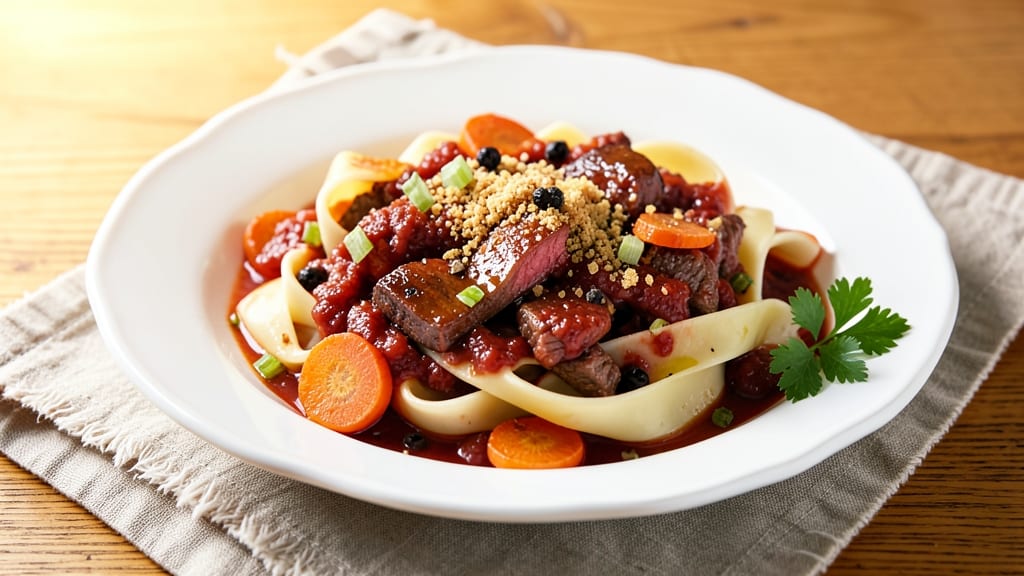
Cooking Jamie Oliver's pappardelle with beef ragu transforms a simple weeknight into an Italian feast without the fuss. The slow-braised beef ragu develops deep, complex flavors from red wine and herbs, while the al dente pappardelle soaks up every rich drop.
I’ve tested this recipe countless times—it’s the one that finally convinced my skeptical family to embrace homemade Italian dinners.
The secret lies in the technique: searing the beef first creates a flavorful crust, and slow cooking in red wine reduces to a velvety sauce. No fancy equipment needed—just patience and a heavy pot.
This dish delivers restaurant-quality results with simple ingredients, making it perfect for both weeknight suppers and special occasions.
Imagine tender strips of beef swimming in a glossy, wine-infused sauce, served over perfectly cooked pappardelle that’s just firm enough to hold its shape. The aroma alone will have everyone gathering at the table, and the first bite delivers that perfect balance of richness and acidity.
This is comfort food at its finest—warm, satisfying, and impossible to resist.
Pair it with a crisp green salad and a glass of the same red wine used in the ragu for an authentic Italian experience. The leftovers reheat beautifully, too, so you’ll have another delicious meal waiting in your fridge. Let’s get cooking—this recipe is worth every minute of wait time.
Ingredients for jamie oliver's pappardelle with beef ragu
Simple ingredients, big Italian flavors—this beef ragu transforms pantry staples into restaurant-quality comfort.
| Ingredient | Amount | Notes |
|---|---|---|
| Beef Chuck Roast 🥩 | 1 ½ lb | Cut into 1-inch strips |
| Extra-Virgin Olive Oil 🫒 | 2 tbsp | For searing beef |
| Red Wine 🍷 | 1 cup | Bold, dry variety like Cabernet |
| Beef Broth 💧 | 1 ½ cups | Low-sodium preferred |
| Tomato Paste 🍅 | 2 tbsp | Squeeze tube preferred |
| Carrots 🥕 | 2 whole | Medium size, chopped |
| Celery Stalks 🌿 | 2 whole | Chopped, with leaves |
| Yellow Onion 🧅 | 1 whole | Medium size, diced |
| Garlic Cloves 🧄 | 4 cloves | Minced, fresh preferred |
| Fresh Rosemary 🌿 | 1 tbsp | Chopped, fresh preferred |
| Fresh Thyme 🌿 | 1 tbsp | Leaves only, chopped |
| Pappardelle Noodles 🍝 | 12 oz | Fresh preferred, dried works |
| Salt 🧂 | 1 ½ tsp | Kosher or sea salt |
| Black Pepper 🌶️ | ½ tsp | Freshly ground |
The beef is everything here. Chuck roast breaks down beautifully, but sirloin works in a pinch if you're short on time. I grab mine from Costco when I can—they cut it into perfect strips for me. If you're buying a whole roast, ask the butcher to slice it thin. The red wine? Cabernet Sauvignon or Chianti are my go-tos, but whatever bold, dry red you've got open works. Just make sure it's not too sweet—this isn't sangria. The tomato paste is non-negotiable for depth, but Trader Joe's squeeze tubes make this easy—no mess, no waste.
No red wine? Beef broth with 1 tbsp balsamic vinegar gets you close. Fresh herbs are ideal, but dried rosemary and thyme at half the amount won't ruin it. The carrots and celery can be swapped for frozen mirepoix mix if you're in a hurry. The pappardelle? Fresh is best—it cooks in minutes and soaks up the sauce perfectly. Dried noodles work too, but add them to the sauce at the end to avoid mushiness. The beef broth is where flavor builds—homemade is ideal, but even the good store-bought stuff (like Pacific Foods) will do. Just skip the salt packets if you're using them.
This sauce gets better with time—plan to cook it for at least 2 hours. It reheats beautifully, so make extra. Store in the fridge for up to 5 days or freeze for 3 months. I like to portion it into containers with a little pasta—just reheat with a splash of water. The noodles cook in minutes, so keep them separate until serving. Fresh herbs? Toss them in at the end—they wilt fast, but the aroma is worth it.
Why You'll Love This Recipe
- One-Pot Magic: I swear by this recipe—just brown the beef, deglaze with wine, and let it simmer. No chopping, no fuss, and that slow cook transforms tough chuck into melt-in-your-mouth ragu. (Yes, even on a Tuesday night.)
- Wine-Infused Richness: The red wine doesn’t just add depth—it caramelizes into the sauce, giving it that velvety, slightly tangy flavor. That beef broth and tomato paste combo? It’s the secret to a sauce so good, you’ll lick the pan.
- Leftovers for Days: This ragu tastes better the next day, and it freezes like a dream. I make a double batch, portion it out, and reheat with a splash of water—zero effort, maximum comfort.
- Budget-Friendly Luxury: Beef chuck is affordable, and the pantry staples (olive oil, wine, broth) stretch this into multiple meals. It’s the kind of dish that feels fancy but won’t break the bank—ideal for date nights or lazy Sundays.
Step-by-step instructions for Jamie Oliver's pappardelle with beef ragu
Here's how to create a rich, wine-braised beef ragu that clings beautifully to al dente pappardelle.
Sear the Beef Chuck Roast for Deep Flavor
Pat the 1.5 lb beef chuck roast dry with paper towels—this ensures maximum browning. Heat the 2 tbsp extra-virgin olive oil in a heavy Dutch oven over medium-high heat until shimmering. Working in batches if needed, add the beef in a single layer and sear undisturbed for 3-4 minutes per side until deeply browned with a crust forming. This step develops the rich, caramelized foundation for your ragu.
Don't overcrowd the pan—if the beef steams instead of searing, you'll lose that crucial Maillard reaction that creates deep flavor. Transfer the browned beef to a plate and set aside. Real talk: if your pan gets too crowded, work in two batches and don't rush the second one.
Build the Aromatic Base with Vegetables and Herbs
In the same Dutch oven, add the chopped 2 whole carrots, 2 whole celery stalks, and diced 1 whole yellow onion. Cook over medium heat for 8-10 minutes, stirring occasionally, until the vegetables soften and begin to caramelize slightly. This process releases their natural sweetness and forms the flavor backbone of your ragu.
Add the minced 4 cloves garlic cloves, chopped 1 tbsp fresh rosemary, and 1 tbsp fresh thyme, cooking for another 1-2 minutes until fragrant. Here's where it gets fun—the herbs should perfume the kitchen noticeably. If they burn, you've gone too long. Stir in the 2 tbsp tomato paste and cook for 30 seconds until it darkens slightly.
Deglaze and Simmer the Ragu Low and Slow
Pour in the 1 cup red wine, scraping up all the browned bits from the bottom of the pan with a wooden spoon. This deglazing step captures all the meaty flavor you worked so hard to create. Let the wine simmer for 3-4 minutes until it reduces by half and the alcohol cooks off completely—you'll smell it when it's gone.
Add the 1.5 cups beef broth, then return the browned beef to the pot. Bring to a gentle simmer, then reduce heat to low. Cover partially and let it cook for 2-2.5 hours, stirring occasionally, until the beef is fork-tender and the sauce has thickened to a rich consistency. I know it seems like forever, but patience is key here—this slow cooking breaks down the tough beef into melt-in-your-mouth tenderness.
Finish the Ragu and Cook the Pappardelle
While the ragu simmers, cook the 12 oz pappardelle noodles in salted boiling water according to package directions until al dente—1 minute less than recommended. Reserve 1 cup of pasta water before draining. The ragu should be thick enough to coat the back of a spoon by the end of cooking, but if it's too thick, add a splash of reserved pasta water to loosen it.
Taste the ragu and adjust seasoning with the 1.5 tsp salt and 0.5 tsp black pepper. The sauce should be rich and balanced, with the wine's acidity cutting through the meaty depth. Toss the drained pappardelle directly in the Dutch oven with the ragu, adding reserved pasta water as needed to create a creamy, clinging sauce. Serve immediately with extra fresh thyme leaves sprinkled on top.
Pro Tips For Making Jamie Oliver'S Pappardelle With Beef Ragu
- SEAR THE CHUCK FIRST: After browning the beef, let those crusty bits cool for 2 minutes before deglazing—otherwise, you’ll just turn your red wine into a murky sludge. I learned this the hard way when my first batch looked like soup instead of ragu.
- USE DARK BROTH: Skip the light beef broth unless you want a pale, watery sauce. Dark or "brown" broth adds depth right away, cutting down on the time you’d otherwise need to caramelize the tomato paste. (Yes, even if it’s not the fanciest option.)
- STIR THE TOMATO PASTE: Don’t just dump the tomato paste in and walk away—stir it into the oil first for 30 seconds. This prevents clumping and ensures it blooms into a smooth, rich base instead of floating like plastic chunks.
- SALT THE PASTA WATER LATE: Wait until the water’s actually boiling before adding salt—otherwise, you’ll end up with a lukewarm, under-seasoned bath. And for this dish, you’ll want that salt to cling to the pappardelle like glue. (Trust me, it matters.)
Pro cooking tips for this recipe
Sear Like a Pro
That initial sear is where all the magic starts—don't skip it! Pat your beef strips completely dry with paper towels before searing, or they'll steam instead of brown. I use a heavy Dutch oven (like All-Clad or Le Creuset) because it distributes heat evenly.
Work in batches if needed—crowding the pan will drop the temperature and ruin that perfect crust. Let the beef sit for 3-4 minutes per side until deep brown. 🔥
Wine Reduction Matters
After searing, deglaze with your 1 cup red wine—this isn't just for flavor, it's for capturing every last bit of beefy goodness stuck to the pan. Let the wine reduce by half before adding broth.
I've made the mistake of rushing this step, and the sauce ends up thin and flat. Patience here pays off—wait until you can smell the alcohol cooking off completely.
Vegetable Prep Shortcut
Chopping carrots and celery takes forever, so I keep a bag of pre-chopped mirepoix mix in my freezer. Thaw it overnight in the fridge, then sauté as directed. For extra flavor, I add 1 bay leaf with the vegetables—remove it before serving.
The key is cooking the veggies until they're soft but not mushy—they should caramelize slightly for sweetness.
Low and Slow Wins
This isn't a recipe you can rush. After adding the broth, maintain a gentle simmer—not a rolling boil. Cover partially to let some steam escape, which prevents the sauce from getting too watery.
Stir occasionally, especially in the first hour when the sauce is most likely to stick. I set a timer for every 30 minutes to check on it—this dish rewards attention.
Pasta Timing Hack
Cook your pappardelle 1 minute less than package instructions suggest, then finish cooking in the ragu sauce. This ensures perfect al dente texture while allowing the noodles to absorb all that rich sauce. Reserve 1 cup pasta water—it's liquid gold for adjusting sauce consistency.
I like to add the noodles directly to the Dutch oven with the ragu, then toss everything together for maximum flavor transfer. ✨
Final Flavor Boost
Before serving, taste your ragu and adjust seasoning. A pinch of salt or black pepper can make all the difference. I finish with a sprinkle of fresh thyme and a drizzle of extra-virgin olive oil—this adds brightness and ties all the flavors together.
The first time I forgot this step, my dish felt flat. Trust me, it matters!
Nutrition facts
Frequently asked questions
Can I substitute pappardelle with another pasta shape?
While pappardelle's wide ribbon shape is ideal for soaking up sauce, you can use fettuccine, tagliatelle, or even pappardelle-shaped pasta from the store. For extra heartiness, try rigatoni or penne, but cook them slightly underdone to prevent mushiness when tossed with the sauce. The key is choosing a shape that holds its own against the rich ragu.
How do I know when the beef is fully tender?
The beef should easily shred with a fork and pull apart into fine strands. Test a piece after 2 hours of cooking—it should be fork-tender but still hold its shape slightly. If it's still tough, continue cooking for another 30 minutes. Pro tip: Press a piece between your fingers—if it resists, it needs more time.
What if I don't have red wine?
No problem! Mix 1.5 cups beef broth with 1 tbsp balsamic vinegar and 1 tsp brown sugar to mimic the depth of red wine. For extra umami, add 1 tsp soy sauce. The acidity from the vinegar will still brighten the dish, though fresh wine delivers the best flavor. This substitution works well in a pinch.
Can I make this dish ahead of time?
Yes, this ragu tastes even better the next day! Cook the sauce completely, then refrigerate for up to 5 days or freeze for 3 months. Reheat gently on the stove with a splash of water or broth. Cook the pappardelle fresh when serving—it only takes 5 minutes. The flavors meld beautifully overnight, making this a perfect make-ahead meal.
Why does my sauce turn out too thin?
Thin sauce usually means the liquid wasn't reduced enough. Simmer uncovered for 10-15 extra minutes to thicken it, or stir in 1 tbsp cornstarch mixed with 2 tbsp water. Another common mistake is adding too much broth—stick to the 1.5 cups called for. For future batches, skim excess fat from the surface after cooking to help thicken the sauce naturally.