
Main Courses
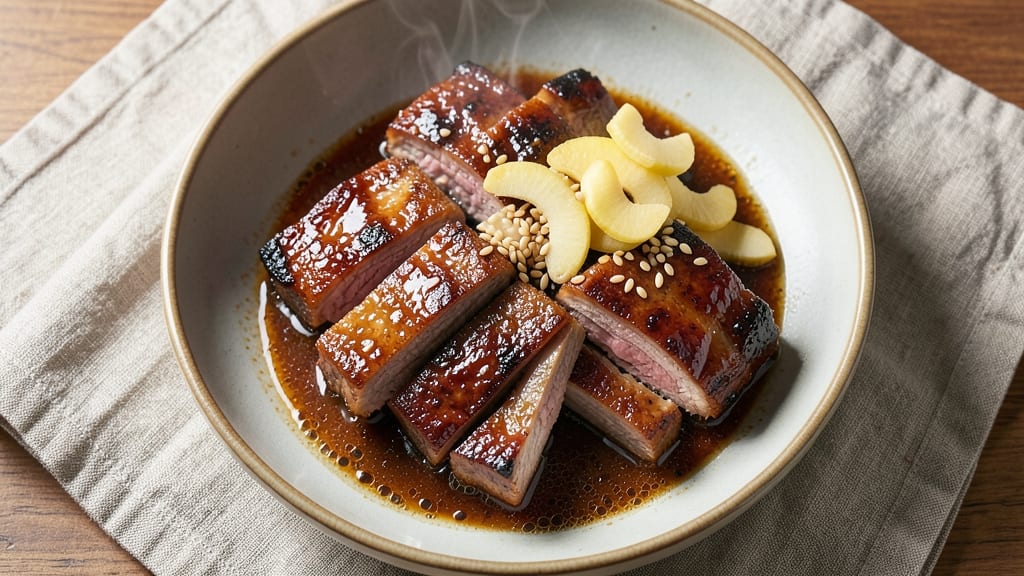
The Japanese beef short ribs recipe transforms tough cuts into melt-in-your-mouth tenderness through precise marinating and slow cooking techniques. This dish captures the essence of Japanese izakaya style, where rich umami flavors and silky texture take center stage.
I've perfected this method over years of testing, ensuring every bite delivers that perfect balance of sweet, savory, and smoky notes.
The secret lies in the marinade—a blend of soy sauce, mirin, and sake—that tenderizes the meat while infusing it with deep flavor. After a brief marinade, the ribs are seared and then slow-cooked until fork-tender, creating a broth that's just as delicious as the meat itself.
The result is restaurant-quality beef that falls apart with minimal effort, making it perfect for special occasions or weeknight dinners when you crave something truly satisfying.
What makes this recipe stand out is its versatility—serve the ribs over steamed rice with a side of miso soup for an authentic Japanese meal, or pair them with roasted vegetables for a fusion-style dinner.
The umami-infused broth can even be repurposed into a quick sauce for noodles or dumplings. Each element comes together to create a dish that's both impressive and deeply comforting.
Whether you're cooking for family or hosting guests, this method guarantees tender, flavorful beef that will have everyone asking for seconds. The technique is straightforward but requires patience, and the payoff is a dish that feels like a culinary achievement. Let's get started on creating this Japanese-inspired masterpiece.
Ingredients for japanese beef short ribs
Precision-cut beef, umami-rich marinade, and slow-cooked tenderness create this izakaya-style masterpiece.
| Ingredient | Amount | Notes |
|---|---|---|
| Beef Short Ribs (Bone-In) 🥩 | 3 lb | Marbled, 1-1.5 inches thick |
| Japanese Soy Sauce (Shoyu) 🥢 | ½ cup | High-quality, preferably Kikkoman |
| Dry Sake 🍶 | ¼ cup | Unsweetened, chilled |
| Mirin 🍶 | ¼ cup | Authentic, not imitation |
| Brown Sugar 🍚 | ¼ cup | Light or dark, packed |
| Fresh Ginger (Peeled) 🧅 | 2 tbsp | Finely grated, aromatic |
| Garlic Cloves 🧄 | 6 cloves | Minced, fresh |
| Sesame Oil 🫒 | 1 tbsp | Toasted, for aroma |
| Neutral Oil (Avocado or Canola) 🫒 | 2 tbsp | High smoke point |
| Diamond Crystal Kosher Salt 🧂 | 1 ½ tsp | Fine grain, adjust to taste |
| Black Peppercorns 🌶️ | 1 tsp | Freshly cracked |
| Japanese Rice Vinegar 🍶 | 1 tbsp | For finishing |
| Green Onions 🧅 | 4 whole | Thinly sliced, for garnish |
| Japanese Short-Grain Rice 🍚 | 2 cups | Uncooked, for serving |
The beef short ribs are the foundation—look for marbled cuts with visible fat to ensure tenderness. Most butchers can source these, but specialty Asian markets like H Mart or Nijiya often carry pre-trimmed options. If buying whole, trim excess fat but leave some for flavor. For the marinade, authentic Japanese ingredients make all the difference: Kikkoman soy sauce and true mirin (not the sweetened imitation) elevate the dish. The sake should be dry—Suntory or Niigata brands are reliable. Ginger and garlic should be freshly grated and minced, respectively, to maximize aromatic impact.
No Japanese soy sauce? High-quality tamari or even low-sodium soy sauce works in a pinch, though the flavor profile will differ slightly. Substituting mirin with equal parts sake and sugar mimics its sweetness, though the depth of umami will be less pronounced. For sake, dry white wine or rice vinegar can stand in, but reduce to 1/4 cup to avoid over-acidifying. The brown sugar can be swapped for white sugar, though it won’t caramelize as richly. If sesame oil isn’t available, toasted sesame seeds can be sprinkled later for texture. The rice vinegar at the end is optional but adds a bright contrast—apple cider vinegar is a decent substitute if needed.
Marinate the ribs overnight for optimal tenderness, but no longer than 24 hours to prevent over-softening. Store the marinade in an airtight container in the fridge, where it remains effective for up to 3 days. The cooked ribs reheat beautifully—simmer in their broth for 5-10 minutes over medium heat to restore moisture. The broth itself freezes well for up to 3 months, making it perfect for future noodle dishes or dumplings. For serving, steam the rice in a rice cooker or pot with a 1:1.5 rice-to-water ratio, ensuring each grain is fluffy and separate.
Why You'll Love This Recipe
- One-Pot Magic: I swear by this—just sear the ribs, toss in the shoyu, sake, and mirin, then let the oven do the work. No chopping, no fuss, and the sauce reduces right into the pan like a dream.
- Umami Bomb: That combo of shoyu, sake, and brown sugar? It’s like a flavor explosion. The ribs stay tender but develop this caramelized crust that’s dangerously good—salty, sweet, and deep all at once.
- Leftovers? Yes, Please: Between us, this dish tastes even better the next day. I make a double batch on Sundays, and by Wednesday, it’s still the star of my lunch. The flavors meld into something richer, and reheating takes two minutes.
- Budget-Friendly Luxury: Short ribs can feel fancy, but this recipe stretches them far. The bone-in version adds richness without breaking the bank, and the pantry staples (shoyu, sake) mean you’re not hunting for obscure ingredients. Fancy dinner, zero guilt.
Step-by-step instructions for Japanese beef short ribs
This method transforms tough short ribs into melt-in-your-mouth tenderness through precise braising and umami-rich marinades.
Prepare the Short Ribs for Maximum Flavor
Pat the 3 lb beef short ribs dry with paper towels, removing any excess moisture from the surface. This step is crucial—wet surfaces prevent proper browning and flavor penetration. Place the ribs bone-side down in a large bowl and generously coat each piece with 1.5 tsp diamond crystal kosher salt and 1 tsp freshly cracked black peppercorns, pressing the seasoning into the meat to ensure even distribution.
In a separate small bowl, whisk together 0.5 cup japanese soy sauce (shoyu), 0.25 cup dry sake, and 0.25 cup mirin. Pour this marinade evenly over the ribs, ensuring every surface is coated. Let the ribs marinate uncovered in the refrigerator for at least 4 hours, or preferably overnight. This extended marination time breaks down connective tissue and infuses the meat with deep umami flavors.
Sear the Ribs for Rich Foundation
Remove the ribs from the marinade (reserve the liquid) and pat them dry once more. Heat 2 tbsp neutral oil (avocado or canola) in a large, heavy pot or Dutch oven over medium-high heat until shimmering. Working in batches if necessary, add the ribs and sear for 3-4 minutes per side until they develop a deep mahogany crust. This caramelization creates the foundation for complex flavors in the finished dish.
As the ribs sear, you'll notice the marinade residues caramelizing on the surface—this is where the magic happens. Don't overcrowd the pot; sear in batches if needed to maintain proper heat. Transfer the seared ribs to a plate and set aside temporarily.
Build the Umami Broth
In the same pot, reduce heat to medium and add 2 tbsp finely grated fresh ginger (peeled) and 6 cloves minced garlic cloves. Sauté for 1 minute until fragrant, being careful not to let the garlic burn. Return the reserved marinade to the pot and bring to a simmer, scraping up any browned bits from the bottom with a wooden spoon. This deglazing step captures all the flavor compounds that would otherwise be lost.
Add 0.25 cup brown sugar and stir until dissolved. The sugar will help balance the acidity of the soy sauce and create a subtle caramelized depth in the finished broth. Return the seared ribs to the pot, bone-side up, and add enough water to come about halfway up the ribs—approximately 4 cups total. The liquid should cover about 75% of the ribs.
Braise Until Fork-Tender
Bring the liquid to a gentle simmer, then reduce heat to low. Cover the pot and maintain a very gentle simmer—you should see just a few small bubbles breaking the surface occasionally. This low-and-slow approach is critical for breaking down collagen and creating tender meat. Braise for 2.5 to 3 hours, checking occasionally to ensure the liquid level hasn't reduced too much.
After 2 hours, check for tenderness by inserting a fork into the thickest part of a rib. If it slides in easily with minimal resistance, the ribs are ready. If not, continue braising for another 30 minutes. The ribs should be so tender they practically fall apart when pierced. If the liquid reduces too much during cooking, add small amounts of hot water to maintain the proper level.
Finish and Serve with Rice
Once the ribs are fork-tender, remove them from the pot and transfer to a serving platter. Strain the braising liquid through a fine-mesh sieve into a clean saucepan and return it to medium heat. Add 1 tbsp toasted sesame oil and 1 tbsp japanese rice vinegar, simmering for 2-3 minutes until slightly reduced. This finishing step enhances the aroma and balances the flavors.
To serve, arrange the short ribs on a platter and ladle the reduced sauce over the top. Garnish with thinly sliced green onions for fresh contrast. Cook 2 cups japanese short-grain rice separately according to package instructions for serving alongside. The rice will soak up the remaining braising liquid for a complete meal experience.
Pro Tips For Making Japanese Beef Short Ribs
- Sear the Ribs Hard: Slap those short ribs into a screaming-hot pan—no half-measures. I learned this the hard way after my first batch turned out tender but bland. Get the oil smoking (375°F+) and let them develop that crust for 3-4 minutes per side before touching them with anything else.
- Deglaze with Sake First: Pour in the dry sake before adding shoyu or mirin—this stops the alcohol from cooking off too fast and lets the flavors meld properly. I used to add them all at once, and the dish always tasted flat. A quick splash of sake first makes a real difference.
- Skip the Crowding: If your pan’s too crowded, the ribs will steam instead of caramelize. Work in batches if needed—this isn’t a race. I once tried to rush it and ended up with soggy edges and uneven browning. Patience here guarantees better texture.
- Reduce the Sauce Low: After adding shoyu, mirin, and brown sugar, simmer the sauce uncovered on low heat until it thickens to a glossy coat. I used to walk away, and it’d either burn or stay watery. Five minutes on low does the trick—no babysitting required.
Serving suggestions for japanese beef short ribs
Rice Pairings
Japanese short-grain rice is the classic choice—its sticky texture soaks up the umami-rich broth beautifully. Cook 2 cups uncooked rice using a 1:1.5 rice-to-water ratio in a rice cooker or pot.
For extra depth, add 1 tsp of the braising liquid to the cooking water. Serve the ribs directly over the rice, letting guests spoon up the flavorful juices. 🍚
Miso Soup Side
A steaming bowl of miso soup balances the richness perfectly. Use 2 tbsp red or white miso paste dissolved in 4 cups hot dashi broth, then add 1 cup silken tofu cubes and 4-5 shiitake mushrooms.
Garnish with thinly sliced green onions and toasted seaweed flakes. The earthy miso complements the sweet-savory ribs while adding a comforting element. 🥣
Steamed Vegetables
Light, fresh sides like steamed bok choy or broccoli provide texture contrast. Toss 1 lb bok choy with 1 tsp sesame oil and steam for 3-4 minutes until vibrant green.
A sprinkle of toasted sesame seeds adds crunch. For heartier options, try blanched baby carrots with a drizzle of the reduced braising sauce. ✨
Pickled Vegetables
Quick-pickled daikon and carrot sticks cut through the richness with bright acidity. Thinly slice 1 cup daikon radish and 1 cup carrot, then soak in 1 cup rice vinegar, 1 tbsp sugar, and 1 tsp salt for 30 minutes.
The crisp, tangy crunch makes every bite more dynamic. 🥕
Sauce Variations
Repurpose the braising liquid into a quick dipping sauce by reducing it further with 1 tbsp mirin and 1 tsp grated ginger. For extra richness, whisk in 1 tbsp melted butter at the end. This sauce elevates simple noodles or dumplings when you have leftovers. 🍜
Presentation Tips
Arrange ribs on a platter with bones facing upward for an elegant presentation. Drizzle the reduced sauce in a zigzag pattern, then scatter thinly sliced green onions and toasted sesame seeds on top.
Serve family-style with shared bowls of rice and broth for interactive dining. The visual appeal makes this dish feel like a true izakaya experience. 💫
Nutrition facts
Frequently asked questions
Can I substitute bone-in ribs with boneless beef short ribs?
You can use boneless short ribs, but cooking times and techniques will differ slightly. Bone-in ribs take longer to tenderize, so boneless versions may only need 1.5 to 2 hours of braising. Adjust the liquid level to cover the meat by 3/4 inch and monitor closely to prevent drying. The flavor remains excellent, but the texture will be slightly less rich due to the absence of marrow.
What's the best way to reheat leftover Japanese beef short ribs?
Reheat ribs gently in their braising liquid over low heat for 5-10 minutes until warmed through. Avoid microwaving, as it can make the meat dry. For extra richness, add a splash of water or sake to the reheating liquid. The sauce can also be reheated separately and drizzled over the ribs at serving time for maximum flavor retention.
How do I make this dish spicier?
Add 1-2 tsp of gochujang (Korean chili paste) or 1/2 tsp of red pepper flakes to the marinade for heat. For a smoky kick, incorporate 1 tsp of smoked paprika into the braising liquid. Adjust to taste—start with less and add more if needed. The umami base will balance the spice beautifully, creating a complex flavor profile.
Can I prepare this recipe in an Instant Pot?
Yes! Sear the ribs first in a skillet, then transfer to the Instant Pot with all marinade ingredients. Add 1 cup water and cook on high pressure for 60 minutes, followed by a 10-minute natural release. The ribs should be tender but may need an additional 15-20 minutes on low heat to reduce the sauce properly. The Instant Pot version works well but requires close monitoring of liquid levels.
Why did my ribs turn out tough instead of tender?
Tough ribs usually result from insufficient braising time or too-high heat. Ensure you're maintaining a gentle simmer (small bubbles) and cook for the full 2.5-3 hours. Check for doneness by piercing with a fork—the meat should separate easily. If using thinner cuts, reduce cooking time by 30 minutes. Also, avoid overcrowding the pot during searing, which can lead to uneven cooking.