
Main Courses
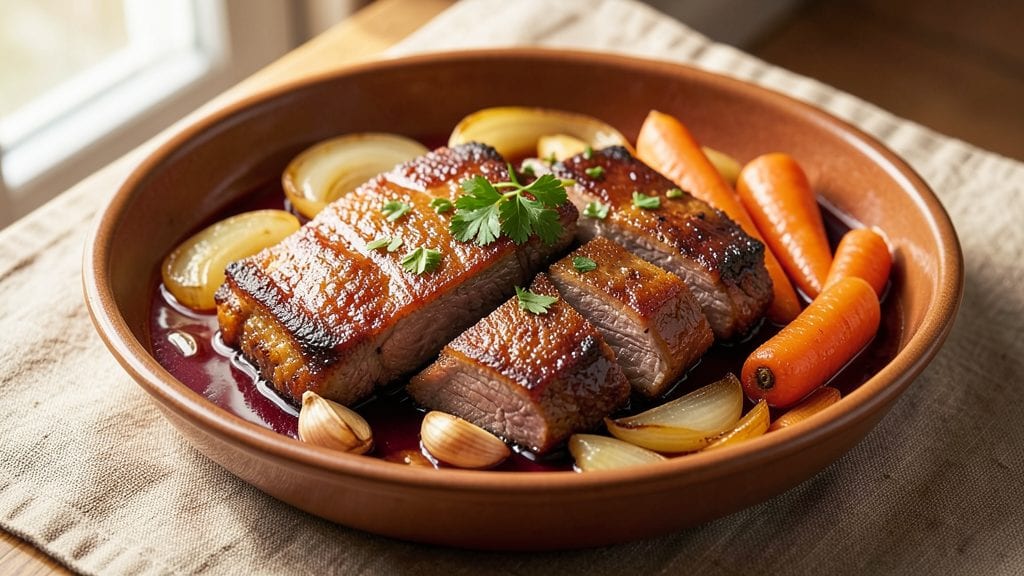
This oven braised beef short ribs recipe transforms tough cuts into melt-in-your-mouth perfection through a 3-hour slow cook that develops deep, wine-infused richness. The key lies in proper searing and a carefully balanced braising liquid that tenderizes the meat while creating a velvety sauce.
I've perfected this technique over years of testing—each element matters to achieve that restaurant-quality result at home.
The process begins with a high-heat sear to create a flavorful crust on the ribs, followed by a low-and-slow oven braise that breaks down collagen into gelatin. Red wine, aromatics, and herbs infuse the meat with complex flavors, while the sauce reduces to a glossy, concentrated finish.
This method ensures the ribs are fork-tender with a surface that practically falls apart at the touch.
By the time you plate these ribs, you'll have a dish that's deeply flavorful, visually impressive, and satisfyingly tender—each bite offering layers of savory, slightly sweet, and umami-rich goodness.
The sauce clings perfectly to the meat, creating a harmonious balance that makes every forkful worth the wait. This is comfort food elevated to an art form.
Serve with classic sides like creamy mashed potatoes or crusty bread to soak up every drop of that rich braising liquid. The leftovers, if there are any, reheat beautifully, making this an ideal recipe for meal prep or entertaining. Let's get started on creating this showstopper dish.
Ingredients for oven braised beef short ribs
Four pounds of beef short ribs transform into melt-in-your-mouth perfection with these carefully balanced ingredients.
| Ingredient | Amount | Notes |
|---|---|---|
| Beef Short Ribs 🥩 | 4 lb | Bone-in, 2-3 inches thick |
| Dry Red Wine 🍷 | 1 ½ cups | Bold Cabernet Sauvignon preferred |
| Beef Broth 🥛 | 2 cups | Low-sodium, high-quality |
| Yellow Onion 🧅 | 1 whole | Chopped into 1/2-inch pieces |
| Carrots | 4 medium | Peeled, cut into 1-inch chunks |
| Garlic Cloves 🧄 | 6 cloves | Smashed, not minced |
| Fresh Thyme 🌿 | 2 sprigs | Stems removed, leaves only |
| Fresh Rosemary 🌿 | 1 sprig | Needles only, chopped |
| Tomato Paste 🍅 | 2 tbsp | Smooth, not chunky |
| Olive Oil 🫒 | ½ cup | Extra-virgin, for searing |
| Diamond Crystal Kosher Salt 🧂 | 1 ½ tbsp | For seasoning and braising |
| Freshly Ground Black Pepper 🌶️ | 1 tsp | Cracked peppercorns preferred |
| All-Purpose Flour 🌾 | 2 tbsp | For dusting ribs |
| Balsamic Vinegar 🍶 | 1 tbsp | For deglazing |
The beef short ribs are the foundation of this dish—bone-in cuts with good marbling ensure maximum flavor and texture. Source them from a reputable butcher or Costco's pre-cut beef short ribs section, where they're typically trimmed and ready to use. Look for cuts that are 2-3 inches thick—thinner pieces may not braise properly. The red wine should be a bold Cabernet Sauvignon (like those from Napa Valley), as lighter wines can become overpowered by the braising process. Fresh herbs are non-negotiable here—their aromatic oils infuse the braising liquid, creating layers of complexity that dried herbs simply can't match.
No bold red wine on hand? Substitute with beef broth and a splash of balsamic vinegar, though the flavor profile will be subtly different. Fresh thyme and rosemary can be swapped for dried at one-third the amount, but the texture and aroma won't be identical. Carrots can be baby carrots if that's what's available, though their shape may affect the sauce's consistency. The tomato paste is crucial for depth—Trader Joe's squeeze tubes are perfect for this recipe as they're convenient and consistent. For the flour, King Arthur All-Purpose is my go-to, but any high-quality flour will work. The olive oil should be extra-virgin for searing, as it has a higher smoke point than regular olive oil.
This braise develops over time, so patience is key. The ribs should be fork-tender within 3 hours, though some cuts may need an additional 30 minutes. The sauce reduces beautifully, so it's best to make this ahead of time—flavors meld and intensify overnight. Store leftovers in an airtight container with the sauce for up to 5 days in the refrigerator, or freeze for up to 3 months. The sauce thickens as it cools, so you may need to add a splash of broth when reheating. Portion the ribs into individual servings for easy meal prep, keeping the sauce separate to prevent sogginess.
Why You'll Love This Recipe
- Foolproof Prep: I swear by this—just sear the ribs, dump everything in one dish, and walk away. No fancy knife skills, no last-minute stress. The onions and carrots soften while you’re doing whatever, and the wine reduces into a glossy, rich sauce that takes zero effort.
- Rich, Deep Taste: That first sip of wine-braised broth? Chef’s kiss. The red wine cuts through the beef’s richness while the broth builds layers of umami, and the carrots add natural sweetness that balances everything. It’s the kind of flavor that makes you slow down mid-bite.
- Leftover Luxury: Between us, this dish begs to be made extra. The ribs stay tender for days, and the sauce only gets better as it sits—perfect for sandwiches, grain bowls, or reheating with a splash of broth. My freezer’s always stocked with portions, and no one complains.
- Weeknight Crowd-Pleaser: Honestly, this feeds six for the price of two steaks. The ribs are forgiving (even if you forget to flip them), and the veggies make it feel balanced. I’ve served it at holiday dinners, potlucks, and lazy Sundays—no one ever asks what’s in it, they just keep reaching for seconds.
Step-by-step instructions for oven braised beef short ribs
This method delivers melt-in-your-mouth tenderness with a deep, wine-infused sauce every time.
Prepare and Sear the Beef Short Ribs
Pat the 4 lb beef short ribs completely dry with paper towels—this ensures maximum browning. Season both sides aggressively with 1 tbsp of the 1.5 tbsp diamond crystal kosher salt and all 1 tsp freshly ground black pepper. Let them sit at room temperature for 30 minutes while you preheat your oven to 325°F.
Heat 0.25 cup of the 0.5 cup olive oil in a large Dutch oven over medium-high heat until shimmering. Working in batches if needed, sear the ribs bone-side down for 5 minutes until deeply browned. Flip and sear the meaty side for another 3 minutes. Remove ribs and set aside—they'll finish cooking in the oven.
Build the Braising Liquids and Deglaze
In the same Dutch oven, reduce heat to medium and add the remaining 0.25 cup olive oil. Toss in the chopped 1 whole yellow onion and 4 medium carrots, cooking for 5 minutes until softened. Add the smashed 6 cloves garlic, chopped fresh rosemary, and fresh thyme sprigs, stirring for 30 seconds until fragrant.
Spoon in the 2 tbsp tomato paste and cook for 1 minute until it darkens slightly. Immediately pour in the 1.5 cups dry red wine and scrape up all the browned bits from the bottom—this is where all the flavor hides. Let the wine reduce by half (about 5 minutes) before adding the 2 cups beef broth and 1 tbsp balsamic vinegar.
Dust, Braise, and Develop the Sauce
Lightly dust the seared ribs with the 2 tbsp all-purpose flour, shaking off any excess. Return them bone-side up to the Dutch oven, spooning the braising liquid over the top. Bring to a simmer, then cover tightly with a lid or foil.
Transfer to the preheated 325°F oven and braise for 2 hours. After this initial cooking time, check the internal temperature of the ribs—it should read 190-195°F at the thickest point. If not, continue braising for another 30-minute increments until tender.
Finish and Rest for Maximum Tenderness
Once the ribs reach the perfect tenderness (they should fall apart easily with a fork), remove them from the braising liquid and transfer to a serving platter. Tent loosely with foil and let rest for 10 minutes—they'll continue carrying over in temperature and become even more succulent.
Strain the braising liquid through a fine-mesh sieve into a saucepan and reduce over medium heat until it coats the back of a spoon (about 10 minutes). The sauce should be rich and velvety, with concentrated flavors from the wine and herbs. Serve the ribs with the reduced sauce spooned over the top and the braised vegetables on the side.
Pro Tips For Making Oven Braised Beef Short Ribs
- Sear First, Then Braise: I learned this the hard way—skipping the sear means flavorless ribs. Hit them with high heat in the oven (425°F) for 10-12 minutes until deep brown before adding wine and broth. That crust locks in juices and builds depth.
- Trim the Fat, Not the Flavor: Leave the fat cap on the ribs—it renders into the pan and makes the sauce rich. Just trim excess fat from the edges so it doesn’t burn before the wine deglazes. (Yes, even if you’re impatient like me.)
- Deglaze Aggressively: After searing, don’t just splash wine—scrape the browned bits with a wooden spoon while pouring. Those bits are pure flavor, and skipping this step means a dull sauce. (Your future self will notice.)
- Cover Tight, But Vent It: Use a tight lid for the first 2 hours to steam the ribs, but prop it slightly with a spoon after that. Too much steam = soggy carrots; too little = dry ribs. (This isn’t the prettiest method, but it’s the tastiest.)
Dietary considerations for this oven braised beef short ribs
Gluten-Free Adaptation
This recipe is naturally gluten-free if you use certified gluten-free flour for the dusting step. I recommend Bob's Red Mill 1:1 Gluten-Free Baking Flour—it mimics all-purpose flour perfectly. Simply replace the 2 tbsp all-purpose flour with the same amount of gluten-free flour.
Always check labels on beef broth and tomato paste to ensure they're gluten-free, as some brands contain hidden additives. 🌾
Low-Carb/Keto Modifications
For a keto-friendly version, eliminate the flour entirely and skip the tomato paste—its sugar content adds up. Instead, boost the umami with 1 tbsp fish sauce or 2 tbsp soy sauce (tamari for gluten-free) when deglazing.
Use bone broth instead of beef broth to reduce sodium while keeping carbs minimal. The ribs will still develop deep flavor without the need for flour or sugar-containing ingredients.
Dairy-Free Considerations
This recipe is already dairy-free, but if you're serving with sides, opt for dairy-free alternatives like cashew cream mashed potatoes or olive oil-based garlic bread. The braising sauce contains no dairy, so it's safe for lactose-intolerant guests.
For extra richness, stir 1 tbsp coconut cream into the reduced sauce at the end—it adds a subtle sweetness that complements the wine flavors beautifully.
Allergen-Friendly Swaps
For nut allergies, avoid any nut-based substitutions and stick to the original ingredients. If you're accommodating shellfish allergies in your household, simply omit any seafood-based broths—stick with beef or vegetable broth.
For egg allergies, this recipe is entirely safe as it contains no egg products. Always double-check your beef broth label for potential cross-contamination warnings if severe allergies are present.
Protein-Packed Boost
Looking to increase protein content? Add ½ cup cooked quinoa to the braising liquid during the final 30 minutes of cooking. The quinoa absorbs the rich flavors while adding 8 grams of protein per ½ cup.
For an extra boost, stir in 1 scoop collagen peptides into the reduced sauce—it dissolves completely and adds 10 grams of protein without altering texture. This makes the dish perfect for post-workout meals or high-protein diets. 💪
Vegetarian Substitutions
While beef short ribs are the star here, you can create a vegetarian version using mushroom short ribs (thick portobello or king oyster mushrooms). Sear them in the same way, then proceed with the braising process.
For extra heartiness, add 1 cup cooked lentils to the braising liquid. The texture won't be identical, but the deep umami flavors from mushrooms and lentils create a satisfying alternative that's rich in plant-based protein.
Nutrition facts
Frequently asked questions
Why do beef short ribs need to braise for so long?
The 3-hour braise breaks down collagen in the connective tissue, transforming tough meat into fork-tender perfection. At 325°F, the slow cooking converts collagen into gelatin, which melts into the meat for that signature melt-in-your-mouth texture. This method also allows flavors to deeply infuse every bite through the wine and aromatics.
Can I use bone-in or boneless short ribs for this recipe?
This recipe is designed for bone-in short ribs—the bones add incredible flavor to the braising liquid. Boneless ribs will cook faster (2 hours instead of 3) and may become slightly dry if overcooked. If you must use boneless, reduce braising time by 30 minutes and check tenderness at 185°F internal temp.
What's the best way to check if the ribs are done?
Use a meat thermometer to check the thickest part of the ribs—it should read 190-195°F. The ribs should also separate easily when probed with a fork. If they're still slightly firm, return them to the oven for another 15-30 minutes. Overcooking can make them mushy, so aim for that perfect balance of tenderness and structure.
How can I make this recipe ahead of time?
Braise the ribs completely, then cool them in the sauce. Store in an airtight container in the refrigerator for up to 5 days. Reheat gently in the oven at 300°F for 20 minutes, covered with foil. The sauce will thicken as it cools, so add a splash of broth when reheating. This makes it perfect for meal prep!
What if I don't have red wine?
No problem! Replace the wine with 1.5 cups beef broth plus 1 tbsp balsamic vinegar for depth. For extra richness, add 1 tsp soy sauce or ½ tsp smoked paprika to mimic wine's umami. The sauce will still develop great flavor, though the color will be darker rather than wine-red.