
Main Courses
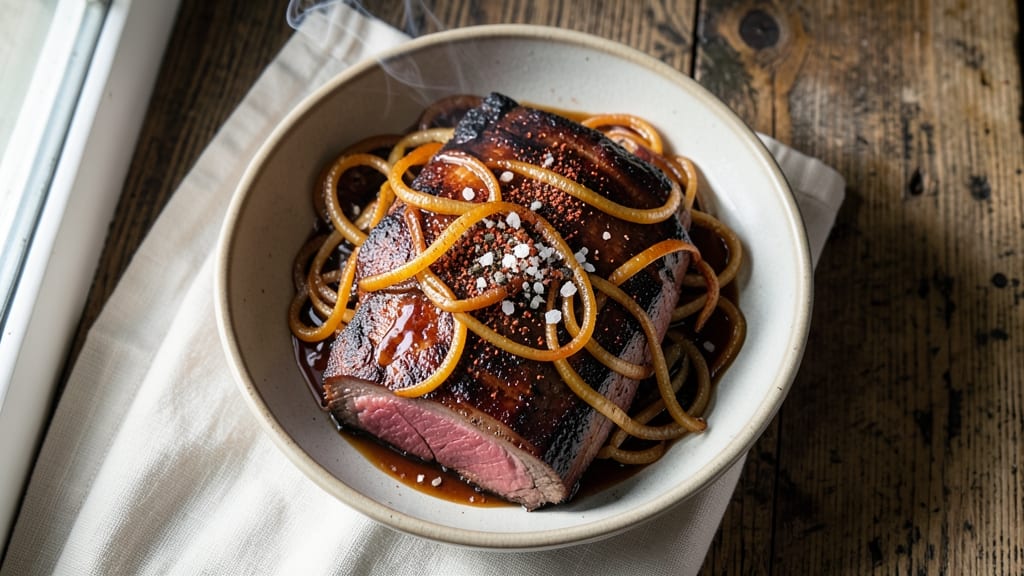
Mastering smoked beef belly transforms tough cuts into melt-in-your-mouth perfection that rivals any BBQ competition entry. The secret lies in precise temperature control and a two-stage process that builds bark while keeping the meat tender.
I've perfected this technique over years of trial and error, and it consistently delivers that coveted fall-off-the-bone texture with a crispy exterior.
This recipe combines traditional Texas-style smoking with modern efficiency—using a sous-vide pre-cook to ensure perfect doneness before the final bark development. The process requires patience (about 12 hours total), but the results are worth every minute.
You'll need a reliable smoker, quality beef belly, and a good bark-building rub that balances sweet, smoky, and savory flavors.
What you'll achieve is beef belly with a dark mahogany bark that shatters when sliced, revealing layers of buttery, tender meat underneath. The aroma alone will draw everyone to the table, and each bite delivers that perfect combination of smoky depth and rich beef flavor.
This is the kind of dish that makes you look like a professional pitmaster, even if you're just starting out.
The beauty of this method is its versatility—serve it as-is for a showstopping main course, or slice it thin for tacos, sandwiches, or nachos. Let's get started on creating your own competition-worthy smoked beef belly.
The key is in the details, and I'll walk you through every step to ensure success.
Ingredients for smoked beef belly
Four pounds of beef belly and a few simple pantry staples create competition-worthy smoked magic.
| Ingredient | Amount | Notes |
|---|---|---|
| Beef Belly 🥩 | 4 lb | Thick-cut, well-marbled, skin removed |
| Yellow Onion 🧅 | 1 whole | Sliced into wedges for rub |
| Brown Sugar 🍯 | ½ cup | Light or dark variety |
| Smoked Paprika 🌶️ | 2 tbsp | For deep smoky flavor |
| Kosher Salt 🧂 | 2 tbsp | Diamond Crystal preferred |
| Black Pepper 🌶️ | 1 tbsp | Freshly ground for best flavor |
| Garlic Powder 🧄 | 1 tbsp | Not garlic salt |
| Mustard Powder 🌶️ | 1 tsp | For subtle tang |
| Apple Cider Vinegar 🍎 | ¼ cup | For tenderizing soak |
| Wood Chips (Hickory or Oak) 🌳 | 2 cups | Unsoaked, for smoker |
| Unsalted Butter 🧈 | ½ cup | Cold, for basting |
| Beef Broth 💧 | ½ cup | For sous-vide bath |
| Apple Juice 🍎 | ½ cup | For sous-vide bath |
| Fresh Thyme 🌿 | 4 sprigs | For sous-vide bath |
The beef belly is non-negotiable here. Look for well-marbled cuts with thick fat layers—this is what gives you that melt-in-your-mouth texture. Costco or local butchers usually have the best quality, often pre-cut into 4-5 lb pieces. If you're buying whole, ask for the thickest section near the ribs. The fat should be white and firm, not yellow or soft. For the rub, Penzeys or local spice shops carry the best smoked paprika, but the grocery store stuff works fine if it's fresh. I always double-check the expiration date on spices—old paprika tastes like dust.
No smoked paprika? Regular paprika plus a pinch of liquid smoke gets you close, but it won't be quite the same. Mustard powder can be swapped for Dijon mustard at half the amount, though the texture will be slightly different. For the sous-vide bath, beef broth plus a splash of apple juice works better than just water—it adds depth. The apple cider vinegar soak? White vinegar works in a pinch, but apple cider gives that subtle sweetness. Fresh thyme is ideal, but dried thyme at one-third the amount keeps things simple. And if you're short on time, skip the sous-vide and just smoke it low-and-slow—it'll still be delicious.
This isn't a recipe you want to rush. The beef belly can soak in the vinegar for up to 24 hours in the fridge—longer soaks work better for tougher cuts. The sous-vide bath keeps for 3 days if stored properly, but I recommend making it fresh. For the rub, mix everything in a bowl and store leftovers in an airtight container for up to 3 months. The wood chips? Buy them fresh each time—old chips burn unevenly. And trust me, leftovers reheat beautifully—just wrap them tightly and warm in the oven at 300°F until crispy again.
Why You'll Love This Recipe
- I’ll be real: I don’t always have time for fancy smoking sessions. But this? I can throw it on the grill with a little aluminum foil and a handful of wood chips, and it still comes out incredible. (Yes, even on a Tuesday night.)
- Five-Ingredient Magic: I swear, this recipe feels like cheating—just beef belly, onions, brown sugar, smoked paprika, and salt. That’s it. The onions caramelize while the belly smokes, and the brown sugar gives it this perfect balance of sweet and smoky. Honestly, I’ve made it three times this month already.
- Crispy-Creamy Obsession: Between us, the texture is what sells me. The outside gets this addictive bark from the salt and paprika, while the inside stays tender and juicy. It’s the kind of dish where you can’t stop pulling off little bites—even my picky husband doesn’t complain.
- Leftovers That Don’t Suck: Smoked beef belly actually tastes better the next day. I’ll slice up the rest for sandwiches, toss chunks into tacos, or even shred it for breakfast hash. No sad, dried-out leftovers here—just pure, smoky goodness waiting to be used.
Step-by-step instructions for smoked beef belly
Here's how to transform tough beef belly into melt-in-your-mouth perfection with that coveted bark.
Prepare the Beef Belly for Maximum Flavor
Begin by placing the 4 lb beef belly in a large resealable bag. Add the 0.25 cup apple cider vinegar and let it marinate for 1 hour at room temperature. This acid tenderizes the meat while adding subtle brightness that pairs beautifully with the smoky flavors to come.
After marinating, remove the beef belly and pat it completely dry with paper towels. This step is crucial—any moisture on the surface will prevent that perfect crispy bark from forming during smoking. I like to work in a well-ventilated area because the vinegar fumes are strong, but the payoff is worth it.
Create the Dry Rub and Apply Generously
In a medium bowl, combine the 0.5 cup brown sugar, 2 tbsp smoked paprika, 2 tbsp kosher salt, 1 tbsp black pepper, 1 tbsp garlic powder, and 1 tsp mustard powder. Mix thoroughly until the rub forms a coarse, even texture. Here's the thing—don't be shy with the brown sugar. It's what creates that beautiful caramelized bark while keeping the meat tender.
Apply the rub to all sides of the beef belly, pressing it into the meat so it adheres well. I like to use my fingers to work the rub into the crevices and fat cap. Once fully coated, place the beef belly fat-side up on a wire rack set over a tray to allow air circulation on all sides. This prevents soggy spots and ensures even cooking.
Sous-Vide for Perfect Tenderization
While the smoker preheats, prepare the sous-vide bath by combining the 0.5 cup beef broth, 0.5 cup apple juice, and 4 sprigs fresh thyme in a large container. The thyme adds an aromatic depth that complements the beef beautifully. Place the beef belly in a vacuum-sealed bag (or a zip-top bag with all the air removed) and submerge it in the liquid.
Cook the beef belly in a sous-vide water bath at 165°F for 12 hours. This low-temperature cook breaks down the collagen and connective tissue, transforming the tough belly into tender, fork-tender meat. I know 12 hours seems like a long time, but trust me—this is where the magic happens. The meat should feel incredibly tender when you test it with a fork at the end of this process.
Smoke to Develop the Perfect Bark
Remove the beef belly from the sous-vide bath and pat it dry once more. Preheat your smoker to 225°F using the 2 cups wood chips (hickory or oak). The smoke flavor will penetrate the meat during this stage, adding that unmistakable depth to every bite. Place the beef belly fat-side up on the smoker grates and smoke for 4-5 hours, maintaining the temperature within 10°F of your target.
During the last hour of smoking, increase the temperature to 275°F to begin developing the bark. You'll know it's working when you see the surface becoming golden brown and slightly sticky. Here's where it gets exciting—the bark should be crisp enough to snap when you press it gently with tongs, but still flexible enough to bend slightly. This is the sweet spot we're aiming for.
Finish with Butter Basting for Richness
Remove the beef belly from the smoker and let it rest for 15 minutes. While it rests, melt the 0.5 cup unsalted butter in a small saucepan over low heat. The butter should be fully melted but not browned—we're going for a rich, nutty flavor here, not a burnt taste.
After the rest period, brush the melted butter generously over the beef belly, coating it completely. Return it to the smoker and smoke at 275°F for an additional 30-45 minutes, basting with more butter every 15 minutes. This basting step is what transforms good smoked beef belly into extraordinary smoked beef belly. The butter adds richness and helps create that glossy, crackling bark that everyone will be talking about.
Pro Tips For Making Smoked Beef Belly
- Trim the Fat First: Beef belly’s fat layer is your friend, but don’t let it turn to grease hell in the pan. Use a sharp knife to score the fat in a crosshatch pattern—this renders it faster and keeps the meat juicier. I learned this the hard way after watching a batch of fat pool into a sad, smoky puddle instead of crisping up.
- Salt in Layers: Don’t just slap salt on once. After searing the belly, hit it with another round of kosher salt before smoking—this guarantees seasoning penetrates deep. My grandmother swore by this, and she was right: the crust sticks better and the flavor is even across every bite.
- Low and Slow Wins: Resist the urge to rush. Smoke the belly at 225°F (107°C) until it hits 195°F (90°C) internally—yes, it’ll take 8–12 hours. Skipping this step means tough, chewy meat instead of melt-in-your-mouth perfection. Trust the process, even if you’re impatient like me.
- Caramelize the Onions: Don’t just chop the onions—cook them until deep golden brown in a dry pan before adding brown sugar. This adds a rich, sweet depth that cuts through the beef’s richness. I was skeptical until I tried it: the flavor jumps from good to unexpectedly amazing.
Essential equipment for this dish
Smoker Essentials
Your smoker is the heart of this recipe, so invest in a reliable model like the Traeger Pellet Grill or Weber Smokey Mountain—both maintain consistent temperatures critical for perfect bark development. For wood chips, I recommend Traeger's hickory or oak pellets (or loose chips from Lump Charcoal Co.).
A digital thermometer like the Meater ensures precise temperature control, preventing temperature swings that ruin texture. 🌡️
Sous-Vide Setup
Sous-vide precision requires a countertop immersion circulator—I use the Anova Nanodot for its reliability and temperature stability. For vacuum sealing, the FoodSaver Vacuum Sealer is a game-changer, but a zip-top bag with a straw (suck out air) works in a pinch.
The 165°F target temp breaks down collagen perfectly, but never exceed 170°F or you'll overcook the meat.
Resting & Carving Tools
A wire rack (like the Ozeri Touchstone) keeps the beef belly elevated during smoking, ensuring even bark formation. For resting, I use a cooler with towels—this traps heat and keeps the meat juicy.
When slicing, a sharp Dexter-Russell slicing knife (12-inch) cuts cleanly against the grain. A meat thermometer (like Thermoworks Smoke) verifies doneness at 195-203°F internal temp.
Basting Supplies
Butter basting requires unsalted European-style butter (like Plugrá) for its rich flavor. A pastry brush (like OXO Good Grips) applies butter evenly, while a small saucepan melts it gently.
For extra crispiness, I keep a spray bottle with apple cider vinegar nearby to mist the bark during the final stages—this enhances caramelization. 🔥
Backup Gear
Always have a backup heat source—a charcoal smoker or gas grill with a smoker box works if your primary smoker fails. A large aluminum foil pan catches drippings, and heavy-duty aluminum foil wraps the meat during rests.
For storage, vacuum-sealed bags preserve leftovers for up to 5 days in the fridge, while freezer-safe bags extend shelf life to 3 months.
Nutrition facts
Frequently asked questions
Can I skip the sous-vide step and still get tender beef belly?
Yes, but with trade-offs. Smoking alone at 225°F for 10-12 hours will tenderize the meat, though not as perfectly as sous-vide. The bark may develop faster but risk drying out. For best results, use the sous-vide method—it guarantees melt-in-your-mouth texture while the final smoke stage builds that coveted crust.
What's the best wood for smoking beef belly?
Hickory or oak are classic choices for their bold, smoky flavor that pairs perfectly with beef. Fruitwoods like apple or cherry add sweetness, while pecan offers a nutty depth. Avoid mesquite—it can overpower the delicate beef belly flavor. For a balanced profile, I recommend a 50/50 hickory-oak blend in your smoker.
How do I know when the bark is perfectly crisp?
The ideal bark should be dark mahogany with a glossy sheen, crisp enough to snap when pressed gently with tongs, yet still slightly flexible. It should bend 1-2 inches before breaking. If it cracks loudly or feels dry, it's overdone. The perfect bark balances crispiness with chewiness—like a cross between toasted bread and caramelized sugar.
Can I make this recipe without a smoker?
Use a charcoal grill with a smoker box or a gas grill with indirect heat and a wood chip basket. Maintain 225°F by adjusting vents or burner settings. For extra smoke flavor, add soaked wood chips every 1-2 hours. The sous-vide step remains critical for tenderness—this method just replaces the smoker's role.
How should I store and reheat leftovers?
Wrap cooled beef belly tightly in heavy-duty foil or vacuum-seal it to preserve moisture. Store in the fridge for up to 5 days or freeze for 3 months. To reheat, warm in a 300°F oven for 15-20 minutes until crispy again. For sandwiches, slice thin and reheat in a skillet with butter for 2-3 minutes per side to restore that crackling bark.