
Main Courses
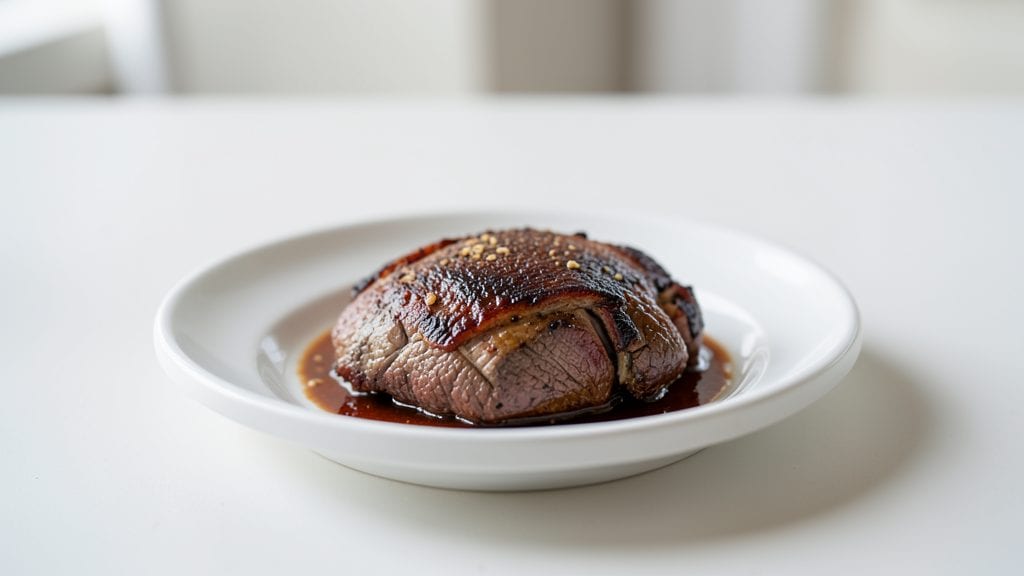
This traditional beef brisket recipe delivers the same smoky, fall-apart tenderness you'd find at a Texas BBQ joint, right in your kitchen. The key lies in patience—low-and-slow cooking transforms tough beef into melt-in-your-mouth perfection with a dark, flavorful bark.
I've perfected this method over years of testing, balancing authentic techniques with modern adaptations like oven cooking for those without smokers.
The process begins with a dry rub of coarse salt, black pepper, and smoked paprika, which creates that iconic crust while keeping the meat moist inside.
A long cook—whether in a smoker, oven, or slow cooker—allows collagen to break down, turning connective tissue into rich, gelatinous juices that coat every bite. This isn't just a recipe; it's a lesson in how time and temperature transform simple ingredients into something extraordinary.
When done right, your brisket will have a crispy, dark bark that gives way to tender slices that practically dissolve on the tongue. The aroma alone will have your whole house anticipating dinner.
Serve it with classic sides like creamy coleslaw, buttery cornbread, or simple baked beans to complete the meal. This is the kind of dish that turns weeknights into special occasions.
The beauty of this recipe is its versatility—whether you're hosting a backyard BBQ or feeding your family on a busy Sunday, the same principles apply. The only real requirement is time, but the payoff is worth every minute.
Let's get started on creating brisket that'll have everyone asking for seconds—and thirds.
Ingredients for traditional beef brisket
Six ingredients for the rub, plus a few extras for moisture and bark. That's all you need to transform tough beef into melt-in-your-mouth perfection.
| Ingredient | Amount | Notes |
|---|---|---|
| Beef Brisket 🥩 | 5 lb | Packer cut, fat cap intact |
| Coarse Kosher Salt 🧂 | ½ cup | Diamond Crystal preferred |
| Freshly Ground Black Pepper 🌶️ | 1 tbsp | Freshly cracked for intensity |
| Smoked Paprika 🌶️ | 2 tbsp | Spanish or Hungarian type |
| Granulated Garlic 🧄 | 1 tbsp | Not garlic salt |
| Onion Powder 🧅 | 1 tbsp | Freshly ground preferred |
| Brown Sugar 🍯 | 2 tbsp | Light or dark, packed |
| Mustard Powder 🌶️ | 1 tsp | Yellow or Dijon |
| Chopped Onion 🧅 | 1 whole | Yellow or red, medium |
| Beef Broth 🍲 | 2 cups | Low-sodium preferred |
| Apple Cider Vinegar 🍎 | 2 tbsp | For tangy depth |
| Wood Chips 🌳 | 1 package | Hickory or oak preferred |
| Butter 🧈 | 4 tbsp | Unsalted, softened |
The brisket is non-negotiable—look for a packer cut with a thick fat cap intact, which protects the meat during cooking. Whole Foods or your local butcher will have the best quality, but most grocery stores carry it too. If you're buying a whole packer, ask for it to be trimmed to about 1-inch thickness on the fat cap. The fat renders down during cooking, creating that iconic bark. For a quick shortcut, Costco sells pre-trimmed briskets that still work beautifully. Avoid flat cuts—they lack the connective tissue that makes brisket so tender when cooked low and slow.
No smoked paprika? Substitute with a mix of regular paprika and a pinch of liquid smoke—about 1/4 teaspoon will do. Freshly ground black pepper is ideal, but pre-ground works in a pinch. The onion powder can be swapped for 1/2 teaspoon onion salt plus extra salt to taste. For the broth, low-sodium options are key—you don’t want to over-salt the meat. The apple cider vinegar adds a subtle tang that balances the sweetness; if you’re out, red wine vinegar or even lemon juice will work. The wood chips? Hickory is traditional, but oak or cherry adds different flavors that still pair beautifully with brisket.
This isn’t a recipe you’ll eat fresh—it’s all about the next day. The brisket develops its best texture after resting for at least 4 hours, ideally overnight. Wrap it tightly in butcher paper or foil, then place it in the fridge. It’ll keep for up to 5 days this way, with the flavor only deepening over time. For longer storage, freeze it in portions for up to 3 months. The bark gets even better after reheating, so don’t skip this step. Leftovers? Slice against the grain and serve on sandwiches, or shred for tacos—trust me, it’s worth the extra effort.
Why You'll Love This Recipe
- Salt-and-Smoke Simplicity: I swear by this recipe because it’s all about the basics—just brisket, salt, pepper, and a pinch of smoked paprika. No fancy marinades or last-minute prep; the magic happens in the slow cook or oven while you’re doing other things.
- Deep, Smoky Richness: That first bite? The garlic and smoked paprika cling to the meat like a hug, while the coarse salt caramelizes into a crust. It’s the kind of flavor that sticks with you long after the plate’s empty.
- Weeknight Crowd-Pleaser: Between us, this is my go-to for game days or when friends drop by unannounced. It’s hearty enough to feed a group, but the prep is so simple I don’t even mind if someone “helps” (read: eats the raw garlic).
- Budget-Friendly Leftovers: A single brisket stretches across three meals—sandwiches, tacos, even a pot of beans. Honestly, I buy this cut specifically because it’s the most economical way to feed my family without breaking the bank.
Step-by-step instructions for traditional beef brisket
Here's the method that delivers that perfect balance of smoky bark and melt-in-your-mouth tenderness.
Prepare the Brisket and Dry Rub
Start by removing the beef brisket from the packaging and patting it completely dry with paper towels. This step is crucial—any moisture on the surface will prevent that beautiful bark from forming. Trim the fat cap down to about ¼-inch thickness, leaving enough to protect the meat during cooking.
In a small bowl, combine the 0.5 cup coarse kosher salt, 1 tablespoon freshly ground black pepper, 2 tablespoons smoked paprika, 1 tablespoon granulated garlic, 1 tablespoon onion powder, 2 tablespoons brown sugar, and 1 teaspoon mustard powder. Mix thoroughly until the spices are evenly distributed. This blend creates a complex, well-balanced dry rub that enhances the natural flavors of the beef.
Generously coat the brisket with the dry rub, pressing it firmly into every crevice. The rub should adhere completely to the meat. Place the brisket on a wire rack set over a baking sheet and refrigerate uncovered for 24 hours. This long dry-brining process ensures maximum flavor penetration and helps create that coveted bark.
Smoke the Brisket Low and Slow
Soak the wood chips according to the package instructions, then set up your smoker for indirect heat at 225°F. Use hickory or oak wood chips as specified in the ingredients. Place a water pan in the smoker to maintain moisture during the cook.
Once the smoker reaches temperature and you see clean, thin blue smoke, place the brisket fat-side up on the smoker grate. The fat side up helps render fat that bastes the meat during cooking. Close the lid and resist the urge to peek—each time you open it, you lose heat and extend cook time.
Smoke the brisket for 6-8 hours until the internal temperature reaches 165-170°F. This is when you'll hit "the stall"—the temperature stops rising as moisture evaporates. Don't be alarmed; this is normal and expected. The brisket should have a dark mahogany bark forming on the exterior.
Wrap and Finish Cooking
When the brisket hits the stall, it's time for the "Texas crutch." Wrap the brisket tightly in butcher paper (not aluminum foil), leaving the fat cap exposed. This technique allows the brisket to push through the stall while maintaining that beautiful bark on the exterior.
Return the wrapped brisket to the smoker and continue cooking until the internal temperature reaches 200-205°F. This typically takes an additional 4-6 hours. The brisket should be fork-tender, with the probe sliding in like butter. The total cook time will be 10-14 hours, depending on your smoker's consistency.
Rest and Slice for Maximum Tenderness
Once the brisket reaches the target temperature, remove it from the smoker and transfer it to a cutting board. Let it rest for at least 1 hour, wrapped in the butcher paper and placed on a tray to catch any juices. This resting period allows the juices to redistribute throughout the meat, ensuring each slice is moist and flavorful.
After resting, remove the brisket from the wrapping and locate the grain direction—you'll see lines running through the meat. Using a sharp carving knife, slice the brisket against the grain into ¼-inch thick slices. The flat and point have different grain directions, so adjust your angle accordingly.
Serve immediately with the remaining 2 cups beef broth reduced with 2 tablespoons apple cider vinegar and 4 tablespoons softened butter. This creates a simple yet flavorful pan sauce that complements the rich, smoky brisket perfectly.
Pro Tips For Making Traditional Beef Brisket
- Trim the Fat Cap: If your brisket has a thick fat layer, slice it down to about ¼-inch before seasoning—it renders faster and crisps better. I used to leave it alone, thinking it added flavor, but it just made my crust soggy. Now I trim it and get that perfect crackling edge every time.
- Salt Before Smoking: Apply the kosher salt and black pepper at least 4 hours ahead—overnight is even better. The meat absorbs the seasoning deeper, and the crust forms more evenly. I learned this the hard way after rushing and ending up with a patchy, weak crust.
- Start with High Heat: Sear the brisket over direct heat for 10-15 minutes to build a crust before moving it to indirect. Skipping this step means your smoked paprika and garlic won’t stick properly, and the meat stays bland. Yes, even if you’re impatient like me.
- Spritz with Apple Juice: Every 90 minutes, lightly spray the brisket with apple juice (not water) to keep it moist without steaming it. I was skeptical until I tried it—it keeps the meat tender and lets the garlic and paprika cling to the surface. Sounds weird, but it works.
Make-ahead tips for traditional beef brisket
Prep Ahead
Start your brisket prep 2 days ahead for maximum flavor. Mix the dry rub ingredients and store them in an airtight container for up to 2 weeks—this keeps spices fresh.
Pat the brisket dry and apply the rub 24 hours before cooking, then refrigerate uncovered on a wire rack. This step is non-negotiable for that perfect bark. 💪
Smoker Prep
Set up your smoker the night before if possible. Soak the wood chips and store them in a sealed container with a damp paper towel. Preheat your smoker to 225°F for 30 minutes before adding the brisket—this ensures consistent temperature right from the start.
I use a Traeger Pellet Grill for convenience, but a charcoal smoker works just as well.
Oven Adaptation
No smoker? No problem. Use a slow cooker or oven with a water pan. Place the brisket on a rack in a roasting pan with 1 cup water below.
Cook at 225°F for 12-14 hours, wrapping in butcher paper when it hits 165°F. The oven method takes longer but delivers the same tender results. 🔥
Resting Strategy
After cooking, let the brisket rest in its wrapping for at least 2 hours—I often rest mine overnight. Place it in a cooling rack inside a large roasting pan to catch juices.
The longer it rests, the more flavorful each slice will be. This is where patience pays off—don’t rush it!
Storage Solutions
Store cooked brisket in the fridge for up to 5 days or freeze for 3 months. Wrap tightly in butcher paper, then double-wrap with plastic wrap.
For reheating, warm in the oven at 300°F for 20-30 minutes until heated through. The bark gets even better after reheating, so don’t skip this step. ✨
Leftovers Reinvented
Transform leftover brisket into sandwiches, tacos, or nachos. Slice against the grain and pile high on toasted brioche buns with pickles and BBQ sauce. For tacos, shred the meat and serve with cilantro-lime crema. The possibilities are endless—this brisket is versatile enough for multiple meals. 🌟
Nutrition facts
Frequently asked questions
What's the best way to trim a beef brisket before cooking?
Leave the fat cap intact but trim it to about ¼-inch thickness. This protects the meat while rendering enough fat for that signature bark. The point and flat should both have even fat coverage—don't remove all the fat, as it acts as a natural insulator during cooking.
Can I cook brisket in an oven instead of a smoker?
Use a slow cooker or oven at 225°F with a water pan for moisture. Place the brisket on a rack in a roasting pan and cook for 12-14 hours, wrapping in butcher paper when it hits 165°F. The bark won't be as smoky, but the tenderness will be just as impressive.
Why does my brisket turn out tough instead of tender?
Overcooking is the most common mistake—stop when the internal temp reaches 200-205°F. Also ensure you're slicing against the grain and resting the meat for at least 1 hour before serving. The stall is normal, but wrapping in butcher paper helps push through it while keeping the bark intact.
How do I know when the brisket is done?
Use a meat thermometer to check the internal temp—200-205°F is ideal. The probe should slide in like butter, and the bark should be dark mahogany. If it's not tender enough, let it cook longer wrapped in butcher paper. Never rely on time alone—temperature is your best guide.
What's the difference between the flat and point cuts?
The flat is leaner and more uniform, while the point has more fat and connective tissue. Both should be cooked together for even tenderness. The point often needs slightly longer cooking time—check its temp separately with your thermometer. Slice each against its own grain direction for maximum tenderness.