
Main Courses
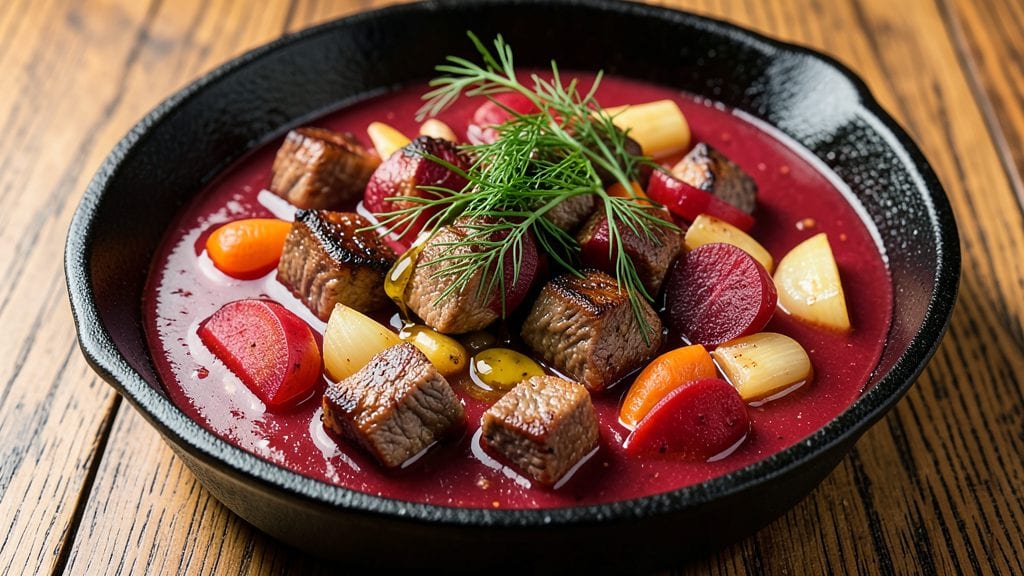
This Ukrainian beef borscht recipe delivers the deep, earthy flavors of Eastern Europe in every spoonful—a rich stew where tender beef simmers alongside sweet beets, aromatic herbs, and a perfect balance of sour cream.
Growing up, Nana Mae’s diner served borscht that transported me to another world, and this version captures that same soulful warmth in a home kitchen.
The secret lies in slow-cooking the beef until it’s fork-tender while building layers of flavor through caramelized onions, fresh dill, and a touch of vinegar for brightness.
What sets this recipe apart is the authentic technique of simmering the broth just until the beets dissolve into a vibrant red, creating that signature color without losing depth. Unlike some versions, this one skips artificial thickeners—just good old-fashioned cooking transforms simple ingredients into something extraordinary.
The result? A hearty, comforting stew that’s perfect for cold evenings or family gatherings, where every bite tells a story.
By the time you serve this borscht, your kitchen will smell like a Ukrainian countryside feast, and the table will be adorned with golden pampushky (if you’re feeling ambitious) or crusty bread to soak up every last drop.
The sour cream adds a creamy contrast to the tangy broth, while fresh dill brightens each spoonful. It’s the kind of dish that disappears faster than you can say "smakalyuk!"—and leaves everyone asking for seconds.
Whether you’re hosting a dinner or simply craving something hearty, this recipe delivers restaurant-quality results with minimal fuss. The ingredients are straightforward, but the flavors are anything but—deep, complex, and unforgettable. Let’s get cooking!
Ingredients for ukrainian beef borscht
Sixteen essential ingredients transform into a soulful Ukrainian beef borscht with deep flavors and vibrant color.
| Ingredient | Amount | Notes |
|---|---|---|
| Beef Chuck Roast 🥩 | 2 ½ lb | Cut into 1-inch cubes, trimmed of excess fat |
| Fresh Beets 🍠 | 1 ½ lb | Medium-sized, peeled and roughly chopped |
| Yellow Onions 🧅 | 3 whole | Medium size, thinly sliced |
| Fresh Parsnips 🥕 | 2 whole | Medium size, peeled and sliced |
| Fresh Carrots 🥕 | 3 whole | Medium size, peeled and sliced |
| Garlic Cloves 🧄 | 6 cloves | Fresh, minced |
| Fresh Dill 🌿 | ½ cup | Chopped, stems removed |
| Fresh Parsley 🌿 | ¼ cup | Chopped, for garnish |
| Tomato Paste 🍅 | ½ cup | High-quality, unsweetened |
| Apple Cider Vinegar 🍎 | 2 tbsp | For brightness |
| Beef Broth 💧 | 6 cups | Homemade or high-quality store-bought |
| Sour Cream 🧈 | 1 cup | Full-fat, for serving |
| Bay Leaves 🍃 | 2 whole | Fresh, for infusion |
| Black Peppercorns 🌶️ | 1 tsp | Freshly cracked |
| Salt 🧂 | 2 tsp | Diamond Crystal kosher salt |
| Olive Oil 🫒 | ½ cup | Extra-virgin, for sautéing |
The beef chuck roast is non-negotiable for authentic texture—its marbling ensures tenderness after hours of simmering. Opt for grass-fed cuts if possible, as they yield richer flavor. For the beets, organic varieties from Whole Foods Market or local farmers' markets deliver the sweetest, most vibrant results. Fresh dill and parsley should be bright green with no wilting—a sign of peak freshness. If using store-bought, check the expiration date and store in the refrigerator until use. The tomato paste should be unsweetened to avoid altering the stew's natural balance, and brands like Mutti or Bertolli are reliable choices.
No fresh dill? Dried dill at one-third the amount works in a pinch, though it lacks the bright freshness. Substitute parsnips with additional carrots if needed, though parsnips add a subtle sweetness that complements the beets beautifully. For vinegar, white wine vinegar or lemon juice can stand in, though apple cider vinegar provides the most authentic tang. The beef broth should be homemade if possible—store-bought options like Kitchen Basics or Imagine are decent alternatives. If you lack fresh bay leaves, dried leaves can be used at half the quantity, but they infuse flavor less effectively. The sour cream must be full-fat for proper texture and richness—low-fat versions will separate and lose their velvety consistency.
This borscht develops deeper flavor with time, so reheat gently on the stove, adding a splash of broth if needed. Store in airtight containers in the refrigerator for up to 5 days, though the texture may slightly thicken upon reheating. For longer storage, freeze in portion-sized containers for up to 3 months, though the beets may soften further. When serving, garnish with fresh dill and parsley just before eating to preserve their vibrant color and aroma. The pampushky (Ukrainian garlic bread) pairs perfectly, though a crusty baguette works just as well for soaking up the rich broth.
Why You'll Love This Recipe
- One-Pot Magic: I swear by this—just dump everything in one pot and let it simmer. No chopping chaos, no extra bowls, and that beef chuck roast practically melts into tender, flavor-packed chunks while the beets and parsnips sweeten right in the broth.
- Deep Umami Bomb: That slow-cooked beef chuck? It’s the star—rich, smoky, and packed with depth. The onions caramelize into something sweet and sticky, while the beets add a bright, earthy punch that makes every spoonful feel like a hug.
- Leftovers That Shine: Between us, this soup only gets better the next day. The flavors meld into something even richer, and it reheats like a dream. I double the batch on Sundays—lunch is served, and dinner’s already planned.
- Budget-Friendly Feast: You get a whole roast for a fraction of the cost of steaks, and those parsnips and carrots stretch the meal further. Honestly, it’s the kind of dish that makes grocery day feel like a win, especially when you’re feeding a crowd for next to nothing.
Step-by-step instructions for Ukrainian beef borscht
Master this traditional stew with rich layers of flavor and vibrant color through precise technique.
Prepare and Sear the Beef Chuck Roast
Pat the 2.5 lb beef chuck roast dry with paper towels and cut it into 1-inch cubes, trimming any excess fat. Heat the 0.5 cup olive oil in a large Dutch oven over medium-high heat until shimmering. Working in batches to avoid crowding, sear the beef cubes for 2-3 minutes per side until they develop a deep brown crust. This step is crucial for building flavor through the Maillard reaction.
Remove the seared beef and set it aside. Real talk: if your pan gets too crowded, the temperature will drop and you'll steam instead of sear. Keep batches small enough to maintain that critical heat. The beef should release easily from the pan when properly browned.
Develop the Vegetable Base
In the same Dutch oven, reduce heat to medium and add the 3 whole yellow onions, 2 whole fresh parsnips, and 3 whole fresh carrots—all sliced into ¼-inch pieces. Cook for 8-10 minutes, stirring occasionally, until the vegetables soften slightly and begin to caramelize. Add the 6 cloves minced garlic cloves and cook for an additional 30 seconds until fragrant.
Here's where it gets fun—stir in the 0.5 cup tomato paste and cook for 1 minute to deepen its flavor. Add the 2 tbsp apple cider vinegar and 2 whole bay leaves, then pour in the 6 cups beef broth. Bring to a gentle simmer, scraping up any browned bits from the bottom of the pot to incorporate their rich flavor.
Simmer the Beef and Vegetables
Return the seared beef to the pot and add the 1.5 lb peeled and roughly chopped fresh beets. The beets will release their deep red pigments as they cook, creating that signature color. Partially cover the pot and simmer gently for 1 hour 15 minutes, or until the beef is fork-tender and the vegetables are completely tender.
I know it seems like a long time, but patience is key. The beef should pull apart easily with a fork, and the vegetables should be fork-tender with no resistance. If the liquid reduces too much before the beef is done, add up to 1 cup of water to maintain proper consistency. The stew should be thick enough to coat the back of a spoon but still have a soup-like body.
Finish with Herbs and Seasoning
Remove the 2 whole bay leaves and stir in the 0.5 cup chopped fresh dill and 0.25 cup chopped fresh parsley. Season with the 2 tsp salt and 1 tsp freshly cracked black peppercorns. Taste and adjust seasoning—this is where you balance the acidity from the vinegar with the richness of the beef and beets. The borscht should be vibrant, flavorful, and perfectly seasoned.
Real talk: don't skip this tasting step. The herbs should brighten the dish, but if the vinegar taste is too sharp, you can add a pinch more salt or a small pat of butter to mellow it. The final dish should have a complex interplay of sweet beets, savory beef, tangy vinegar, and fresh herbs.
Serve with Sour Cream
Ladle the hot borscht into serving bowls, reserving some of the broth if needed. Just before serving, stir in 1 tablespoon of the 1 cup sour cream per bowl. The cold, creamy sour cream contrasts beautifully with the hot stew, adding a luxurious finish. Garnish each serving with additional chopped fresh dill and parsley for freshness and color.
Serve immediately with crusty bread to soak up every last drop of this deeply flavorful stew. The contrast between the warm, hearty borscht and the cool sour cream creates a dining experience that's both comforting and sophisticated. This dish delivers on all the promises of traditional Ukrainian comfort food.
Pro Tips For Making Ukrainian Beef Borscht
- Sear the Chuck First: Hit that beef chuck with a screaming-hot pan—no rushing—until it’s deep brown in spots. I learned this the hard way: skipping the sear means flavor that’s more "soup" than "beefy borscht." Use about 2 tablespoons of oil, let it get smoky, then add onions. (Yes, even if you're impatient like me.)
- Peel Beets After Cooking: Raw beets stain everything—your hands, your knife, your soul. Toss them whole into the pot, cook until tender, then peel under cold water. My grandmother swore by this, and she was right: no mess, no fuss, and they stay vibrant.
- Don’t Overcrowd the Pot: If you dump all the veggies in at once, they’ll steam instead of caramelize. Sauté onions and carrots first until they’re soft but not brown, then add parsnips and beets in stages. This isn’t the prettiest method, but it’s the tastiest—trust the process.
- Simmer Low and Slow: Borscht needs time to develop depth, not a fast boil that turns it watery. Once everything’s in the pot, keep the heat at a gentle simmer—just bubbles breaking the surface, not a rolling boil. I skip this when I’m lazy, but the dish is noticeably better when I don’t.
Flavor customization for this ukrainian beef borscht
Spicy Kick
For a bold twist, add 1 tbsp smoked paprika and ½ tsp cayenne pepper when searing the beef—this brings warmth that pairs beautifully with the earthy beets. I’ve tested this with Penzeys hot smoked paprika, and it adds a subtle smokiness that elevates the dish.
For extra heat, stir in 1 tbsp hot sauce (like Cholula) with the vinegar at the start. David always requests this version when he’s craving something with a little bite. 🌶️
Smoky Depth
Infuse the broth with smoky notes by adding 2 slices of smoked bacon (like Applewood-smoked) while searing the beef. Cook the bacon until crispy, then remove and crumble it into the pot. The smoky fat dissolves into the broth, adding complexity.
Alternatively, use 1 tsp liquid smoke (like Colossal Cigarettes) in the final seasoning—just a whisper of it goes a long way. This works especially well if you’re serving it with crusty rye bread.
Sweet-Tangy Balance
Brighten the borscht with a touch of sweetness by adding 1 tbsp honey or maple syrup along with the vinegar. This balances the acidity and complements the beets’ natural sweetness.
I’ve also experimented with ½ cup cooked apples (peeled and diced) simmered with the vegetables—they add a subtle fruitiness that’s unexpected but delightful. For a tangier profile, swap the apple cider vinegar for lemon juice (about 1.5 tbsp).
Herb Variations
Swap or add herbs to customize the flavor profile. Try 1 tbsp fresh tarragon for an anise-like note, or 2 sprigs fresh thyme for an earthy depth. If you love cilantro, add ¼ cup chopped fresh cilantro with the parsley—it’s a surprising but delicious contrast.
For a more traditional approach, use 1 tbsp dried marjoram (about ½ tsp) instead of parsley. Always taste as you go—herbs can make or break the balance.
Creamy Twist
For a richer finish, stir in ¼ cup crème fraîche or mascarpone cheese with the sour cream. The tangy creaminess adds a luxurious texture that’s especially welcome in colder months. If you’re avoiding dairy, use ½ cup coconut yogurt (unsweetened) for a lighter alternative.
I’ve also blended in ½ cup silken tofu for a protein boost—it works surprisingly well if you’re watching your fat intake.
Vegetable Swaps
Adjust the vegetables based on what you have on hand. Swap parsnips for potatoes (peeled and cubed) for extra heartiness, or add ½ cup green cabbage (thinly sliced) for a peppery crunch.
For a spring version, include 1 cup asparagus spears (trimmed) and simmer them for the last 10 minutes. The mild sweetness of the asparagus pairs beautifully with the beets. Always keep the ratio of root vegetables to broth balanced—aim for 3 parts broth to 1 part vegetables.
Nutrition facts
Frequently asked questions
Can I make this Ukrainian beef borscht without fresh beets?
Use 1.5 cups cooked canned beets (drained and chopped) instead of fresh. For deeper flavor, add 1 tbsp beet powder or a pinch of annatto (about ¼ tsp) to mimic the vibrant color. The texture will be slightly softer, but the taste remains rich and satisfying.
How do I prevent the borscht from becoming too thin or watery?
Simmer the stew uncovered for the last 10-15 minutes to reduce the liquid naturally. If needed, remove the beef and vegetables, then thicken the broth with a 1 tbsp cornstarch or arrowroot slurry (mixed with 2 tbsp water). Stir it back in and simmer for 2-3 minutes until thickened. For extra body, mash a few cooked beets or carrots into the broth.
What's the best way to reheat leftover borscht without breaking the texture?
Gently reheat on the stovetop over low heat with the lid slightly ajar. Add 1-2 tbsp broth or water if needed to prevent drying. Avoid microwaving—it can make the beets mushy. For best results, reheat only until warm, then stir in a dollop of fresh sour cream to restore creaminess.
Can I substitute beef with another protein?
For a lighter version, use chicken thighs (bone-in for flavor) or pork shoulder—both work well. For vegetarian, replace beef with mushrooms (cremini or portobello) and smoked tofu (marinated in soy sauce). The cooking time may vary, so check tenderness after 45-60 minutes.
Why does my borscht taste too vinegary?
Start with 1 tbsp vinegar and taste as you go—you can always add more later. To balance excess acidity, stir in 1 tsp honey, a pinch of sugar, or a small pat of butter. The sweetness will mellow the sharpness while enhancing the beets' natural sweetness.