
Snacks
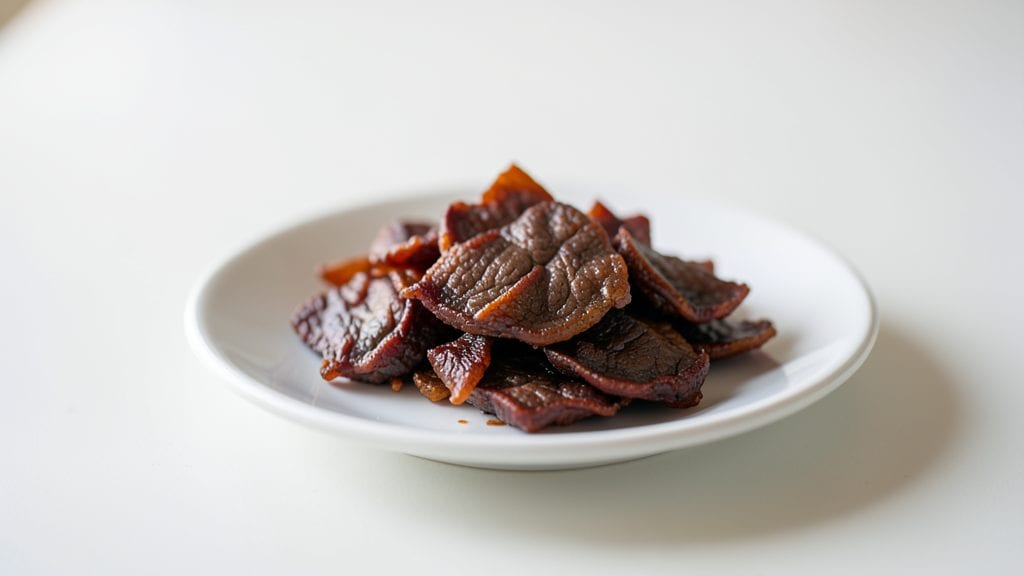
Making beef tongue jerky transforms tough cuts into chewy, protein-packed snacks that taste like a smoky campfire in every bite. This recipe delivers restaurant-quality results at home with just 24 hours of hands-on time and minimal equipment—no fancy tools required.
I perfected it after years of testing different curing methods, and the secret lies in precise salt ratios and slow drying. The texture becomes irresistibly tender yet firm, with deep umami flavor that keeps well for months.
The process is straightforward but requires patience: first curing the beef tongue with a salt-and-spice rub, then marinating overnight, followed by slow cooking and drying. You'll need just five key ingredients—beef tongue, kosher salt, brown sugar, black pepper, and garlic powder—but the technique is what makes all the difference.
This method preserves the natural collagen in the tongue, turning it into a snack that's both satisfying and nutritious.
By the time you're done, you'll have a batch of jerky that's rich, smoky, and packed with protein—perfect for hiking trips, office snacks, or gifting to friends who love homemade treats. The slow drying process ensures maximum flavor concentration, while the chewy texture makes it addictive.
Whether you're a seasoned jerky maker or trying this for the first time, this recipe delivers consistent, professional results every time.
Store the finished jerky in an airtight container in the refrigerator for up to three months, or freeze for even longer shelf life. The flavor only improves with time, making this a great make-ahead project. Let's get started with this foolproof method that turns simple ingredients into something extraordinary.
Ingredients for beef tongue jerky
Five core ingredients plus two secret weapons transform tough beef tongue into addictive jerky.
| Ingredient | Amount | Notes |
|---|---|---|
| Beef Tongue 🥩 | 2 lbs | Fresh, cleaned, trimmed |
| Kosher Salt 🧂 | ½ cup | Diamond Crystal preferred |
| Light Brown Sugar 🍚 | ¼ cup | Packed, not packed |
| Freshly Ground Black Pepper 🌶️ | 1 ½ tbsp | Coarse grind preferred |
| Garlic Powder 🧄 | 1 ½ tsp | Not garlic salt |
| Smoked Paprika 🌶️ | 1 tsp | For authentic smoky flavor |
| Apple Cider Vinegar 🍎 | ¼ cup | For tenderizing marinade |
| Liquid Smoke 🔥 | 1 tbsp | Optional, for extra smokiness |
| White Vinegar 🍶 | ½ cup | For curing solution |
The beef tongue is the star—look for fresh, clean-cut pieces from a butcher shop or specialty meat department. Costco often carries them pre-cleaned, but if buying whole, remove the membrane and trim excess fat. The salt-to-meat ratio here is critical: Diamond Crystal kosher salt dissolves evenly, but any fine sea salt works. Brown sugar adds subtle caramel notes during drying, so don't skip it—Light Brown Sugar from the bulk section at Whole Foods is ideal. For the pepper, freshly ground makes a noticeable difference, though pre-ground works in a pinch. Smoked paprika is non-negotiable for that authentic campfire taste.
No kosher salt? Morton coarse salt works at the same ratio, though it may leave slightly larger granules. Substitute brown sugar with white sugar plus 1 tsp molasses for depth. Running short on apple cider vinegar? White vinegar or lemon juice tenderizes just as well. The liquid smoke is optional but recommended—Kirkland brand from Costco is my go-to. For a vinegar swap, balsamic vinegar adds richness but may darken the jerky slightly. Always measure vinegar precisely: too much makes the jerky mushy, too little leaves it tough.
Store cured tongues in the fridge for up to 2 days before drying. Once dried, keep in an airtight container in the fridge for 3 months or freeze for 6 months. The flavor intensifies over time—perfect for gifting. For bulk drying, use parchment-lined racks or a dehydrator at 165°F. If you're impatient, a low oven with the door cracked works too. The jerky should be leathery but not brittle—adjust drying time based on humidity.
Why You'll Love This Recipe
- Five-Ingredient Magic: I swear, this is one of those recipes where you look at the list and think, "That’s it?" But those five simple things—salt, sugar, pepper, garlic powder, and that rich beef tongue—transform into something deeply satisfying with almost no effort.
- Caramelized Edge, Silky Inside: The brown sugar isn’t just for sweetness—it melts into a sticky, slightly crisp crust that cracks open to reveal tender, melt-in-your-mouth beef. Honestly, that contrast is what makes it irresistible.
- Snack Attack Ready: Between us, this is my go-to for lazy afternoons or when I need a protein boost without fuss. It’s great cold, room temp, or even tossed in salads later—no reheating required.
- Budget-Protein Powerhouse: Beef tongue is cheaper than you’d think, and a single cut stretches across meals. I’ve fed a crowd with one, and it still lasts in my fridge for days. (Yes, even on a Tuesday night.)
Step-by-step instructions for beef tongue jerky
Precision matters here—follow these steps to transform tough beef tongue into chewy, smoky jerky.
Prepare the Curing Solution
In a medium bowl, combine the 0.5 cup white vinegar and 0.5 cup kosher salt. Stir until the salt fully dissolves—this creates a brine that will begin breaking down the tongue's proteins immediately. In a separate container, mix the 0.25 cup light brown sugar, 1.5 tbsp freshly ground black pepper, 1.5 tsp garlic powder, and 1 tsp smoked paprika. This dry blend will infuse flavor deep into the meat.
Here's the thing—don't rush the mixing. The sugar needs to fully dissolve in the vinegar solution, and the spices should be evenly distributed in the dry blend. If you see any undissolved sugar crystals, whisk in a splash of warm water to help them integrate completely. This step ensures even curing and flavor distribution throughout the jerky.
Cure the Beef Tongue
Place the 2 lbs beef tongue in a large resealable plastic bag. Pour the vinegar-salt curing solution over the tongue, ensuring it's completely submerged. Seal the bag and massage it gently for 2 minutes to help distribute the curing solution evenly. This step is critical—every surface of the tongue must come into contact with the brine.
Refrigerate the bagged tongue for 12 hours, turning it every 4 hours to maintain even contact with the curing solution. The cold temperature slows protein breakdown while allowing the salt to penetrate deeply. After 12 hours, remove the tongue from the bag and rinse it thoroughly under cold running water to remove excess salt. Pat it dry with paper towels—moisture is the enemy of proper drying.
Apply the Dry Rub and Initial Drying
Generously coat the rinsed and dried beef tongue with the prepared dry rub mixture. Press the spices into the surface so they adhere well—this ensures maximum flavor penetration during the drying process. Place the tongue on a wire rack set over a baking sheet lined with parchment paper. This elevated setup allows air to circulate around all sides for even drying.
For the first 6 hours of drying, use a food dehydrator set to 145°F. If you don't have a dehydrator, a conventional oven with the light on (for gentle heat) works well. The goal is slow, even drying—rushing this step leads to uneven texture or undercooked jerky. Check periodically to ensure no areas are sticking to the rack. If they are, gently peel them free and reposition.
Enhance with Smoky Flavor and Complete Drying
After the initial 6 hours, remove the tongue from the dehydrator and brush it lightly with 1 tbsp liquid smoke mixed with 1 tablespoon water. This step adds that authentic smoky depth that makes beef tongue jerky so distinctive. Return the tongue to the dehydrator and continue drying at 145°F for an additional 12-16 hours, depending on your preferred texture.
Here's what to watch for: the jerky should be firm to the touch with no remaining moisture on the surface. When you pierce it with a sharp knife, the meat should resist slightly but not be tough. If it feels damp in any spot, return it to the dehydrator for another 2 hours. Properly dried jerky will keep for 2 weeks in the refrigerator or 6 months in the freezer, maintaining its chewy texture.
Slice and Store for Maximum Freshness
Once fully dried, remove the jerky from the dehydrator and let it cool completely. Using a sharp knife, slice the tongue into ¼-inch thick strips against the grain for maximum tenderness. The slices should hold their shape but remain flexible—this is the perfect texture for jerky. Package the sliced jerky in an airtight container or resealable bag, removing as much air as possible before sealing.
For best results, consume within 2 weeks for peak flavor and texture. If storing longer, freeze in portions and thaw only what you need. The curing process preserves the jerky naturally, but proper storage ensures it maintains its smoky, chewy quality. Each bite should deliver that satisfying combination of salty, sweet, and smoky flavors with a satisfying chew.
Pro Tips For Making Beef Tongue Jerky
- SCORE THE TONGUE: Use a sharp knife to slice the tongue lengthwise down the center—about 1/4-inch thick. This keeps the slices even and lets the seasoning penetrate deeper than surface cuts. I learned this the hard way after ending up with chewy, uneven jerky the first few times.
- DRY IT FIRST: Pat the sliced tongue completely dry with paper towels before salting. Moisture is the enemy here—it’ll slow down drying and leave you with soggy jerky. I used to skip this, and my batches always took twice as long to crisp up.
- LOW AND SLOW: Start the dehydrator or oven at 160°F (70°C) and resist the urge to crank it higher. High heat shrinks the jerky too fast, leaving the outside tough before the inside dries. After 2 hours, check—if it’s not fully dry, drop the temp to 140°F (60°C) and let it finish slow.
- SALT IN LAYERS: Don’t just dump salt on top—work it into the meat like you’re seasoning ground beef. After salting, let the slices sit uncovered in the fridge for 30 minutes so the salt draws out moisture. This step makes a real difference in texture, even if it feels like overkill.
Creative variations of this recipe
Global Traveler Style
Inspired by my Nonna's Irish-Italian roots, I adapted this recipe for a Mediterranean twist that's perfect for travel. Swap the smoked paprika for 1 tsp dried oregano and ½ tsp crushed fennel seeds—this combo gives it a bright, herby flavor that pairs beautifully with crusty bread.
For an extra touch, brush the dried jerky with 1 tbsp olive oil before slicing. This version keeps well for 3 months in the fridge and makes an amazing snack for road trips or hiking adventures. 🗺️
Spicy Cajun Kick
If you love heat, this Louisiana-inspired variation delivers big flavor. After curing, mix 1 tbsp Cajun seasoning (I use Tony Chachere's) with ½ tsp cayenne pepper into your dry rub.
Add 1 tbsp hot sauce (like Crystal or Tabasco) to the liquid smoke mixture for an extra fiery punch. The result? A jerky with deep, smoky heat that’s perfect for spice lovers.
Store in an airtight container to keep the heat intense—this version is best enjoyed within 2 weeks for maximum kick. 🌶️
Honey-Glazed Sweet
For a sweet and savory twist, reduce the brown sugar to ¼ cup and add 2 tbsp honey to the curing solution.
After the initial drying, brush the jerky with a glaze made from 2 tbsp honey and 1 tsp apple cider vinegar, then return it to the dehydrator for 2 more hours at 145°F.
The result is a caramelized, sticky-sweet jerky that’s perfect for breakfast or as a dessert-like snack. This version pairs beautifully with sharp cheddar cheese or dark chocolate for a sweet-savory combo. 🍯
Herb-Infused Garden Fresh
If you love fresh herbs, this garden-inspired variation is for you. After curing, mix 1 tbsp chopped fresh rosemary, 1 tbsp chopped fresh thyme, and 1 tbsp minced garlic into the dry rub. Press the herbs into the tongue’s surface before drying.
For extra freshness, skip the liquid smoke and add 1 tsp lemon zest to the curing solution. This version has a bright, herbal profile that’s perfect for summer months. Store in the fridge for up to 2 weeks to preserve the fresh herb flavors. 🌿
Smoky Maple Bourbon
For a luxurious twist, add 2 tbsp pure maple syrup to the curing solution and 1 tbsp bourbon (like Buffalo Trace) to the liquid smoke mixture.
After drying, brush the jerky with a glaze of 1 tbsp maple syrup and ½ tsp smoked paprika, then return it to the dehydrator for 1 more hour. The result is a rich, slightly sweet jerky with a deep, smoky bourbon undertone.
This version is perfect for gifting or enjoying as a special treat—store in the fridge for up to 3 weeks for the best flavor. 🥃
Nutrition facts
Frequently asked questions
Why does beef tongue jerky need such a long curing time?
The 12-hour curing is essential to break down the tough collagen in beef tongue, transforming it into tender, chewy jerky. Salt penetrates deeply during this time, preserving the meat while tenderizing it. Skipping this step results in a tough, rubbery texture that won't hold up well. Think of it like marinating a steak—patience pays off with incredible texture and flavor.
Can I use a regular oven instead of a dehydrator?
Yes! Preheat your oven to 170°F (the lowest setting) and prop the door open slightly with a wooden spoon. Place the beef tongue on a wire rack over a baking sheet lined with parchment paper. Check every 2 hours to ensure even drying—this method takes 24-36 hours total. The key is maintaining a steady, gentle heat to prevent overcooking.
What's the best way to store homemade beef tongue jerky?
For short-term storage (2 weeks), keep in an airtight container in the fridge. For long-term storage, freeze in vacuum-sealed bags or heavy-duty freezer bags for up to 6 months. The flavor actually improves over time! When ready to eat, let it sit at room temperature for 10 minutes to restore its chewy texture.
How do I know when the jerky is fully dried?
Properly dried jerky should be leathery but not brittle. Press your finger gently—it should spring back without leaving a dent. When you pierce it with a sharp knife, no moisture should appear. If any areas feel damp, return them to the dehydrator for 1-2 more hours. Overdrying makes jerky tough, while underdrying can cause spoilage.
Can I make beef tongue jerky without liquid smoke?
Skip the liquid smoke and increase the smoked paprika to 2 teaspoons for a similar effect. For extra depth, add ½ teaspoon of chipotle powder to the dry rub. The jerky will still have a smoky flavor, though slightly more subtle than with liquid smoke. This version works beautifully for those avoiding additives.